In brief
- Biomni is an AI agent “co-scientist” that can help biomedical researchers through the entire research workflow, with outputs that demand human experience and reasoning.
- The tool specializes in being able to work with prompts written in casual language, such as “Why are these patients responding differently to the drug?”
- A prototype Biomni is already in use by more than 10,000 labs, making it the most widely used AI co-scientist system in biomedicine.
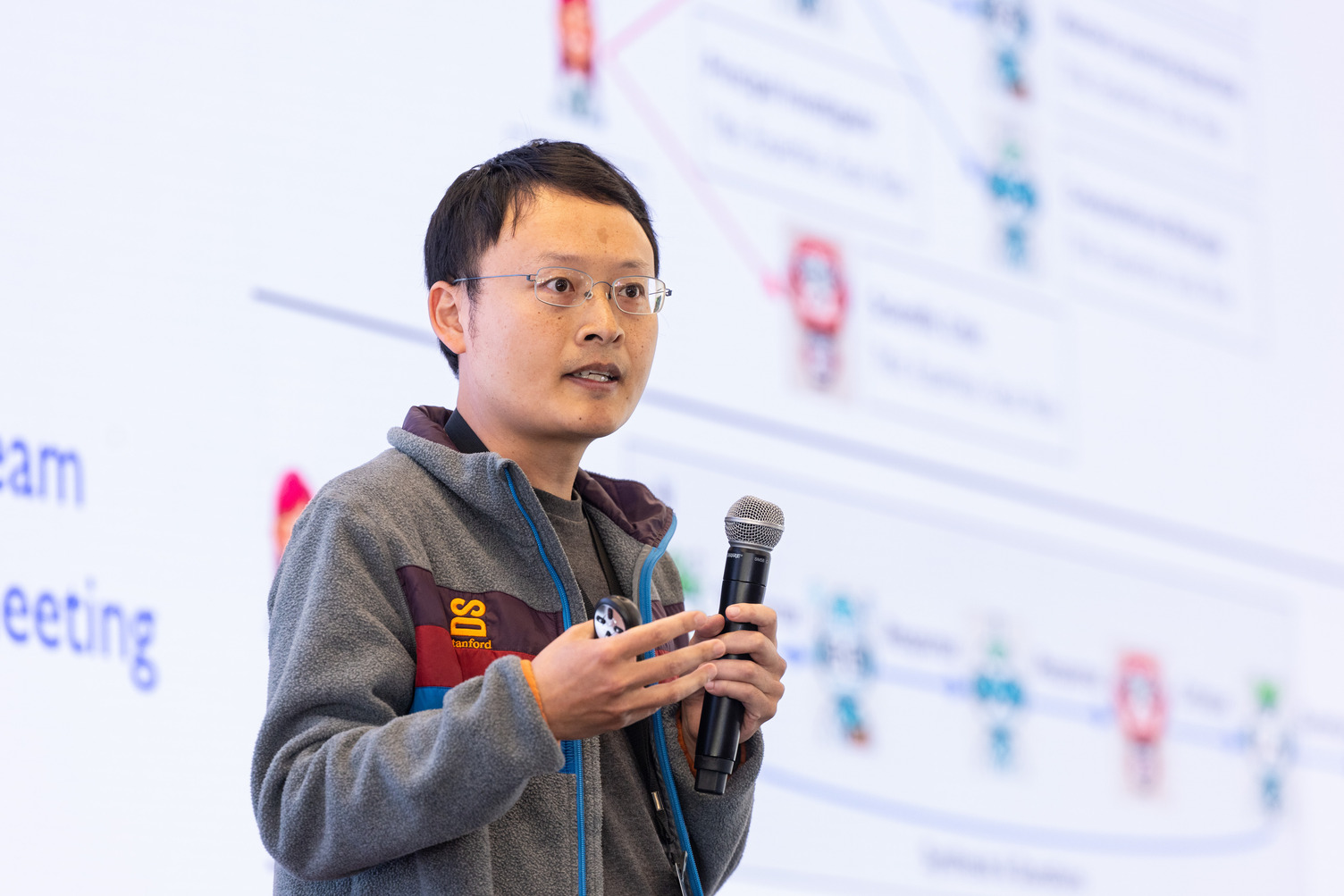
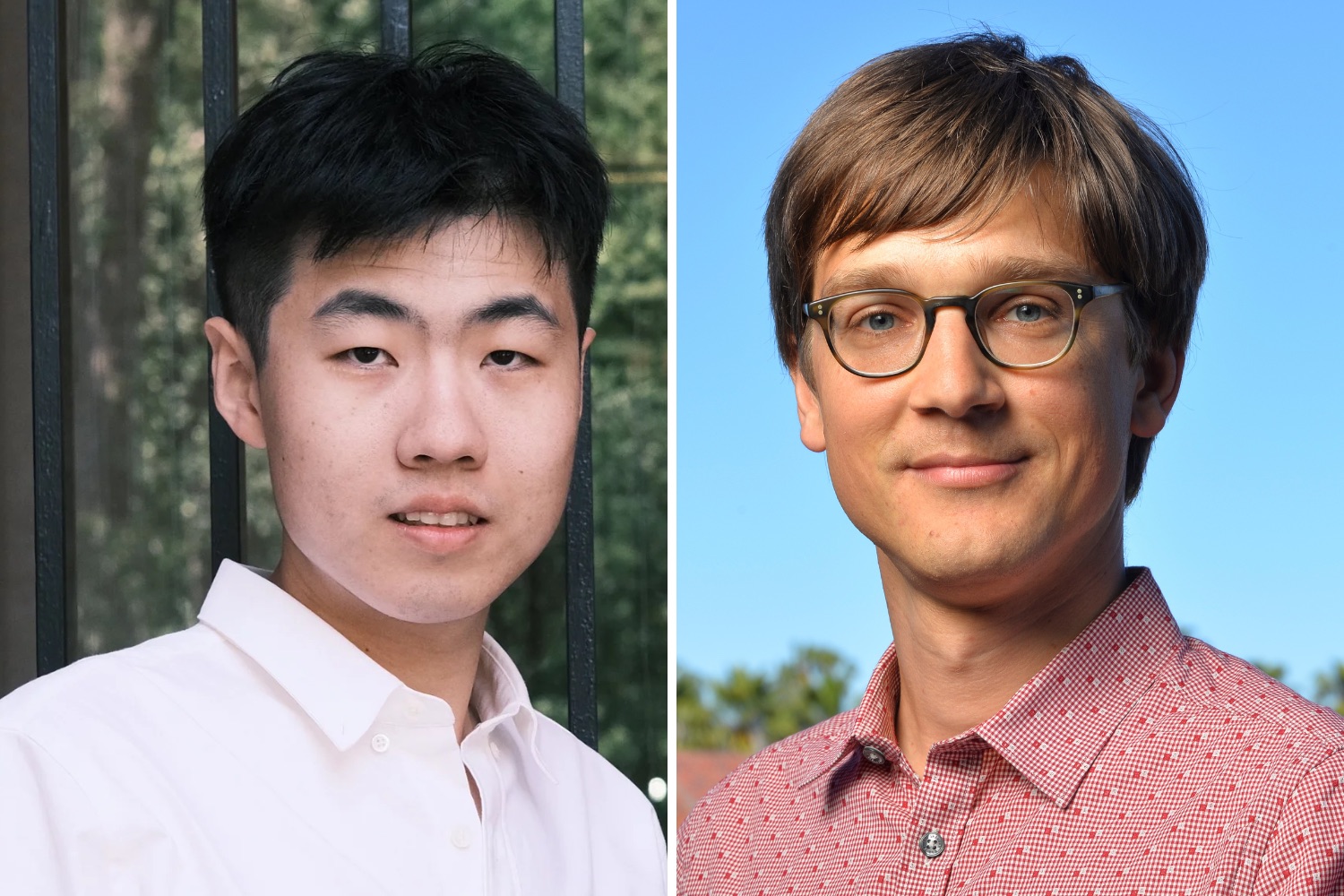
Researchers at Stanford University have announced the debut of Biomni – an AI-powered multi-skilled biomedical research agent. Biomni is no mere chatbot. It is a full-fledged “co-scientist” capable of designing and developing complex research workflows, said Jure Leskovec, the Alfred and Rebecca Lin Professor and professor of computer science in the School of Engineering and senior author of the paper introducing Biomni in the journal Science.
“If you think of an agent as a carpenter, a carpenter without tools is just a carpenter who can talk,” Leskovec said, explaining what sets Biomni apart from popular generative AI chatbots. “With Biomni, we give the carpenter a set of tools so it can build.”
Born for impact
Biomni was born from the notion that, when working with an AI agent, a scientist should be able to describe a research problem in simple, natural language. With that in mind, the researchers designed Biomni to read the literature, form hypotheses, choose datasets and tools, write code, interpret results, and suggest next-stage experiments in a complete research workflow.
“Biomni is able to understand a simple question like, ‘Why are these patients responding differently to the drug?’” explained Kexin Huang, a former doctoral student in Leskovec’s lab who recently earned his PhD and now heads a startup to bring this technology to market. “Then it digs in, doing a lot of the scientific legwork.”
The researchers have chosen biomedical sciences for its potential to improve the lives of everyday people. From basic understanding of life to new cures for myriad diseases, scientific breakthroughs in biomedical research cannot come fast enough.
In a real-world example, one Biomni user uploaded more than 450 files of continuous glucose monitoring, food intake, and physical activity data and asked a simple question: “Analyze this data, find interesting and plausible hypotheses.” In just 40 minutes, Biomni cleaned and unified the data, generated visualizations, and identified patterns relating food intake and body temperature. Leskovec estimates that work would have taken 60 or more hours for a human to complete.
Biomni offers one more advantage the chatbots can’t claim: It provides full citations and tracking of its work. In its traceability, the researchers argue, Biomni makes the science more rigorous and more reproducible.
If you think of an agent as a carpenter, a carpenter without tools is just a carpenter who can talk. With Biomni, we give the carpenter a set of tools so it can build.Jure LeskovecThe Alfred and Rebecca Lin Professor
Innovation apace
Biomni is specifically trained in biomedical sciences. It incorporates the breadth of full-text, publicly available papers, code, and data stored on bioRxiv, a service for prepublishing early versions of promising scientific findings, to identify common software, tools, and databases that are used in biomedical research. Biomni layers in 150 specialized biomedical tools, 105 software packages, and 59 databases spanning all 25 biomedical subdomains defined by bioRxiv, ranging from genetics to neurology.
Biomni speeds the process of scientific ideation and innovation. Leskovec explained there is an inverse relationship between scientific information and the pace of discovery. As the volume of knowledge, data, and tools has grown, innovation has slowed.
The reason for that slowdown is simple. Behind every breakthrough lies years of study that all begin with a hypothesis. Even just developing a hypothesis requires substantial investment from scientists – reading literature, ingesting and homogenizing datasets, writing code, and looking for unexplored patterns that then become the basis for groundbreaking work. This process can take weeks or even months.
“The hurdle in biomedical science is not intelligence or ideas; it is mechanics,” Leskovec emphasized. “It’s this laborious stuff that slows innovation. Biomni can do this work in minutes.”
Human in the loop
Leskovec and Huang are quick to point out that Biomni will not replace humans, but it frees them to concentrate on the value of the scientist – ideation and judgment. While Biomni can synthesize vast amounts of information and data very quickly and is adept at pattern recognition, the choice to pursue a scientific trajectory demands human experience and reasoning.
“And it always will,” said Huang. “This is not about machines taking over science, but more about machines becoming a powerful new partner to augment human researchers. With Biomni, scientists have a fast and tireless collaborator that empowers them to focus on the important work of science.”
A prototype Biomni is already in use by more than 10,000 labs in academia and industry, making it the most widely used AI co-scientist system in biomedicine.
“Biomni is my first research project that has gained wide use by real biologists,” Huang said. “To have that impact on how biologists are doing their work has been rewarding. I look forward to seeing where Biomni goes from here.”
For more information
Contributing authors include: graduate students Serena Zhang, Ryan Li and Gavin Li; postdoctoral scholars Hanchen Wang, Yusuf Roohani, Yuanhao Qu, Junze Zhang, Xin Zhou, Yingzhou Lu and Di Yin; visiting Professor Xin Zhou; Michael Snyder, the Stanford W. Ascherman Professor of Genetics in the School of Medicine (Stanford Medicine); Le Cong, associate professor of pathology and of genetics in Stanford Medicine; research engineer Shruti Marwaha; genetic counselor Jennefer N. Carter; professor Matthew Wheeler, associate professor of medicine (cardiovascular medicine) in Stanford Medicine; and professor Jonathan A. Bernstein, professor of pediatrics (genetics) in Stanford Medicine. Researchers at the University of Washington, the Arc Institute, Genentech, Princeton University, and the University of San Francisco also contributed.
Bernstein is also a member of Stanford Bio-X, the Maternal & Child Health Research Institute (MCHRI), and the Stanford Medicine Children’s Health Center for IBD and Celiac Disease, and a faculty affiliate of the Institute for Human-Centered Artificial Intelligence (HAI). Le Cong is also a member of Stanford Bio-X, the Cardiovascular Institute, the Stanford Medicine Children’s Health Center for IBD and Celiac Disease, the Stanford Cancer Institute, and the Wu Tsai Neurosciences Institute. Leskovec is also a member of Bio-X and the Wu Tsai Neurosciences Institute, and a faculty affiliate of HAI. Snyder is also a member of Stanford Bio-X, the Cardiovascular Institute, the Wu Tsai Human Performance Alliance, the MCHRI, the Stanford Medicine Children’s Health Center for IBD and Celiac Disease, the Stanford Cancer Institute, and the Wu Tsai Neurosciences Institute. Wheeler is also a member of Bio-X, the Cardiovascular Institute, the Wu Tsai Human Performance Alliance, MCHRI, and the Wu Tsai Neurosciences Institute.
Funding was provided by the National Science Foundation, Stanford Data Science Applications, Wu Tsai Neurosciences Institute, Stanford Institute for Human-Centered AI, Chan Zuckerberg Initiative, Amazon, Genentech, GSK, Hitachi, and SAP.
Media contact:
Jill Wu, School of Engineering: jillwu@stanford.edu
Writer
Andrew Myers