For two and a half centuries, the Declaration of Independence has remained a living document, reshaped by each generation.
This spring, a new course explores how the declaration and the ideas within it have been revisited and reworked across its 250-year history. The class brings together more than 30 scholars from across the university to examine the document’s enduring influence on American life.
As Stanford historian Jonathan Gienapp explained in the course’s opening session on Tuesday, March 31, the declaration did far more than announce the creation of a new nation.
“It also laid down what would become the nation’s defining creed: That all people are created equal. The United States would not be held together or defined by blood, soil, or religion, but instead an ideal and the symbols through which it was expressed,” said Gienapp, who co-teaches HISTORY 25: America at 250 with Stanford law Professor Pamela Karlan.
That belief has made the declaration one of the most contested documents in American history, said Gienapp, who holds a joint appointment in the School of Humanities and Sciences (H&S) and Stanford Law School (SLS) and is a fellow at the Hoover Institution.
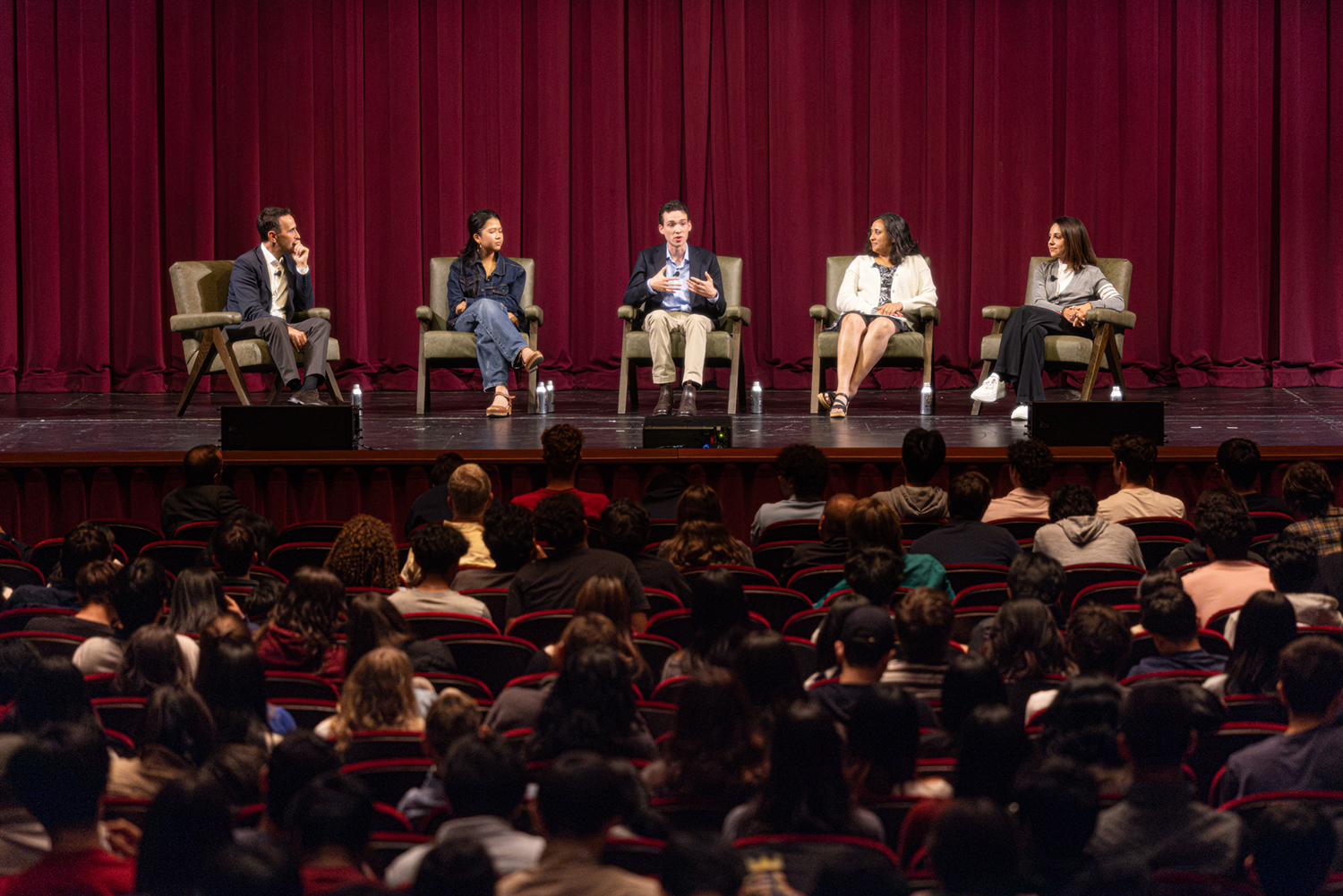
The 10-week series, also open to members of the Stanford community, meets on Tuesdays from 3 to 4:20 p.m. in the CEMEX Auditorium.
Each week, scholars from different disciplines ranging from law and politics to medicine, religion, the arts, and the humanities will examine how the document has been reinterpreted – as Gienapp described it, the declaration is a “multivocal character.”
As Gienapp explained, from America’s inception, those in power sought to limit the declaration’s reach, while those less powerful – such as the enslaved, women, immigrants, and political dissidents – claimed it as their own and demanded that its universal pronouncements be honored. The question of who the document belongs to, and what it means, has never been fully resolved.
The course opened with a discussion about the declaration itself, led by Gienapp and Caroline Winterer, the William Robertson Coe Professor of History and American Studies. Future sessions will cover topics such as national identity and immigration, equality and rights, capitalism and democracy, the role of scientific expertise, and the relationship between communication technology and democratic life.
Participating faculty reflect the course’s breadth and include university leadership. Stanford President Jonathan Levin will join a class examining capitalism, trade, and economics, and Provost Jenny Martinez will speak on a session examining foreign affairs and the military.
Other speakers include Dean for Religious and Spiritual Life Rev. Dr. Tiffany Steinwert, art historian Alexander Nemerov, political scientist and former U.S. ambassador to Russia Michael McFaul, and School of Medicine’s Steven Goodman.
Finding their own voice in the founding document
Students will also be asked to interpret the declaration for themselves.
For their final assignment, they will write an erasure poem using the Declaration of Independence as their source material. An erasure poem is created by taking an existing text – such as a newspaper, a book, or other document – and removing and selecting words to create a new poem by what remains.
Karlan, who is the Kenneth and Harle Montgomery Professor of Public Interest Law, has used this assignment in her COLLEGE 102: Citizenship in the 21st Century classes. She was inspired by former U.S. poet laureate Tracy K. Smith, who wrote her own declaration poem.
“It asks students to think,” Karlan said, adding, “But they can do this thinking only once they know. The goal of the course is to give them that knowledge so they can think for themselves.”
Part of that work involves looking beyond the declaration’s famous opening lines to its lesser-read passages, including the list of 27 grievances against King George III and the British parliament, which carefully laid out the case for the colonies to break from Great Britain. The rights the founders outlined – from judicial independence to trial by jury – still resonate today.
“Throughout the Declaration of Independence, you can see foreshadowing of where we find ourselves today,” said Karlan. “We hope students start thinking about these issues while they’re here, but that what they learn carries them through their lives.”
The semiquincentennial across Stanford
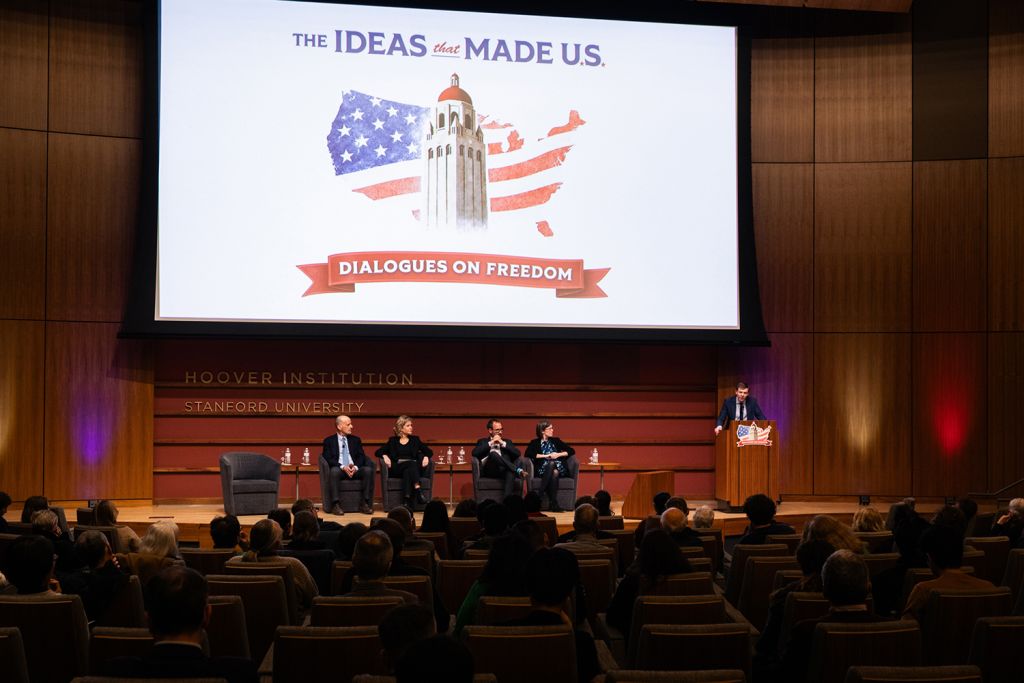
The course is one of several efforts across Stanford marking the semiquincentennial. The Hoover Institution is also commemorating the milestone with USA@250, a year-long program of lectures, conversations, and public events exploring the founding principles of American freedom and the choices that will define its future.
Winterer is also teaching a four-session Continuing Studies course, The Declaration of Independence at 250: Big Ideas That Made a Nation.
Students are organizing events as well. Through the Democracy Hub, students and faculty will gather at On Call Cafe on Tuesday, April 7, to discuss the country’s founding and future. On Monday, May 11, the Federalist Society will host Judge Charles Eskridge for a discussion on the Declaration of Independence 250 years on.
For more information
HISTORY 25: America at 250 is sponsored by the School of Humanities and Sciences, the Stanford Democracy Hub, and the Department of History.
Gienapp is an associate professor of history and of law, and is the Nehal and Jenny Fan Raj Civics Faculty Fellow in Undergraduate Teaching.
Goodman is a professor of epidemiology and population health and of medicine.
McFaul is the Ken Olivier and Angela Nomellini Professor of International Studies in Political Science.
Nemerov is Carl and Marilynn Thoma Provostial Professor in the Arts and Humanities.
Winterer is the William Robertson Coe Professor of History and American Studies.