At Stanford, undergraduate students are pursuing ambitious, faculty-mentored research across disciplines – some beginning as early as their first year. Through funding programs administered by the Office of the Vice Provost for Undergraduate Education (VPUE), including Research Experiences for Undergraduates (REU) and Undergraduate Research Grants, students receive support and guidance to design research questions, execute original studies, and lead projects of their own.
“Undergraduate Research sits uniquely at the intersection of Stanford’s research and educational missions,” said Brian Thomas, VPUE senior director of undergraduate research.
“This is where students are exposed to the idea that knowledge doesn’t simply fall into their laps – it is created by people who ask questions with rigor and open minds, and we invite students to join that enterprise. As a result, we see students transforming from consumers of knowledge into creators of knowledge. And we see them turning from students into collaborators, and that’s a really exciting development to watch in these really promising students.”
Learn more about undergraduate research at Stanford
- Explore tips for getting started, including how to identify a research focus, connect with Stanford’s community of scholars, and create a project plan.
- Discover funding opportunities for undergraduate research, including student grants, departmental funding, faculty funding, and other sources of support for your project.
About one-third of Stanford undergraduates receive some form of VPUE research funding during their four-year Stanford experience, and additional opportunities are available through departments, interdisciplinary programs, research centers, and individual faculty.
Computing smarter
As the race to scale AI accelerates, junior mathematics major Teresa Zhang is building her research career around a different question: How can we compute smarter?
Zhang believes that building a sustainable and equitable future for AI requires redefining progress – not by how much we scale, but by how efficiently we achieve more with less. At the Stanford IRIS (Intelligence through Robotic Interaction at Scale) Lab, she is working on methods that help AI agents, under limited context and memory budgets, more efficiently answer difficult questions over long document collections. Her independent research projects have also focused on algorithms and data structures that make various major computational tasks much more efficient.
“A lot of attention goes to model design – making them larger, more accurate, more capable,” Zhang says. “The underlying system costs are often less hyped, especially factors like memory movement. It’s important to make these systems more scalable, sustainable, and affordable.”
The Research Experiences for Undergraduates program is a unique opportunity to engage in a long-term research project that students can call their own.Teresa Zhang, ’27
Zhang, who is minoring in electrical engineering and coterming in computer science, began research in her first year, starting as an undergraduate research assistant before joining Professor John Pauly’s lab through the Electrical Engineering REU program, funded in collaboration with VPUE. What makes the program special, she said, is that “it’s a unique opportunity to engage in a long-term research project that students can call their own, and gain lead-researcher experience with the support of incredible mentors. It shows how wonderful the research culture at Stanford is.”
Pursuing a cure
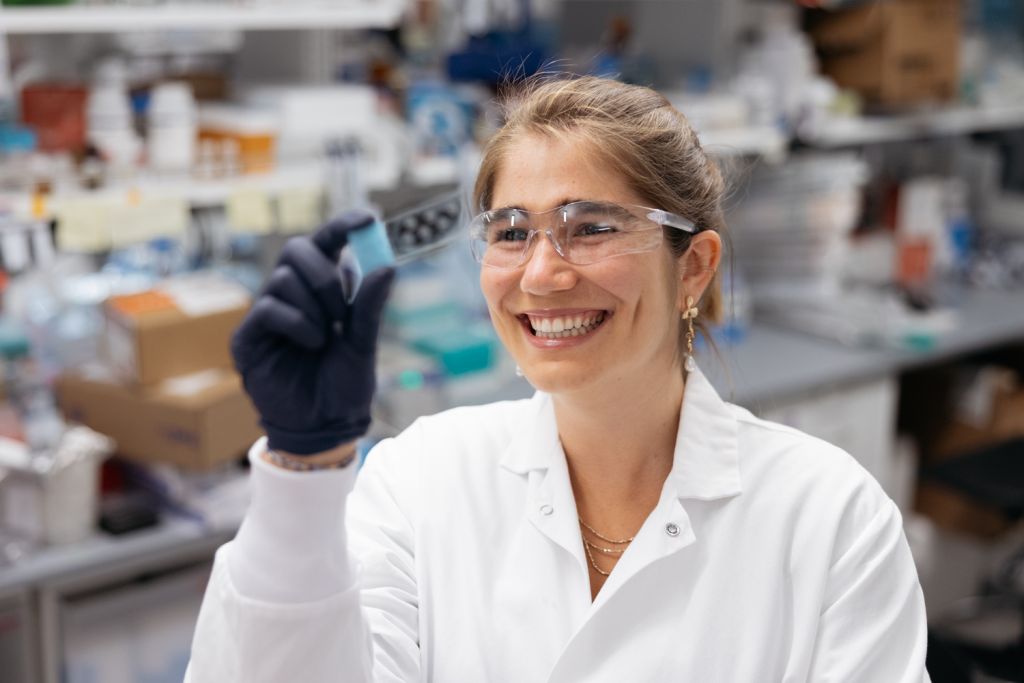
Senior Heloise Hoffmann, a bioengineering major, describes herself as a dreamer who leans into taking risks. “If you have an idea of something that you want to do, what better way to explore it than through research?”
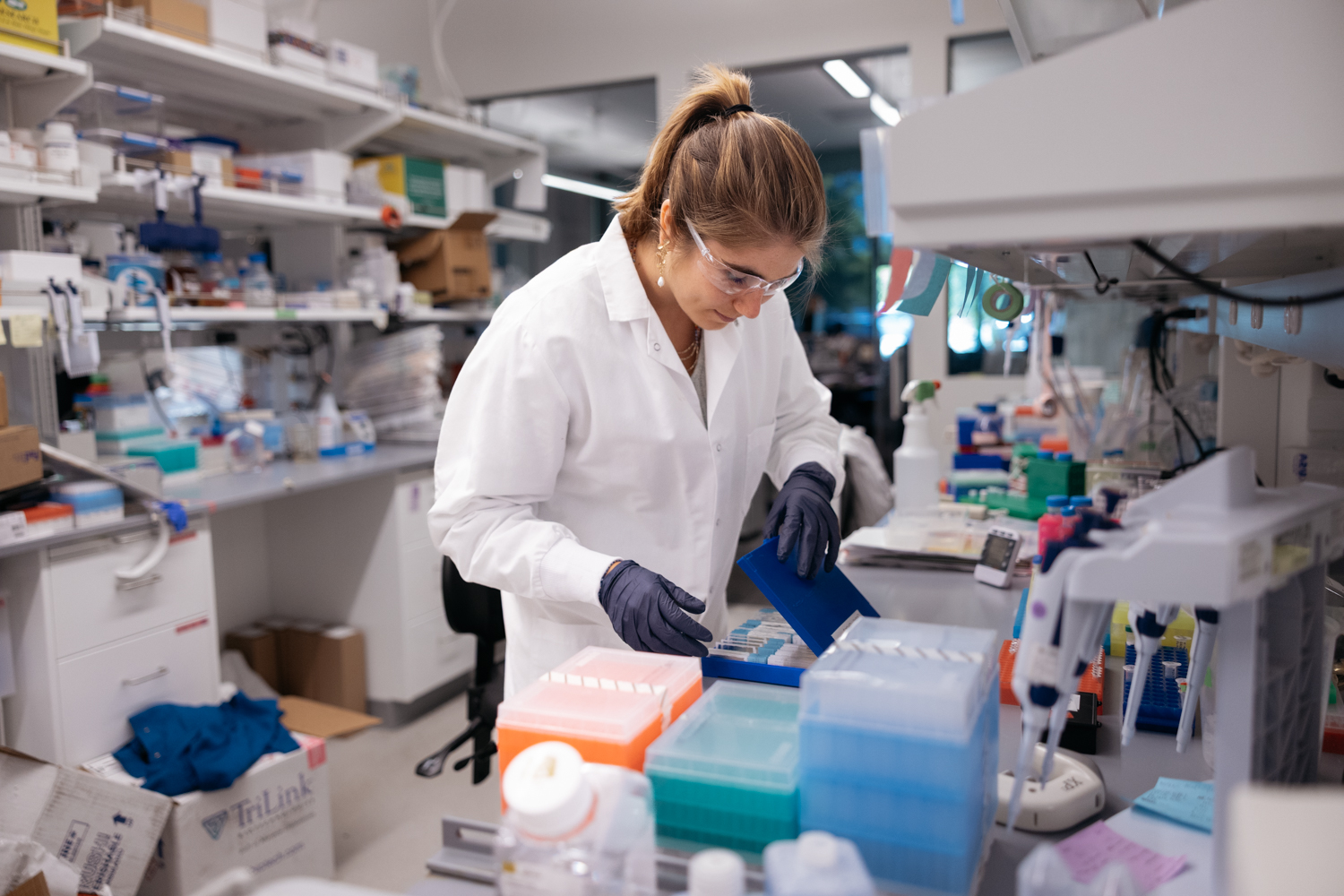
In 2025, Hoffmann and her teammates won the Sarafan ChEM-H Undergraduate Entrepreneurship Program pitch night with their proposal to develop a gene therapy for facioscapulohumeral muscular dystrophy (FSHD), a rare disease that causes progressive muscle degeneration and for which there is no cure. The team received $50,000 to carry out their research using the Nucleus and the Innovative Medicines Accelerator at Sarafan ChEM-H. In addition, Hoffmann received three VPUE research grants, which helped fund the overall project.
For Hoffmann, finding a cure is deeply personal – she was diagnosed with the disease at age 13. Once she arrived at Stanford, she began to get involved in FSHD research. She joined the Blau Lab, which focused on muscle biology, and then iGEM, the largest synthetic biology competition for undergraduates.
The genetic basis of FSHD involves a transcription factor called DUX4, which is normally active during early embryonic development but silenced in healthy adult cells. In individuals with FSHD, this silencing mechanism fails, allowing DUX4 to inappropriately activate a cascade of genes that should remain inactive in adulthood. The team’s proposed solution is to engineer DUX4 to turn its target genes off instead of on.
“This is a completely new approach that no one has tried before,” Hoffmann says. “I am not going to give up until there is a treatment that’s accessible to everyone, and that works for everyone.”
Hoffmann says the most rewarding aspect of her research at Stanford has been the mentorship she has received, especially from her current principal investigator, Stanley Qi, associate professor of bioengineering and expert in genome engineering technologies. “It’s really all about the mentorship and building on the shoulders of giants, which is something that I really appreciate about the academic culture here.”
Strengthening communities
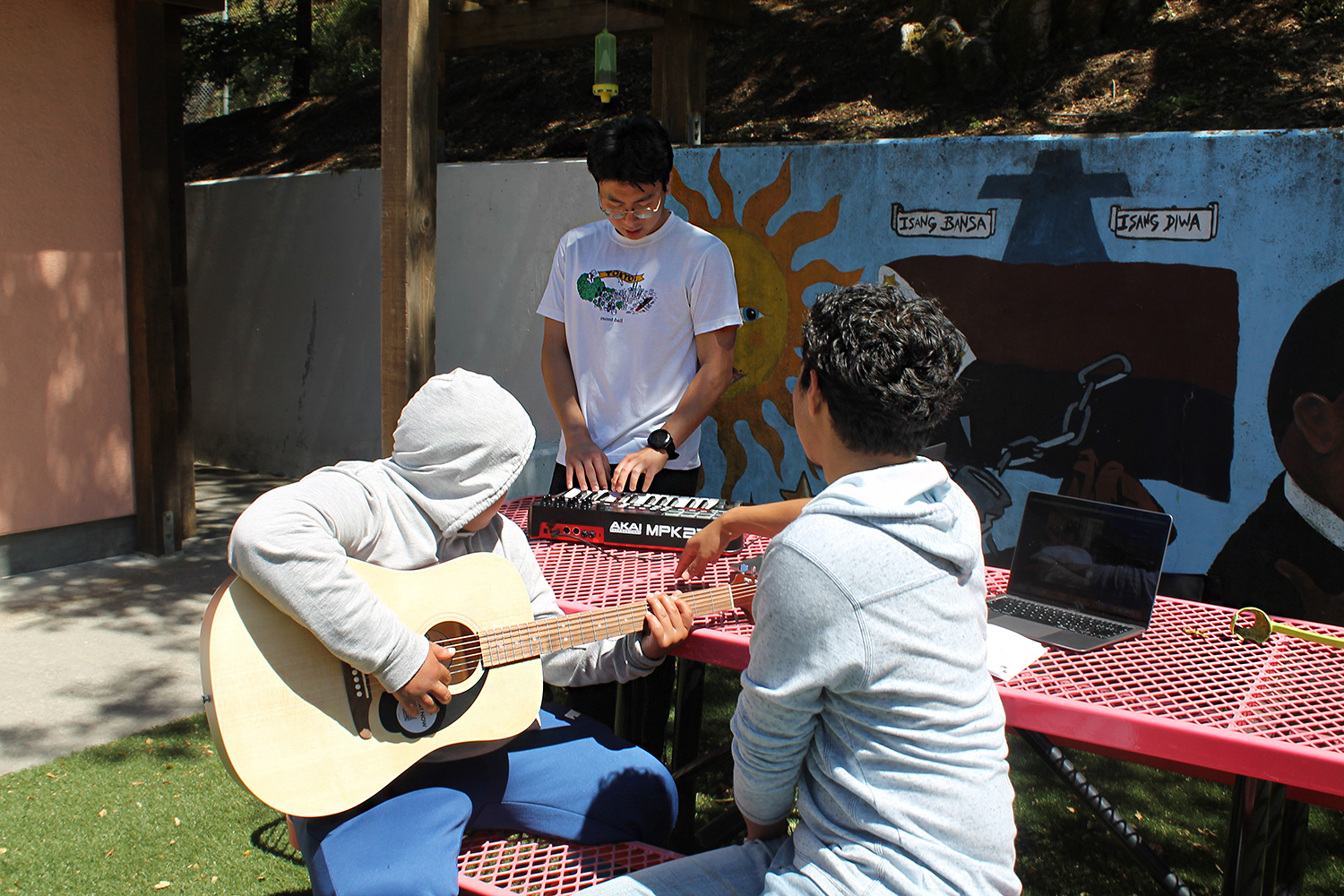
David Sengthay is using research to elevate the work of a community nonprofit in his hometown of Stockton, California. An urban studies major and coterminal student in public policy, he received VPUE’s Major Grant, which provides a 10-week stipend to support full-time, immersive summer projects.
If there’s something you care deeply about and want to elevate through academia, Stanford is the place to do it.David Sengthay, ’26
Sengthay’s honors thesis explores how Southeast Asian Youth Power (SEAYP), a community-based leadership and mentorship initiative, disrupts pathways to criminalization for Cambodian American youth in Stockton. The project is both academically rigorous and personal – as a former participant and alumnus of the program, he has witnessed its evolution and impact firsthand over the past five years.
“Being able to develop youth in a way that cultivates their leadership, their agency, and their voice allows them to imagine themselves at a place like Stanford,” Sengthay says. “It’s really gratifying to see how I was a participant in the test pilot stage of the program and now to see it grow and be able to have research about it in the literature and academia – it’s so fulfilling.”
Drawing on 10 weeks of ethnographic fieldwork and 15 semi-structured interviews with SEAYP participants, facilitators, and educators, he examines how peer mentorship, advocacy, and leadership training shape youth trajectories.
After four years on the Farm, Sengthay has advice for undergraduates who are considering dipping their toes into research.
“I would recommend any undergraduate to consider writing an honors thesis and engaging in fieldwork, especially with support from VPUE’s Major Grant,” he says. “If you’re passionate about your community or there’s something you care deeply about and want to elevate it through academia, Stanford is the place to do it.”
Writer
Diana Aguilera