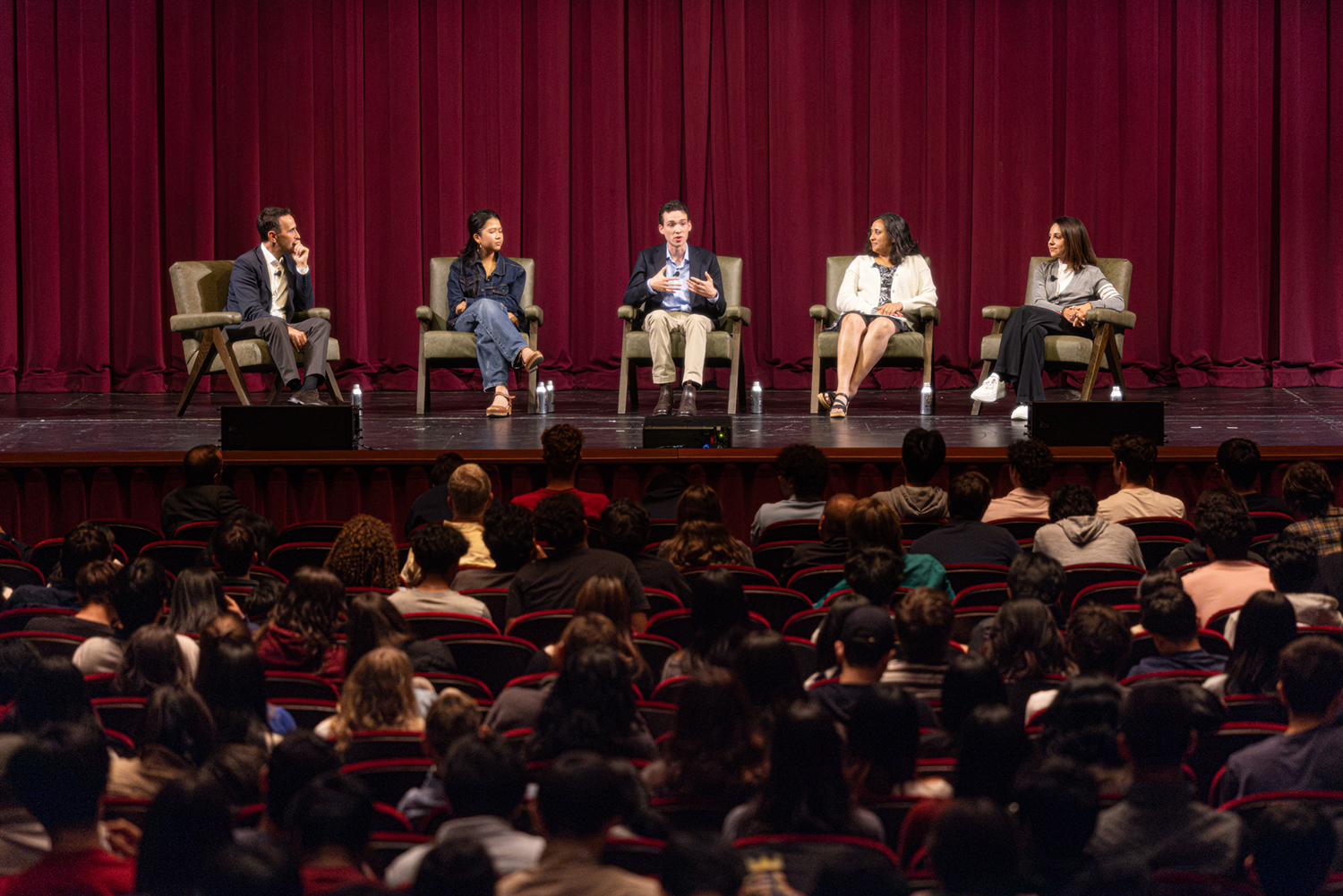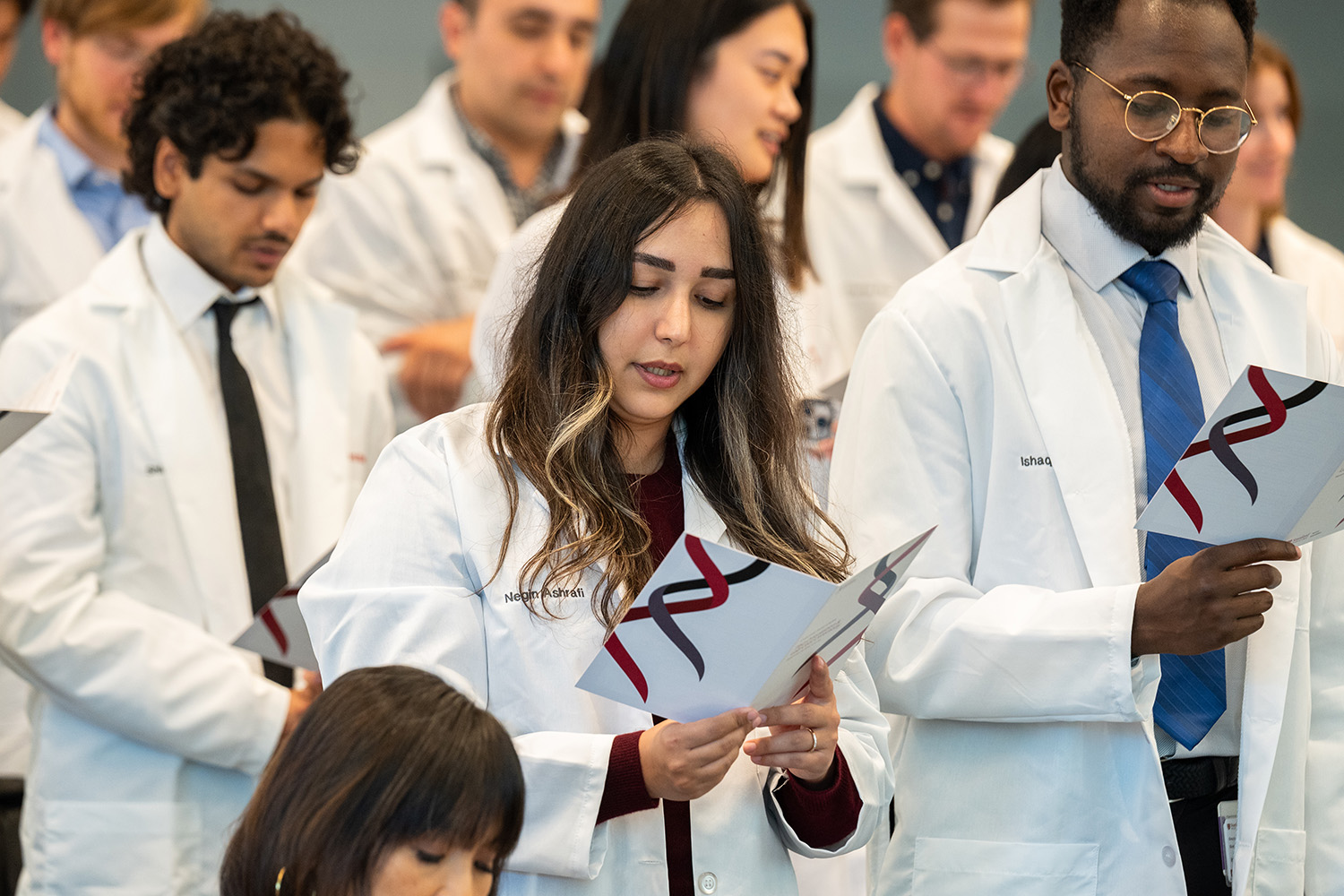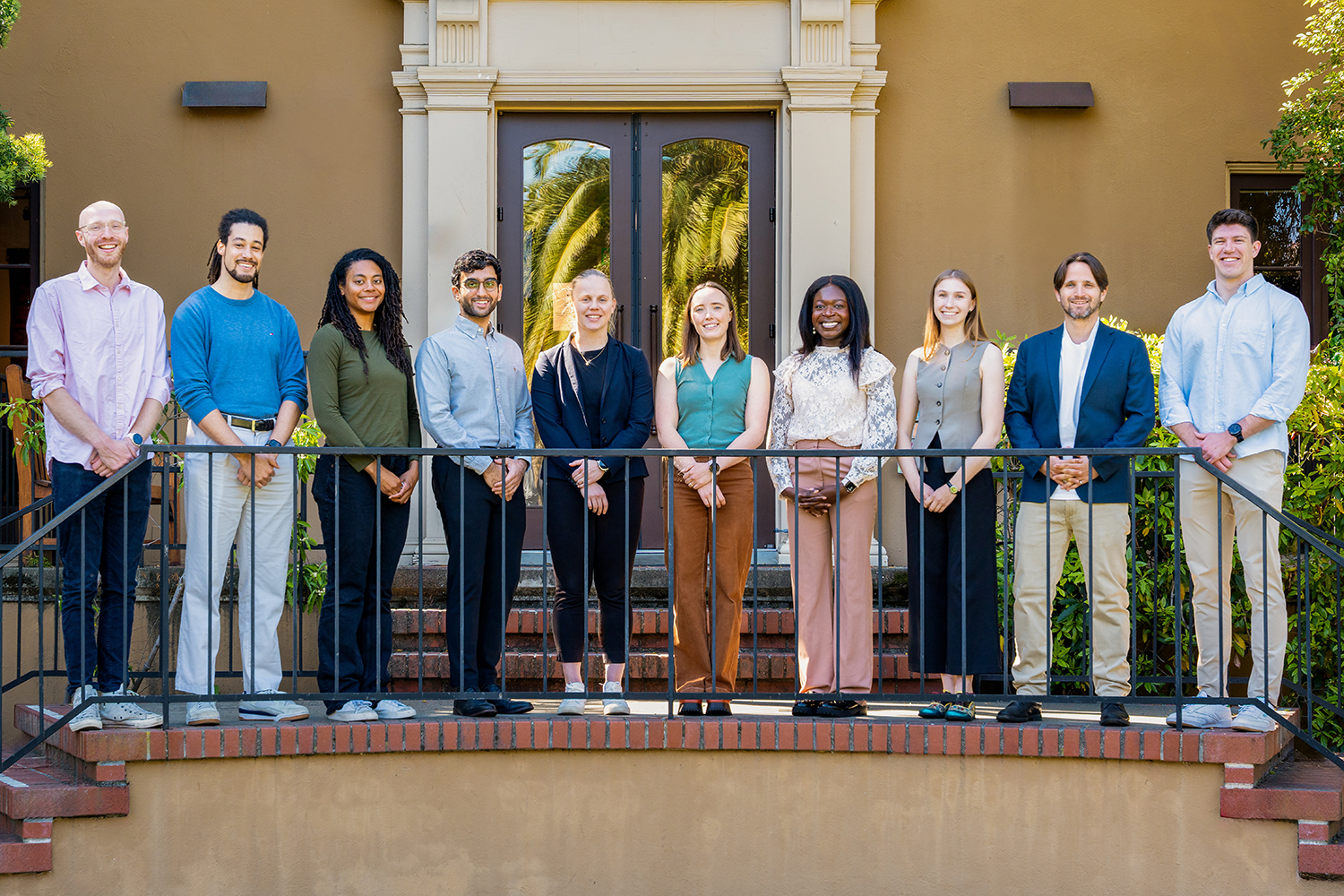
Ten finalists will take the stage this spring to present their research at Stanford’s Three Minute Thesis (3MT) competition. The event, which celebrates graduate scholarship while testing students’ ability to communicate clearly and engagingly about complex research, returns April 16 with President Jonathan Levin as emcee.
Finalists were selected from a university-wide pool based on self-submitted videos. On competition day, the finalists will have 3 minutes to explain their work to a general audience, with no props save for a single static slide.
Register to attend the Three Minute Thesis competition on April 16 from 4 to 6 p.m. in Hauck Auditorium. Doors open at 3:45 and attendees are encouraged to arrive early; the competition begins promptly at 4 p.m.
Stacey Bent, professor of chemical engineering and of energy science and engineering; Lloyd Minor, dean of the School of Medicine and vice president for medical affairs; Condoleezza Rice, the Tad and Dianne Taube Director of the Hoover Institution; Blakey Vermeule, professor of English; and Howard Wolf, president of the Stanford Alumni Association, will serve as judges. Audience members will cast their votes for the People’s Choice Award.
The first-place winner will receive $5,000; second place will receive $3,000; third place will receive $1,000; and People’s Choice will receive $500.
Last year’s winner, Favour Nerrise, will represent Stanford at the online Western regional 3MT competition April 1-3, where she’ll present her research on teaching AI to spot brain disease.
Meet the finalists
Ibukun Ajifolokun
Materials Science and Engineering
No Antigen Left Behind
Anuj Amin
Religious Studies
Divine Prisons and Sacred Bindings: Late Ancient Aramaic Incantation Bowls
Colette Benko
Developmental Biology
Cellfies: Understanding How Cells Communicate with the Immune System
Orisa Coombs
Mechanical Engineering
Money Down the Toilet: Recovering the Value of Urine as Fertilizer
David Dumas
Chemistry
Plastics As They Should Be
Ziv Lautman
Bioengineering
What Your Wearable Knows Before Your Doctor Does
AJ Phillips
Electrical Engineering
Teaching Neural Interfaces to Speak the Brain’s Language
Kate Reinmuth
Economics
The Making of a Promotion Gap: Incentives, Constraints, and Career Choices
Tom Rutter
Economics
Mapping Social Networks at Scale
Cady van Assendelft
Physics
Listening to the universe: searching for dark matter using quantum sensors
Writer
Charity Ferreira