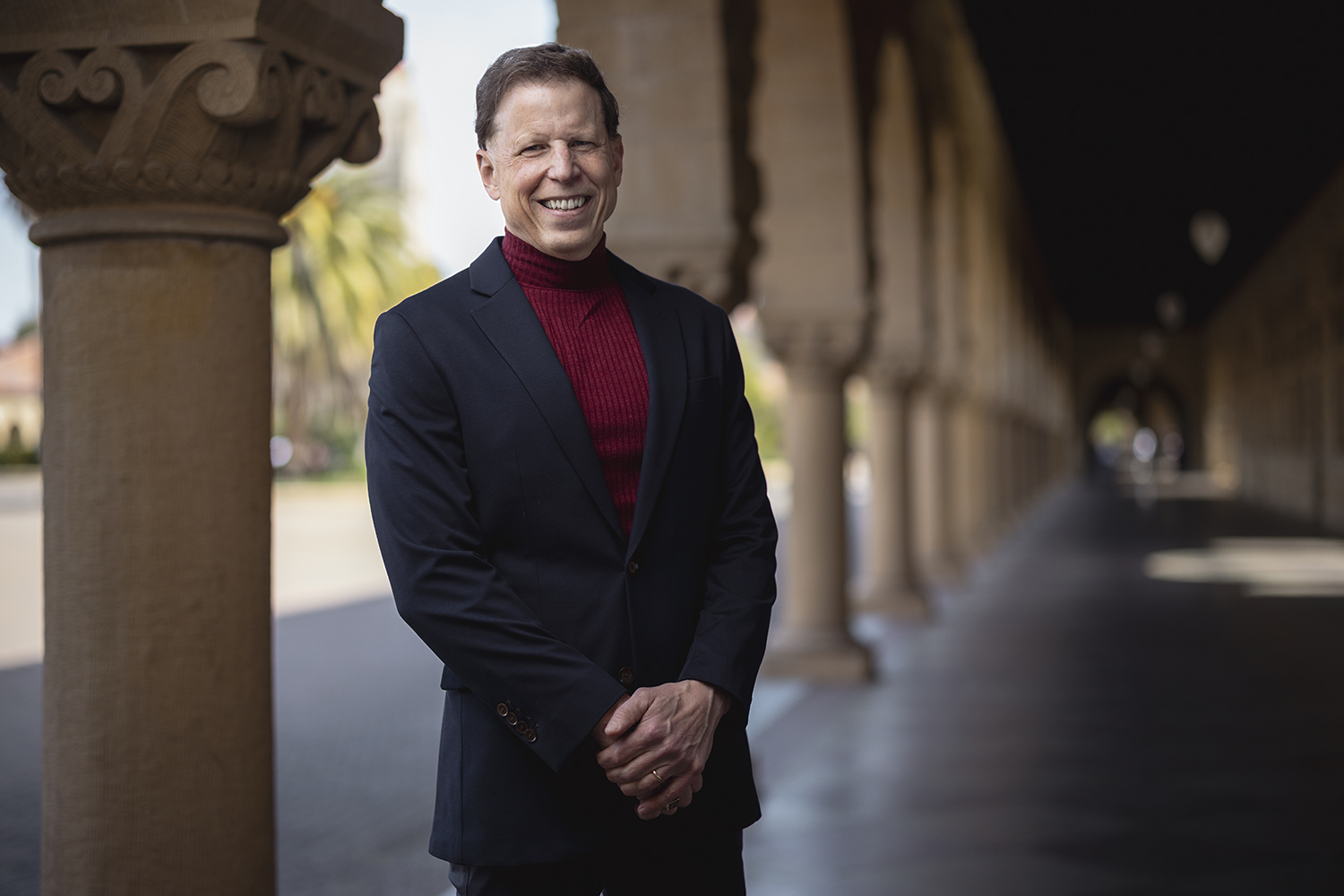
Ken Goodson has dedicated much of his career to teaching and research, guiding and supporting the work and training of many students and postdocs as both a professor and administrator. One year ago, Goodson – an engineer by trade – took the helm of the Office of the Vice Provost for Graduate Education, leading the university’s approach to supporting graduate study and research.
Here, Goodson reflects on his first year as VPGE, the challenges, what’s changing in graduate education, and how students might approach an evolving professional landscape.
You’ve been in this role for nearly a year. How’s it going?
It’s going well. A wonderful part of this year has been getting to know staff from across the whole campus who support our graduate students, as well as the team within VPGE. They are all deeply committed and have been a lifesaver as we’ve addressed challenges. Also, given my background in engineering and science, I’ve made an extra effort to spend time with department chairs and faculty in the humanities and social sciences – from English and history to philosophy, anthropology, and psychology – and learned so much about how they think about graduate scholarship, what they value, and what they want to achieve.
Any new insights or revelations since becoming VPGE?
Common themes emerge among the things that contribute to the scholarly well-being of graduate students. For example, most benefit strongly when there is a sense of community with their peers. For students who don’t necessarily have to be on campus, it can be tough to maintain energy and enthusiasm. Our departments have done a good job of bringing students back on campus post-pandemic and are serving them well.
I’ve also spent time with the Office of Postdoctoral Affairs, including attending their social events for postdocs. That community is incredibly vibrant and, having worked with many postdocs, I know how pivotal they are to the research mission on campus. Many postdocs and graduate students are international, and they bring enormous talent and diversity of thought to Stanford. I’ve grown profoundly appreciative of the work of the Bechtel Center, which supports our international students at all levels.
Any changes that VPGE has had to navigate this past year?
One of the most challenging things we’ve had to do is sunset two fellowship programs, DARE and EDGE, both of which have greatly benefited many students over the years, including several in my own research group. Following the 2023 Supreme Court ruling on admissions, the programs couldn’t function as they’d been imagined.
Ending them was tough, but it created the opportunity to reflect on how we can deploy our resources and expertise to support our current students and their emerging needs. With that in mind, we are developing several new programs that fall into two categories.
The first category of programs, collectively named “Empowering Your Journey,” will focus on supporting graduate students at three important moments in their Stanford journey: 1) Thrive at Stanford supports first-year students through peer mentorship and curriculum; 2) Emerging Scholars Network helps students maintain their academic progress and research momentum after gaining PhD candidacy; and, finally, 3) Dissertation Completion Fellowship supports students as they wrap up their studies and complete their doctorates.
The second category will focus on public service. We are collaborating with the Haas Center for Public Service to develop programs and curriculum that enrich the graduate student experience in this area.
What else is on the horizon for graduate students in the coming year?
We’re organizing the first graduate student appreciation week. It will be a chance to celebrate the contributions of graduate students writ large across campus, and the centerpiece will be the Three Minute Thesis competition. We’re working to connect the competition to the national and regional ones where the Stanford winners can also compete.
It can feel like a challenging time to be a grad student. Issues like funding, immigration, and AI, among others, are creating volatility for universities, the research enterprise, and the job market. What would you say to students who are concerned about the future?
Many issues affecting higher education directly impact graduate students. So, if you’re a grad student and it feels like a tense time – you’re right, it is. There’s a lot of uncertainty. But there’s also a lot happening right now that’s augmenting areas of scholarship and employment opportunities. AI, for instance, has opened vast fields for study, including its interaction with music, social media, business management, law, drug discovery, to name just a few areas.
Opportunities are ramping up dramatically for students to define new fields of research, start companies, or develop expertise that’s attractive in a corporate setting, a nonprofit, or in a national lab. I would argue that the job market could be very strong for students who are willing to think a bit beyond the traditional areas of focus in their disciplines. The opportunity to define new world-class scholarship has never been better.
You’ve been at Stanford for 30 years. What keeps you here, and what do you think makes this place special and worth investing in?
I love working with students who think creatively about their careers and their research. The students who come to Stanford are very talented and committed to their studies and have a thirst for independence and creative thinking. Being able to leverage my learning as a professor to help graduate students navigate this time in their lives is a privilege.
Writer
Alex Kekauoha