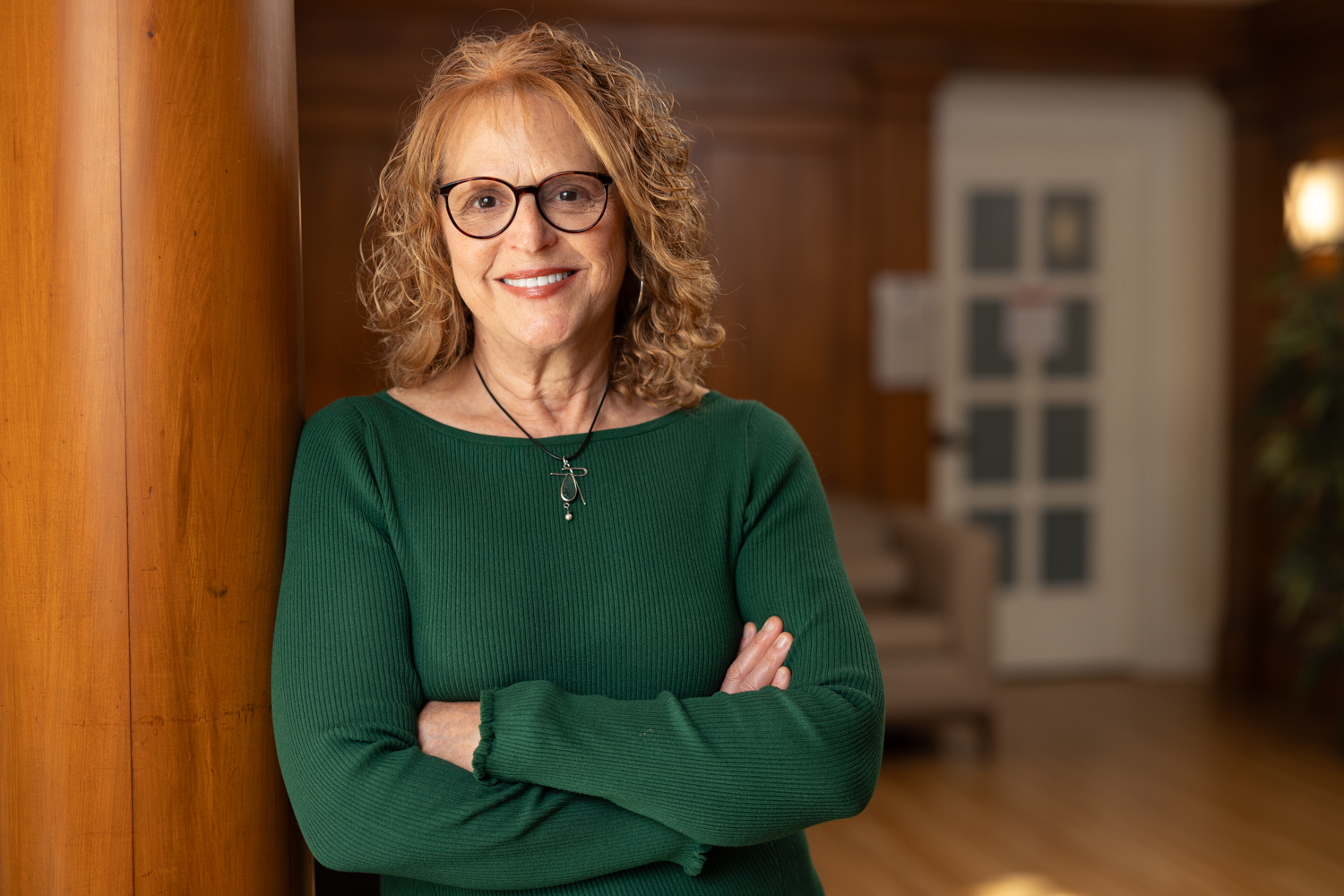
As the university ombuds, Brenda Berlin, JD ’90, serves as a confidential resource to help Stanford community members resolve disputes and address concerns.
Before joining Stanford in 2018, Berlin worked for 30 years as a civil rights attorney and clinical law professor, including for the Civil Rights Division at the Department of Justice, Legal Aid Society of DC, and Duke University School of Law. Berlin graduated from Stanford Law School.
Here, Berlin discusses her work.
What services does your office provide?
The Ombuds Office serves the Stanford community as a resource to aid students, staff, postdocs, and faculty in developing the tools to, in the best case, avoid the emergence or escalation of conflicts or, when conflicts arise, serve as an informal dispute resolution resource. Where possible, I seek to be proactive and preventative, promoting approaches that build the capacity to engage in challenging conversations across differences with curiosity and courage. The office supports the entire Stanford community with the exception of the School of Medicine, which has its own Ombuds Office. The support my office provides is confidential, and it is designed to help individuals and groups navigate conflicts and concerns occurring at Stanford. Services include referrals to other university resources, information about relevant university policies and processes, and coaching to support effective self-navigation of challenging situations. I also work with individuals, workgroups, and teams experiencing communication or trust breakdowns through mediation, group facilitation, confidential surveys and interviews, and workshops focused on trust-building, teamwork, and conflict management skills. In addition, I support the equitable interpretation of university policies, assist visitors in navigating institutional complexity, and provide a confidential feedback channel to leadership on issues affecting the Stanford community.
What kind of issues do you generally address? How do you help people work through those?
The issues raised by visitors are tracked, and aggregate data is published in an annual report that can be found on the Ombuds Office website. Among faculty, staff, and postdoctoral scholars, the most common concerns relate to communication – particularly communication breakdowns – followed by issues involving disrespectful or abrasive conduct, trust, and psychological safety. Students most often seek assistance with academic matters. For undergraduates, this typically includes confidential support related to cases before the Office of Community Standards and grade grievances. Graduate students most frequently raise concerns about academic dismissal or communication challenges with their faculty advisors.
It is never too early – and rarely too late – to connect. Many people I meet with later share that they wish they had reached out sooner.
Services are tailored to visitors’ needs and typically begin with a confidential 45-minute consultation. Support may include coaching individuals on addressing concerns independently, connecting them with appropriate university resources, explaining relevant policies and processes, and, when appropriate, providing follow-up services such as facilitated conversations or informal consultation and coordination with other university offices to help resolve issues.
What does the process to access and use the Ombuds’ services look like?
It’s very simple! I am a one-person office, so individuals just need to call or email me to schedule a 45-minute meeting. There is information on the Ombuds Office website regarding how to get in touch with me or my counterpart at the School of Medicine.
How does confidentiality work in these services?
Confidentiality is fundamental to the work of the Ombuds Office. Information shared with the office is kept strictly confidential, with the sole exception of situations in which disclosure is necessary to prevent imminent harm. In all other circumstances, confidentiality is strictly maintained. To that end, I do not record visitors’ names in my calendar or data system, and services and practices are intentionally designed to protect visitor confidentiality.
How do the services of the Office of the Ombudsperson and the Faculty Staff Help Center complement each other?
The services of our office and the Faculty Staff Help Center are highly complementary. We regularly refer visitors to one another and frequently collaborate to support the needs of the Stanford community. This collaboration includes consultation for individuals, as well as joint work on departmental and workgroup consultations, surveys, and the design and delivery of workshops.
Our offices also bring distinct but complementary perspectives to this work. My professional background is in law, having practiced as an attorney for 30 years, which informs the lens through which I often approach concerns. In contrast, staff at the Faculty Staff Help Center are trained therapists. As a result, while we often assist the same individuals in navigating challenges at the University, we do so with different yet complementary areas of expertise that together provide more comprehensive support.
Is there anything about your office’s work that you wish more people knew about?
First, I want community members to feel comfortable reaching out to the Ombuds Office at any time if they think they might benefit from support. It is never too early – and rarely too late – to connect. Many people I meet with later share that they wish they had reached out sooner, before a concern escalated into a crisis. I know some hesitate out of concern that they are contacting me “too soon,” but from my perspective, my role is to help make your Stanford experience stronger and more sustainable. If you find yourself struggling or would benefit from a confidential conversation with a neutral “thought partner” as you explore options, reaching out early can be a constructive and empowering step.
Second, an increasing focus of my work is prevention. I am particularly interested in how we, as a community, can build greater confidence and capacity to engage in challenging conversations across differences with curiosity and courage. To support this goal, I am developing additional trainings and workshops, and I welcome consultations with offices and leaders across the university to explore how this work can support individuals, teams, and workgroups at Stanford.
Writer
Chelcey Adami