Stanford frosh Zidaan Kapoor was a toddler when he was diagnosed with life-threatening anaphylactic allergies to eggs, nuts, and seafood. A reaction to these foods could cause his lips to tingle, his skin to swell, and his airways to close.
“If I don’t inject the EpiPen soon enough, my organs will begin to shut down, and that could be deadly,” he said.
When considering colleges, Kapoor thought hard about how schools would accommodate his allergies. “Stanford was a big draw for me,” he said. “Having a nutritionist and the entire Residential and Dining Enterprises (R&DE) community there to help was a really big plus.”
Stanford Dining goes to great lengths to accommodate students’ nutritional needs. It’s now offering an allergen-free dining room at Branner Hall that serves safe and delicious food for everyone.
“Our goal in this residential dining program is to have a safe and secure environment for all students to eat, particularly those with complex food allergies,” said Eric Montell, assistant vice provost of Stanford Dining, Hospitality, and Auxiliaries within R&DE.
Food allergies on the rise
According to the organization FARE (Food Allergy Research & Education), 33 million Americans have food allergies, including one in 10 adults. Food allergies among children rose 50% between 1997 and 2011, and again by 50% between 2007 and 2021. Montell said the trend is reflected at Stanford, where more students are reporting complex food allergies, particularly to peanuts, tree nuts, wheat, gluten, milk, and shellfish.
Stanford Dining has long taken steps to accommodate students’ food allergies. The Fresh Plate program, for example, allows students to request that their meal be prepared separately from potential allergens, and daily menus and labels identify ingredients. Ricker and Stern dining halls offer nut-sensitive food options, and all Stanford Dining staff receive comprehensive training on cross-contact prevention.

Having a community of people around you who understand what’s going on creates a safer environment for anyone with a food allergy.Zidaan Kapoor
Fall quarter, R&DE took a bold step when it opened Stanford’s first dining hall that’s free of the nine most common allergens: milk, eggs, peanuts, tree nuts, soy, wheat, fish, shellfish, and sesame.
“Supporting student well-being is central to R&DE’s mission and it guides every aspect of our dining operations,” said Dr. Shirley Everett, senior associate vice provost of R&DE and senior advisor to the provost. “Our new allergen-friendly dining program at Branner reflects this commitment by creating a safe, inclusive, and welcoming environment for students with complex dietary needs. We are advancing best practices for students to have access to meals that are free of the nine most common food allergies.”
Creamy Cajun chicken, mushroom etouffee
Branner’s updated dining hall looks and operates like all others on campus; it has food stations for everything from salads to burgers to daily specials. Jay-Ar Pugao, a performance chef with Stanford Dining, created Branner’s modified menu, which is free of the most common food allergens.
“We’re mirroring the cuisines offered at other dining halls, but removing or substituting ingredients,” Pugao said. For instance, Branner’s hamburger buns don’t contain wheat or milk, the pizza crust has no dairy, the pesto has no nuts, and the cheese is coconut-based.
“I also make sure all of my cooks are trained with spices and other ingredients, so they know how to achieve a certain flavor profile for allergen-free food,” Pugao said.
Stanford Dining recently served creamy Cajun chicken across all dining halls. But at Branner, “We substituted the cream with coconut yogurt and oat milk to give it the creaminess,” Pugao said. “And for our mushroom etouffee, instead of flour and butter to make the roux, we use non-allergen vegan butter with garbanzo flour.”
Kristin Gravani, a performance and food allergy dietitian in Stanford Dining, works closely with Pugao and other R&DE staff to address students’ complex medical nutrition needs, not just allergies. For example, students with irritable bowel syndrome may have a complicated diet and worry about cross-contamination. Or a student with celiac disease may worry about accidentally consuming gluten.
“Those may be things students think about at other dining halls, but at Branner, there's less thought or mental energy that goes into eating because we’re already addressing those concerns before they sit down to eat,” said Gravani.
The individualized meal planning they offer also provides peace-of-mind. “For students to have someone who says, ‘Hey, let’s sit down, work together, and individualize your dining experience,’ lets them know their food needs are taken care of throughout the day,” Gravani said.
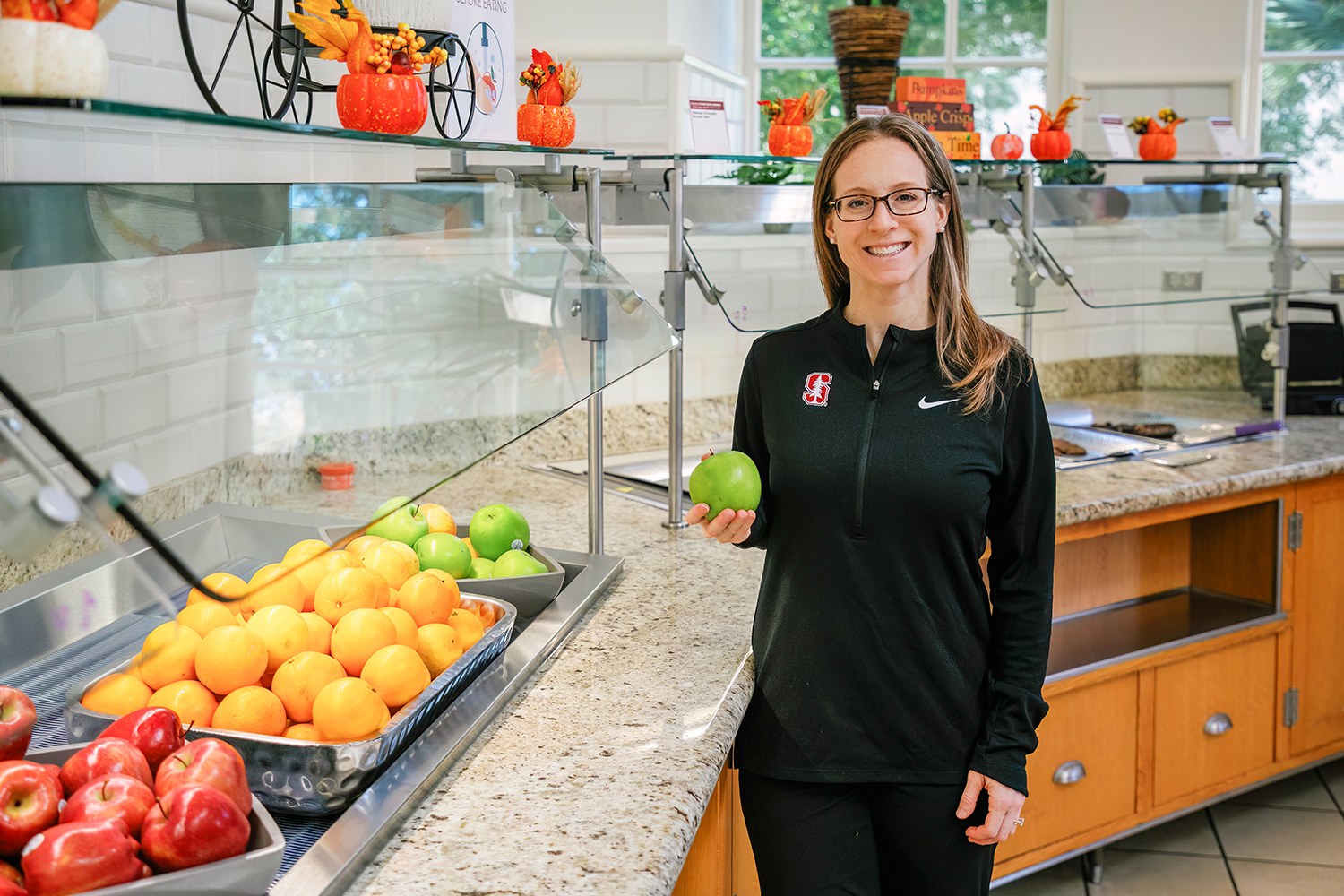
While Branner Hall is free of the top nine allergens, Stanford Dining does its best to accommodate students who have more uncommon ones, such as red apples.
Raising awareness
Kapoor has long been an advocate for people with food allergies and has even delivered a TED talk on the subject. He said that in addition to the physical reaction, food allergies can cause immense anxiety.
“That children and young adults go through this can be a very difficult experience mentally. That's been the most difficult part for me,” said Kapoor, adding that managing food allergies can be particularly challenging for students as they acclimate to a new environment.
“I really think that food allergies need to be talked about more on college campuses because starting a new life at college is daunting in itself. But having a community of people around you who understand what’s going on creates a safer environment for anyone with a food allergy,” he said.
Writer
Alex Kekauoha