In brief
- Stanford's First-Year PhD Community Program fosters connections among incoming students at the Doerr School of Sustainability through social events.
- The program encourages interdisciplinary collaboration, enabling students to explore diverse research perspectives and build supportive relationships.
- The initiative enhances community engagement, helping PhD students combat isolation and gain broader perspectives on sustainability challenges.
Leaving the East Coast to begin her doctoral studies in the Emmett Interdisciplinary Program in Environment and Resources at the Stanford Doerr School of Sustainability was the biggest move Julia Sharapi had ever made.
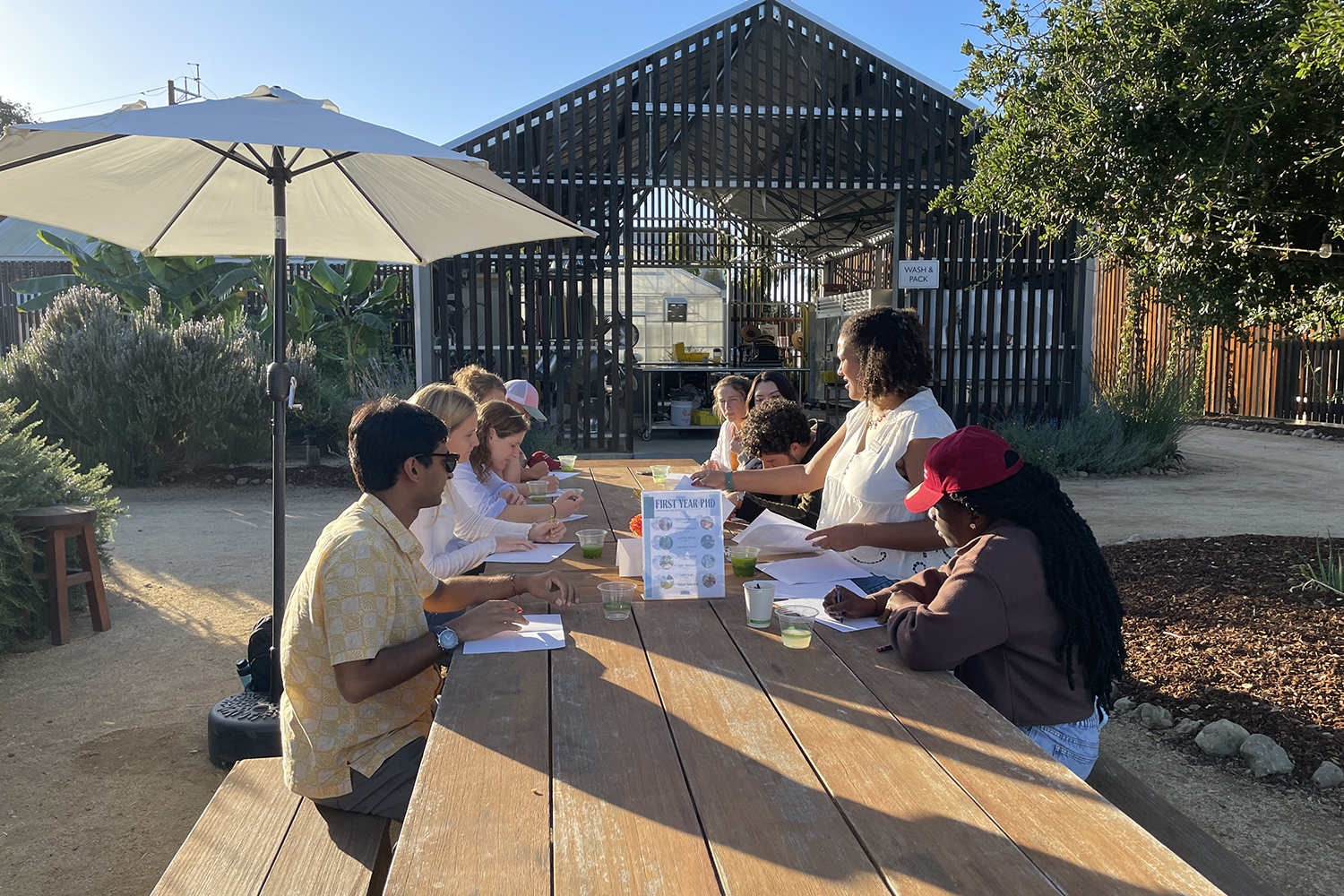
It was important to Sharapi to form a community in her new California home, so she attended a welcome dinner in the fall for new PhD students at the O’Donohue Family Stanford Educational Farm. The event was the first of many gatherings organized through the school’s First-Year PhD Community Program that Sharapi would attend as she settled in at Stanford.
“It’s really nerve-wracking to move somewhere new, to not know anyone, but something nice about this programming is that it’s both structured and unstructured,” said Sharapi, who studies how to make ecosystems and communities more resilient to the impact of saltwater intrusion and sea level rise. “You really just have to show up, and making connections is easy. They’ve fostered this lovely, welcoming atmosphere, so everyone feels very comfortable.”
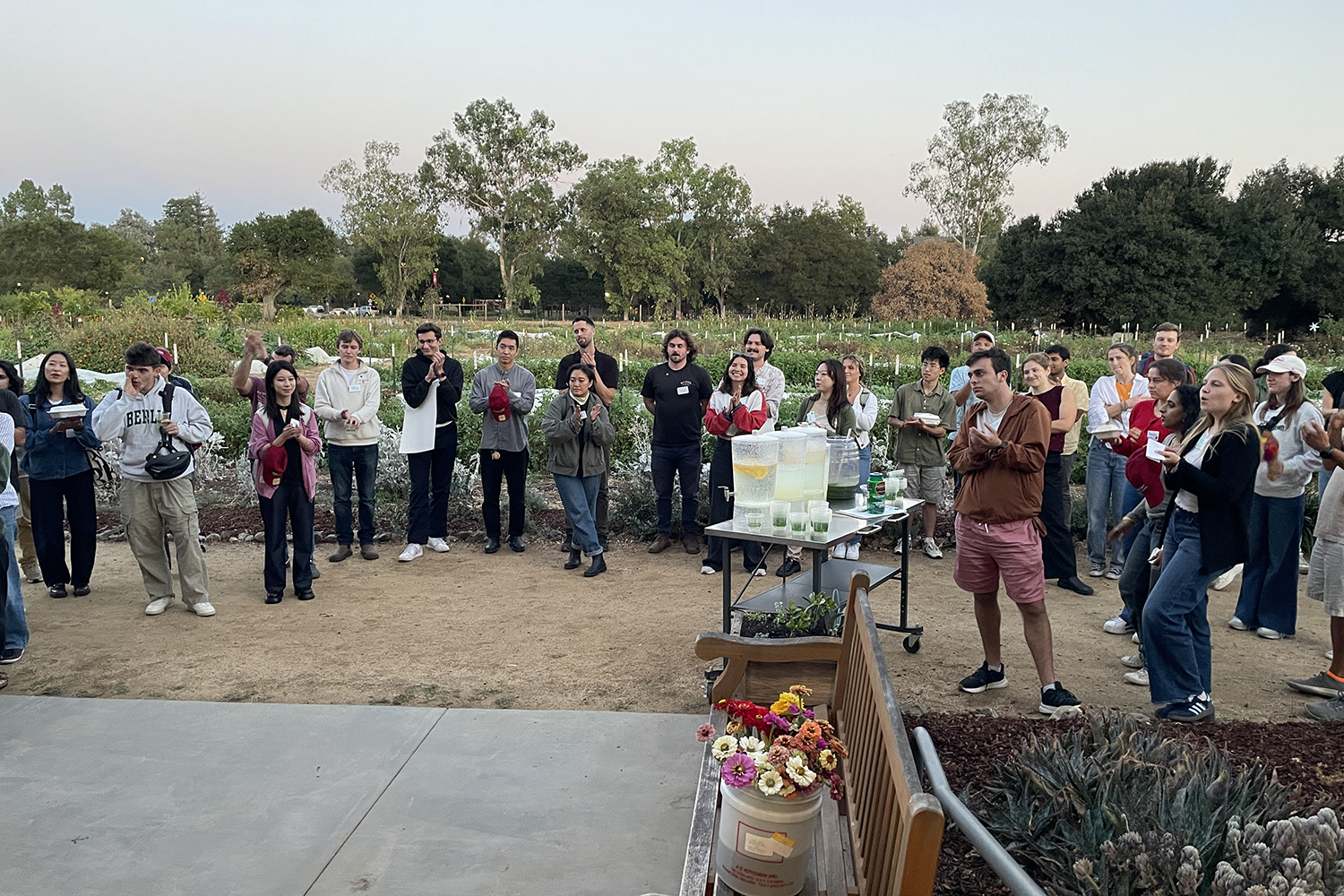
Incoming PhD students meet at the First-Year PhD Community Program welcome at the O’Donohue Family Stanford Educational Farm in October 2025. | Jenny Saltzman
One of the first friends Sharapi made at the dinner was Emma Kerr, a PhD student in energy science and engineering. Kerr’s research into developing electrocatalysts to produce hydrogen for clean fuel draws on multiple disciplines, so she was excited to talk with people from a variety of backgrounds and expertise.
“We’re not entirely sure how some of these interactions will result in productive relationships, but that’s a really exciting part of it,” Kerr said. “The program has been helpful for meeting people and learning more about all the research that’s going on and potential collaborations, but also making friends and having a really strong, warm environment.”
A few months after they met, Sharapi and Kerr, along with another upper-level PhD student, decided to create a graduate networking group called the Sustainability Professionals and Researchers’ Network (SPARK) to help Doerr School of Sustainability students and alumni find unique synergies among multidisciplinary researchers that can lead to academic and professional collaborations.
Sharapi and Kerr’s experience and creation of SPARK embody the goals of the First-Year PhD Community Program.
Scott Fendorf, senior associate dean of research, said one of the key features of the school is integration across departments and fields. By connecting with fellow researchers across a cohort, PhD students gain a broader perspective on sustainability challenges.
“Making sure that we’re thinking across these different domains is important, and this is a way to help foster the ability to see what other people are doing and have it change your view on how you’re going to do things,” Fendorf said.
Purposeful planning to build community
The community program for new PhD students started with a small pilot in spring 2023 and was fully introduced in the 2023-24 academic year.
In 2024-25, the program brought together 73 new PhD students out of a total of 95, representing all seven of the school’s departments, at 12 events throughout the year. Second-year PhD students were invited to attend as mentors and to build connections across cohorts. In a year-end survey, all students who participated reported feeling welcome at the events.
This program will make your PhD more than you could’ve imagined because of the enrichment you get from getting to know the broader cohort and being part of the full school community.Scott FendorfSenior Associate Dean of Research
Patricia Germanow, a program manager at the Doerr School of Sustainability, said finding community is important for people pursuing a PhD, which can be isolating, especially for students living in California or the United States for the first time.
“I think the core of the program is the ability to connect with other PhDs across disciplines, but within the umbrella of the school,” Germanow said. “It’s unique in that you’ll be focusing on a very specific research topic, but we create a social environment that allows you to connect to a community of broader intellect and potential.”
Program staff plan events to appeal to a range of students’ personalities and interests. In 2024-25, students hiked at Stanford’s Jasper Ridge Biological Preserve, shared a holiday meal, met with faculty members over lunch, made art, and more.
Clare Maloney-McCrystle, who led programming when she worked at Stanford from 2022 to 2025, said the team purposefully chose different settings for events and activities, from the O’Donohue Farm and other parts of campus where some students conduct research to sites across the Bay Area.
“The fact that we have every department represented at nearly every event is a great crystallization of what we want: You’re going to show up, maybe with a friend, but you’ll be sitting next to someone from another department or another part of the world who’s focused on researching something totally different than you,” Maloney-McCrystle said. “That image of a shared meal or a shared hike, where you’re next to someone who, without this program, you would probably not ever have a conversation with, is exactly why we’re doing it.”
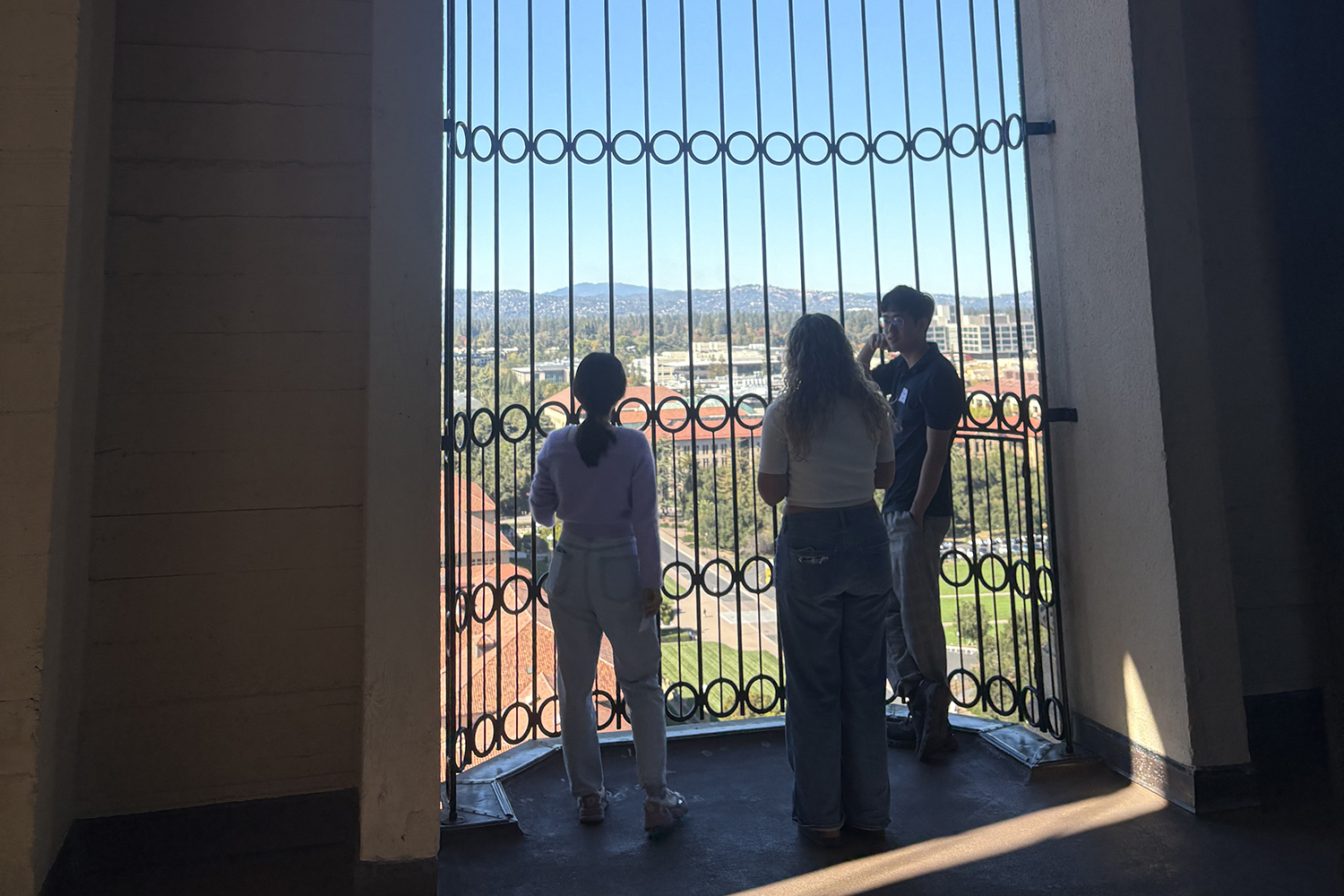
First-Year PhD Community Program students explore campus and get to know each other with a visit to the top of Hoover Tower in October. | Patty Germanow
Long-term research connections
The First-Year PhD Community Program not only benefits current students but also aims to enrich the broader world of sustainability research.
Meeting sustainability challenges requires thinking across domains, Fendorf said: Scientific disciplines “aren’t separated from how we as humans interact with the Earth and how natural processes interact with us.”
“A lot of times the areas where we lack the most knowledge are between the classic areas of study,” he said. “Those zones of interdisciplinarity are often where the biggest questions reside.”
Students who participate in the First-Year PhD Community Program may discover years down the road that someone they met at a dinner or hike can become a colleague or collaborator, Fendorf said.
In the meantime, the program helps students think creatively about their work and shows them that faculty, staff, and fellow students care about their sense of belonging in the school and within the larger ecosystem of sustainability.
“This program will make your PhD more than you could’ve imagined because of the enrichment you get from getting to know the broader cohort and being part of the full SDSS community,” Fendorf said.
For more information
This story was originally published by Stanford Doerr School of Sustainability.
Writer
Tara Roberts