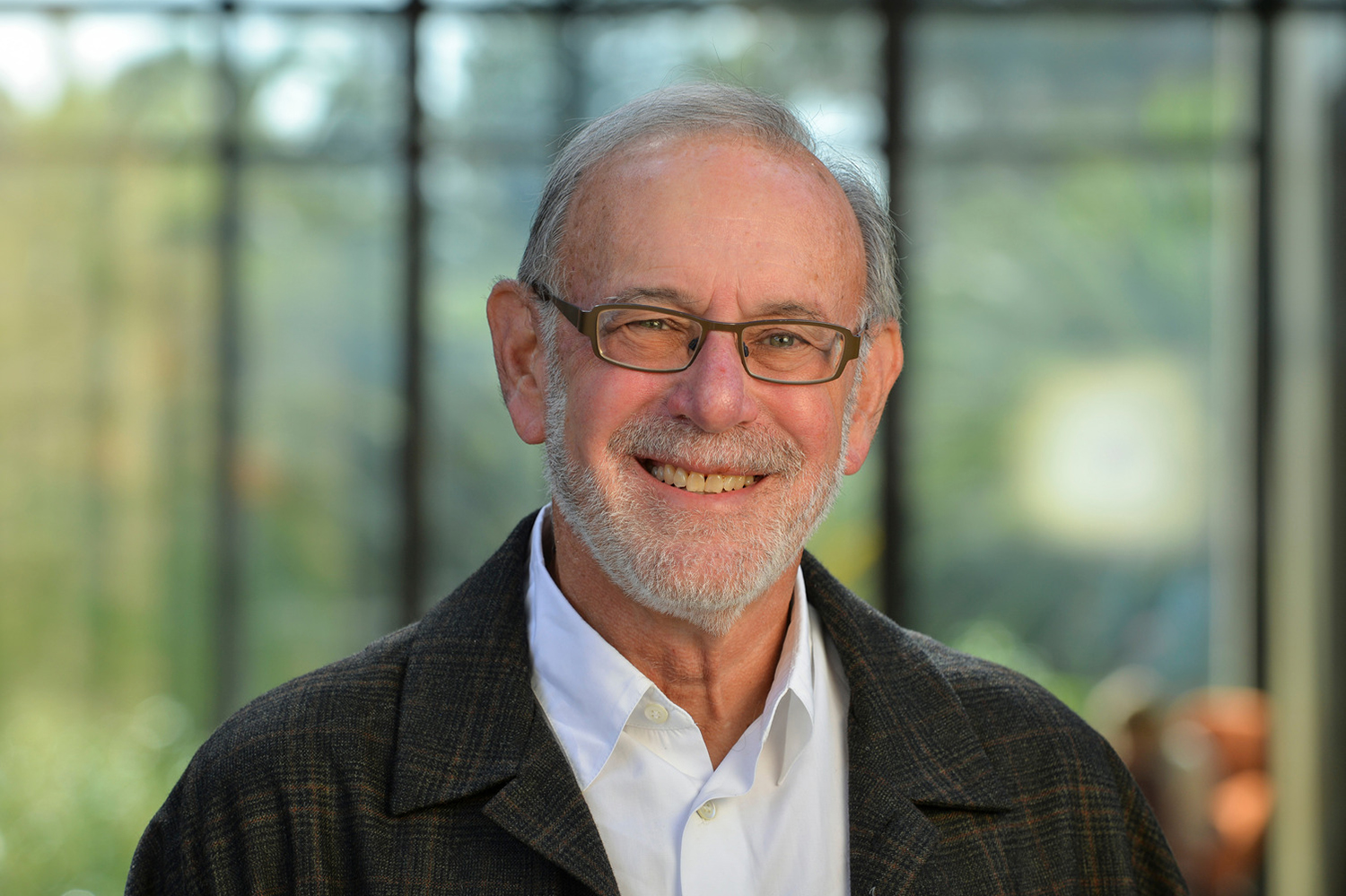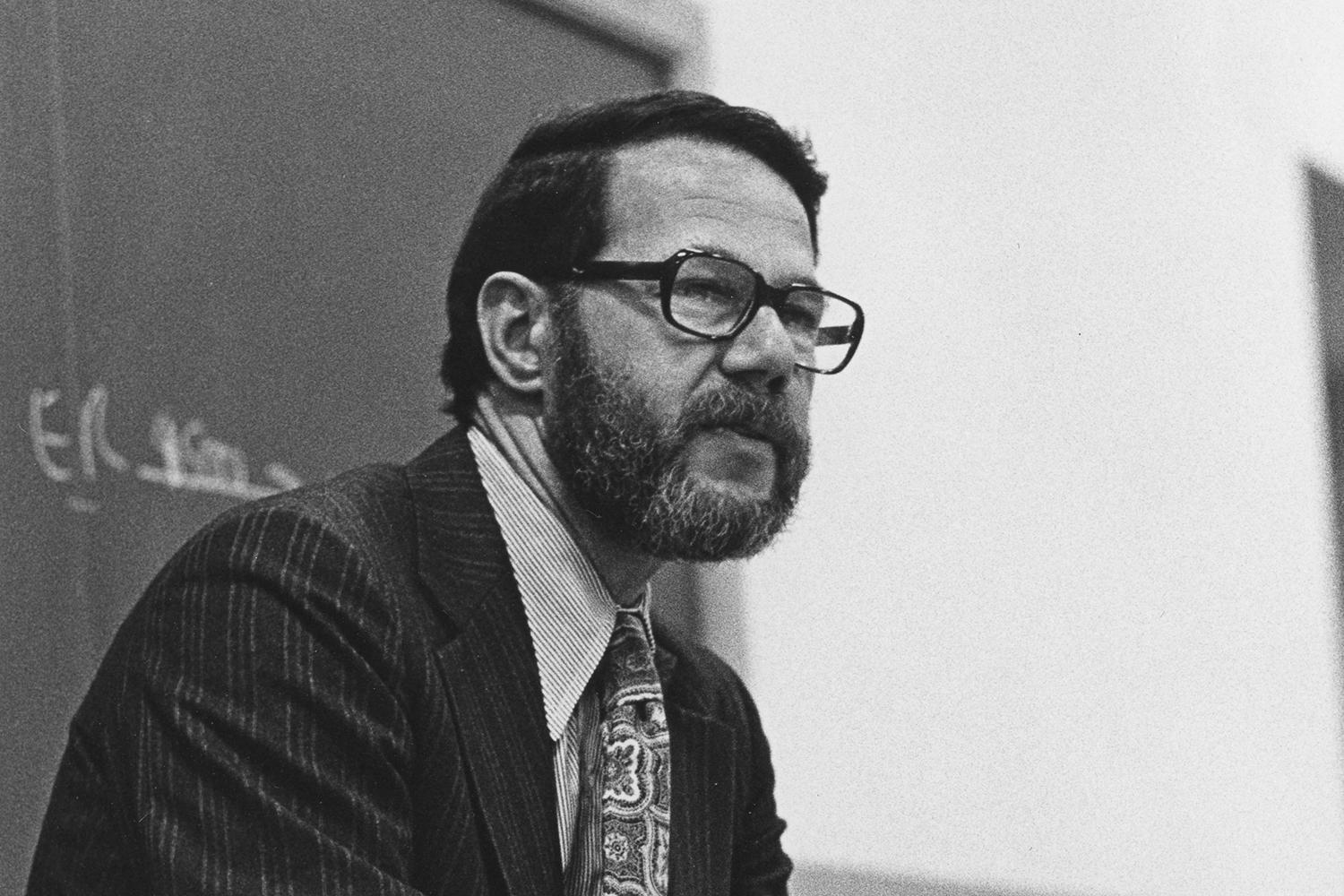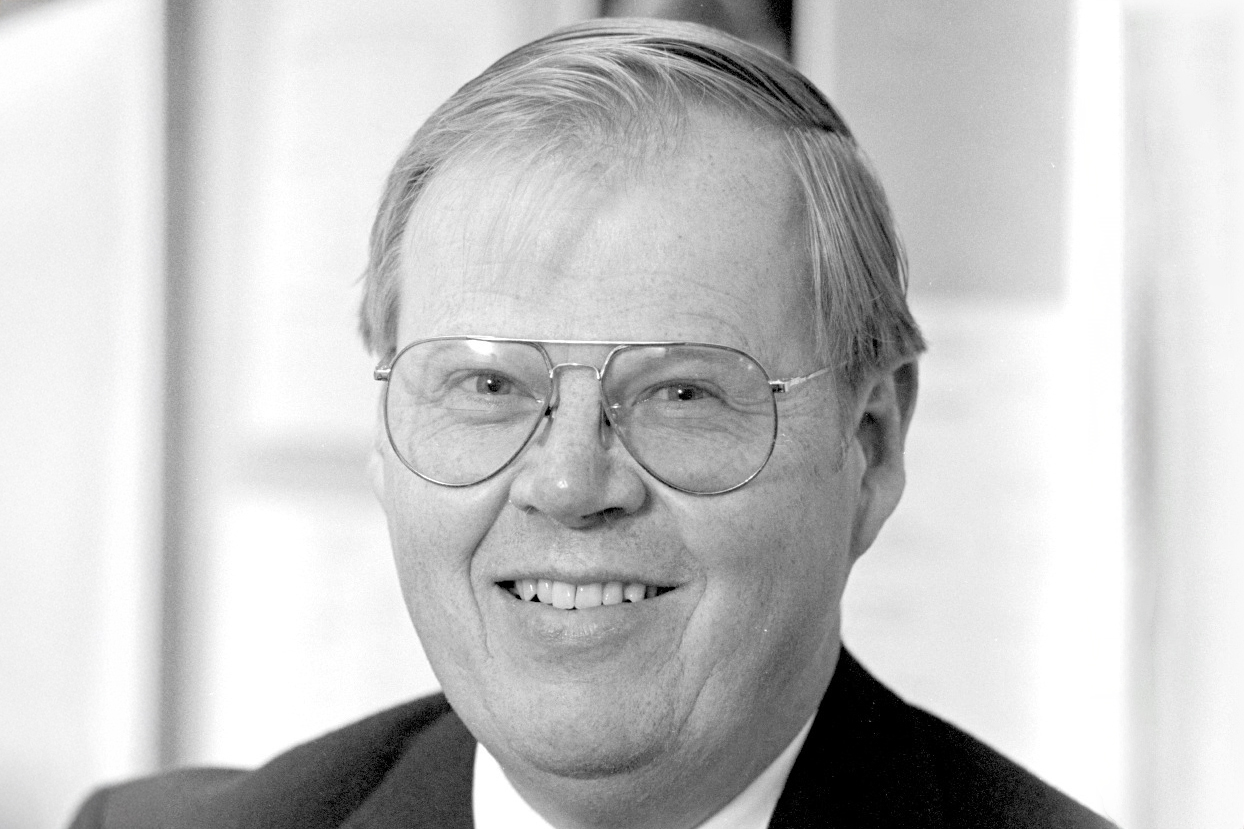
Hans Andersen, the David Mulvane Ehrsam and Edward Curtis Franklin Professor in Chemistry, Emeritus, in the Stanford School of Humanities and Sciences (H&S) and a pioneer in the use of statistical mechanics and molecular simulation techniques in chemistry, died July 4, 2026. He was 84.
A trailblazing theoretical chemist, Andersen helped usher in an era of change for his field by introducing computer-based methods for simulating chemical systems. During his nearly six decades at Stanford, he expanded understanding of complex chemical systems through analytical theories and contributed research techniques to the field of materials science. For example, he co-developed what’s now known as the Weeks-Chandler-Andersen (WCA) theory of liquids, today considered foundational to the study of simple liquids.
Andersen also held several leadership positions at Stanford and served on many university and department committees. In addition, he received a wide array of accolades, including awards for teaching from Stanford, membership in the National Academy of Sciences, and fellowships in the American Academy of Arts and Sciences and the American Association for the Advancement of Science.
“Hans built the kind of science that undergirds and ultimately disappears into everyone else's,” said Todd Martínez, the David Mulvane Ehrsam and Edward Curtis Franklin Professor in Chemistry in H&S (the endowed title previously held by Andersen) and professor of photon science at SLAC National Accelerator Laboratory. “His thermostat and barostat are now so ubiquitous that they often go uncredited, and the ideas behind his barostat continue to surface in other contexts such as ab initio molecular dynamics (AIMD). Hans was a delightful colleague who loved to learn and to share what he knew. I recall our periodic lunch discussions about scientific ideas very fondly.”
A generous and treasured colleague
Andersen joined Stanford as an assistant professor of chemistry in 1968. Throughout his time at the university, his work occupied a place at the leading edge of his field. His early work on the WCA theory laid the groundwork for tools used in developing medicines, modeling battery electrolytes, and more. Later, he revolutionized the ability of chemists to perform molecular dynamics simulations under different conditions by showing how those simulations can be generalized to different ensembles, such as systems under constant pressure and temperature.
In 1984, Andersen invented kinetically constrained models (KCMs), which showed how materials behave at extremely cold temperatures. In the 1990s, he and Walter Kob (of France’s University of Montpellier) invented the Kob-Andersen potential, which provided a microscopic model for a simple but stable in silico glass-forming system. This work, as with his earlier achievements, helped shape the research of countless chemists in his wake. For these efforts, he was elected to the National Academy of Sciences in 1992.
Andersen also shaped many lives as an educator and leader. Students and colleagues alike praised his teaching, and he was recognized with the Walter J. Gores Award for Excellence in Teaching at Stanford for 1972-73 and the H&S Dean's Award for Distinguished Teaching for 2018-19. His service to the university included three years as the associate dean for the natural sciences in H&S and three years as chair of the Department of Chemistry.
“Hans was an inspirational adviser to his graduate students and postdocs,” said Sharon Hammes-Schiffer, his former doctoral student who is now the A. Barton Hepburn Professor of Chemistry at Princeton University. “He would spend hours with each of us, discussing concepts and deriving equations on the board. He showed us by example how to think clearly and analytically. I still remember the most important advice he gave me: Physical insight is very useful, but you always need to back it up with the math. I have tried to follow this advice throughout my career and have passed it along to my own students and postdocs over the years. Equally important, Hans led by example in terms of balancing family and work and maintaining a high level of integrity and human kindness.”
Even into retirement, Andersen continued to have an impact.
“I treasured the time I had with Hans here,” said Thomas E. Markland, professor of chemistry in H&S. “Although Hans went emeritus just before I started at Stanford, throughout my tenure track and right up to the pandemic, he would often attend my group meetings on topics of interest to him, and we would frequently have lunch. His support and advice were extremely important to me in helping me to navigate research, Stanford, and being a professor. His research fundamentally changed the fields of liquid-state theory, laid the basis for modern molecular dynamics simulation algorithms, and developed models that greatly enhanced understanding of how glasses form and behave. He was a generous and kind person, and I will miss him greatly."
Humble origins and a long-distance courtship
He was born Hans Christian Andersen, like the Danish writer of fables, in Brooklyn to Norwegian parents who had emigrated during the Great Depression. His parents impressed upon him the importance of an education. Years later, his father would carry around reprints of Andersen’s articles to impress friends, according to an autobiographical essay Andersen wrote in 2004 for the American Chemical Society.
Andersen earned both his bachelor’s degree (in chemistry) and doctoral degree (in physical chemistry) from the Massachusetts Institute of Technology. He was a junior fellow of the Harvard Society of Fellows from 1965 to 1968, during which time he met his future wife, June Jenny Andersen. They began a six-month courtship despite Hans being in Cambridge and June pursuing a doctoral degree in biophysics in Colorado. (She later received a doctorate in genetics from Stanford, before becoming one of the first biologists to work for IBM.)
A polymath, Andersen pursued many interests over the years, including biblical history, opera, and jazz and classical piano – during a self-described midlife crisis, he purchased a grand piano.
Andersen is survived by his wife, June, and two sons, Hans Christian and Albert William, both of whom graduated from Stanford. A memorial service will be held at 3 p.m. Saturday, Aug. 29, 2026, at the Emerald Heights Retirement Community in Redmond, Washington. The service will be livestreamed on Zoom. In lieu of flowers, the Andersen family requests donations to the Stanford Graduate Student Fellowship Fund in the Department of Chemistry. Contributions may be made online.
For more information
This story was originally published by Stanford School of Humanities and Sciences.
Writer
Paul L. Underwood