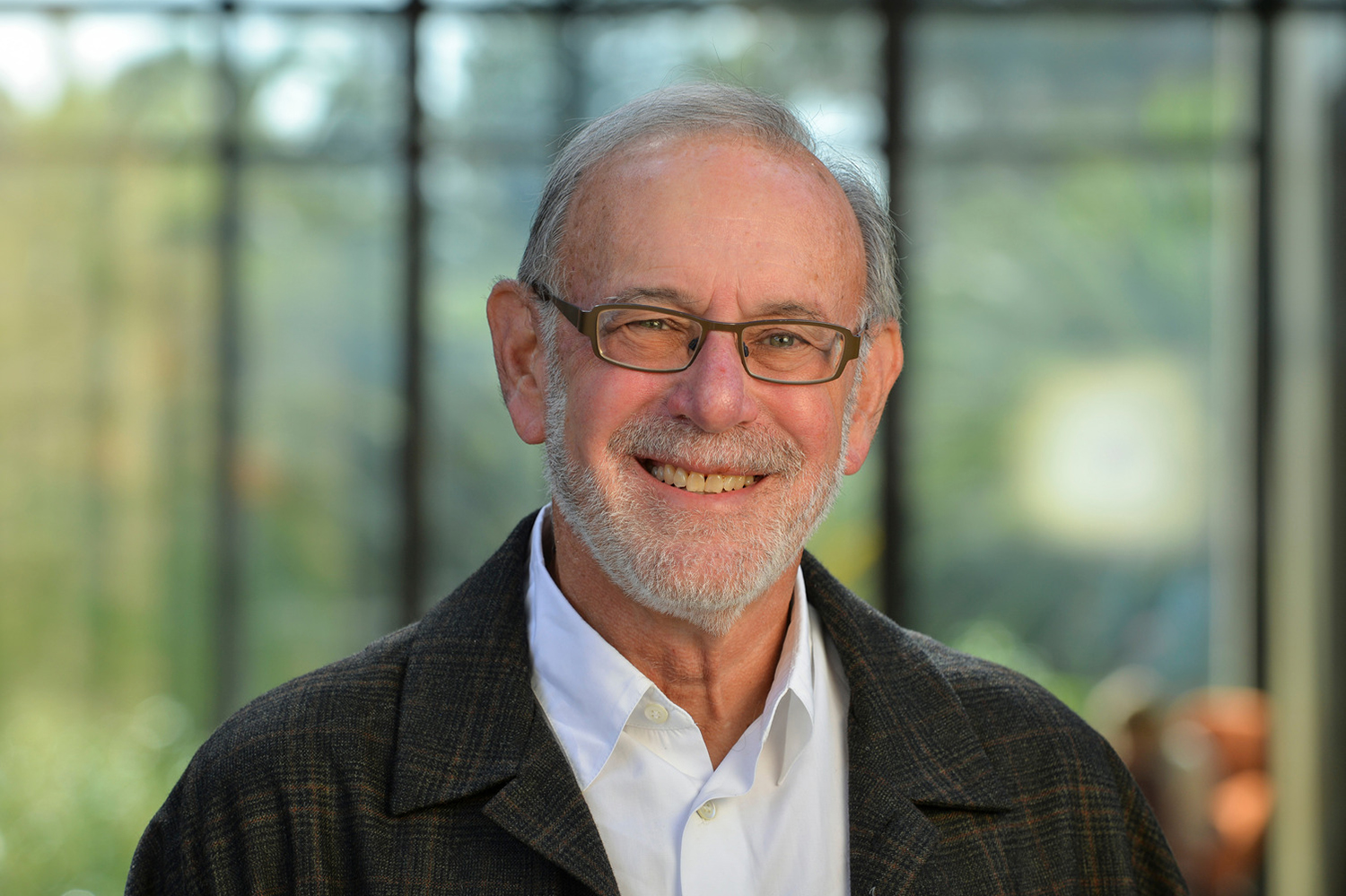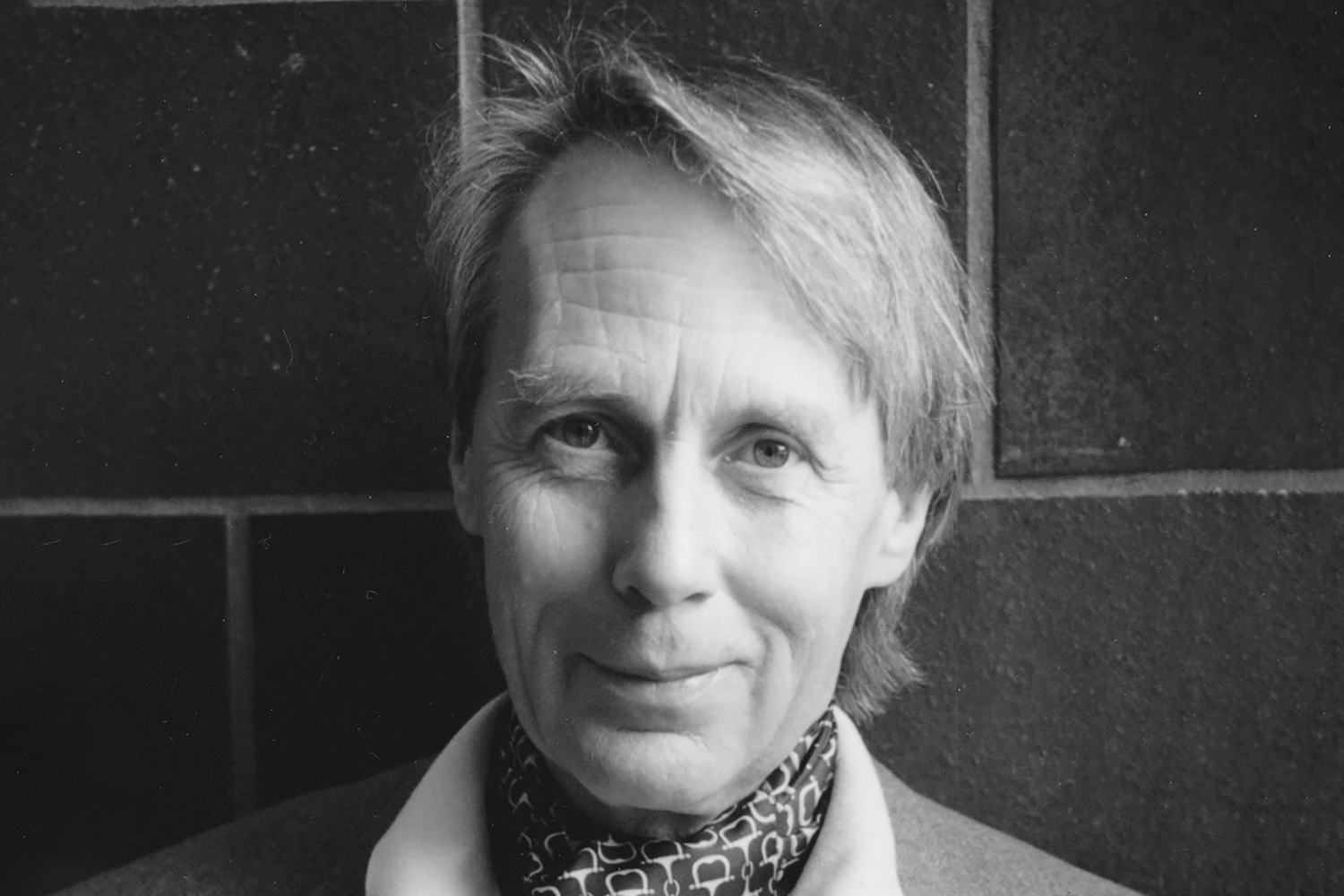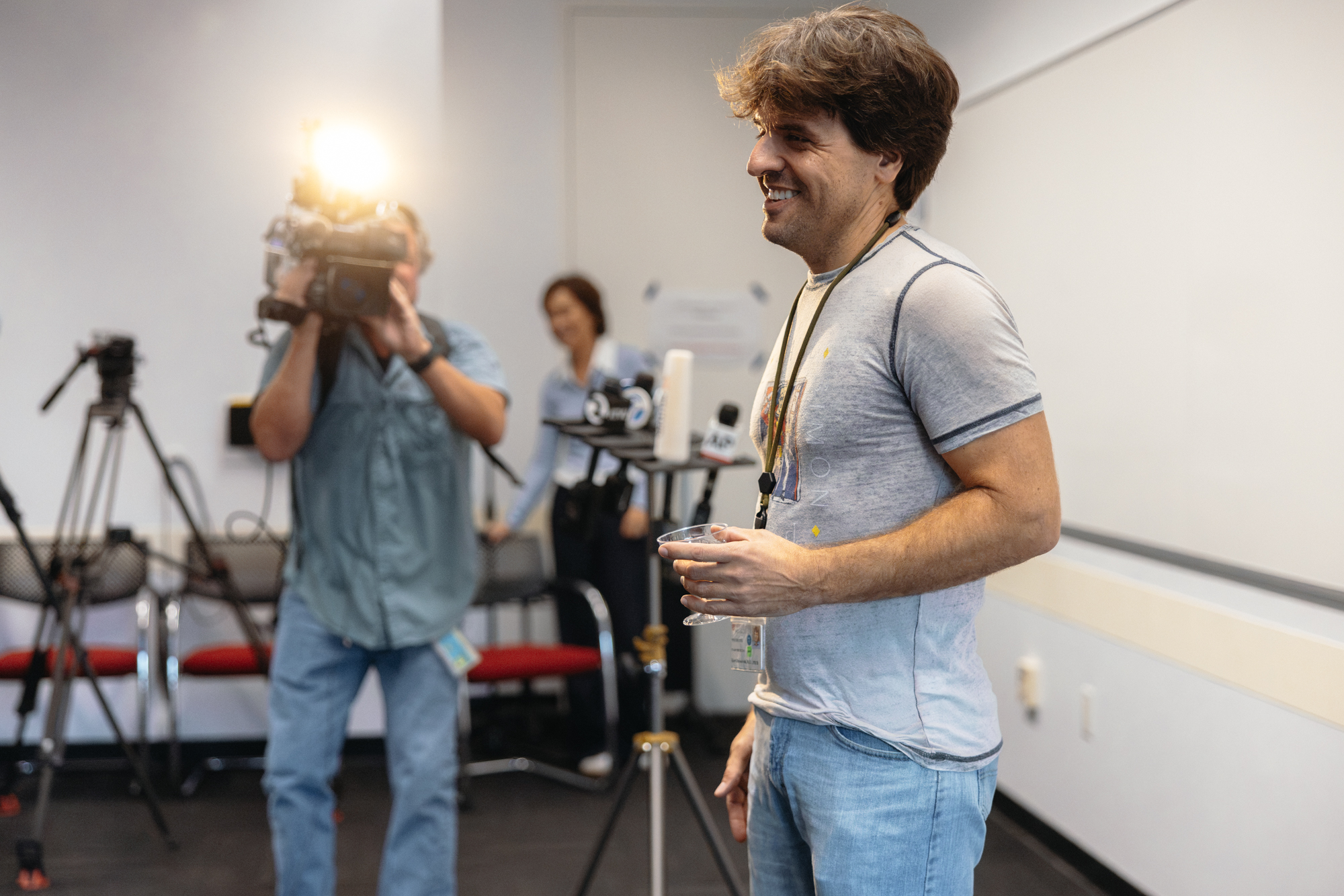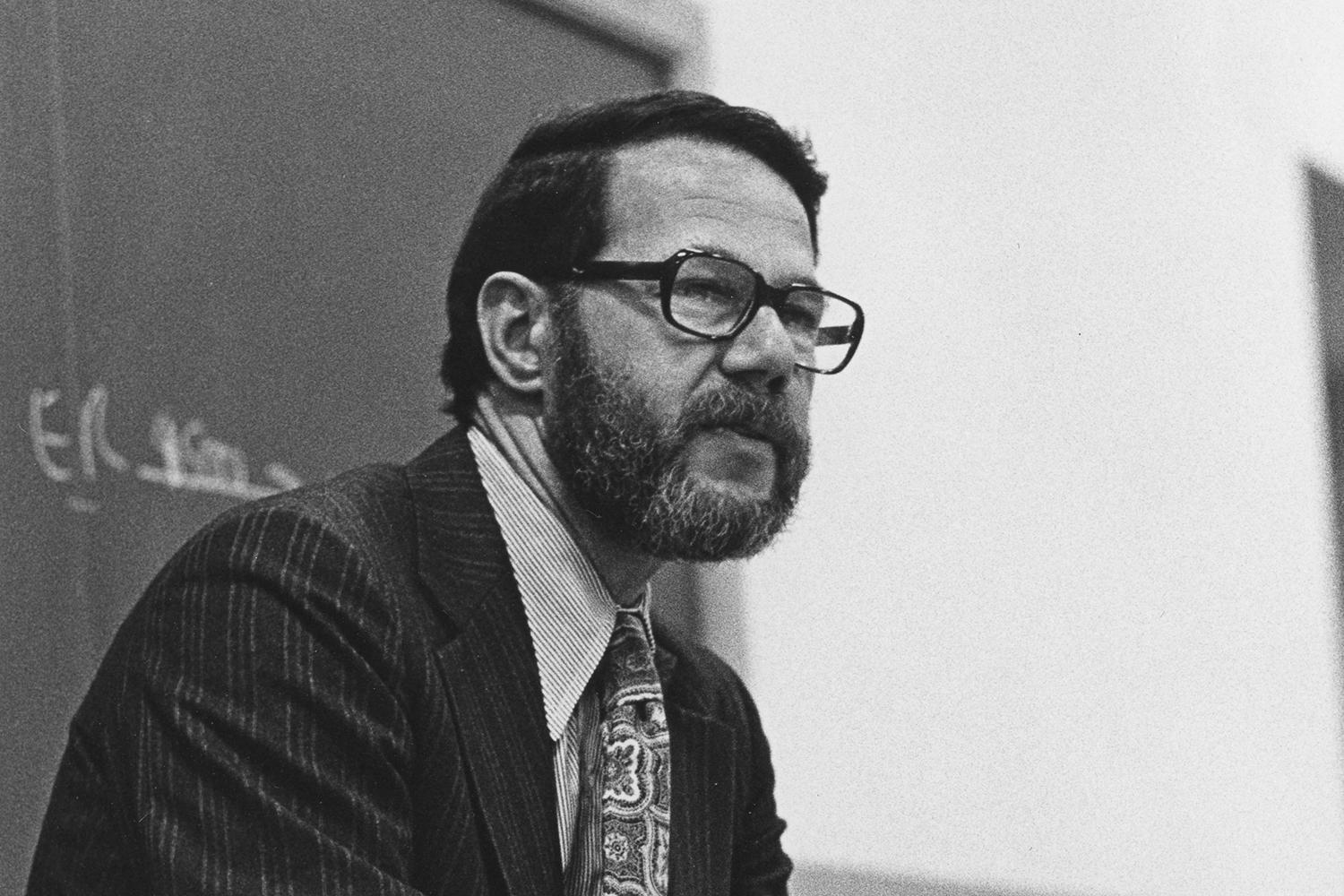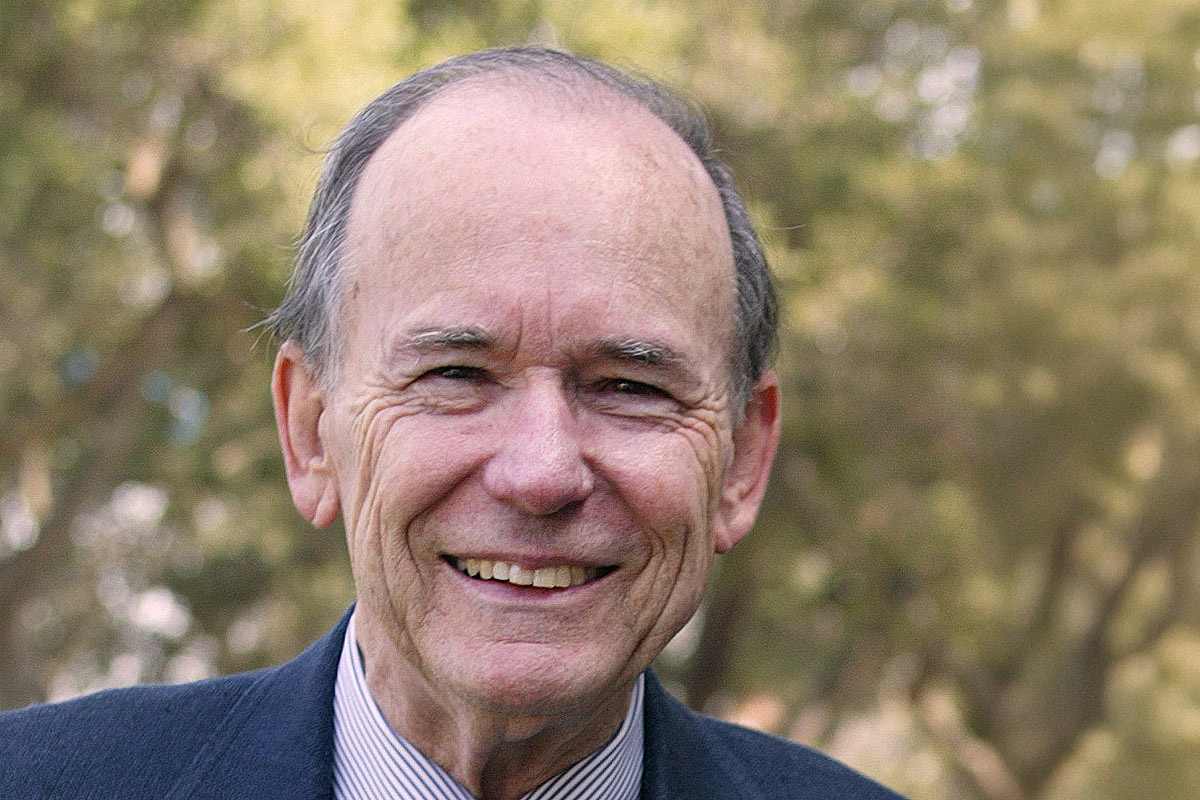
David G. Luenberger, a professor emeritus of management science and engineering whose textbooks shaped generations of engineers, economists, and financial professionals, died at his home on May 19, 2026. He was 88.
Luenberger was a member of the Stanford faculty for more than five decades. He started his Stanford career with landmark doctoral work, the “Luenberger Observer,” a cornerstone of control theory that is still taught and used in engineering programs around the world.
“David was a great researcher who made many significant contributions to the field,” said Yinyu Ye (PhD ’88), a professor emeritus of management science and engineering at Stanford who studied under Luenberger and later co-authored editions of one of his textbooks. “At the same time, he was the best teacher through his books. That’s how I remember him, as a teacher, and his books’ impact on students will last a long time.”
Tall and soft-spoken, Luenberger was remembered by colleagues as sometimes quiet in professional settings, drawn to serious conversation and abstract reasoning. They say he chose his words with the same precision he brought to his writing.
“He was incredibly clear in his thinking,” said Benjamin Van Roy, a professor of management science and engineering and of electrical engineering at Stanford, who counted Luenberger as a mentor. “He was an original thinker, creative, knowledgeable, and terrific at distilling things down.”
Luenberger had a characteristic long-horizon view of what mattered and little interest in work that wouldn’t endure for decades. His contentment with his work came not from external recognition but from the problems he was solving. Yet to those who knew him best, he was a genuinely happy, fun-loving person who smiled easily and often.
Five decades in Palo Alto
Luenberger arrived in Palo Alto in 1959 as a graduate student in Stanford’s Department of Electrical Engineering. Near the end of his doctoral program, a summer internship at Westinghouse in Pittsburgh gave him the problem that would define his dissertation: how to determine the complete internal state of a dynamic system using only partial observations of its behavior.
The result – now universally known as the Luenberger Observer – provided a mathematical framework for reconstructing a system’s hidden state from its measured inputs and outputs. More than six decades later, it remains a standard topic in engineering curricula worldwide and continues to be used in aerospace, robotics, and AI-enabled autonomous systems.
“Much of his work didn’t take an algorithmic approach. It was a conceptual approach to help people understand what was going on inside a system,” said James Sweeney (PhD ’71), a professor emeritus of management science and engineering at Stanford. “That depth and abstraction of thought characterized Dave Luenberger’s approach to being an academic.”
After completing his doctorate in 1963, Luenberger joined the department. He soon joined a group of colleagues led by William Linvill in co-founding the Department of Engineering-Economic Systems, one of Stanford’s most distinctive graduate programs. Luenberger served as its second chairman, from 1980 to 1991.
The team’s unique approach brought engineering’s mathematical rigor to bear on social, economic, and policy problems. It trained a new kind of engineer who applied optimization and systems thinking to problems of public policy, energy, urban planning, finance, and medicine, which often have no single right answer.
The new Engineering-Economic Systems department was just one example of Luenberger’s unusual appetite for reinvention. Rather than deepening a single specialty, he repeatedly brought his original and highly mathematical perspective into new fields and distilled what he learned into a series of exceptionally clear textbooks.
“There were no extra words in what he wrote,” said Ross Shachter, an associate professor of management science and engineering at Stanford. “Across all of his books, he would try to take a problem that you’re struggling to solve and make it more general. In the process, he would make it easier to solve that problem and an even larger class of problems.”
His first major book, Optimization by Vector Space Methods from 1969, unified disparate strands of optimization theory within a single mathematical framework, making powerful tools from functional analysis accessible to engineers across disciplines. Before the book was published, engineers in different fields were solving the same classes of problems using unrelated methods; Luenberger’s book showed the common structure underneath.
“This optimization principle applies everywhere, in economic systems, engineering systems, society,” Ye said. “Even in today’s AI, optimization is still foundational.”
His Introduction to Linear and Nonlinear Programming, first published in 1973 and updated through a fifth edition co-authored with Ye, who used the textbook as a graduate student in 1982, addressed the mathematics of finding solutions with minimum cost and maximum efficiency, when the relationships between variables may be curved rather than straight.
In Introduction to Dynamic Systems, from 1979, he returned to his roots in control theory while extending those tools into unexpected domains. “If you flip through the book,” recalled his son, Rob Luenberger (PhD ’95), “there are examples involving insects, the marriage practices of different cultures, and games – all showing how you can model almost anything in nature or in policy using these tools.”
In his 1995 book, Microeconomics, he applied the same mathematical lens to economic theory. His 1997 book, the first edition of Investment Science, coined that term for an approach to financial decision-making grounded in optimization theory: how to allocate assets, balance risk against return, and price financial instruments under uncertainty. His book, Information Science, published in 2006, clearly described the core principles underlying the information age.
He also contributed the Luenberger Benefit Function to mathematical economics, a measure that allows economists to compare welfare and policy outcomes without reducing everything to dollar terms.
Over his career, Luenberger took multiple sabbaticals abroad and in Washington, D.C., where he served as a technical assistant to the President’s Science Advisor, applying mathematical modeling to housing policy and federal budgets. He also spent time at MIT and at research institutions in France and Denmark.
In addition to his writing, research, and teaching, Luenberger was a devoted mentor. Among his doctoral students was Darrell Duffie (PhD ’84), the Adams Distinguished Professor of Management, Emeritus, at Stanford Graduate School of Business, who is one of the world’s foremost financial economists.
Luenberger was named a Fellow of the IEEE in 1975. He also received the Hendrik W. Bode Lecture Prize of the IEEE Control Systems Society in 1990, the Oldenburger Medal of the American Society of Mechanical Engineers in 1995, and the Expository Writing Award of the Institute for Operations Research and the Management Sciences in 1999. He was elected to the National Academy of Engineering in 2008.
Luenberger retired from Stanford in November 2014 and continued working on research and writing for several years.
A magical life
David Gilbert Luenberger was born on September 16, 1937, in Los Angeles. He earned a bachelor’s degree in electrical engineering from the California Institute of Technology in 1959, then came north to Stanford for graduate school.
He met his future wife, Nancy Iversen, at a social exchange between nursing students and Crothers Memorial Hall engineering students. They married in January 1962 and raised four children in Palo Alto.
The Luenbergers were active travelers, journeying to Africa, Europe, and Asia. Luenberger was an avid photographer and longtime member of the Palo Alto Camera Club. He was an active member of Grace Lutheran Church in Palo Alto, where he served as president of the congregation. He also greatly enjoyed playing the piano.
He had a lifelong love for magic. As a teenager, he discovered a magic shop, taught himself to perform, and had calling cards printed under his middle name: Gilbert the Magician. He would later become a member of the Magic Castle in Hollywood. Inside the classroom, he would deploy magic tricks mid-lecture to make abstract points concrete and hold students’ attention.
He is survived by his wife, Nancy Luenberger of Palo Alto; his son, Rob; his daughters Susan, Jill, and Jenna; his sisters Joanne and Linda; and 10 grandchildren.
A memorial service will be held on August 30, 2026, at 2 p.m. at Grace Lutheran Church in Palo Alto.
For more information
This story was originally published by Stanford School of Engineering.
Writer
Jennifer Welsh