When Eli Carrillo was 11 years old, he sat in the stands of Stanford Stadium watching USA play Brazil in the 1994 FIFA World Cup. He remembers his amazement at the global crowd and the joy they shared watching the game.
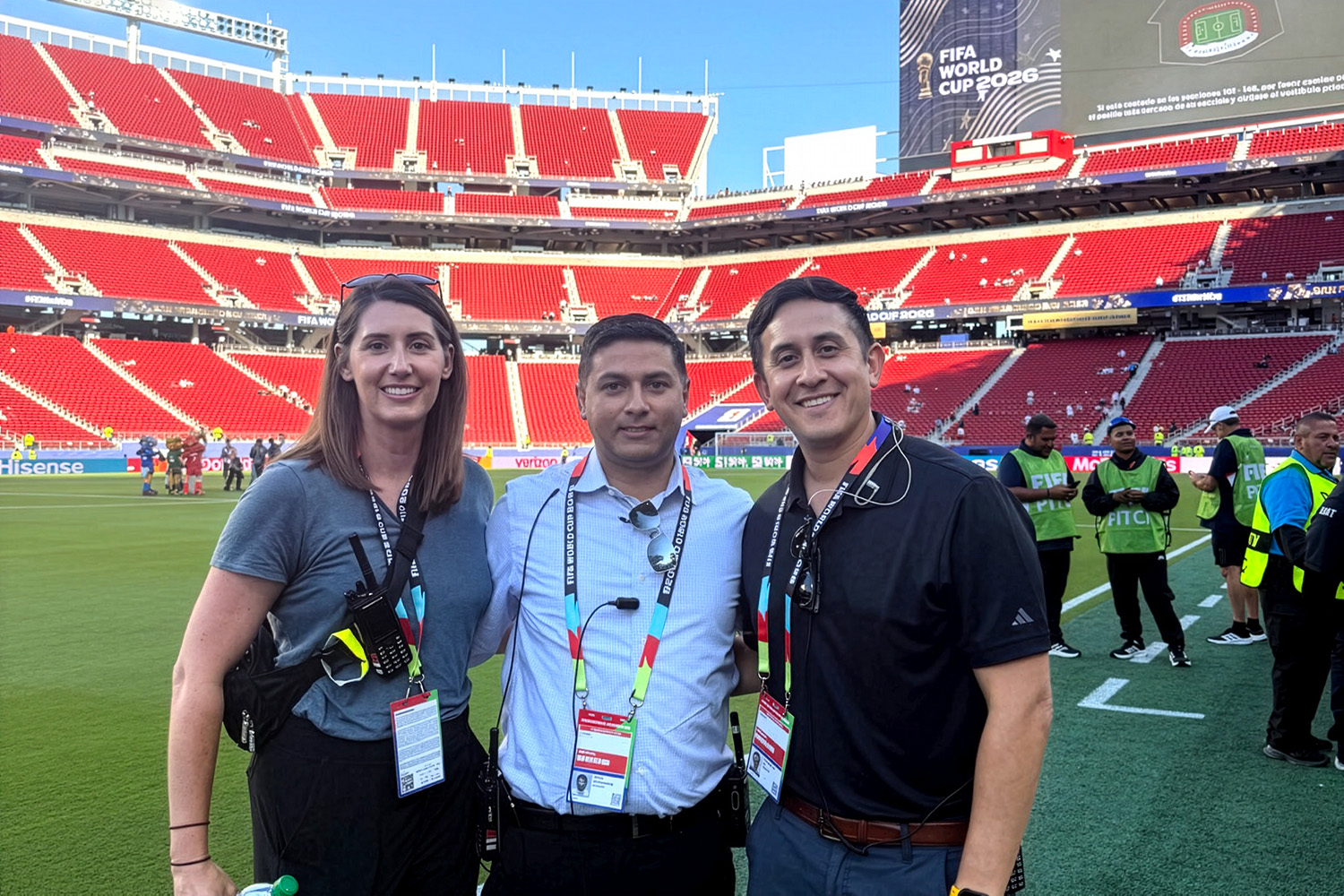
Decades later, Carrillo had more at stake than rooting for goals and saves. He was on the sidelines at Levi’s Stadium in Santa Clara as part of the Stanford Emergency Medicine medical team assigned to care for the athletes, referees, FIFA personnel and other dignitaries traveling with the teams.
While the World Cup teams meticulously strategized, the Stanford Medicine physicians on duty for the six games held at Levi's Stadium oversaw an equally complex playbook, one dedicated to responding to both urgent and emergent life-threatening scenarios.
The Stanford Emergency Medicine team consisted of Carrillo, Shashank Ravi, MD, Meredith Masters, MD, and Peter D’Souza, MD, all clinical associate professors of emergency medicine; Sam Shen, MD, clinical professor of emergency medicine; and Alyssa Perry and JR Abellon, both registered nurses.
The right team for a high-stakes job
The Stanford Medicine team secured the medical contract for the event because it has expertise in providing care in the field; shaping best practices for 911 responses; and operating in dynamic, unpredictable environments.
This experience was precisely what FIFA organizers look for to protect players and officials. Stanford Medicine was chosen “due to our field experience,” said Carrillo, who, along with Meredith Masters and Peter D’Souza, are emergency medical services physicians, a board-certified subspecialty of emergency medicine. Carrillo volunteered to oversee the procurement of equipment and medications and to assemble the medical team. “Our role is to be the liaison between what happens on the field and the hospital system to improve patient outcomes.”
Courtesy Shashank Ravi and Eli Carrillo
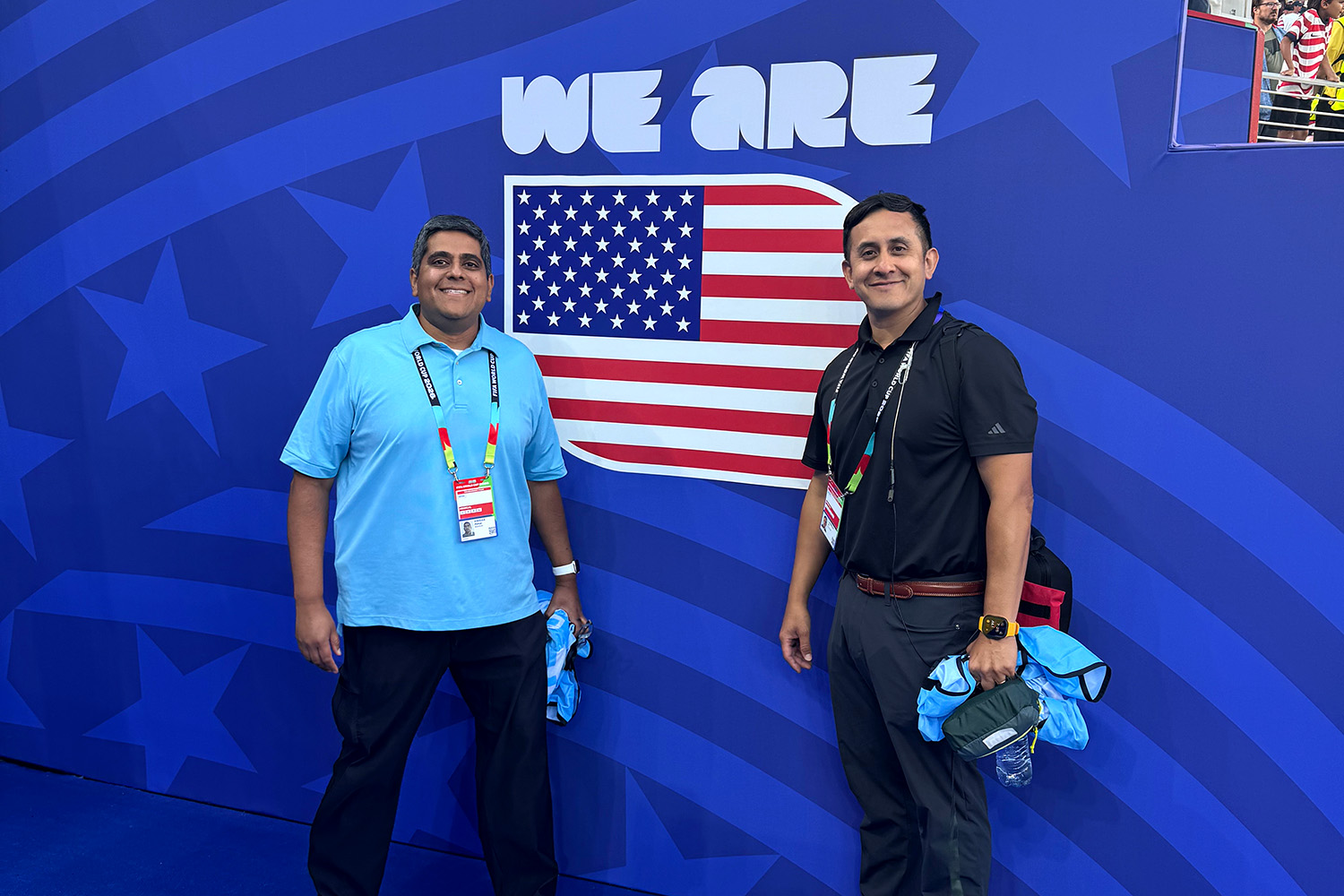
Peter D’Souza, MD, and Eli Carrillo, MD, at the USA vs Bosnia and Herzegovina game on Thursday, July 2.
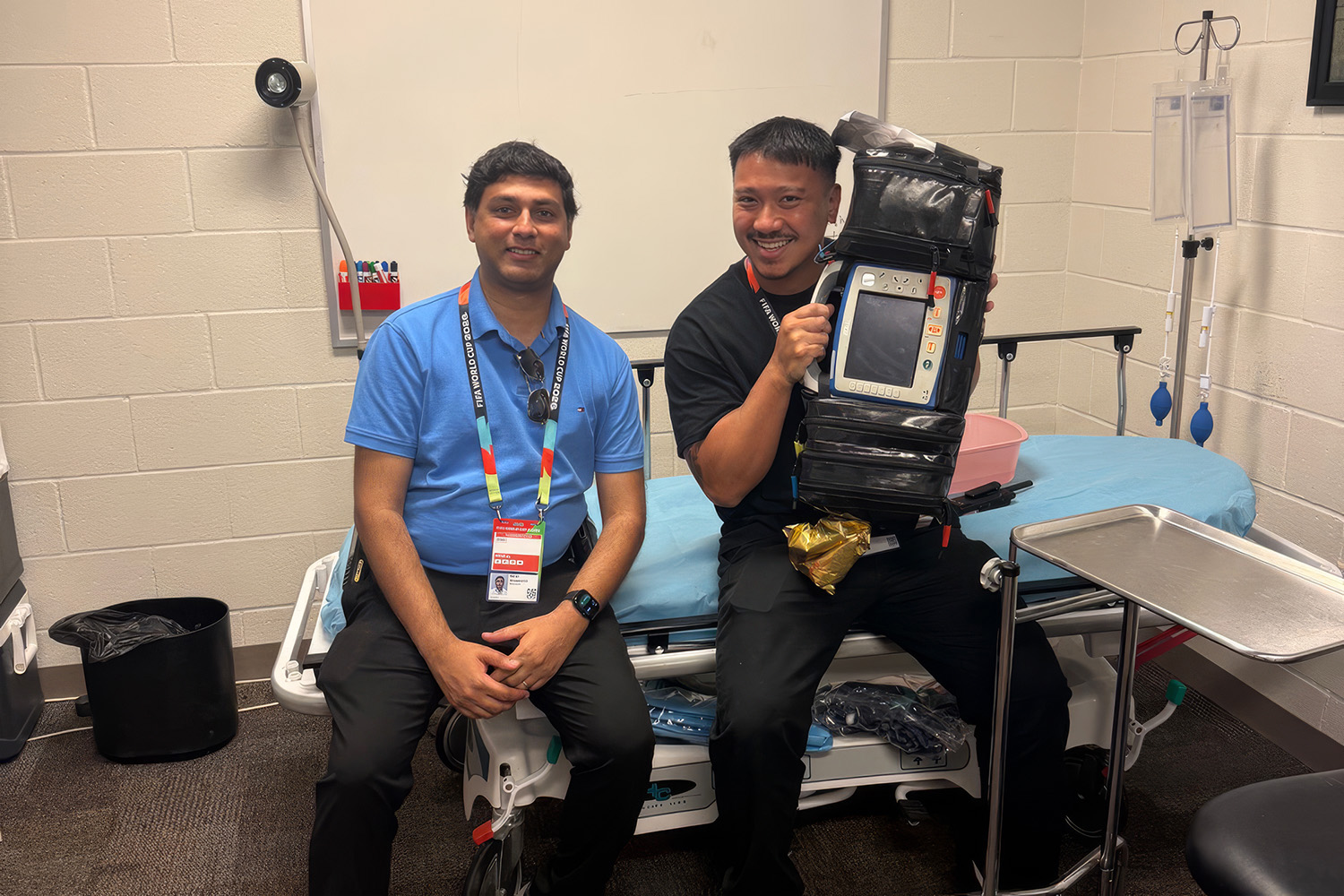
Shashank Ravi, MD, and JR Abellon, RN, in the pop-up clinic at Levi's Stadium.
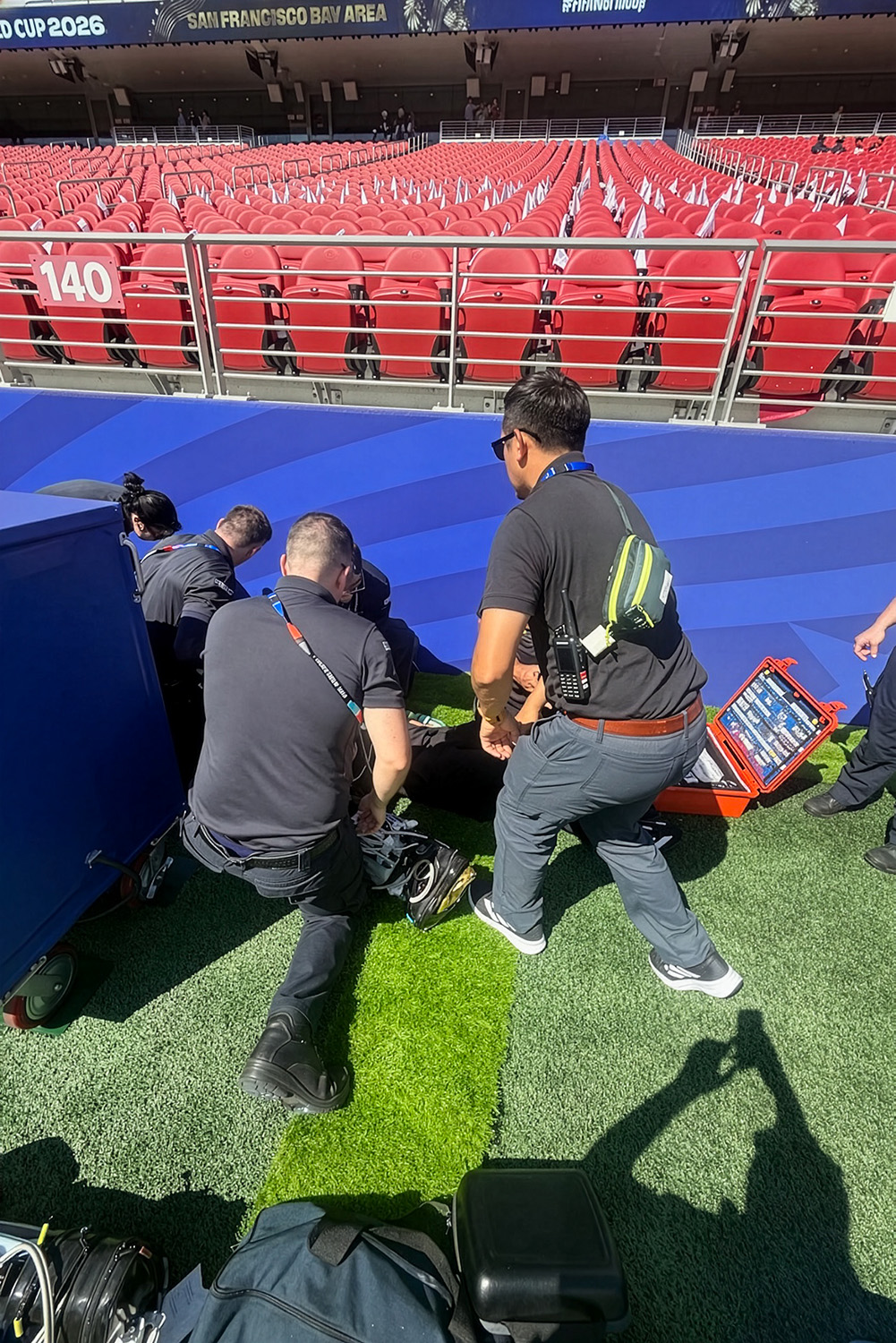
Stanford Medicine team working through medical response simulations with other medical personnel before a World Cup game.
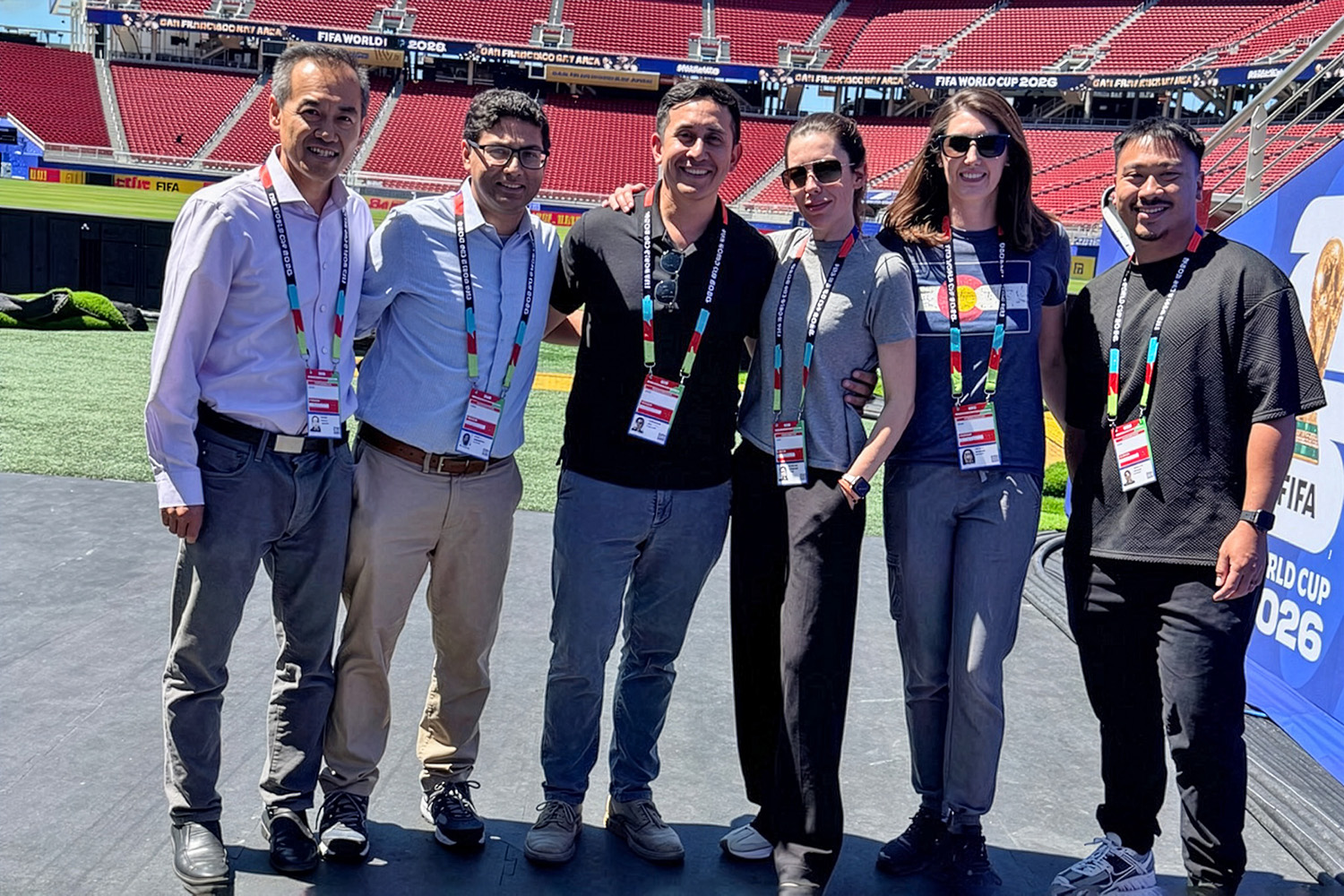
From left: Sam Shen, MD; Shashank Ravi, MD; Eli Carrillo, MD; Meredith Masters, MD; Alyssa Perry, RN; JR Abellon, RN.
Building a clinic on the grounds of the World Cup
Months before the first whistle blew, the team was engaged in creating a fully functional medical center within the stadium. “We essentially built a mobile, two-bed urgent care clinic from the ground up,” Carrillo said. With support from Stanford Medicine’s pharmacy department and local emergency medical services, they equipped the space with medications, mobile medical equipment and all the supplies needed to handle everything from concussion evaluations to more serious traumatic injuries.
They also conducted drills with local paramedics, fire departments and stadium staff to synchronize response protocols. They rehearsed for worst-case scenarios, with a focus on cardiac events and noncontact injuries, in which a player might collapse without warning. “There is a high emphasis on cardiac safety,” Ravi said. “We have to be prepared to respond to those critical events.”
Game day: Controlled calm
The medical team began their preparations about three hours before kickoff. After a comprehensive briefing with all emergency medical service providers and FIFA officials, they took their positions. The team was split between the pop-up clinic inside the stadium and a field-side physician posting alongside FIFA’s match doctor.
While the stadium buzzed with energy, the medical team operated in a state of focus. “The unpredictable nature of what might happen on the field is very similar to a shift in the emergency department,” Ravi said. “You have to rely on your training and your team.”
Luckily, very few players required treatment at the stadium. The most common issues were evaluations for head injuries and potential fractures. This involved careful coordination between the on-field physicians, team doctors from various countries and even officials who reviewed video footage to assess the impact of a collision.
“The core of our job remains the same, whether in the emergency department or on a field,” Carrillo said. “It’s about rapid assessment, quick decision-making and building a rapport with the patient, even when you have seconds to do it.”
A rewarding mission
For Carrillo and Ravi, the experience was a reminder of the breadth of their profession, the strength of their institution and an opportunity to represent Stanford Medicine on a global stage. “It’s incredibly rewarding to be here,” Ravi said. “Seeing the respect that the Stanford Medicine name carries and being able to demonstrate that expertise at a worldwide event makes you proud of the organization you work for.”
The collaboration was a highlight, as working seamlessly with world-class paramedics, international team doctors and FIFA’s own medical staff reinforced the importance of clear communication and shared expertise under pressure.
Now that the World Cup matches at Levi’s Stadium have wrapped up, the Stanford Emergency Medicine team members have returned to their day-to-day work, bringing back more than just memories. For Carrillo, the experience brought his journey full circle. The awe he felt as a child watching the game is now paired with the responsibility of protecting its players. He saw the intricate web of safety and preparation required to make such a global spectacle possible – a quiet, dedicated team working behind the roar of the crowd to ensure the game remains safe for all.
For more information
This story was originally published by Stanford Medicine.
Writer
Karissa Hayes