On a recent autumn morning, second-year biology PhD student Crystal Ramirez sat among a row of towering corn husks at the O’Donohue Family Stanford Educational Farm. Accompanied by her fellow researchers, she carefully analyzed the soil.
“I’m researching the symbiotic association among three plants, including corn, for my dissertation,” said Ramirez. “It’s my first experiment here on the farm.”
Nearby, farm staff monitored crops. Meanwhile, Stanford chefs led a cooking demonstration at an outdoor kitchen for postdoctoral scholars. It’s a typical day on this bustling urban farm and garden. “The campus community gets a lot of use out of this space, which is great to see,” said Farm Director Patrick Archie.
Andrew Brodhead

PhD student Crystal Ramirez studies corn, bean, and squash plants at the O’Donohue Family Stanford Educational Farm.

Aidee Guzman, assistant professor of biology, advises students conducting agricultural research at the farm.

Facility and production coordinator William Chen helps maintain the farm.

Residential & Dining Enterprises chef Adrian Farmer helps lead a “Teaching Kitchen” class in making apple crisp.
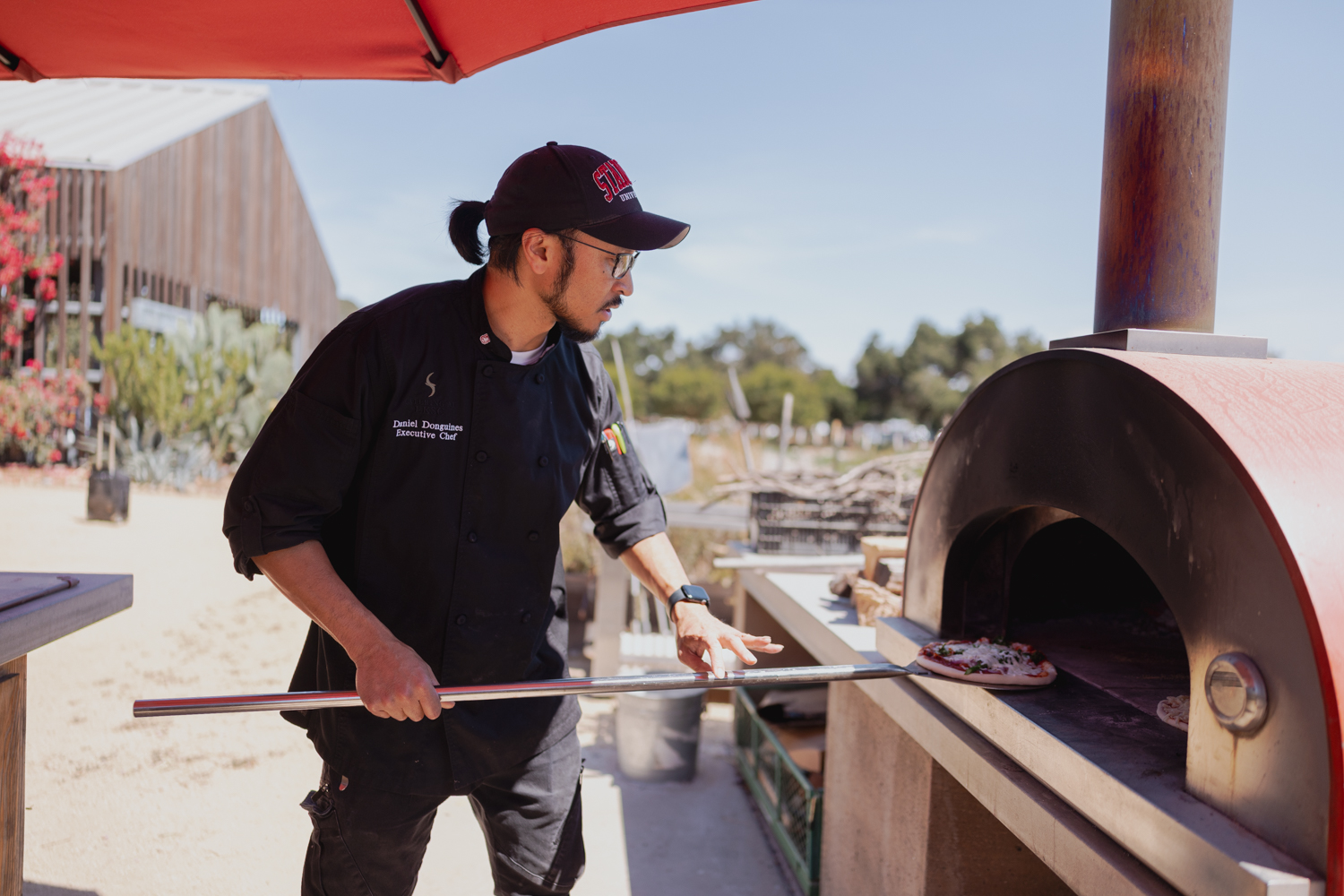
Residential & Dining Enterprises chef Daniel Donguines shows postdocs how to make pizzas in the farm’s outdoor oven.
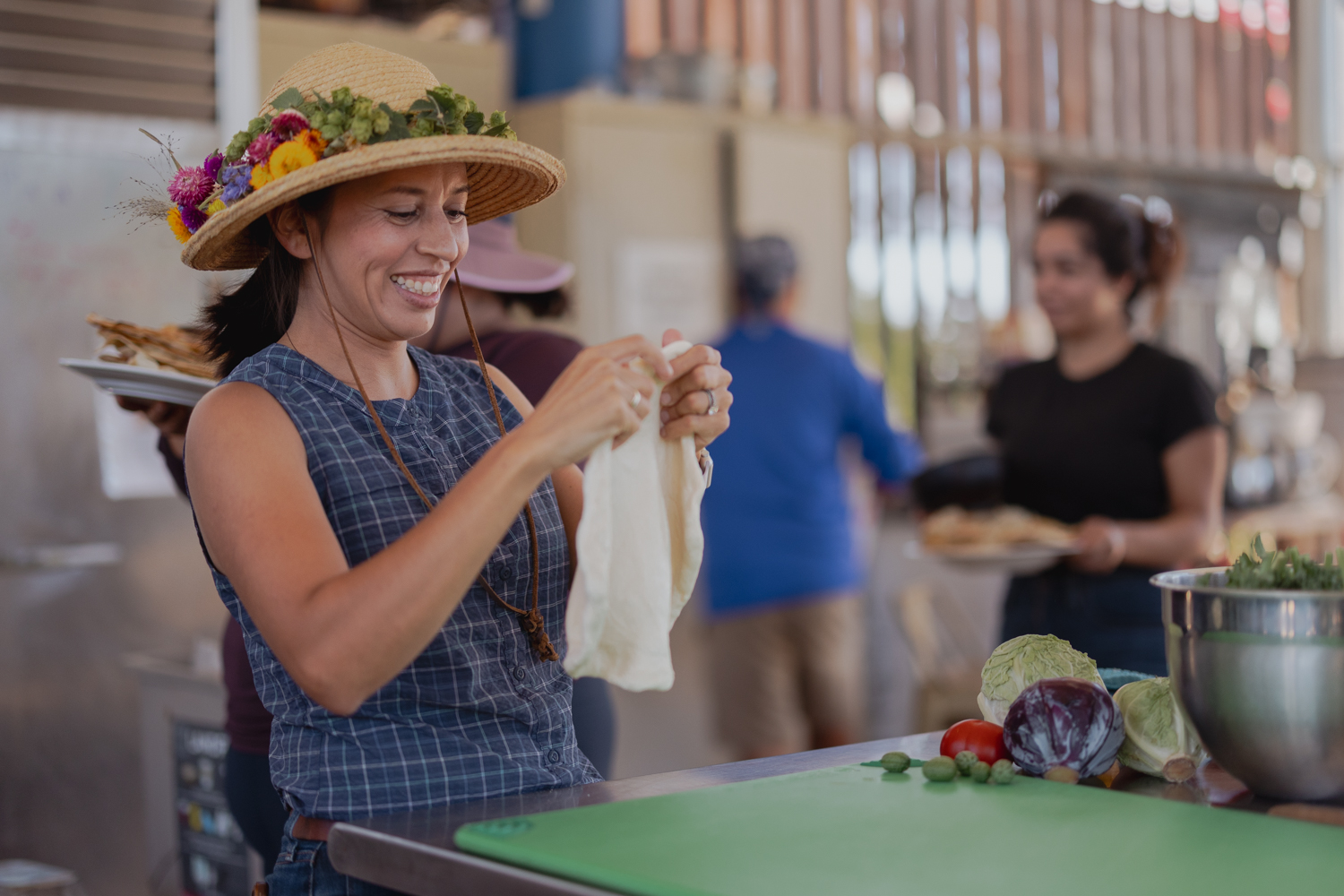
In the outdoor kitchen, programs coordinator Jessica Chu makes a pizza from ingredients sourced from the farm.
A dream come true
Part of the Stanford Doerr School of Sustainability, the farm was established 10 years ago, following years of advocacy by students who wanted to learn about sustainable agriculture. “They wanted to not just read and hear about it, they wanted to engage with it,” said Archie. “It had been a real dream of theirs.”
In the early 2010s, Professor Pamela Matson was serving as the dean of the School of Earth, Energy and Environmental Sciences, which closed with the 2022 launch of the new sustainability school. She agreed on the need for a farm and hired Archie to help bring it to fruition. Archie, who is also a lecturer in the Earth Systems program, arrived with years of experience teaching and developing urban farms and gardens, including at universities. Working with campus planners and other Stanford leaders, he began scouting locations.
“There was a lot of interest in building the farm on the other side of Highway 280, where there’s a lot of land, including Stanford’s best farmland,” Archie recalled. “But it would’ve been difficult to engage with students and the community, so we pushed really hard for a space on the main campus.”
They landed on 2 hectares (almost 6 acres) of unused greenfield on Campus Drive, filled mostly with oak trees and invasive weeds. Multiple gifts, including from the O’Donohue family, helped make the farm a reality. Over several months, Archie oversaw its transformation into a highly diversified, certified organic farm that he manages with three additional full-time staff: facility and production coordinators Allison Bauer and William Chen, and programs coordinator Jessica Chu.
The team grows over 200 varieties of vegetables, herbs, field crops, and fruit, as well as cut flowers that often adorn the university and campus events. They grow many native plants and over 240 trees, including an avocado orchard they planted this summer. They’ve also partnered with members of the Muwekma Ohlone tribe to plant three gardens on the farm. They feature plants that have been important to the tribe for thousands of years. The plants are used for teaching and as sources for seeds and propagation materials. They will help grow plants for more Muwekma gardens throughout the tribe’s traditional territories in the Bay Area.
The team now grows over 200 varieties of vegetables, herbs, field crops, and fruit, as well as over 240 trees.
Every school year, the farm team hires 12 to 15 students to help with general operations like harvesting, deliveries, and leading the volunteer program, which is open to the public. Volunteers work on everything from harvesting and mulching to weed control and fruit thinning, all while learning about urban gardening.
Over the years, the space has become a hotbed of teaching and research, attracting students like Ramirez who studies agricultural systems with the goal of helping farmers grow food sustainably.
Three Sisters: corn, beans, and squash
For her dissertation, Ramirez is studying the Three Sisters, a Mesoamerican system in which corn supports climbing beans while squash spreads across the ground to suppress weeds and conserve water. Together, the three create a resilient, self-sustaining crop.
At the farm, Ramirez and her fellow researchers studied four genotypes of corn, bean, and squash, collecting soil samples to measure microbial biomass, enzymes, and DNA to understand how the crops grow alone versus in combination. “There aren’t many studies on the Three Sisters, but what we observe in our soil samples here on the farm will help me formulate hypotheses,” she said.
Aidee Guzman is a new assistant professor of biology and is advising Ramirez’s research. She’s worked on other university farms, but said Stanford’s stands out. “This is probably the best student farm I’ve been to and the staff are super supportive, helping with things like irrigation or seeding,” she said. “So I’m excited to incorporate this space in my courses on agroecology.”
This is probably the best student farm I’ve been to.Aidee GuzmanAssistant Professor of Biology
The farm has hosted courses across the academic spectrum, from Environmental Communication and Agricultural Law to Indigenous Food Sovereignty and a nature-inspired writing class called Wild Writing.
Gathering space
Much of the produce grown on the farm is funneled into the campus food system, landing in kitchens and dining halls that feed thousands of students, faculty, and staff every day. At the farm’s outdoor kitchen, chefs Adrian Farmer and Daniel Donguines led one of Residential & Dining Enterprises’ popular Teaching Kitchen classes. Using ingredients grown on the farm – fresh basil, heirloom tomatoes, broccolini, peppers, and onion – they taught a group of postdoctoral scholars how to make pizzas cooked in the outdoor oven.
“These classes are great team-building events for different groups and departments on campus to enjoy learning how to cook,” said Farmer, who also made an apple crisp with fresh apples, cinnamon, and vanilla. “And I made the crumble with oats, a little flour, brown sugar, and lots of love,” she added.
The farm has become a popular cultural center for the campus community. “Our primary mission is educational, but people love to use our space to host events,” said Archie.
The farm regularly hosts parties and other gatherings, including guest speakers like star chef Mingoo Kang, a corsage-making demonstration as part of last year’s Big Game week festivities, and the annual student-run Earth Day event, Earth Tones. Even Stanford’s Birdwatching Club visits the farm for its bird walks. Over 100 species of birds have been seen on the farm in the last few years.
Better every year
The farm continues to evolve. Soon, a gift from GS Energy will enable the installation of a new microgrid with solar panels and battery storage will make the farm fully electric. And a new electric tractor will eliminate all use of fossil fuels, making the farm fully powered by the sun.
“Every year this place gets better. The trees get more mature, new crops get planted, our infrastructure improves,” said Archie. “A beautiful aspect of the farm is that it's always changing.”
Further details about workshops, volunteer hours, courses, field trips, and other opportunities at the farm are available online.
To celebrate its 10th anniversary, the farm will host a Halloween Harvest Festival on Friday, Oct. 31, from 2 to 5 p.m. All are invited.
Writer
Alex Kekauoha