In the late 1940s, then-Stanford Provost Frederick Terman envisioned a university business park dedicated to research and development. The park would bring together industry, the local community, and Stanford faculty, students, and scientists to build, innovate, and stimulate the local economy.
Decades later, Stanford Research Park is one of the most productive of its kind, attracting pioneering companies and helping to transform the greater region into the global center of technological innovation.
“It set the conditions, not just for the creation of Silicon Valley, the hardware industry, and everything that has followed from it, but for Stanford to be a world-leading university,” said Stanford President Jonathan Levin at a recent gathering to celebrate the park’s 75th anniversary.
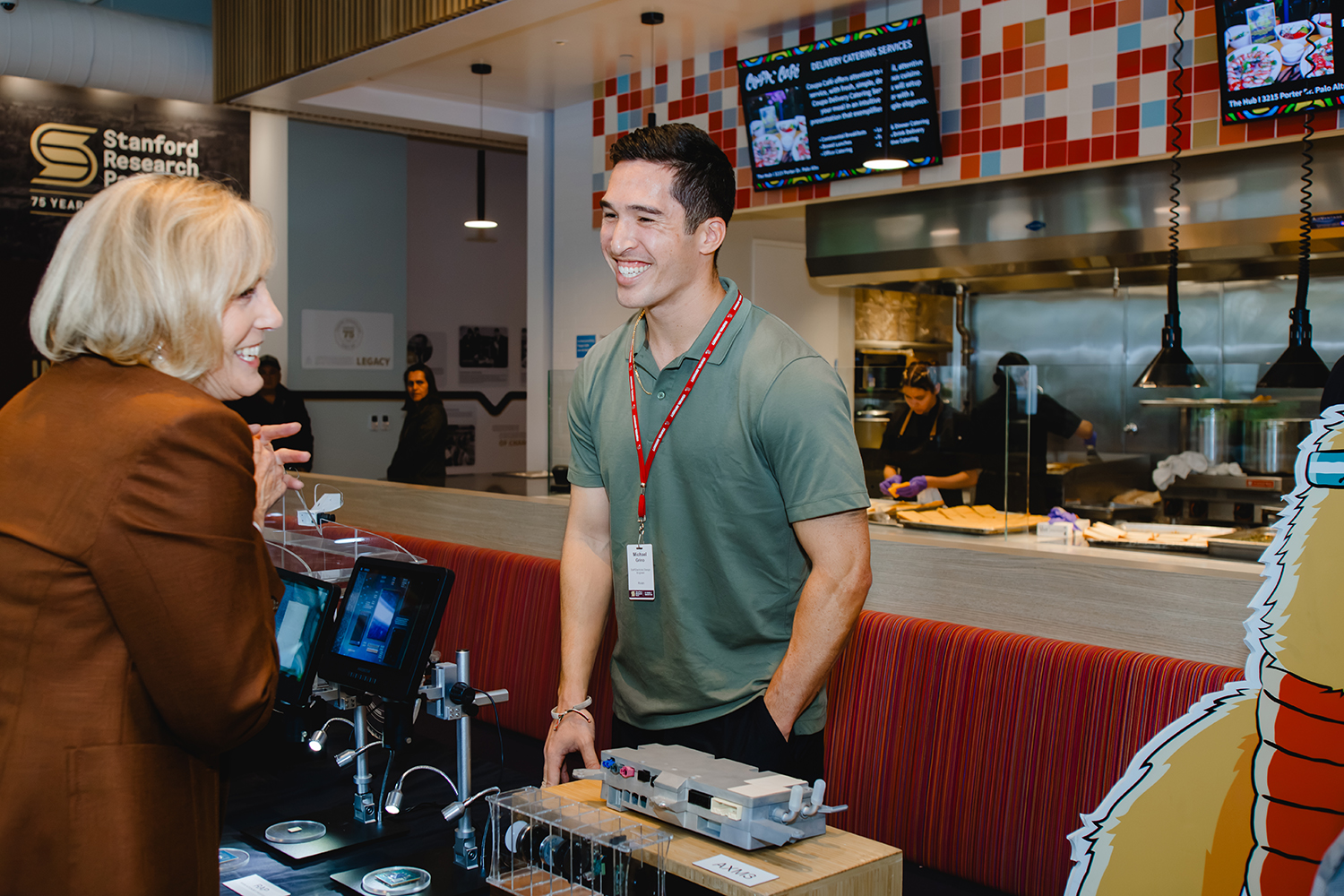
Exhibitors showcase technology developed at Stanford Research Park during a recent celebration of the park. | C Sharp Agency / Stanford University
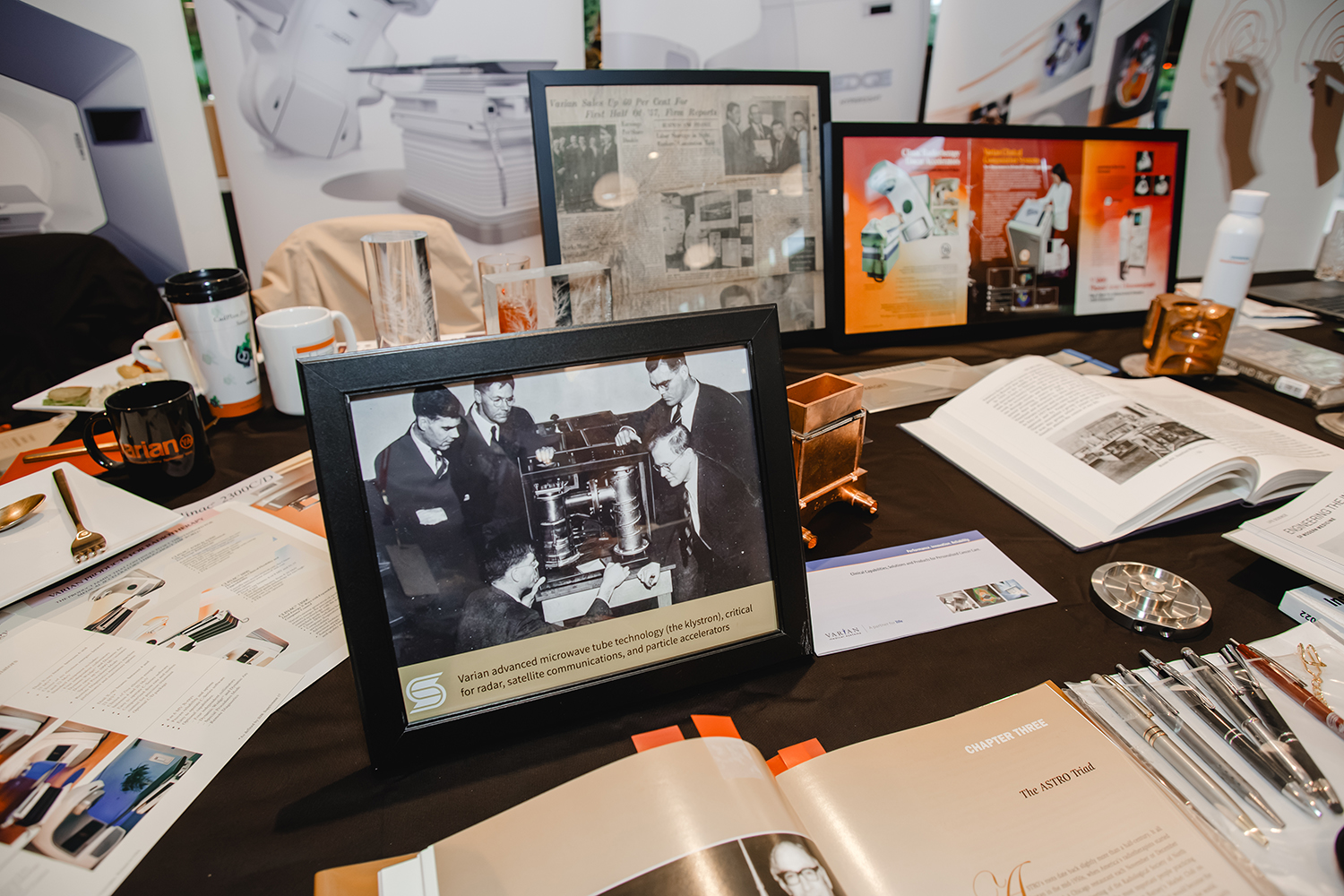
An exhibit on the history of Varian features a photo of Sigurd and Russell Varian, David Webster, William Hansen, and John Woodyard with a model of the klystron, an advanced microwave tube technology. | C Sharp Agency / Stanford University
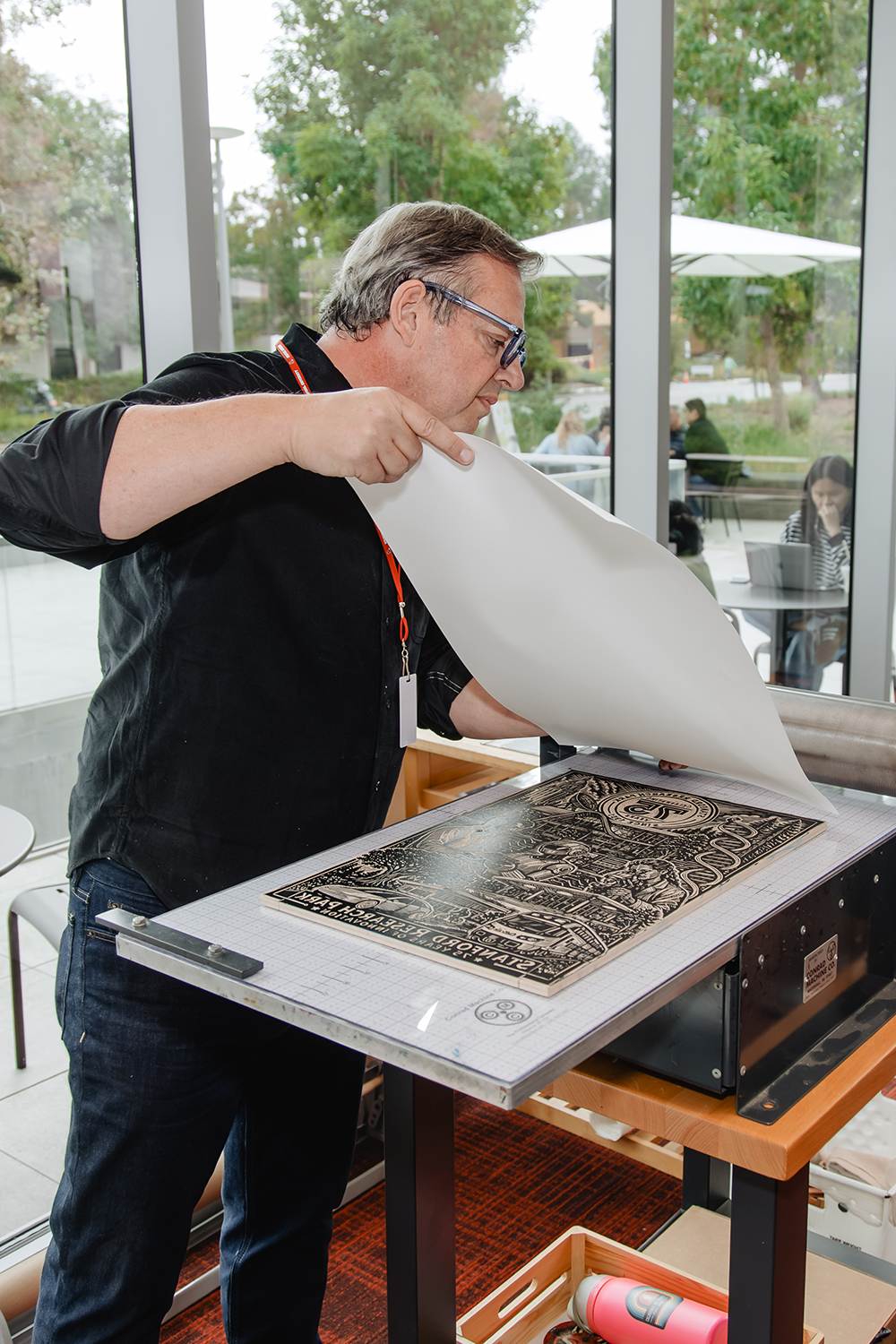
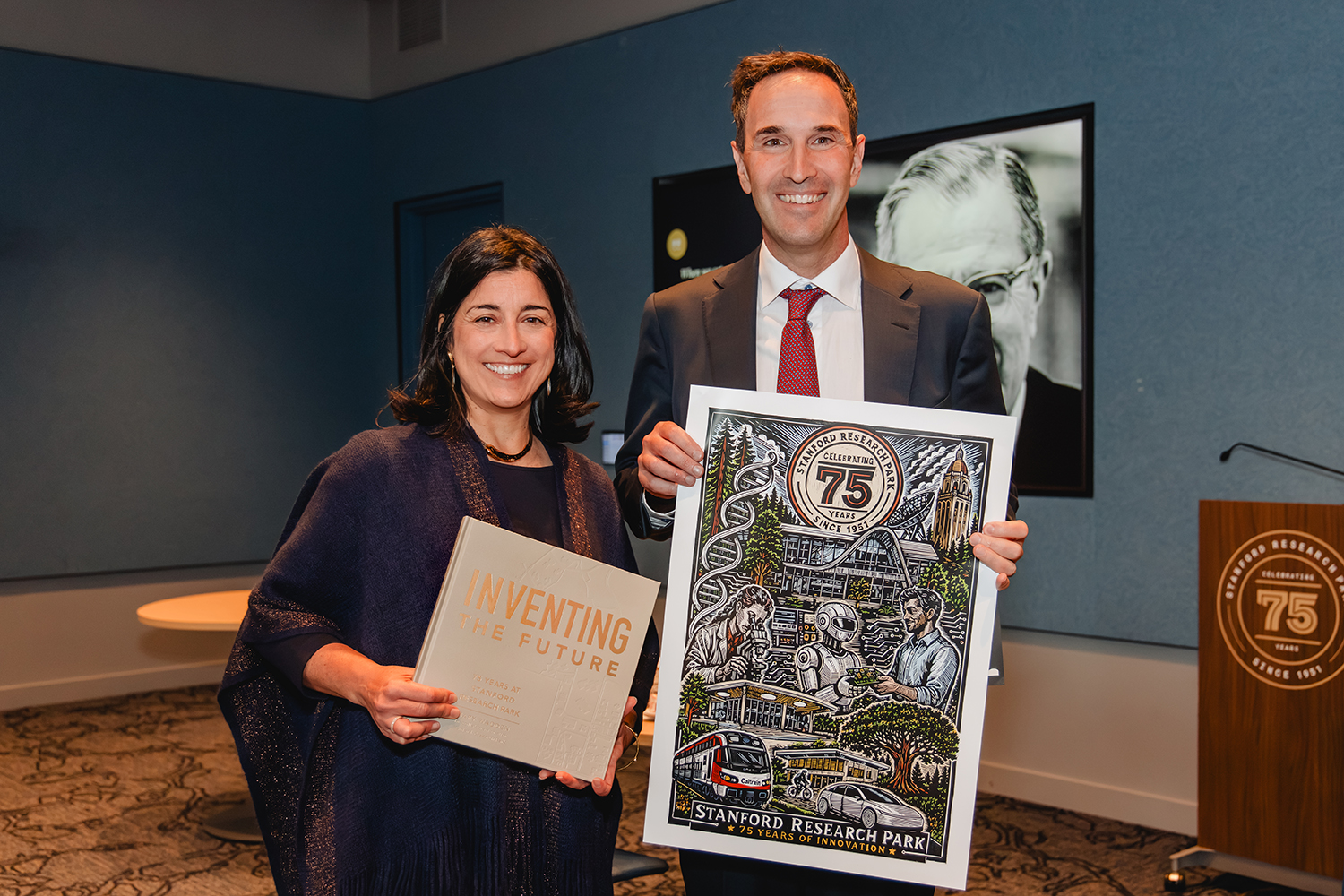
Commemorative posters celebrate the anniversary. | C Sharp Agency / Stanford University
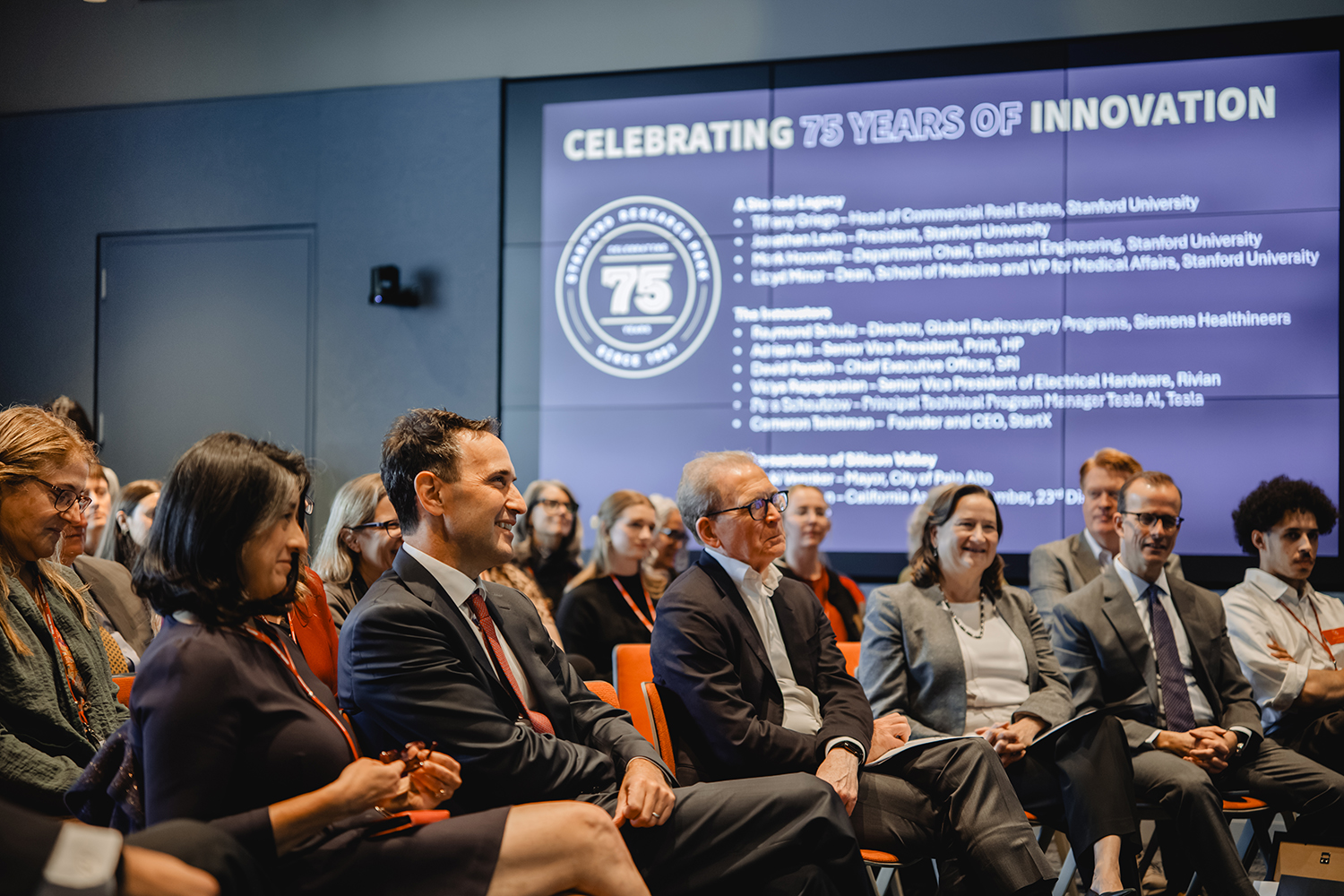
Stanford President Jonathan Levin joins a gathering to celebrate the park’s many achievements and contributions. | C Sharp Agency / Stanford University
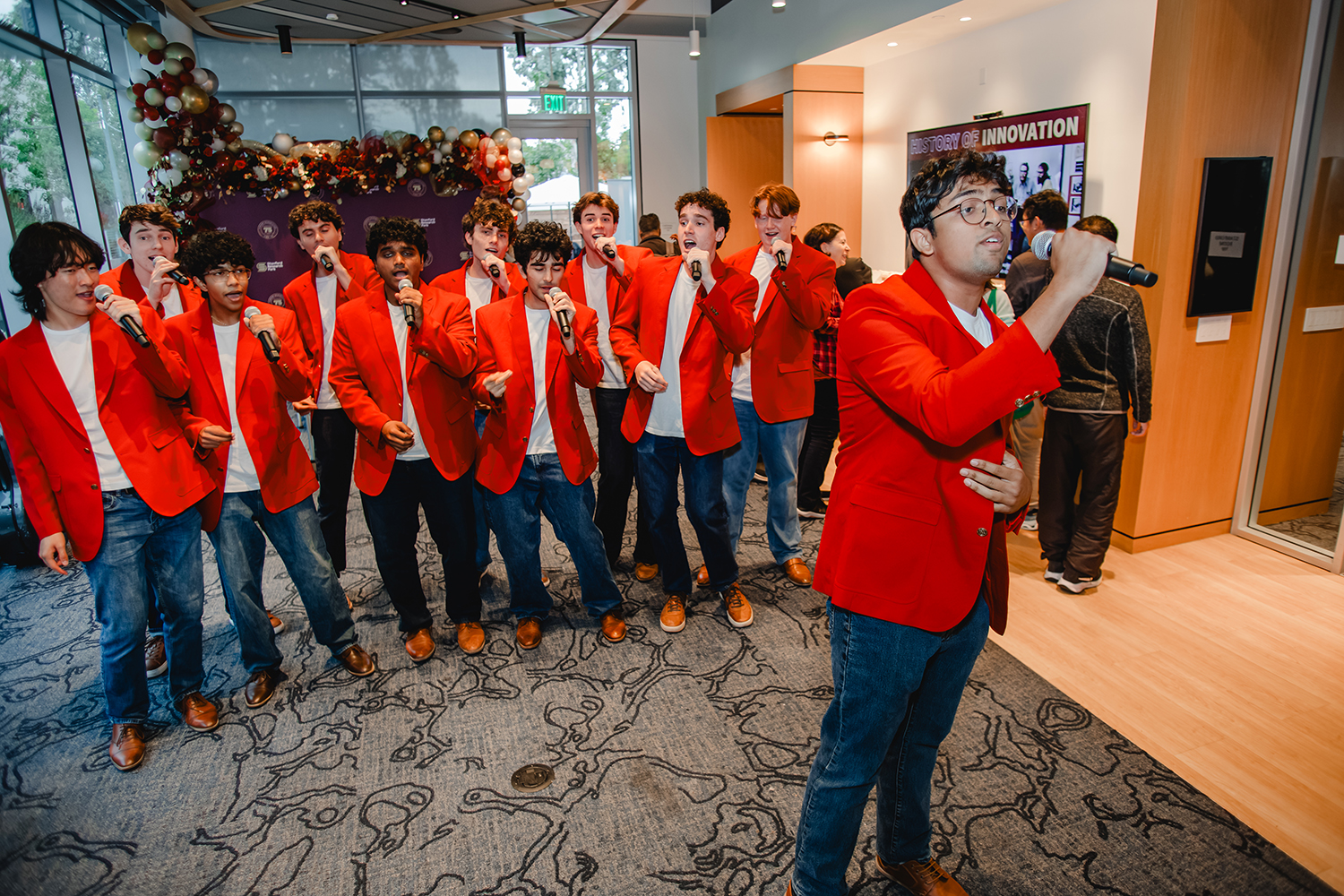
Stanford a cappella group The Mendicants perform. | C Sharp Agency / Stanford University
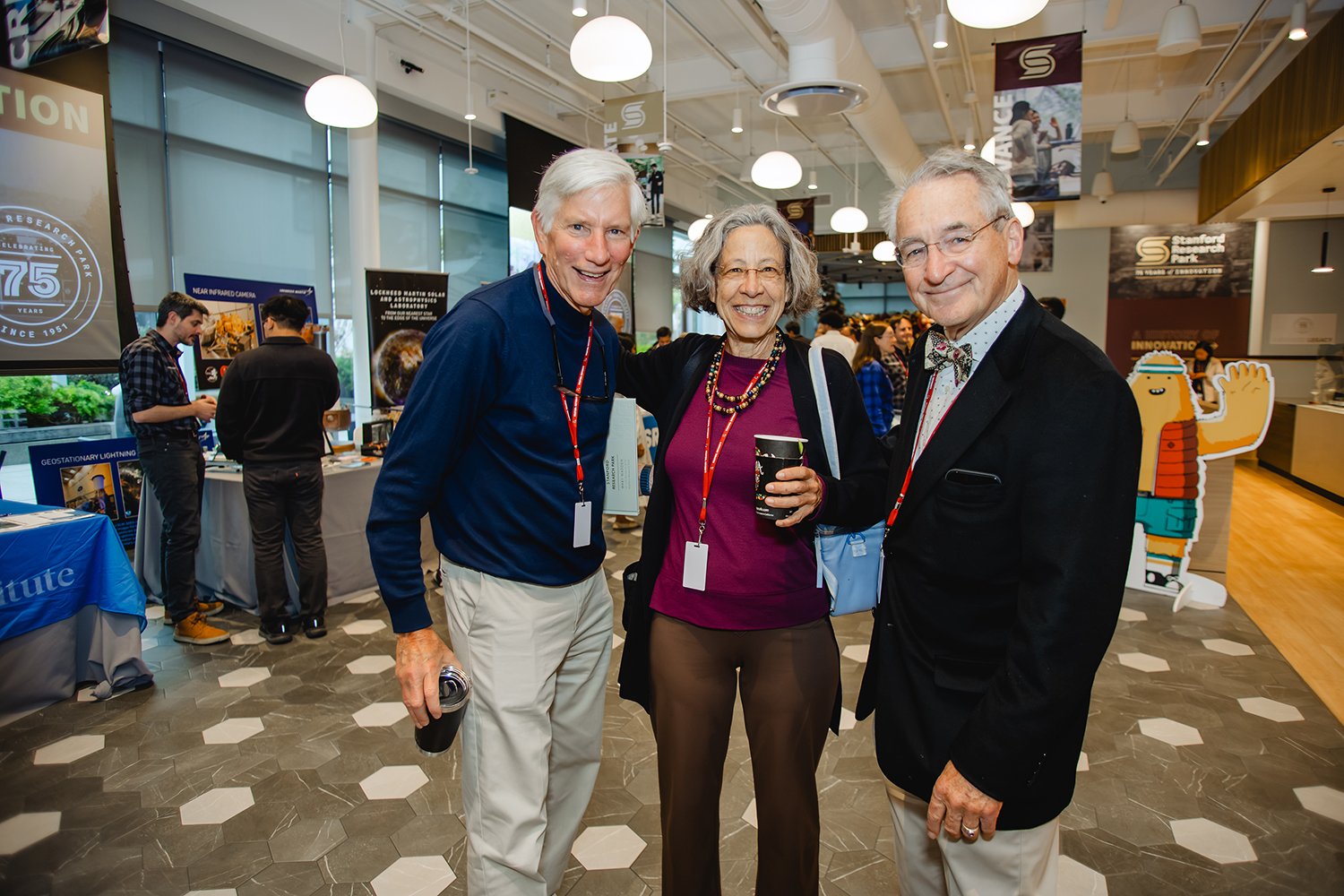
Friends of Stanford Research Park gather to celebrate 75 years of innovation. | C Sharp Agency / Stanford University
Today, Stanford Research Park encompasses hundreds of acres of land, has millions of square feet of R&D and office buildings, and dozens of commercial tenants who are transforming everything from the life sciences to medical technology to electric car manufacturing.
“The university’s leadership of the 1950s was strategic, prescient, and wise in their planning of the park,” said Tiffany Griego, real estate asset managing director for the park. “The university has played a constant role throughout the park’s history. Today, the park is a vibrant innovation ecosystem and business community unlike any other place in the world.”
A place to innovate
According to University Archeologist Laura Jones, in the early 1900s the site of the park was used primarily for agricultural purposes, such as dairy farming, grazing, and flower growing, all of which supported the university economically. Following the Great Depression and World War II, Stanford’s endowment fell to historic lows, while student enrollment boomed, in part due to the GI Bill. To steward the university forward, Terman saw potential in developing a university-affiliated business park, like ones established by East Coast schools.
“He was interested in the idea of an incubator – taking Stanford faculty and students and giving them places to work, train, and start businesses,” Jones said. “And Stanford’s business manager, Alf Bradin, saw the potential to generate greater income from real estate, rather than cows.”
The region already had an established albeit fledgling tech industry, mostly focused on radio research, which local leaders agreed could be elevated by Terman’s idea. “This was going to be a place where engineers were going to innovate, and the City of Palo Alto was on board,” Jones said.
In collaboration with city officials, the university created the Stanford Industrial Park (as it was originally called) on roughly 200 acres, making it the first of its kind on the West Coast. In October 1951, the park signed its first ground lease with electronics company Varian Associates, founded by Stanford graduate Russell Varian, his brother Sigurd, and Stanford physics professor William Hansen. Other companies – many with ties to Stanford – soon followed, including Hewlett-Packard, Lockheed Missiles & Space Company, and Fairchild Semiconductor.
Inventing the future
Commercial tenants in the park have made significant contributions to their industries. Varian, for instance, commercialized advanced microwave and vacuum-tube technologies originally developed in Stanford laboratories, notably the klystron. To this day, Varian Medical Systems uses linear accelerators to treat cancer and other diseases.
After graduating from Stanford with degrees in electrical engineering, William Hewlett and David Packard were convinced by Terman to start a company. HP was famously founded in a Palo Alto garage before relocating to Stanford Industrial Park, where its headquarters were located on Page Mill Road. Demand for HP’s early precision electronic instruments grew rapidly as electronics became central to communications, radar, and scientific research. The company, which still operates in the park today, would eventually expand to many computing hardware and software products and become an industry powerhouse.
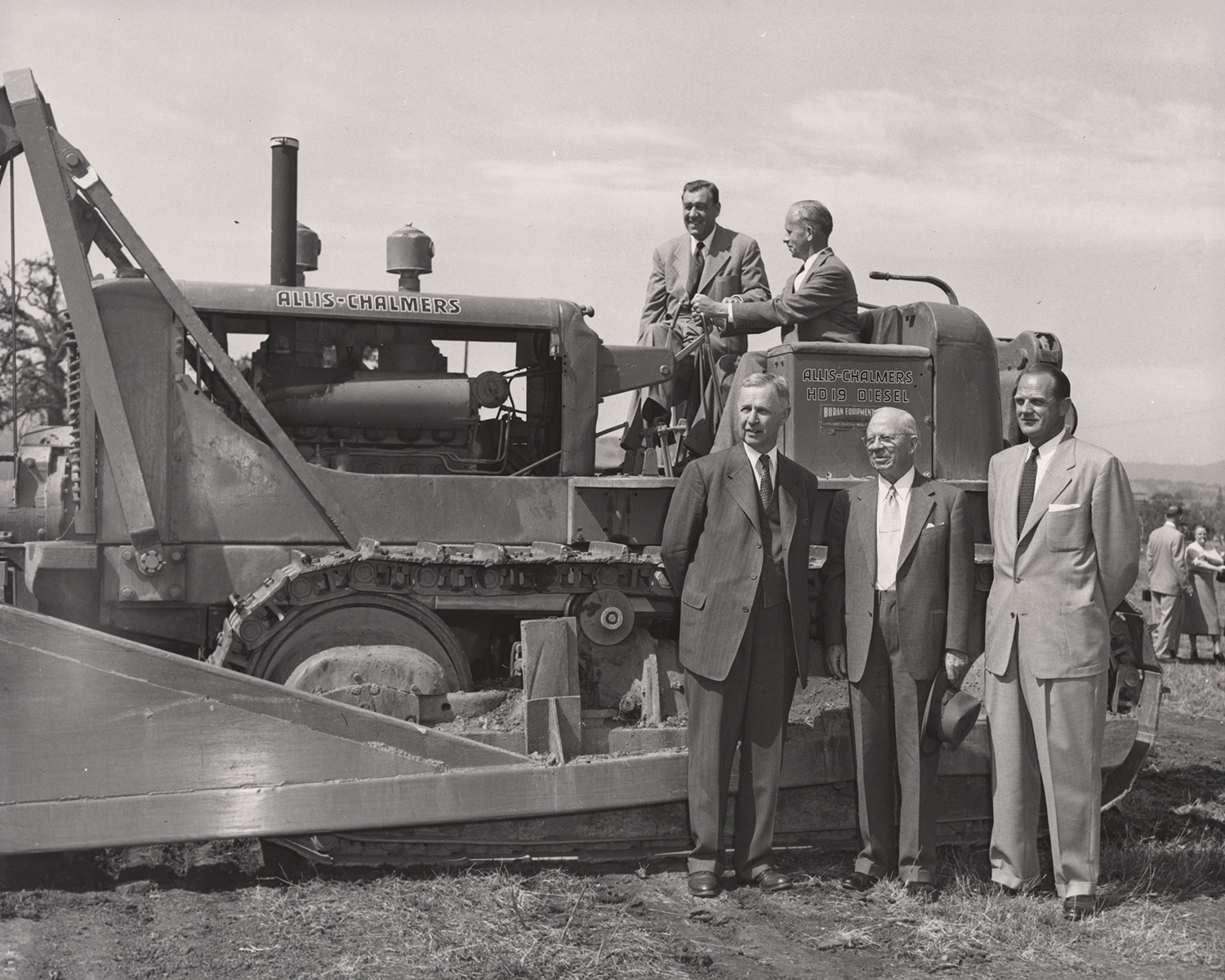
Stanford President J. E. Wallace Sterling, top left, rides construction machinery at the new Stanford Industrial Park.
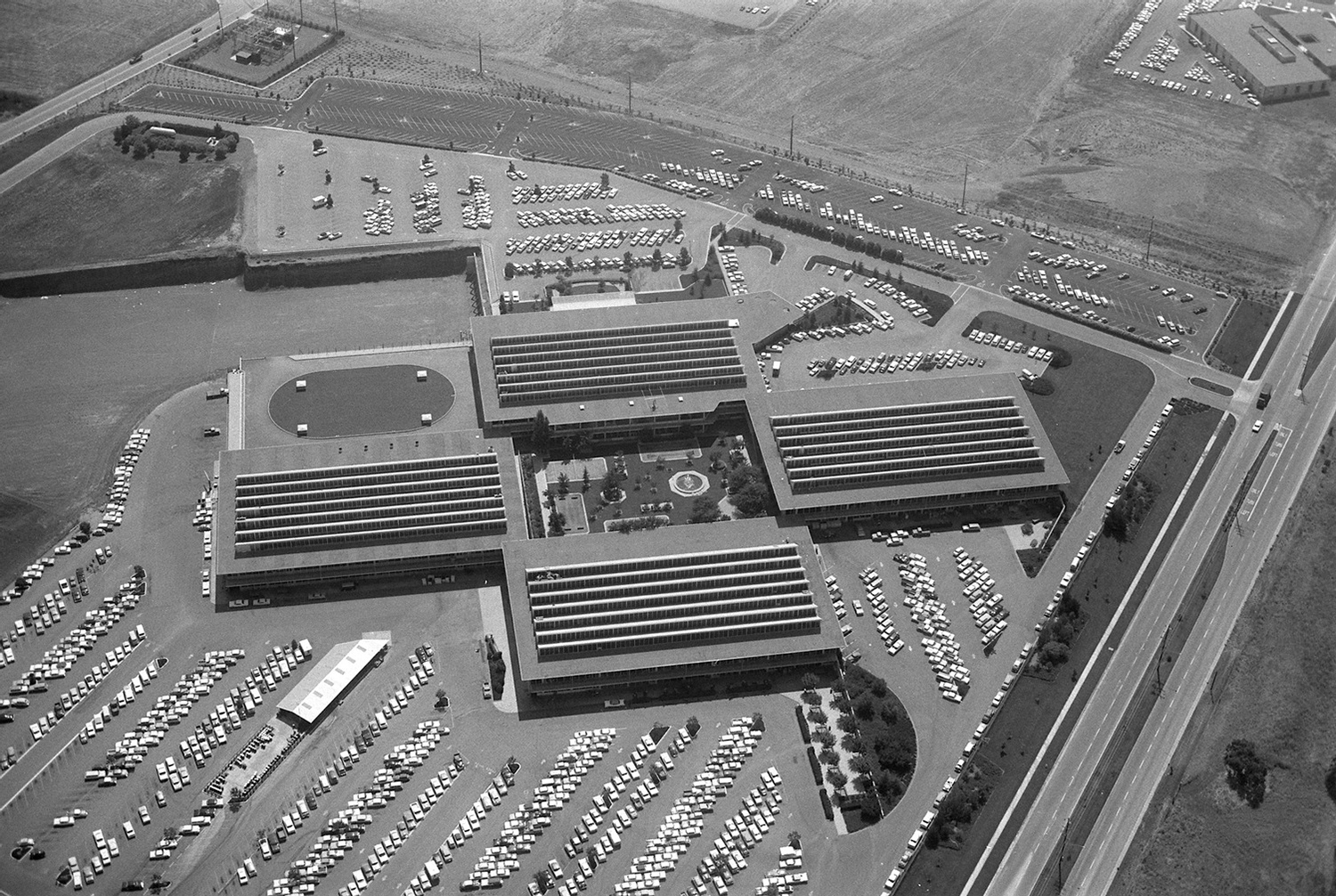
An aerial view of the park in the 1960s.
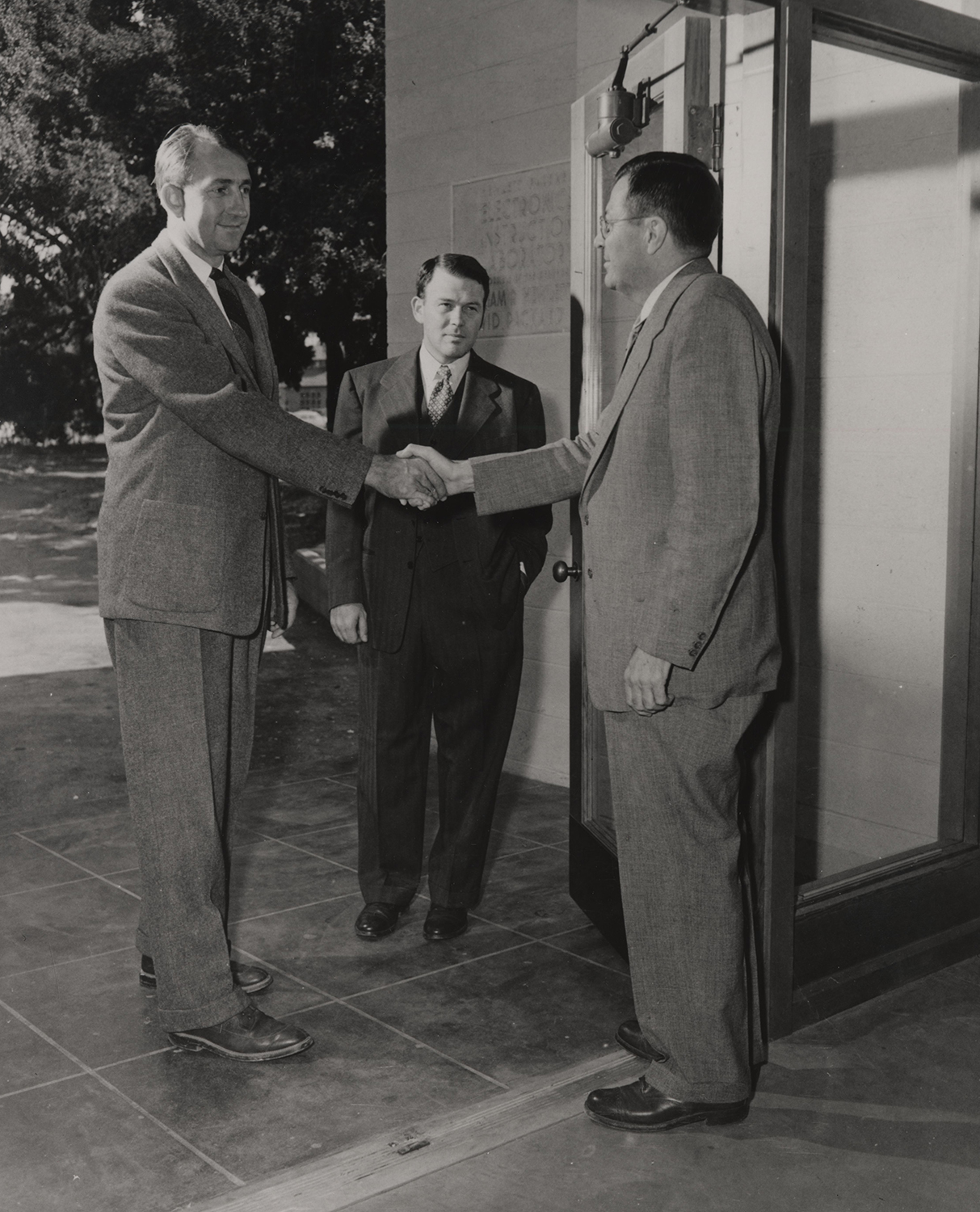
Former provost Frederick Terman (right) convinced Stanford graduates William Hewlett (center) and David Packard (left) to start a company. HP’s headquarters later moved to Stanford Research Park. “When we set out to create a community of technical scholars in Silicon Valley, there wasn’t much here, and the rest of the world looked awfully big,” said Terman in 1974. “Now a lot of the rest of the world is here.”
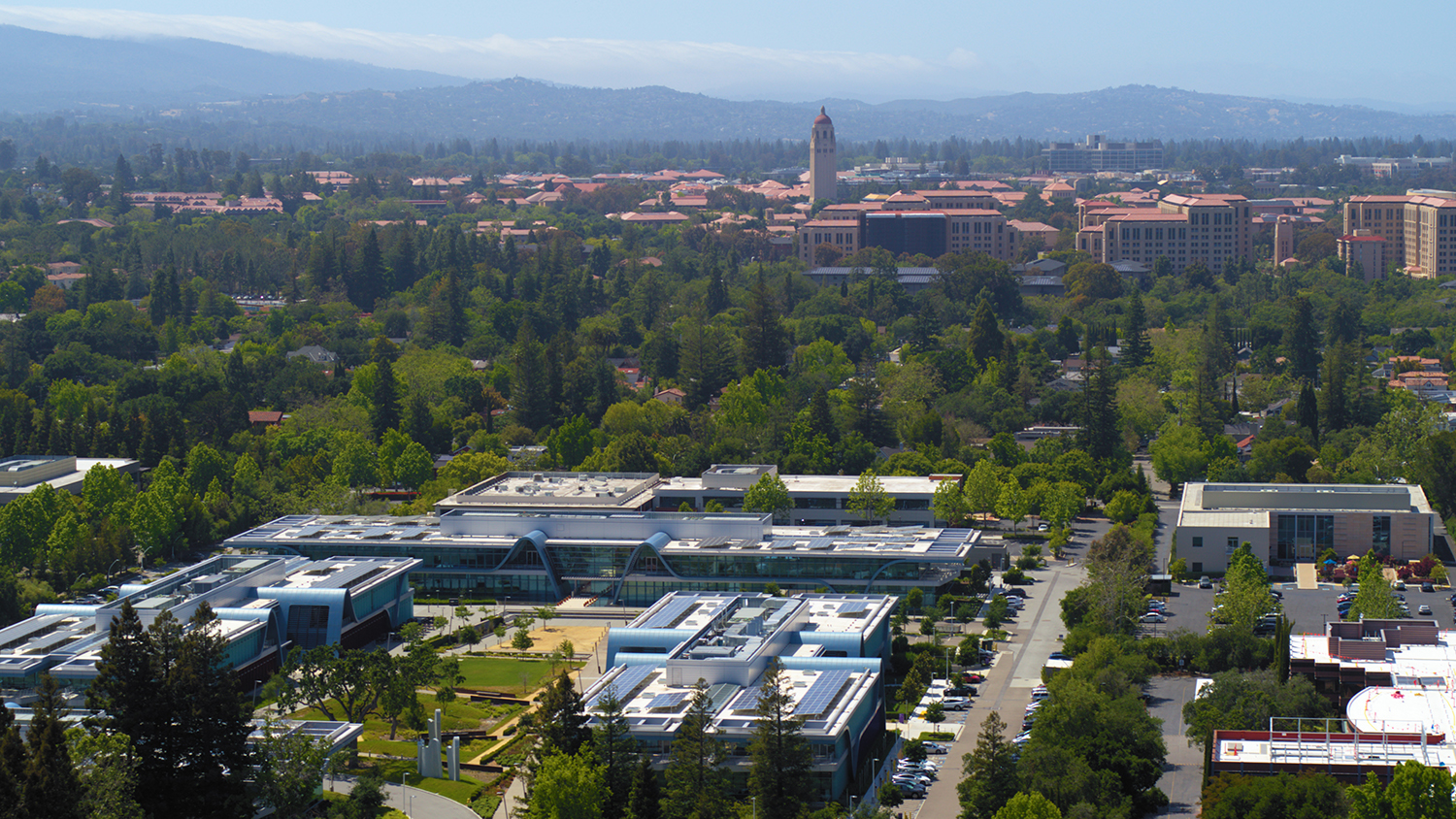
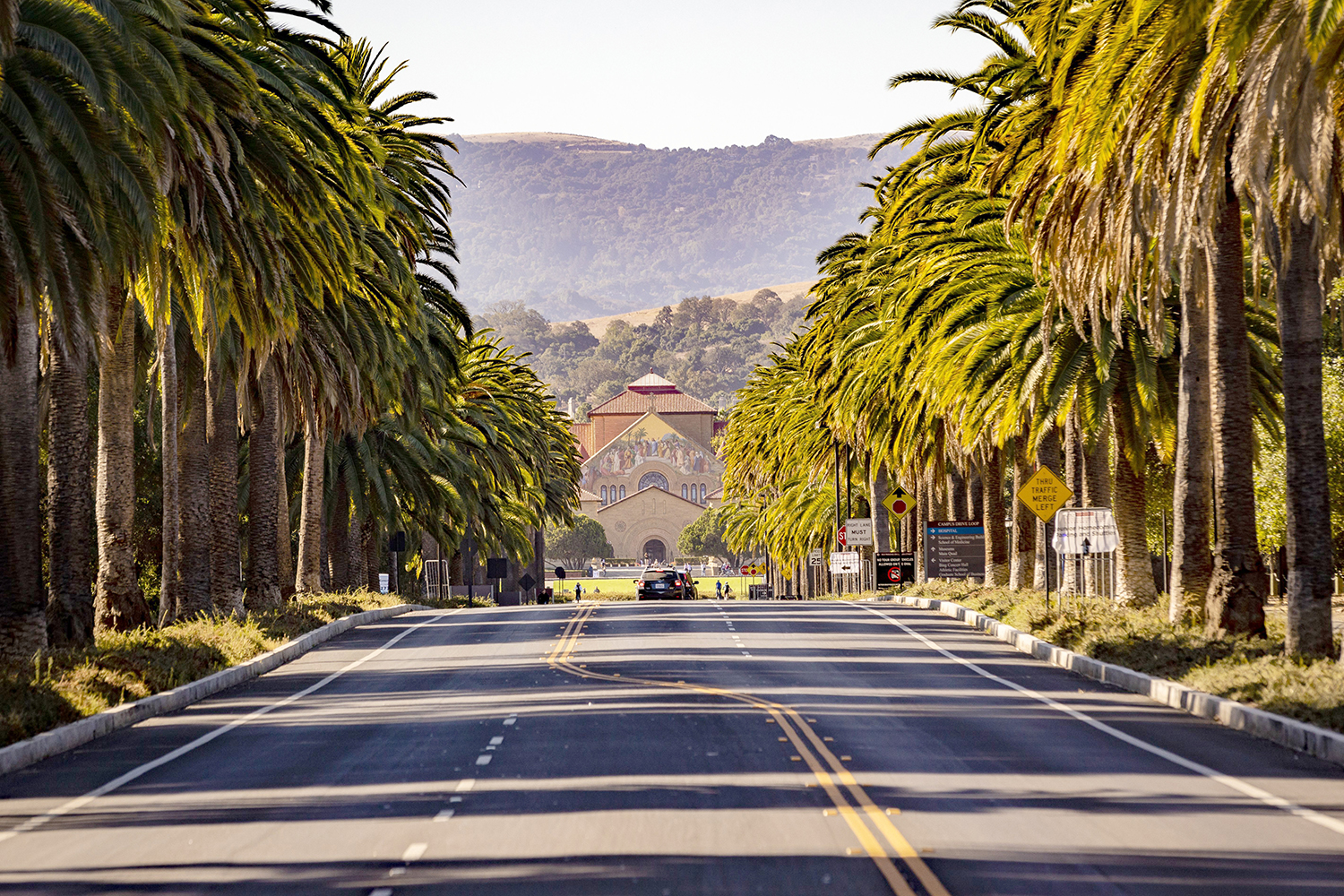
Stanford Research Park, located adjacent to the Stanford campus, is one of the most productive and influential of its kind.
In 1970, Xerox established its Palo Alto Research Center at the park, where its engineers developed technologies foundational to modern personal computing, including the laser printer and the Smalltalk programming language. And after Steve Jobs’ famous ouster from Apple, he launched the startup NeXT, which had a presence in the park and developed technologies like the NeXTSTEP operating system. Over the decades, many more influential companies found their way to the park, including SAP, Facebook, VMware, Guardant Health, Google, Ford, Broadcom, Rivian, and Tesla.
After 75 years, Stanford Research Park remains unique, Griego said, because of the amenities that draw top talent, tenants with unmatched strength in pioneering R&D, and proximity to Stanford’s academic campus. Today it has 700 acres and over 10 million square feet of R&D and office buildings, where more than 150 companies have a presence. The park also features 180 Stanford faculty homes and 70 affordable apartment units, with more than 500 new apartments in development.
“I often tout the tremendous legacy that the City of Palo Alto has inherited from our forebears, and Stanford Research Park is a shining example of that,” said Palo Alto Mayor Vicki Veenker at last week’s celebration. “The City of Palo Alto continues to be proud of our various collaborations with Stanford University.”
In addition to research and development, Veenker said the park “would provide high-quality job opportunities, generate income for the university, and, through tax revenue, benefit the county, the city, and our school district. That pioneering relationship has benefited all of us.”
Stanford Research Park generates approximately $25 million in taxes annually for the City of Palo Alto’s general fund, approximately $30 million per year for the Palo Alto Unified School District, and approximately $30 million per year for the County of Santa Clara, Foothill-De Anza Community College District, and other regional jurisdictions. It also generates approximately $20 million in taxes for the State of California.
The next era
The park is continually evolving and attracting new tenants, such as General Motors, which will move in next year. In 2022, the park opened The Hub, a community space offering meals, happy hours, social events, and classes taught by Stanford faculty. And plans are underway to increase housing in the park for the local workforce, including a new development on El Camino Real that broke ground in May.
Griego said she’s excited about what’s ahead for the park and sees this anniversary as an opportunity to build on the vision that Stanford leaders imagined 75 years ago.
“We are proud of our past, and we think constantly about the future and ways to lead Stanford Research Park into its next successful era,” she said.
Writer
Alex Kekauoha