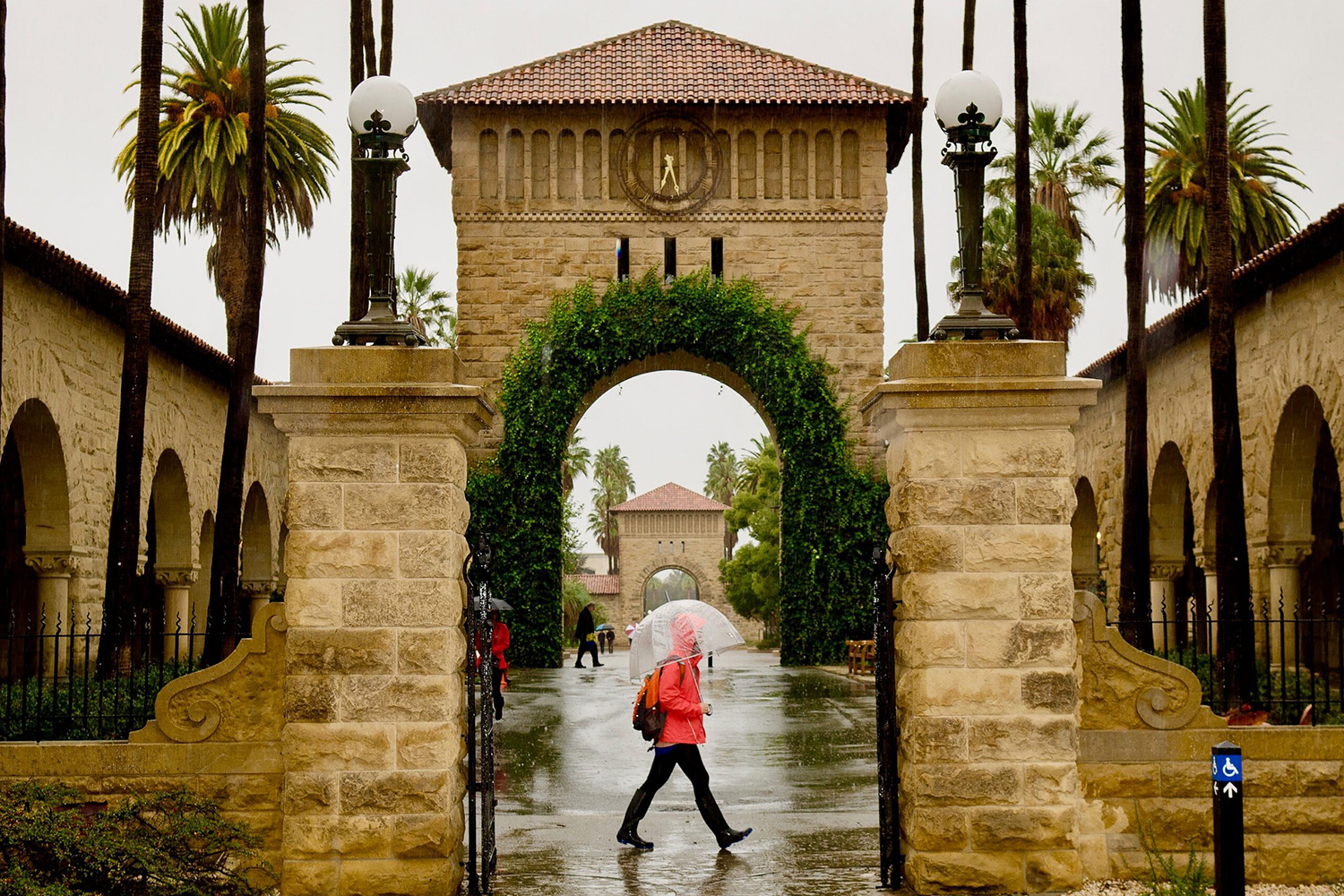
In February 1998, overflowing water from the foothills above campus rushed into the basements of Green and Meyer Libraries and seeped into residence halls and neighboring homes. Recorded as one of the most powerful local climate events in recorded history, the 1998 El Niño storm’s aftermath produced millions of dollars in campus damage and a crystal-clear directive to make the best possible attempt to prevent this severity of flooding again.
With this year’s El Niño, estimated by the National Oceanic and Atmospheric Administration (NOAA) Climate Prediction Center to be very strong and potentially reaching historic strength, the campus is prepared to respond to heavy storms and flooding largely because of infrastructure investments made over the past three decades following the 1998 storm.
Redirecting rainfall
To prepare for future storms and flooding, Stanford’s water resources and civil infrastructure group was tasked to diagnose the problems and implement preventative measures. The team first evaluated how rainfall flows through campus, analyzed the locations of vulnerable areas on Stanford land, and identified improvements to better handle the rainfall. The result? Significant enhancements to Stanford’s stormwater infrastructure to safely redirect rainfall away from campus buildings. Through strategic land grading, expanded piping, and added drainage outlets, runoff now flows past buildings rather than into them. Additionally, multi-use detention basins – which double as athletic fields at Sand Hill Road and at Serra Street near El Camino Real – capture excess rainfall to protect surrounding communities from flooding.
“It was, and still is, important for us to evaluate Stanford’s extensive stormwater system, which runs through two watersheds, to ensure that it can be effective in decreasing heavy rainwater impacts on our community – both campus and Stanford’s neighbors,” shared Tom Zigterman, director of water resources and civil infrastructure in Land, Buildings & Real Estate.
Winter storm readiness is underway
This winter’s preparations include field inspections of the campus-wide stormwater monitoring system. Data will be collected from these monitoring devices to inform future engineering of stormwater infrastructure. Other routine actions for the campus entail the ongoing maintenance of drainage systems; conducting tree risk assessments for root and structural health as well as canopy thinning; replenishing sandbags to manage localized flood susceptibilities; and informing and planning coordination with operations staff across campus.
Zigterman added, “Ongoing operation and maintenance activities to clear inlets, drainpipes, and ditches of leaves that have fallen will be particularly important this El Niño rainy season. The many efforts include our waste hauler doing street sweeping, the grounds team and tree crew cleaning up debris, system operators patrolling campus to observe any problem areas, and plumbers ensuring that buildings’ sump pumps are operational to clear campus facilities of stormwater. It’s an entire team effort before, during, and after a heavy storm.”
Working as one community
University departments are already coordinating protocols to respond to heavier rainfall and fallen debris from stronger, windy storms. In early September, the university’s Office of Emergency Management gathered staff from Stanford Health Care; Land, Buildings & Real Estate; and Residential & Dining Enterprises, as well as representatives from local jurisdictions (Palo Alto and Menlo Park), at Stanford’s emergency operations center to learn more about the climate phenomenon of El Niño from the National Weather Service and from Chris Field, the Melvin and Joan Lane Professor in Interdisciplinary Environmental Studies in the School of Humanities and Sciences and former director of the Stanford Woods Institute for the Environment, to address any remaining gaps and coordination protocols before winter begins.
Operational exercises continue through November and December and consist of surging water scenarios for both in-house at Stanford and with the surrounding cities of Menlo Park and Palo Alto, as well as discussing interagency coordination and mutual aid.
One important call-to-action being echoed by both scientists and operational leadership is for all members of the Stanford community to identify potential hazards or vulnerabilities at their home, work, and commute. Chris Godley, director of emergency management reflected, “If you’re worried or uncertain about El Niño, now’s a good chance to take some concrete steps by having a plan on how you might find an alternate route to work, or what to do with your family if the power went out, or have a go-bag or emergency kit. If you have a plan at home and alternative commute routes, then you can safely come to campus and handle work issues.”
Learn more about Stanford’s comprehensive stormwater capture system by visiting Stanford Water Resources. For any storm-related issues like debris blocking a drain or fallen tree limbs, call 650-723-2281.
For more information
This story was originally published by Sustainable Stanford.