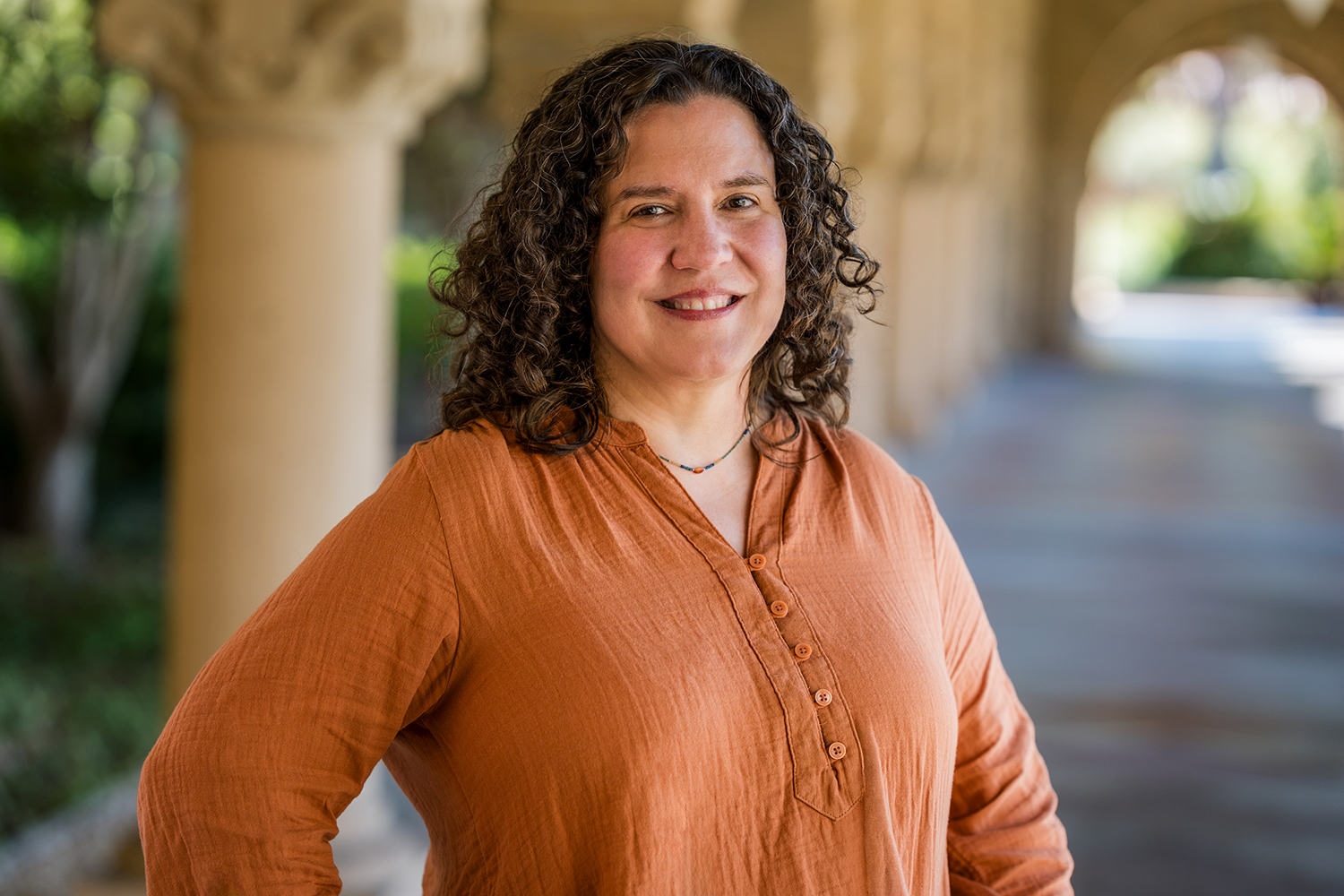
Ashby Morrison, professor of biology, has been named associate vice provost for graduate education and postdoctoral affairs, beginning with the 2026-27 academic year. In addition to her research, which focuses on the intersection of genomic biology and disease, Morrison has extensive experience in career development for graduate students and postdoctoral scholars. This will be one of her focus areas when she starts her new role in September.
“Ashby has a remarkable track record of supporting graduate students and postdoctoral scholars and is already a seasoned administrative leader in the School of Humanities and Sciences and across STEM disciplines,” said Ken Goodson, vice provost for graduate education and postdoctoral affairs. “She will be a highly valued thought partner on topics ranging from career development to student well-being, where she has already done much work on the campus.”
Part of Morrison’s role is to support graduate students and postdoctoral scholars who want to pursue roles in academia. For example, she will be the lead instructor for a workshop on pursuing faculty careers.
But Morrison sees her role as broader than that, and hopes to develop more ways for graduate students and postdocs to connect with a wide variety of potential future employers.
“My goal is to help students and postdocs as they transition to the next stage of their career – to show them the diversity of careers that they can participate in and thrive in,” Morrison said. “I think we need Stanford graduates and postdocs at every level – in government, academia, and industry – to have a broad, beneficial impact on society.”
Equipping graduate students and postdocs with the tools to pursue a broad range of career opportunities is important not only because it increases the potential positive impact they could have, Morrison said, but also because it builds resilience for an evolving job market.
“We need to be nimble,” Morrison said. “We need to see how industry and academia move, so that we can help our students define the most direct path to those careers and thrive in them.”
Morrison hopes that her own nontraditional path to academia will give her a valuable perspective on building students’ flexibility and resilience. The daughter of an immigrant, she came from a low-income background and was one of the first generation in her family to go to college.
“When I came to graduate school, it was my first time in a lab,” Morrison said. “I just really had an appreciation for opportunities, and I’m very dedicated to creating as many opportunities as possible for PhD research across different communities. I think it helps our collective problem-solving skills to have as many voices as possible present in our research community.”
Morrison said graduate students and postdocs at Stanford have an enormous opportunity – one that her office can help them fulfill.
“Geographically, we’re in the best place we can be,” Morrison said. “We have direct avenues to connect locally with all different types of industries and a lot of opportunities in academia. We can build an infrastructure around the attributes that those career paths really value and structure our support system around that.”
And both graduate school and postdoctoral training play a critical role in students’ career trajectories.
“This time really sets the momentum for everything that follows,” Morrison said. “It’s really important that we help our students and postdocs be the best they can here at Stanford, and in their next stage.”
Writer
Margaret Steen