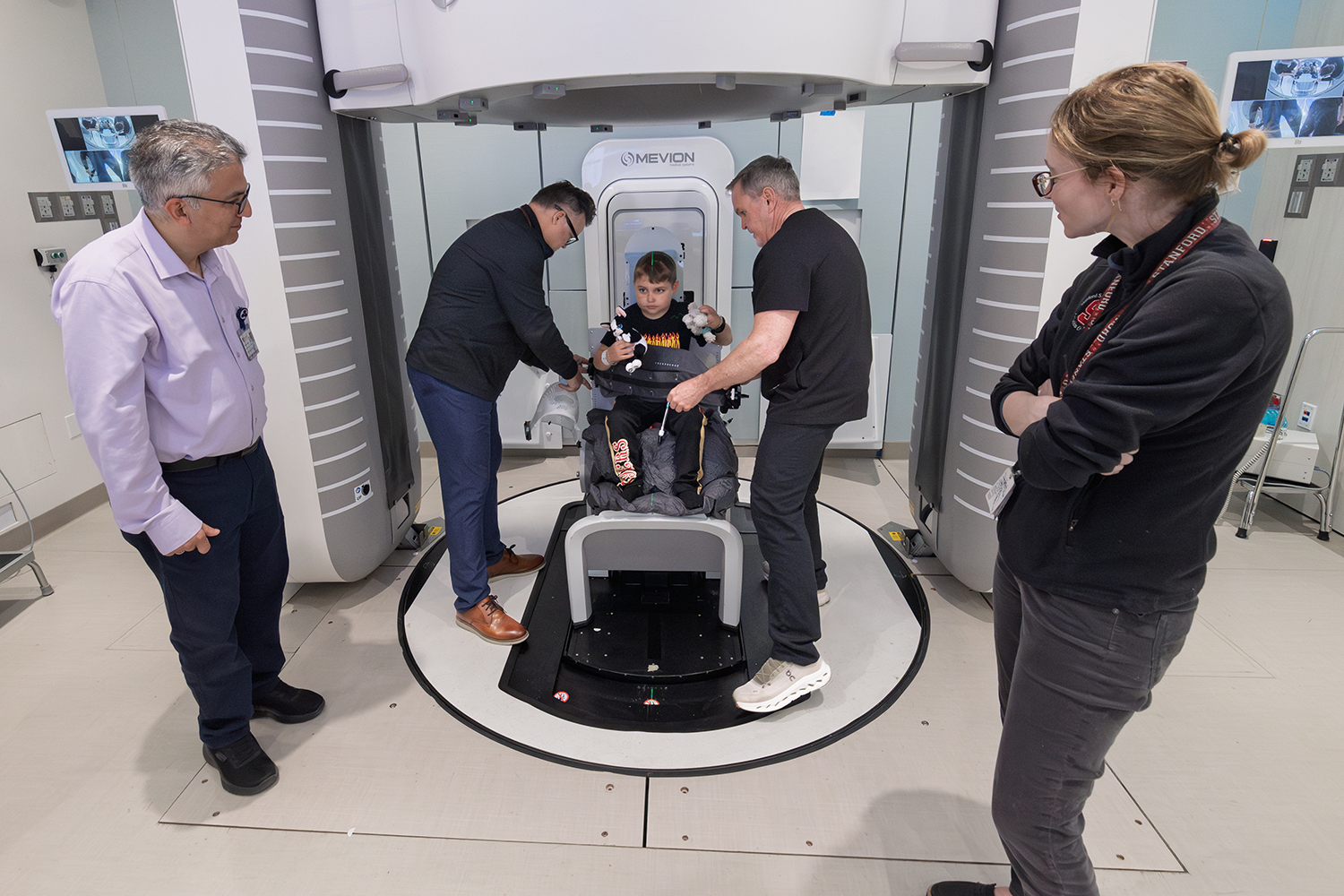
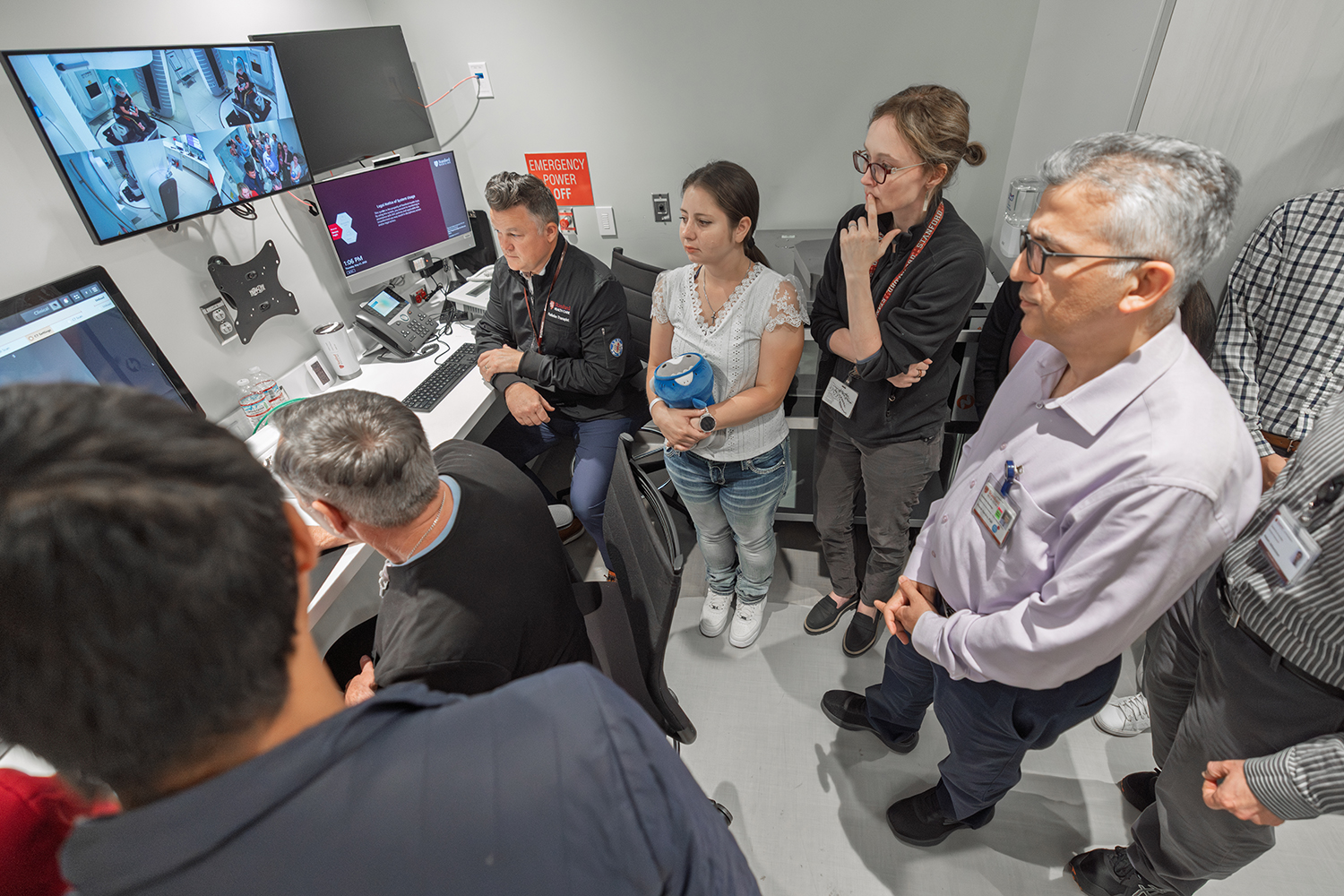
On June 4, a 7-year-old boy who had a rare, malignant brain tumor removed became the first person treated at Stanford Medicine’s new, ultracompact proton therapy facility.
The milestone arrived near the end of patient Stephen De La Torre’s planned radiotherapy treatments; his doctors expect to send him home next week to resume life as a normal, active kid. But Stephen’s treatment is just the start of making a highly effective cancer therapy much more accessible to patients in Northern California and, eventually, around the world.
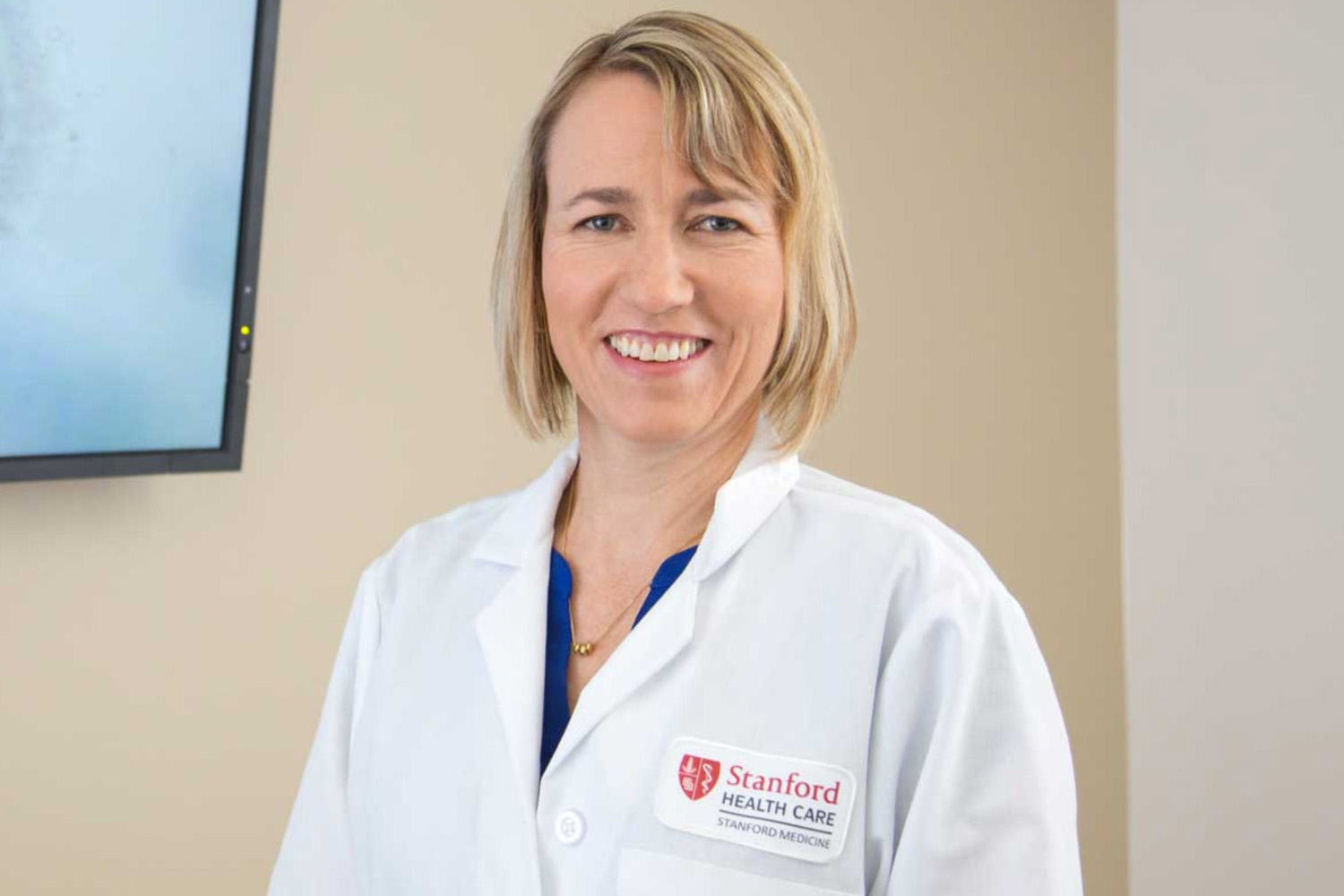
“Our new ability to offer protons is really exciting, especially for pediatric patients, because in many cases it lowers their risk of long-term treatment side effects,” said Susan Hiniker, MD, Stephen’s pediatric radiation oncologist at Stanford Medicine Children’s Health.
The Sridhar B. Seshadri Proton Therapy Suite, the first of its kind in the world, is unique because its small, less costly equipment fits in a compact space.
Until now, the nearest options for most Northern California patients who needed proton therapy were hundreds of miles away. Hospitals have struggled to build traditional proton therapy facilities because the equipment is expensive and so large it requires an area the size of a football field.
The innovative new design is the product of a collaboration between Stanford Medicine and two medical technology companies. When it is replicated, the new design will lower the barriers to proton therapy treatment not just locally but globally.
That will be good for patients of all ages. This week, the Stanford Medicine team will also begin treating adult patients with protons, which can be used for a wide variety of tumors, including those in the head and neck, spine, lungs, liver, and prostate.
“The key is being able to eliminate cancer without causing unacceptable collateral damage,” said Bill Loo, MD, PhD, professor of radiation oncology, who has led efforts to bring proton therapy to Stanford Medicine.
“With protons, we can deposit the dose of radiation in a more controlled way.”
Protons will be especially helpful for children like Stephen. Kids’ growing bodies are extra-sensitive to even low doses of radiation, said Hiniker, who is also an associate professor of radiation oncology at Stanford Medicine. “Being able to send radiation to just the right spot, and avoid healthy tissues nearby, is extremely beneficial.”
Our new ability to offer protons is really exciting, especially for pediatric patients, because in many cases it lowers their risk of long-term treatment side effects.Susan HinikerAssociate Professor of Radiation Oncology
Vanquishing a brain tumor
After several months of unexplained symptoms, Stephen was diagnosed earlier this year with an ultrarare brain tumor, known as a papillary tumor of the pineal region.
The tumor, about the size of an AA battery, was blocking drainage of cerebrospinal fluid from his brain, causing swelling that led to headaches, vision problems, nausea and lethargy. On March 9, Stephen had surgery at Lucile Packard Children’s Hospital Stanford to excise the tumor.
“Our surgeons told us that his tumor was located really close to the brain stem, so they removed what they could safely,” said Stephen’s mom, Tricia De La Torre. “He needed radiation to eliminate the rest.”
When Hiniker first met with Stephen’s parents, Tricia and her husband, Stephen De La Torre Sr., she told them that while Stephen’s case was unique and complex, there could be some benefits to proton therapy for their son. Although cancerous, the tumor is slow growing, and the goal of radiation treatment would be to eliminate what was left of it, Hiniker explained. But minimizing the dose to the surrounding developing brain and brain stem – which controls key body functions such as breathing and heartbeat – would be beneficial.
Protons are the charged particles in the center of an atom. Because of their charge, they can be steered and stopped more precisely than the photons in X-rays, allowing radiation oncologists to conform the dose of protons precisely to the shape of a tumor.
However, when Stephen began radiation treatment in April, the nearest operating proton therapy facilities were in San Diego and Seattle. Each was more than 500 miles from the family’s hometown of Lakeport, California. Stephen needed radiotherapy treatment five days a week for about six weeks, making the distances daunting.
A logistical challenge
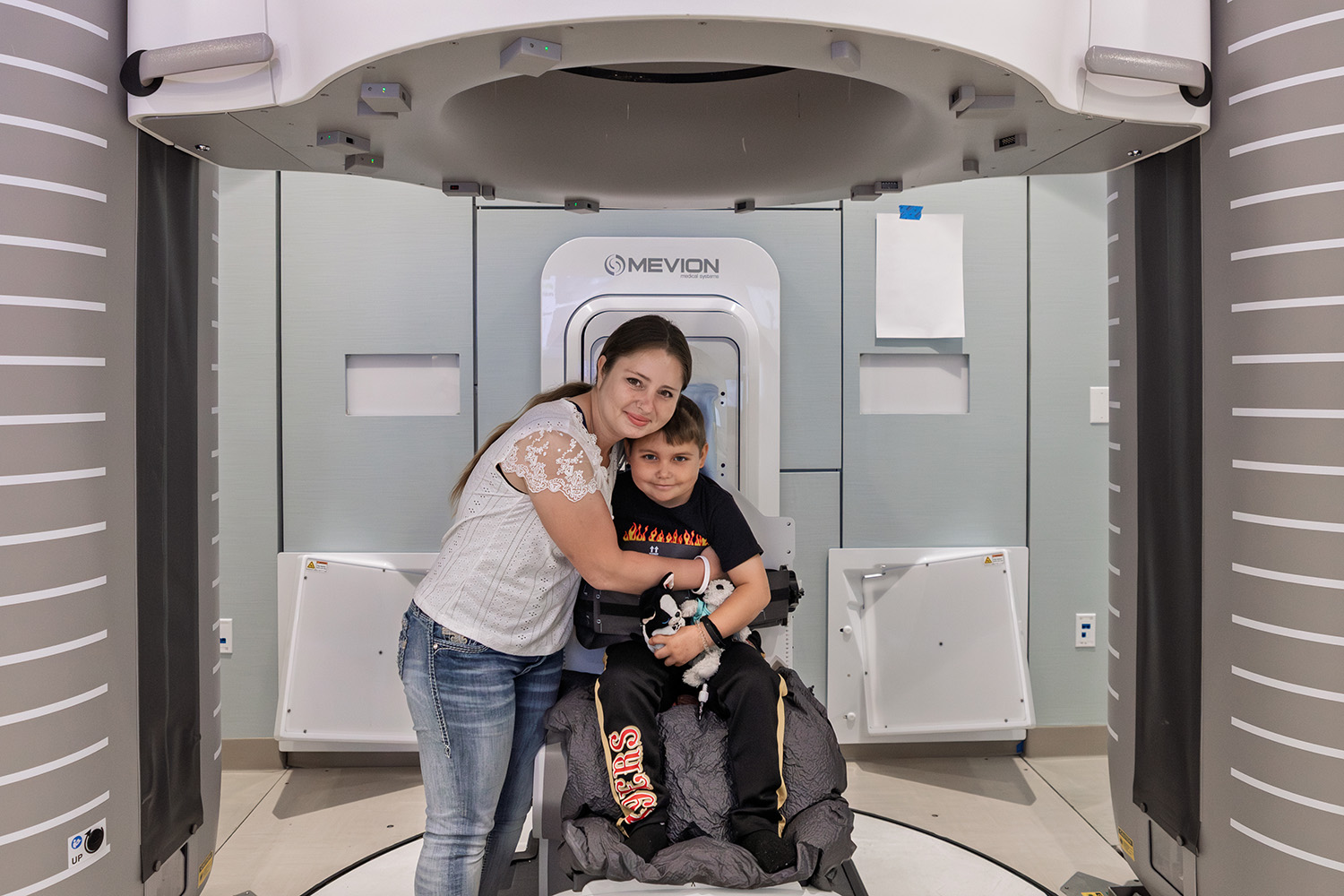
“It would have been a challenge for our family to be totally separated,” Tricia De La Torre said. She has been accompanying Stephen to the majority of his treatments while her husband is at home with Stephen’s sister, Natalia. The children’s grandparents, Sherri and Marc De La Torre, are pitching in with logistics, and their grandma Patricia Miller is sending Stephen letters to help boost his spirits.
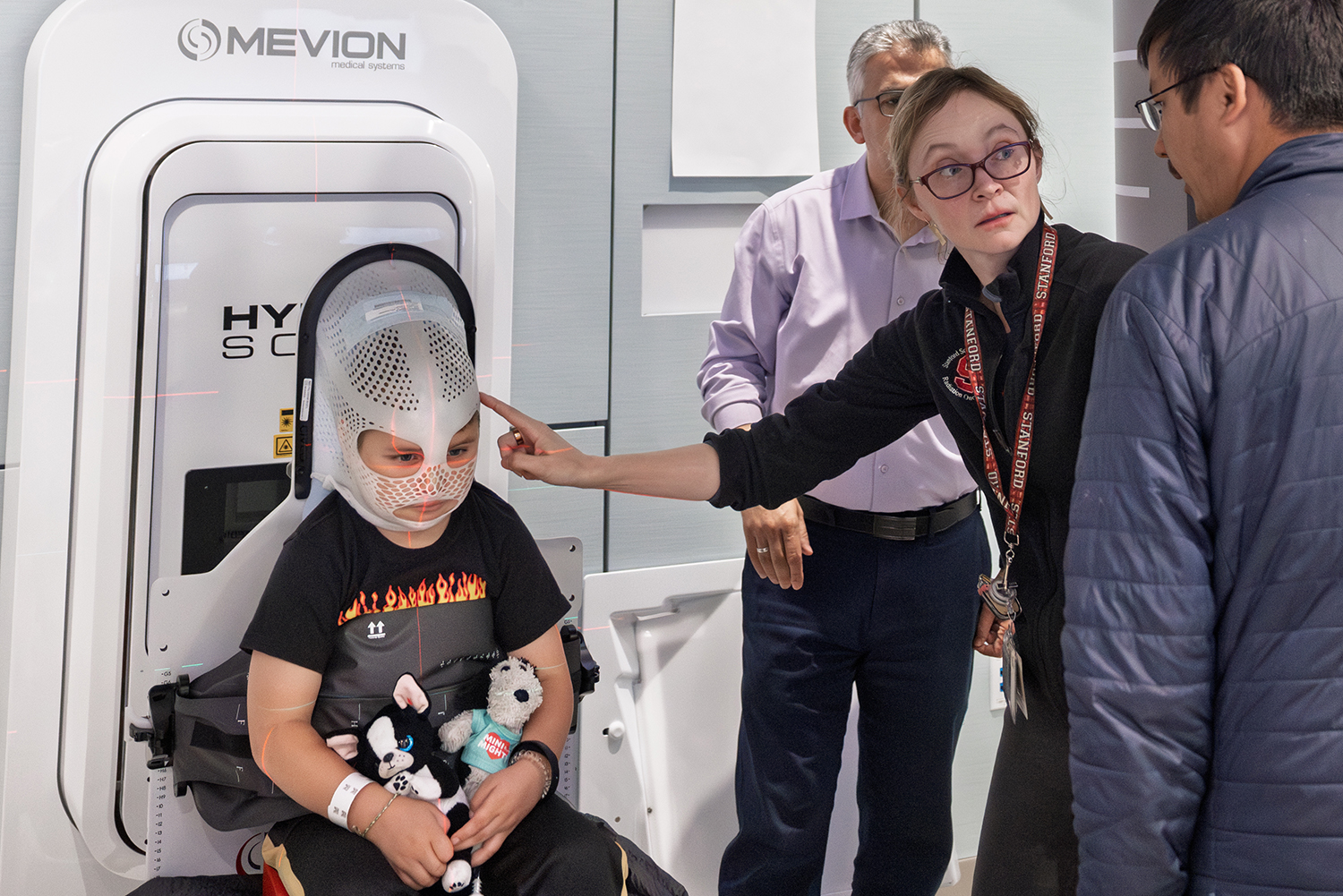
Stephen began receiving radiotherapy treatments at Stanford Medicine with a traditional X-ray beam. The pediatric radiation oncology team designed a customized mask to immobilize his head during treatment; it looks like a San Francisco 49ers football helmet, in honor of his favorite player, Nick Bosa.
Throughout his medical journey, Stephen has been very brave, his mom said.
“He’s just told us he’s going to be OK,” De La Torre said. “His strength and his optimism are the most amazing things about him.”
Meanwhile, the Stanford Medicine team was performing the final calibrations on the new proton therapy facility, which is part of the Stanford Medicine Cancer Center. The team realized Stephen was an excellent candidate to be their first patient.
“Dr. Hiniker told us that he could receive protons for the last few radiation treatments, and that it would be good for the surrounding tissue not to get that extra radiation because the tumor is so close to his brain stem,” De La Torre said.
Stephen’s treatment on June 4 took about a half hour. His doctors plan to give him six more proton therapy treatments over the next several days, then send him home by mid-June.
His family is preparing to throw a big party to celebrate his return. Stephen is looking forward to seeing his friends again and resuming his favorite sports, which include basketball, soccer, baseball and dirt biking, his mom said.
But before the celebrations, he’s ready to get protons.
“He’s really excited about it,” De La Torre said. “He’s been telling everybody, ‘I’m the first patient!’”

For more information
This story was originally published by Stanford Medicine.
Writer
Erin Digitale