In brief
- Stanford Medicine researchers developed an app that tracked older adults’ mobility as daily temperatures rose above 84 degrees Fahrenheit.
- Participants’ travel range shrank with extreme heat, potentially limiting social activity, exercise, and community engagement associated with healthy aging.
- The findings highlight a need for heat-resilient infrastructure and resources, particularly in lower-income communities facing greater heat exposure.
For some, summer can be a season of expansion – sunny afternoon trips to the pool or beach, longer family vacations unconstrained by school schedules, outdoor concerts and festivals.
But as the planet warms and extreme heat waves become more common in the summer months, at least one group of people seems to be limiting their movements: older Americans.
A new phone app developed by researchers at Stanford Medicine revealed that older adults across the country constrict their range outside the home when daily average temperatures climb above 84 degrees Fahrenheit. That finding means more than just a missed summer outing, the researchers say – life-space mobility, a measure of how far people travel outside their home on a daily basis, is strongly correlated with overall health in older adults. Their findings were published recently in the journal Innovation in Aging.
“Life-space is a really integrative measure of health,” said Michelle Odden, PhD, an associate professor of epidemiology. “We were interested in measuring it objectively with people’s mobile phones, which even many older adults carry with them every day.”
How far and how often older adults travel outside the home is an indicator of how much they are socializing, how much they’re exercising, and how much they’re engaging with their communities through work, volunteering, or attending religious services; all these activities are known to correlate with healthy aging and longer lifespans.
An app for mobility
Traditionally, life-space mobility has been measured with questionnaires that ask older adults to recall how many times in the previous week they left their house, their neighborhood, and their town. But studies that rely on recall after the fact may not capture the full picture of a person’s movement.
Annabel Tan, PhD, MPH, a data scientist at Stanford Medicine and former doctoral student in Odden’s lab, and her colleagues built an iPhone app called Cardinal LifeSpace that captures GPS positioning and user-reported data to objectively track older adults’ life-space mobility.
“Older adults are often a forgotten population,” Tan said. “This app could be a tool to help figure out how we should plan for their health.”
The researchers recruited older adults from across the U.S. who were part of a large ongoing study headquartered at the University of Alabama at Birmingham to assess stroke risk factors in Black and white adults. Tan and her colleagues wanted to test the feasibility of their app to capture life-space mobility and to ask whether older adults’ movements outside their home varied with temperature.
Their study tracked the movements of 82 adults with an average age of 74.5 over the course of two weeks in summer, fall, or winter. The researchers looked at the geographical areas the older adults traveled during each day, as well as the farthest distance they traveled from their homes.
They found that once the daily average temperature hit 84 degrees Fahrenheit, that 2D space started shrinking. The study participants reduced the area they ventured outside the house by nearly two-thirds of a square mile for every degree the daily average temperature rose above 84 degrees.
“This is the first study to show that higher temperatures can constrict life-space,” Odden said. “That could result in less social engagement, less physical activity, and less time spent in the community – all of those things we know are important for healthy aging.”
Previous studies in other countries, mostly in Scandinavian countries, used questionnaires to address how life-space mobility in older adults correlates with temperature and did not find this connection. But those studies did not include the level of extreme summer temperatures that are now felt in many parts of the U.S.
How aging bodies cope with heat
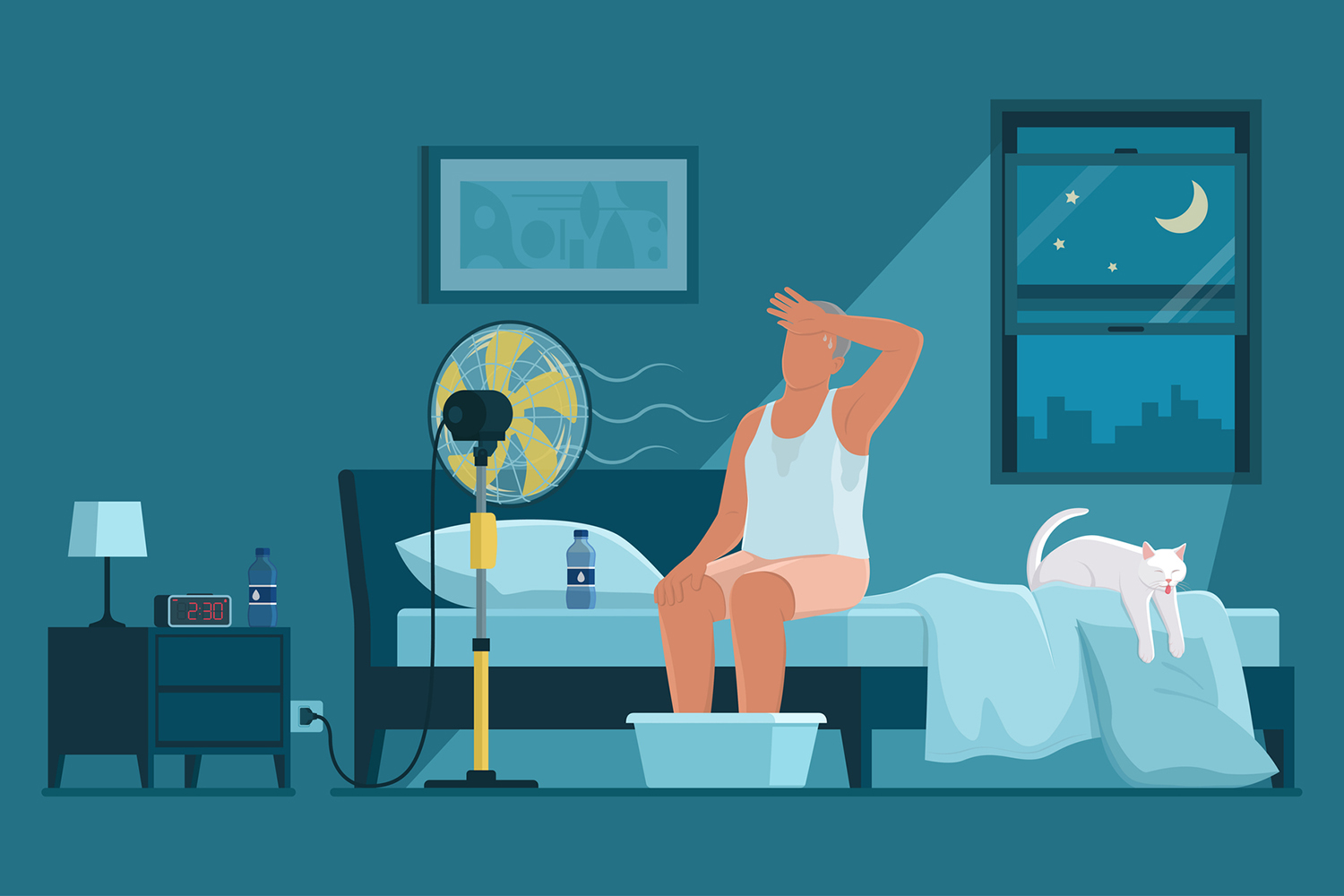
As we age, our bodies’ ability to regulate internal temperatures decreases. Older adults can’t cool themselves down when it’s hot or warm themselves up when it’s cold like they used to. On hot days, that means higher risk of heat stroke or heat exhaustion.
Add in chronic conditions like diabetes or heart disease – also both more prevalent in older adults – and that temperature regulation becomes even more dysfunctional. Extreme heat itself can also increase the risk of heart attacks and strokes, especially in older adults.

This is the first study to show that higher temperatures can constrict life-space. That could result in less social engagement, less physical activity, and less time spent in the community – all of those things we know are important for healthy aging.Michelle OddenAssociate Professor of Epidemiology
Older adults also have a blunted sense of thirst, meaning they are more likely to become dehydrated, especially on hot days. Making sure to get in those eight to 10 cups of water daily is especially important for folks over 65, Odden said.
Policy considerations
Because extreme heat poses danger to the aging population, the researchers’ findings shouldn’t be interpreted to mean that older adults should push themselves to get out for a sweltering hike when temperatures climb, Tan and Odden said. Rather, it’s a message for policymakers and city planners to consider public infrastructure like air-conditioned community centers to keep aging populations healthy while also allowing for social and physical engagement.
Lower-income areas need special attention when it comes to staying healthy in the heat, Tan said, because residents there are less likely to have air conditioning and, in cities, poorer neighborhoods are actually hotter than wealthier ones due to the lack of green spaces.
“It could be as simple as planting more trees in certain areas,” Tan said.
Taking a few days off from walks with your neighbors or your volunteer gig when the thermostat climbs isn’t going to make a big health difference on an individual basis. But climate change is bringing us more frequent and longer heat waves, so that restricted activity could eventually add up to a significant difference on a population-wide level.
“If you disrupt healthy habits, that can shift the trajectory slowly over time to less physical activity, less social engagement, less cognitive stimulation,” Odden said. “And this is something that policymakers need to pay attention to and create alternative resources for older adults as we deal with a warming climate.”
For more information
This story was originally published by Stanford Medicine.
Media contact
Lisa Kim
650-723-6696
likim@stanfordhealthcare.org
Writer
Rachel Tompa