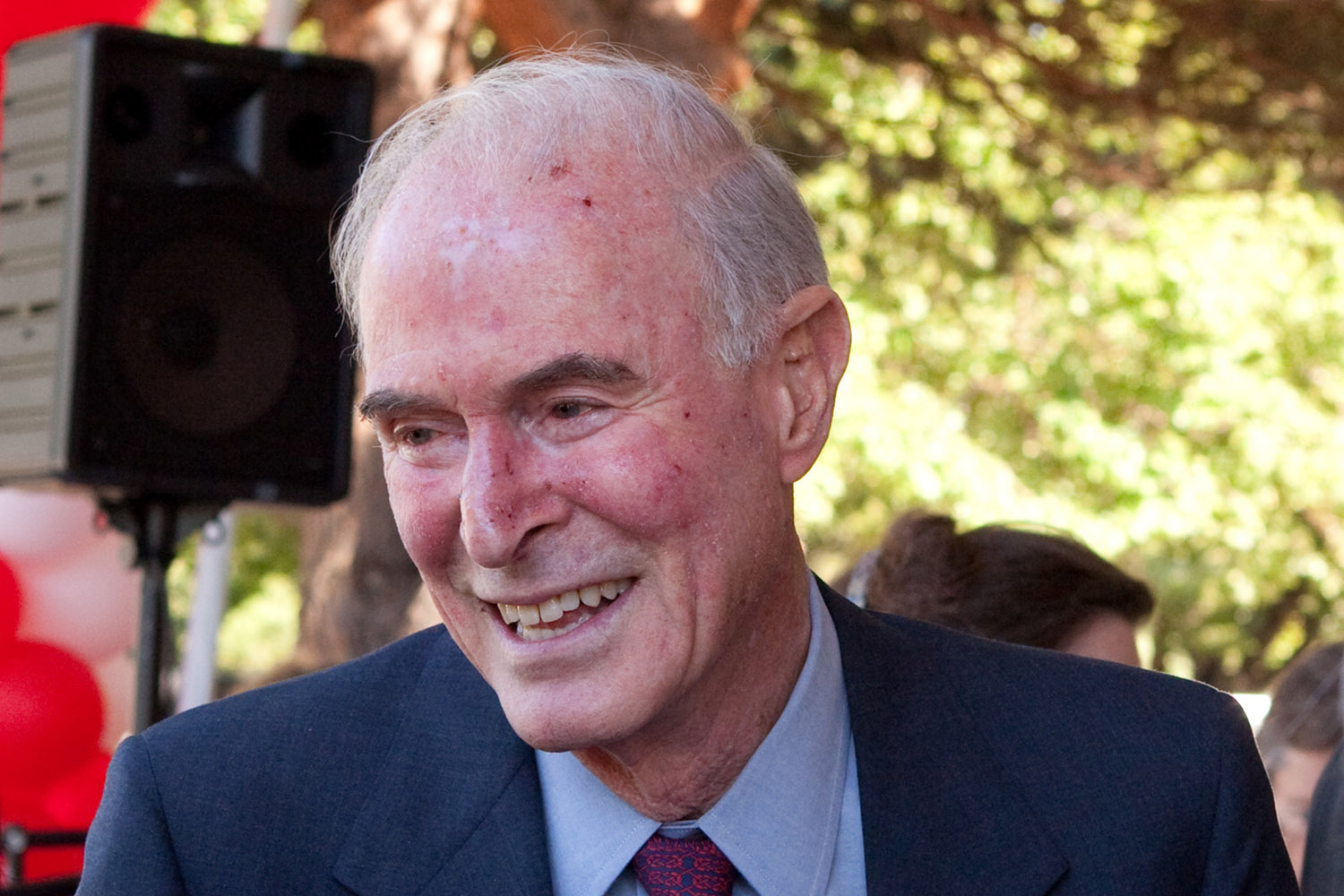
Peter S. Bing, ’55, a trusted advisor to university leaders and member of the Board of Trustees for 31 years, died June 10 at age 91.
Bing was a public health expert who dedicated much of his life and philanthropy in service of the university. He and his wife, Helen, helped give rise to distinctive programs and experiences at Stanford such as study-away programs for undergraduates through the Bing Overseas Studies Program and live performances for the extended Stanford community at Bing Concert Hall. Together, they spent decades advancing opportunities for students and faculty.
Bing once described his family’s philanthropy as driven by “an emotional epoxy that happily bonds each one of us to Stanford for life.” His volunteer service was recognized with the Gold Spike award in 1983, and a decade later he received the university’s highest honor, the Degree of Uncommon Man (now the Degree of Uncommon Citizen), for “rare and extraordinary service to Stanford.”
Stanford President Jonathan Levin, who holds the Bing Presidential Professorship named for Helen and Peter’s generosity, said Bing promoted many of the values that continue to be core to Stanford today.
“Peter championed the importance of the humanities and the arts, an openness to learning from different cultures and ideas, and scientific discovery,” Levin said. “The university owes a great deal to his vision and leadership, which helped shape nearly every corner of our campus and extended Stanford’s impact far beyond.”
From shy student to White House advisor
Bing grew up in Southern California and arrived at Stanford in 1951. He described himself as a shy student who spent most nights at the library because it was where he felt most at home. Decades later, when the 1989 Loma Prieta earthquake devastated the building, Bing stepped forward to support its restoration. The original part of the Cecil H. Green Library, where he liked to study, reopened as the Bing Wing in 1999.
Bing became drawn to public service while an undergraduate. In 1954, he and Dianne Goldman, the future California Sen. Dianne Feinstein, were elected president and vice president, respectively, of the student body.
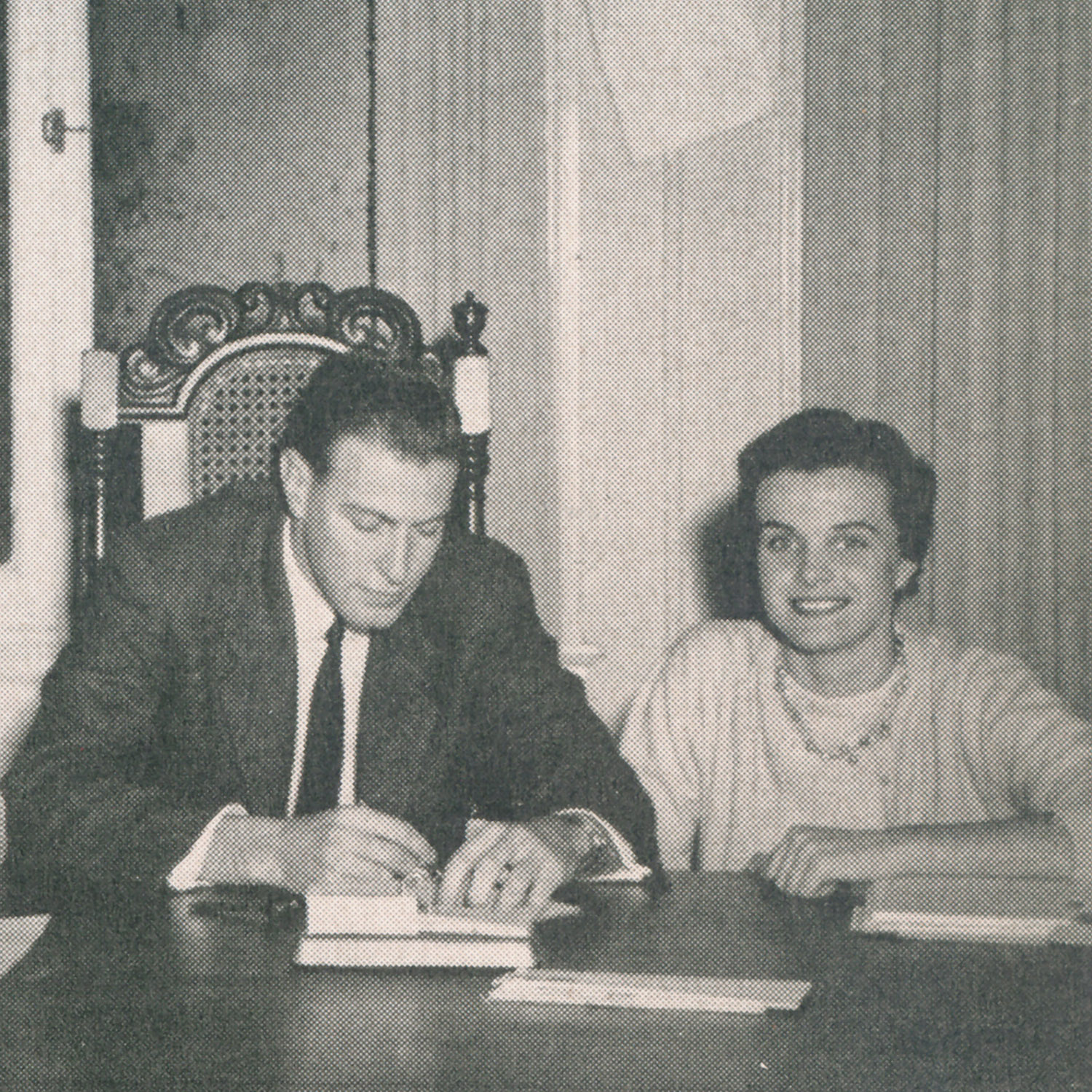
Peter Bing and Dianne Goldman, the future California Sen. Dianne Feinstein, were elected president and vice president, respectively, of the Stanford student body in 1954. | Department of Special Collections & University Archives, Stanford University Libraries
After graduating from Stanford with a degree in humanities, Bing earned a medical degree at Cornell and a master’s in public health from Harvard. He met his future wife, Helen Popovich, while working as a young doctor. The couple spent their first years of marriage in Washington, D.C., where Bing held positions in the Kennedy White House. He later served as executive director of the Presidential Commission on Health Manpower during the Johnson administration.
One of his earliest gifts to Stanford was given with his mother, Anna Bing Arnold, to provide laboratory space and equipment for biochemistry. Bing and his mother also supported Bing Nursery School, which opened in 1966 as a laboratory preschool with a matched grant from the National Science Foundation. Helen Bing would go on to spend decades as an active volunteer and supporter of the school.
For years, a card on Bing’s desk featured a quote attributed to the American philosopher William James: “The great use of life is to spend it for something that will outlast it.”
The example of service
Peter Bing became increasingly involved as a Stanford volunteer and philanthropist after moving to Southern California in 1967 and taking over his family’s real estate business. He was elected to the Stanford University Board of Trustees in 1970 and served for more than three decades, including a term as chair. He also was a member of the presidential search committee that recommended Gerhard Casper as Stanford’s ninth president.
He played a pivotal role in some of Stanford’s most ambitious fundraising efforts – the Centennial Campaign (1986–92), the Campaign for Undergraduate Education (2001–05), and The Stanford Challenge (2006–11) – traversing the globe to engage with alumni, parents, and friends at Stanford events. With his trademark eloquence, he actively encouraged others to step forward to help advance the university’s mission during these efforts.
“Those who benefit from our material success will benefit even more from our example of service,” he said at a 1986 convocation of volunteers. “They will have the confidence, and the moral imperative, to do for themselves and for their communities, as we have done for our universities.”
John L. Hennessy, who served as Stanford president from 2000 to 2016, was the inaugural holder of the Bing Presidential Professorship.
“It is difficult to overstate the impact that Peter had in shaping the university,” Hennessy said. “His generosity created transformative programs across campus, but his real gift was his personal engagement – the way he cared for students and faculty alike and worked tirelessly to strengthen our entire community.”
When he learned that he would receive the Uncommon Man award in 1994, Bing asked that his celebration include a workshop to encourage future volunteerism and philanthropy among Stanford students. He leveraged the event to launch the Bing Senior Solicitation Program and led students and alumni in brainstorming ways to attract more volunteers and donors to the university.
“Peter understood that a university is not built of stone and mortar alone, but of ideals that are nurtured and shared across time,” said Gerhard Casper, who served as Stanford president from 1992 to 2000. “His devotion to Stanford was grounded in the conviction that education enlarges our capacity for understanding and enriches our humanity. He was, in the truest sense, an uncommon citizen of the university.”
A legacy across campus
Over the years, Peter and Helen Bing’s wide-ranging support touched nearly every corner of the university.
They derived great pleasure from cultivating and maintaining relationships with faculty and staff and enjoyed getting to know countless Stanford students over the decades. For several decades they hosted an annual “Welcome to Stanford” reception in Los Angeles for students who had been admitted into the incoming freshman class. While Los Angeles remained their home base, their unofficial second home was a modest motel close to campus where they stayed during their frequent visits.
“Peter’s deep and abiding love for Stanford helped make this university what it is today,” said Martin Shell, Stanford vice president and chief external relations officer. “His counsel, his generosity, and his example moved others – generation after generation – to step forward as he had. Look anywhere on this campus and you will find people standing a little higher for what the Bings built and did, many of them never fully realizing whose generosity lifted them. Those here before us, those here now, and the many still to come are all the better for it.”
The couple helped lead a renaissance in undergraduate education through their early support for Stanford Introductory Seminars, Honors College, and Freshman-Sophomore College in the 1990s.
Inspired by their own experiences living in Washington, D.C., the Bings made the naming gift for the Bing Stanford in Washington Program in 2004. The program enables Stanford juniors and seniors to spend a quarter working in a range of public service internships, helping to connect classroom learning with real-world policy changes and become more effective changemakers.
The couple also wanted to make it possible for students to experience the world beyond the United States. In 2005, with matching funds from the William and Flora Hewlett Foundation, they endowed the Bing Overseas Studies Program, which now enables about half of all undergraduates to spend a quarter living and studying around the globe.
Their gifts created endowed professorships and funded faculty programs such as the Natural Capital Project and supported the establishment of the Stanford Woods Institute for the Environment.
In the arts, they played an instrumental role in making Stanford a world-class cultural destination and making the arts an integrated part of a Stanford student’s educational experience. Their commitment included support for the renovations of Frost Amphitheater and the naming gift for Bing Concert Hall to build a state-of-the-art performing venue.
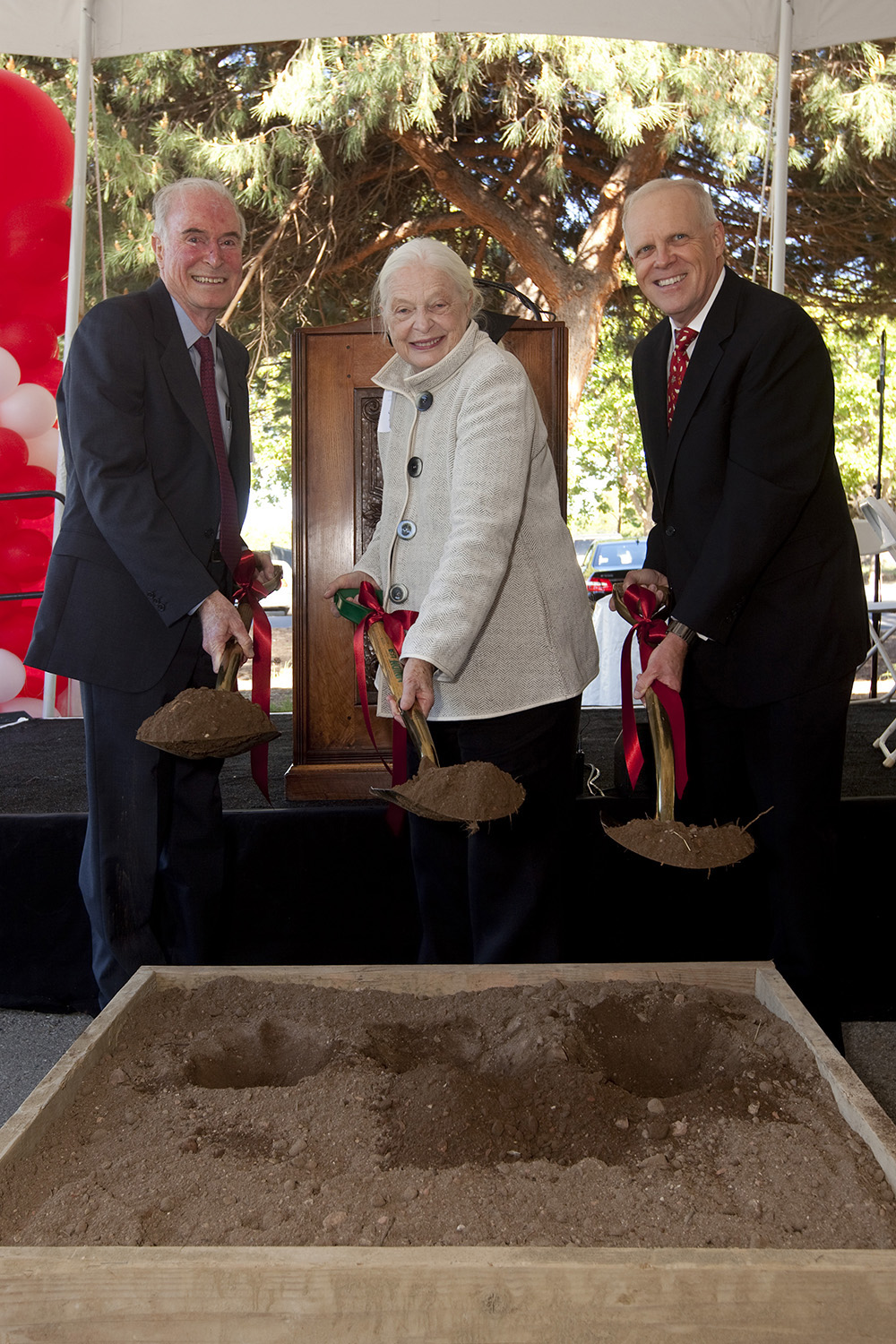
Peter and Helen Bing with then-President John Hennessy at the groundbreaking of Bing Concert Hall in 2010. | Joel Simon Images
“The Bing” is known for its musically calibrated space as well as the finishing touches that enhance every aspect of an artist’s and patron’s experience. As Bing envisioned, it is small enough to be intimate, grand enough to be memorable, and ambitious enough to continue attracting world-renowned performers to the Stanford campus.
“It’s often said that our work defines us,” Bing once said. “But I think our nature is more accurately revealed by the volunteer activities that we choose.”
Peter Bing was preceded in death by his son, Stephen Leo Bing, and is survived by a daughter, two grandchildren, a great-granddaughter, and his wife of 64 years, Helen.
For more information
Lisa Trei contributed reporting to this story.
Writer
Anneke Cole