


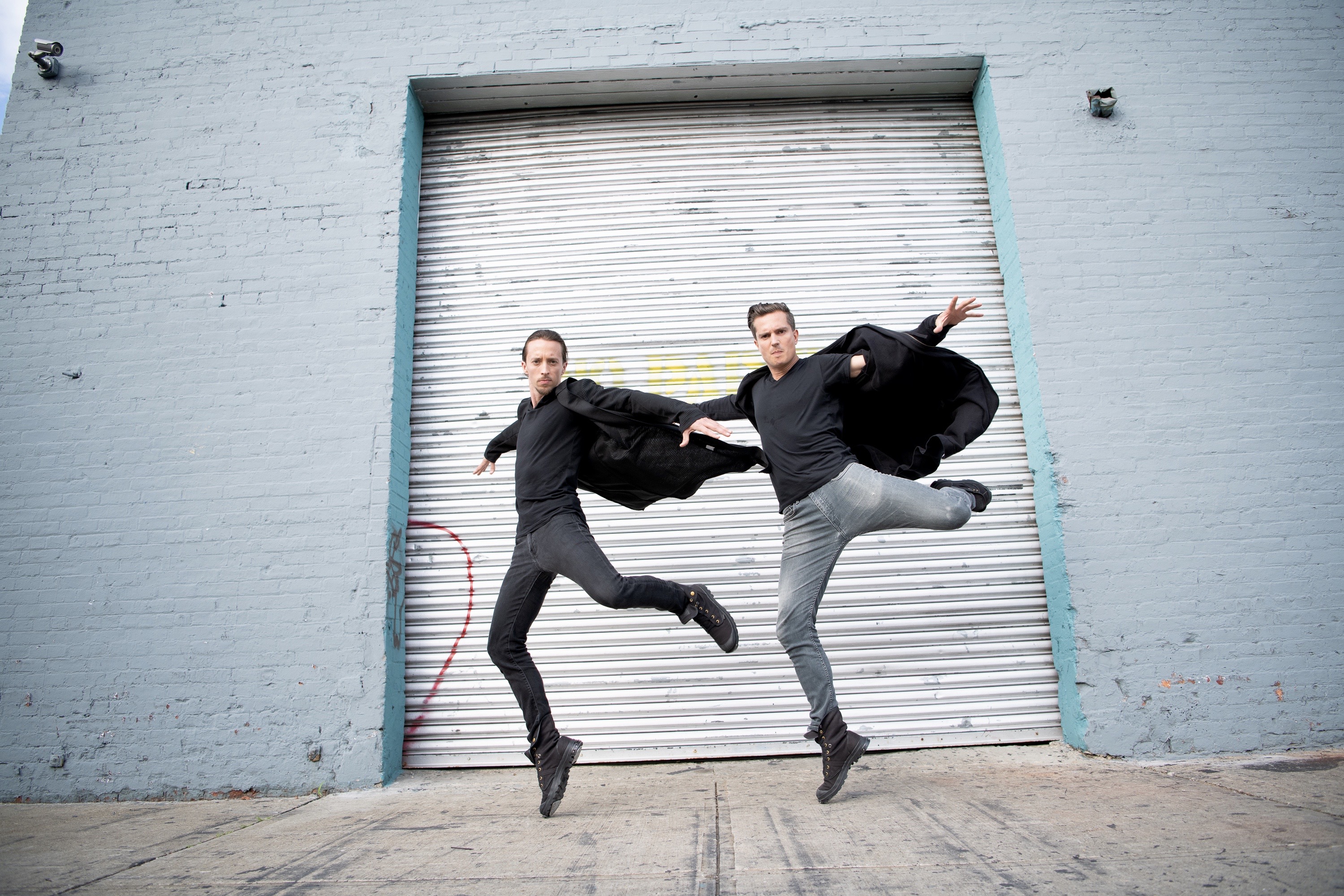
When Jason Oremus McLeish was growing up in Sydney, Australia, his mother was always looking for activities to keep him busy. When she learned about an affordable Irish step dance class nearby, she enrolled him and his sister. Oremus McLeish – who played soccer, cricket, and chess – was reluctant at first, but soon found that, “It was a physically expressive outlet for a boy who had a lot of feelings and things to say but didn’t know how to express them,” he said.
Oremus McLeish showed talent, and at 9 years old, his dance teacher challenged him. “If you commit to my classes and dance as hard as you can and get better, I’ll make you a champion,” she told him.
That promise led Oremus McLeish to the height of the Irish dancing world. After a whirlwind dancing career, he found his way to Stanford, where he’s currently pursuing an engineering degree.
Making a champion
Oremus McLeish dropped his other activities to commit to dance and Australia’s competitive Irish dance circuit. Dancing was expensive, so he and his sister would often perform on the streets of Sydney to fund their training. “We were really earning our education and developing an understanding that nothing was free,” he recalled.
After losing many early competitions, he focused on his training. Early morning practices in a local garage annoyed his neighbors. “Irish dancing is very loud, so they’d yell obscenities and pelt eggs at the garage,” he recalled. But the hard work paid off, and at 14, he won the national title – a success he repeated for the next five consecutive years.
At 18, Oremus McLeish sent in an audition tape for Riverdance, a theatrical production that combines traditional Irish step dancing with music, storytelling, and modern stage design. The show debuted in the mid-1990s and quickly gained global popularity, revolutionizing how dance shows could be commercially successful. Not expecting to land a part in the show, he also committed to college. When a Riverdance producer called to offer him a role, Oremus McLeish put school on hold and jumped at the opportunity. “It was my golden playing card,” he said.
“Exploration and innovation beyond what is considered possible – I think dance and academia share that.”
Arriving in Dublin, Ireland, to join the show was intimidating, Oremus McLeish said, as many of the other dancers were more experienced. But he climbed the Riverdance ranks, becoming the lead male dancer at age 23. He spent a total of 10 years traveling with the show, performing for huge audiences across 42 countries. Ending a four-week tour in Japan was a particularly memorable experience. “When we closed out the show, the audience was uproarious,” Oremus McLeish recalled. “They were chanting our names and refused to leave. It was a real pinnacle moment.”
Finding success at a young age was fulfilling, and Oremus McLeish said he’s grateful for Riverdance, but eventually, he began to want more. “The choreography and music remained the same, and as an artist, I was missing the fulfillment of my own expression,” he said.
Letting the feet do the talking
In the 2000s, Oremus McLeish felt there was a deeper story to tell about disparate art forms, like Irish dance or African American hip hop, that shared similar roots in cultural oppression and resistance. So, he and his creative partner innovated a new dance style called Hammerstep that hybridized these and other contemporary forms of movement, including tap, breakdancing, and the Brazilian martial art capoeira. “It was a life-changing revelation for us that we managed to evolve the art form and have these exchanges with other cultures,” he said.
In 2009, he left Riverdance and moved to New York to launch the Hammerstep dance company, which has performed at Lincoln Center and international venues like the Edinburgh Festival Fringe and London’s Palace Theatre.
In addition to the creative expression, Oremus McLeish said that dancing helped him reconcile childhood challenges. “There can be an ineffable sense of frustration or claustrophobia from being trapped in a difficult situation. And sometimes you don’t have the words required to understand that,” he said. “But with dancing, I could let the feet do the talking.”
Oremus McLeish developed other projects, including co-creating the Tony award-winning Broadway musical Paradise Square, and won numerous recognitions, including a Drama Desk Award. Then one day, while performing on stage, he shattered his ankle. “After about two years of rehab, I had to come to terms with the possibility that I may never dance again,” he said.
Tech, dance, and innovation
Oremus McLeish relocated to the Bay Area and pursued other interests while continuing to rehabilitate his ankle. He choreographed a local show called Indigo Grey that integrated art, dance, and technology. He also developed an interest in mycelium (fungi) growth and culture propagation, leading him to enroll in biology classes at De Anza College.
Last fall, he transferred to Stanford and is considering majoring in bioengineering or mechanical engineering – interests inspired by dancing and his injury. “The foot and its relationship to the sole and ground is still largely unexplored,” Oremus McLeish said. “The functional longevity of dancers, athletes, or anyone could be extended and improved if we know this landscape a little better.”
Since arriving on campus, Oremus McLeish has explored Stanford’s design, engineering, and business courses and joined the Stanford Management Group, an undergraduate organization dedicated to marketing and business. While he’s not dancing professionally right now, the art form is shaping his goals at Stanford. He wants to develop orthopedic footwear and medical devices that reduce loading stress on feet and ankles, extending quality of life for people with chronic lower limb damage or degenerative conditions impacting mobility. He’s also interested in developing biocomputers that combine lab-grown human brain tissue with conventional electronic circuits to read health data.
“Exploration and innovation beyond what is considered possible – I think dance and academia share that,” he said.
Writer
Alex Kekauoha