Ask anyone who’s worked with Chinaka Hodge, the poet, screenwriter, and executive producer behind Marvel’s Ironheart television series, and the words you’ll hear on repeat are charismatic, confident, and authentic.
But ask Hodge about herself, and she’s more likely to turn the focus to those around her, both in the film industry and in the creative community she’s helping to mentor on campus.
“I hope to demonstrate to students that the best artwork comes from not just people having great ideas, but having long-term collaborative relationships,” said Hodge, a 2025-26 visiting artist with the Institute for Diversity in the Arts (IDA).
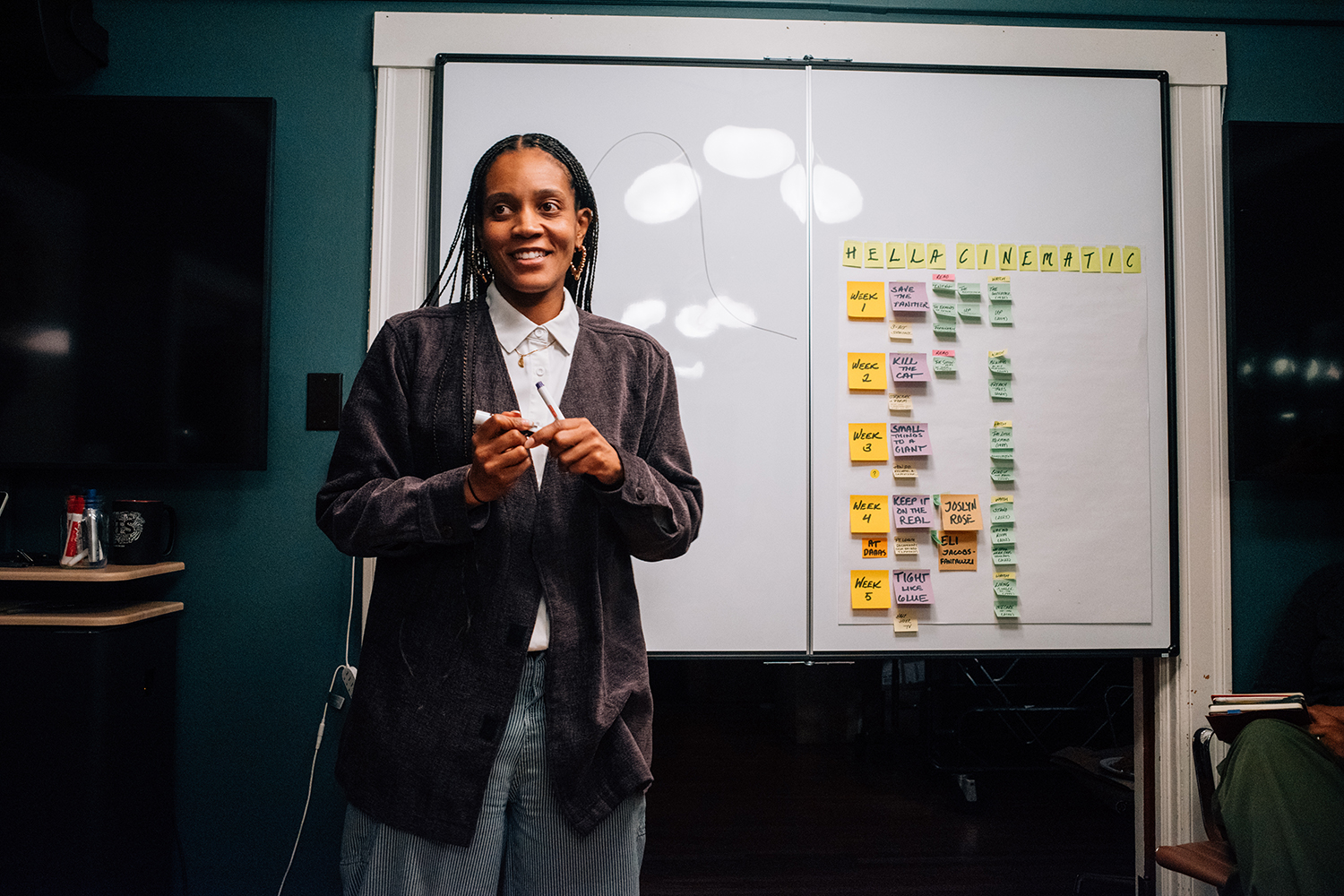
In her time at Stanford, the Oakland native has made appearances across campus, performing poetry, speaking at seminars, and teaching Hella Cinematic: The Radical Impact of the Bay Area on Film, all while keeping in mind these core tenets of creativity, collaboration, and community.
“I am learning from Chinaka that you can be deeply committed to yourself, your community, and your values, all while thriving in the industry or art space,” said Benjamin Lundberg Torres Sánchez, program manager at IDA, and Hodge’s teaching assistant for the course. “Seeing somebody hold all of that with integrity is a lesson in itself.”
A look behind the scenes
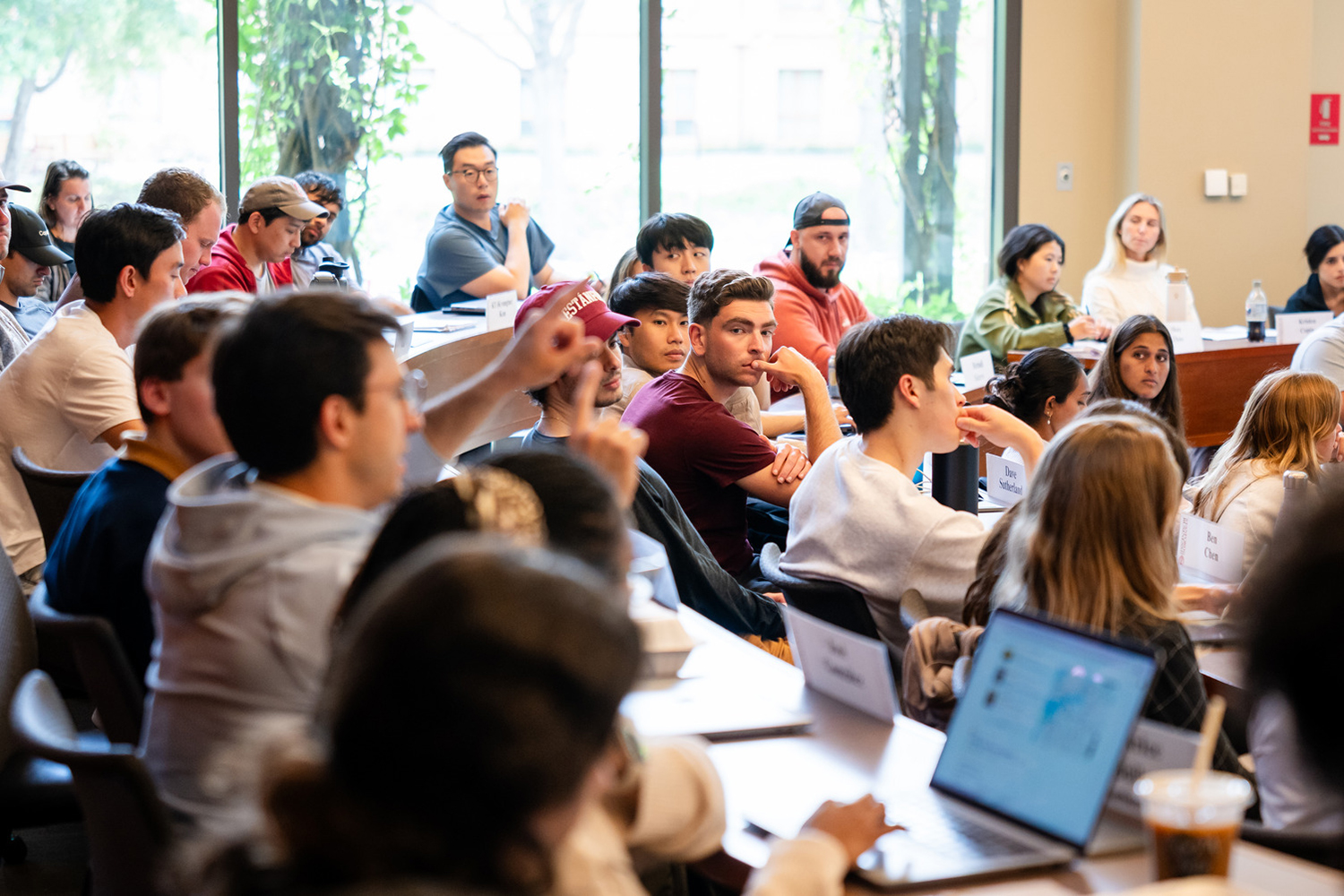
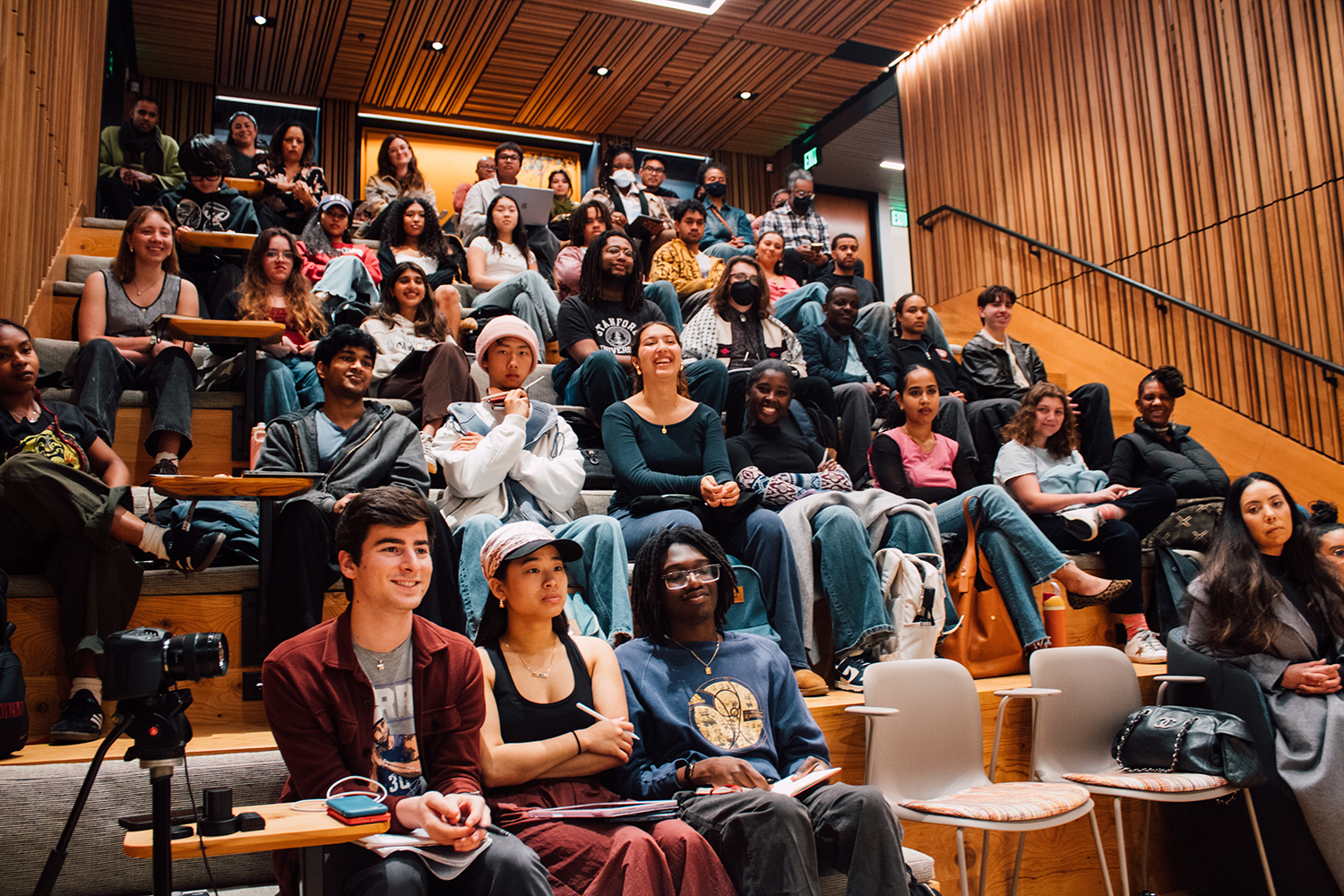
Every Wednesday evening during winter quarter, Hodge clocked out of a writer’s room in Beverly Hills, hopped on a plane to San Jose Mineta Airport, and then took a rideshare to Harmony House to teach 35 students about film and screenwriting through a Bay Area lens, driven by a desire to illuminate career paths in the industry.
I hope to demonstrate to students that the best artwork comes from not just people having great ideas, but having long-term collaborative relationships.Chinaka Hodge
“My purpose is to create an aperture into Hollywood the size of the Webster Street Tube,” she said, referring to the underwater passage between Oakland and Alameda. “It's really nice to be in a space with people who haven't learned bad habits, who trust in and are excited about the storytelling process.”
Her students felt it too.
“Chinaka genuinely has a presence that is needed within academic spaces and broader media,” said Anagali Duncan, a senior studying comparative studies in race and ethnicity, who works as IDA’s student community coordinator. “She’s done so much in these 10 weeks to teach us how to develop worlds that represent our own perspectives and to find power in that.”
Bringing Hollywood to Harmony House
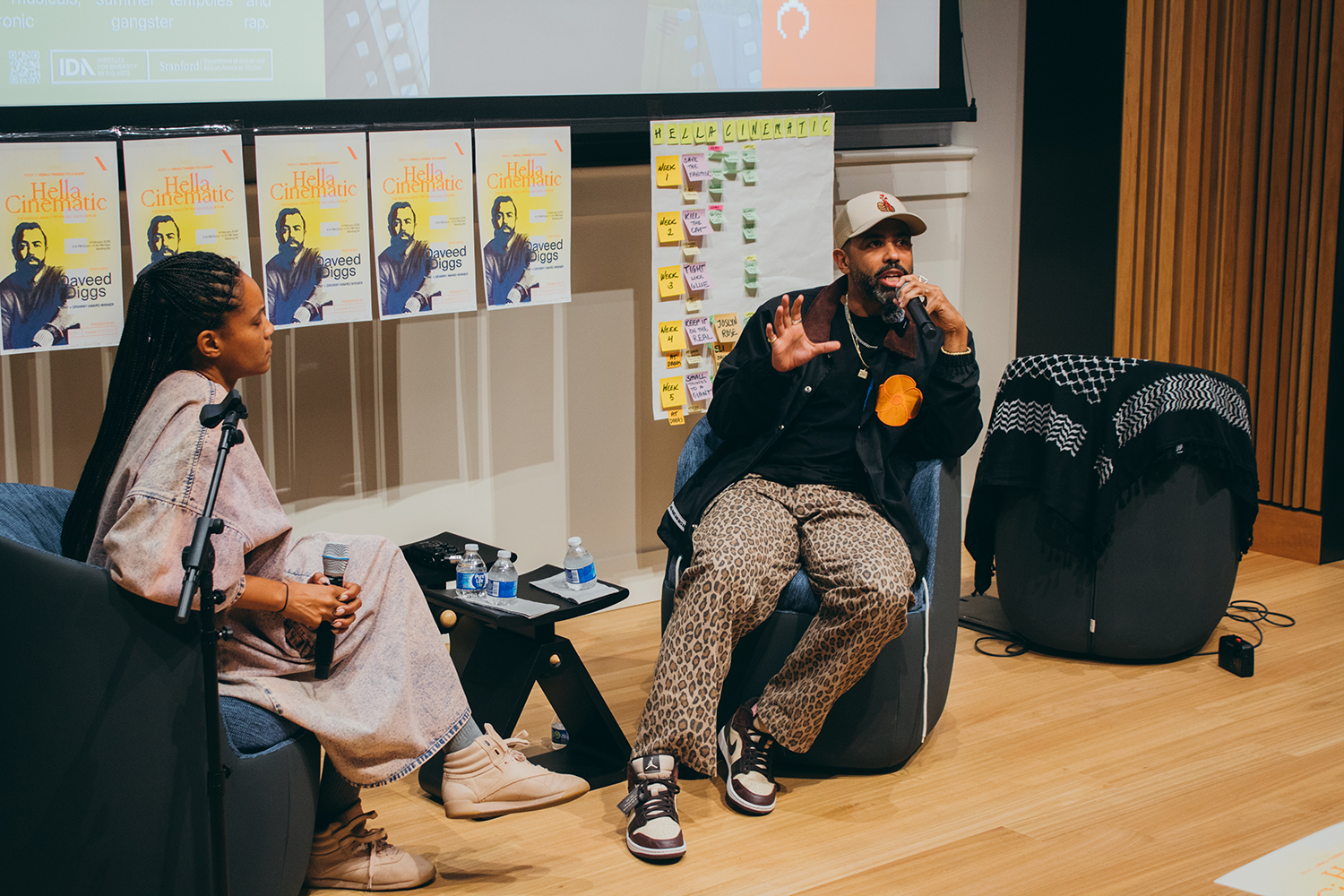
In addition to mapping out scene structures using films influenced by the region, such as Mrs. Doubtfire, Big Hero Six, and The Princess Diaries, students were visited by Bay Area natives from Hodge’s creative circle. Special guest appearances included actor Daveed Diggs, the Tony and Grammy Award-winner of Hamilton and Blindspotting, and a Zoom visit from filmmaker Ryan Coogler, just days before his film Sinners won four Oscars.
“Seeing the genuine bond she had with these creatives, hearing how passionate they were about their work, and seeing how deeply it impacted them in their making process is definitely a memory I will not forget for a while,” said Iman Monnoo, an English and art history major.
“Having so many guest speakers and seeing all the different paths you can take to become successful in whatever art you’re interested in has been really inspiring,” said frosh Sophia Teyolia, who said Hella Cinematic has been her favorite class this year.
As Hodge prepared to return to screenwriting gigs, including the upcoming Hulu television series The Land, she said her time with Stanford students refreshed her perspective on the film industry and reinforced her belief that art must come from a genuine place.
“The people I’ve seen most successful in Hollywood match the core ethos that comes out of the Bay Area, and that’s keep it all the way, 100% real,” said Hodge, who says her combination of filmmaking know-how and Oakland sensibilities has been her secret sauce for success. “Go for the authenticity in fiction, the accuracy in documentary, keep it a buck on the street,” she said. “The thesis of the class is that our honesty, our authenticity, and our hard work drive our filmmaking, and our filmmaking drives the industry.”
Writer
Olivia Peterkin