In brief
- Wellbeing on the Farm debuted this autumn, enrolling 25 students to learn emotional problem-solving skills.
- Shashank Joshi and Oula Khoury, professors of psychiatry and behavioral sciences, teach students practical skills from Dialectical Behavior Therapy.
- The course aligns with Stanford’s commitment to mental health by fostering a supportive campus culture for student well-being.
When Anna Colpack saw an announcement for a new course called Wellbeing on the Farm, it immediately caught her attention. The junior psychology major and member of the women’s lacrosse team knew a class centered on building emotional problem-solving skills for navigating college life and beyond would be a meaningful addition to her toolkit.
“Whether it’s a midterm or just being in highly stressful situations where you’re about to play in a game – as a student athlete you’re tested and challenged, physically and mentally,” said Colpack. “Being able to handle that stress is important.”
These are the kinds of real-life challenges PSYC 151 aims to address by teaching skills students can use to build resilience against everyday stressors and difficulties.
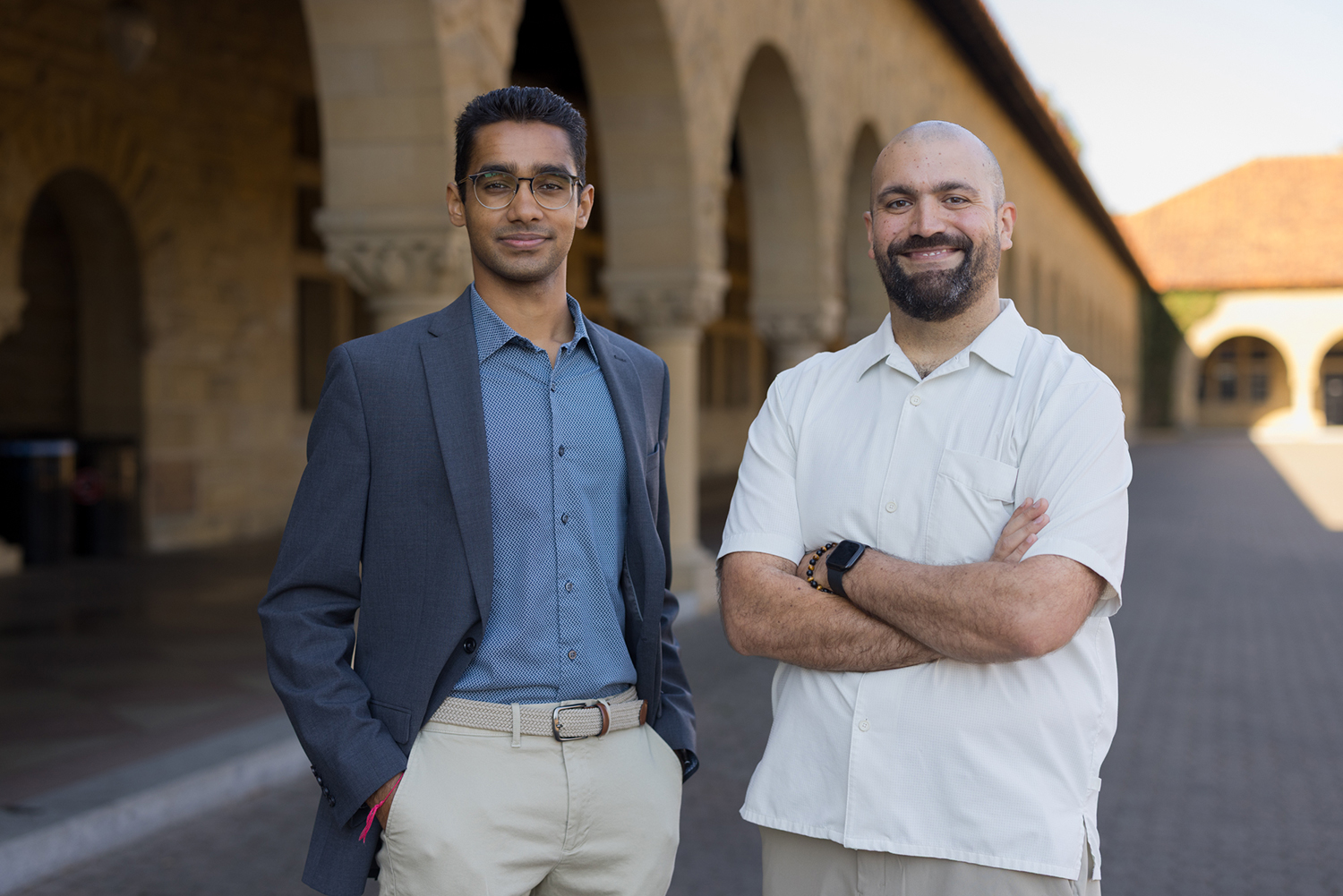
Co-taught by Shashank Joshi, professor of psychiatry and behavioral sciences (and, by courtesy, of pediatrics and of education), and Oula Khoury, clinical assistant professor of psychiatry and behavioral sciences, the course goes beyond simply helping students cope with stress. It teaches them skills and strategies they need to truly thrive at Stanford and beyond.
Fostering a culture of well-being
The course, which debuted this autumn and enrolled 25 students, was inspired by the university’s commitment to supporting students’ mental health and well-being and informed by the campus-wide ePluribus initiative, which focuses on critical inquiry, constructive dialogue, and engaged citizenship.
“We all have perspectives; we all have lived experiences,” said Joshi, who is the senior associate vice provost for academic well-being in the Office of the Vice Provost for Undergraduate Education (VPUE). “If we’re going to have discussions and debates and do that productively, especially when the topic is an emotionally valenced one, we have to make sure that we are understanding our own reactions.”
The course introduces students to four core skills drawn from applied Dialectical Behavior Therapy (DBT), which was developed at the University of Washington. Students learn practical tools like emotion regulation to manage intense feelings, distress tolerance to handle difficult situations, interpersonal communication skills, and mindfulness-based practices.
But it’s not just about theory. Students get to practice these skills in everyday conversations – with friends, through written reflections, and on occasions when someone around them needs support.
One popular DBT technique introduced in the course is “TIPP,” which stands for temperature, intense exercise, paced breathing, and progressive muscle relaxation. This coping strategy is designed to quickly calm one’s body by using cold temperatures to lower the heart rate, engaging in short bursts of vigorous exercise to release emotional energy, practicing paced breathing to regulate the nervous system, and progressively tensing, then relaxing different muscle groups to ease physical tension.
For paced breathing, students practice inhaling for 4 seconds, holding for 4 seconds, and exhaling for 4 seconds. “Paced breathing is a mindful skill. It’s a reminder that you always have your breath,” Joshi said. “You can use breathing to bring you into the present moment fully and without judgment.”
Training students to support themselves and each other
Together, Joshi said, these techniques help bring the body out of “fight-or-flight” mode, allowing one to think more clearly and respond more effectively. Joshi and Khoury have taught the techniques to more than 100 resident assistants, in addition to the students enrolled in the course.
Senior Joshua Alvarez, a political science major who took the course, points out that it is normal to face challenges during one’s undergraduate years.
“Whether you’re an upperclassman or a freshman, Stanford can be academically rigorous, it can be a transition, it can be emotionally overwhelming at times,” he said. “This class reminds you that you can take a step back and recognize that to be happy and to thrive means, most importantly, taking care of yourself.”
Among Alavarez’s most significant insights from the course is his adoption of evidence-based gratitude practices such as structured journaling, which he said has become a daily ritual for grounding and overall well-being.
Joshi and Khoury aim to scale the course so that hundreds of students can participate each year, ultimately helping to shift to a more resilient ethos on campus.
“In any gathering on campus, there may be one or two students who have taken our class who can then share an example of how it’s been useful in their life with their friend groups,” said Joshi. “Our hope is that it becomes part of campus culture to think about and apply coping skills and practical examples of things that have been shown to work.”
Writer
Diana Aguilera