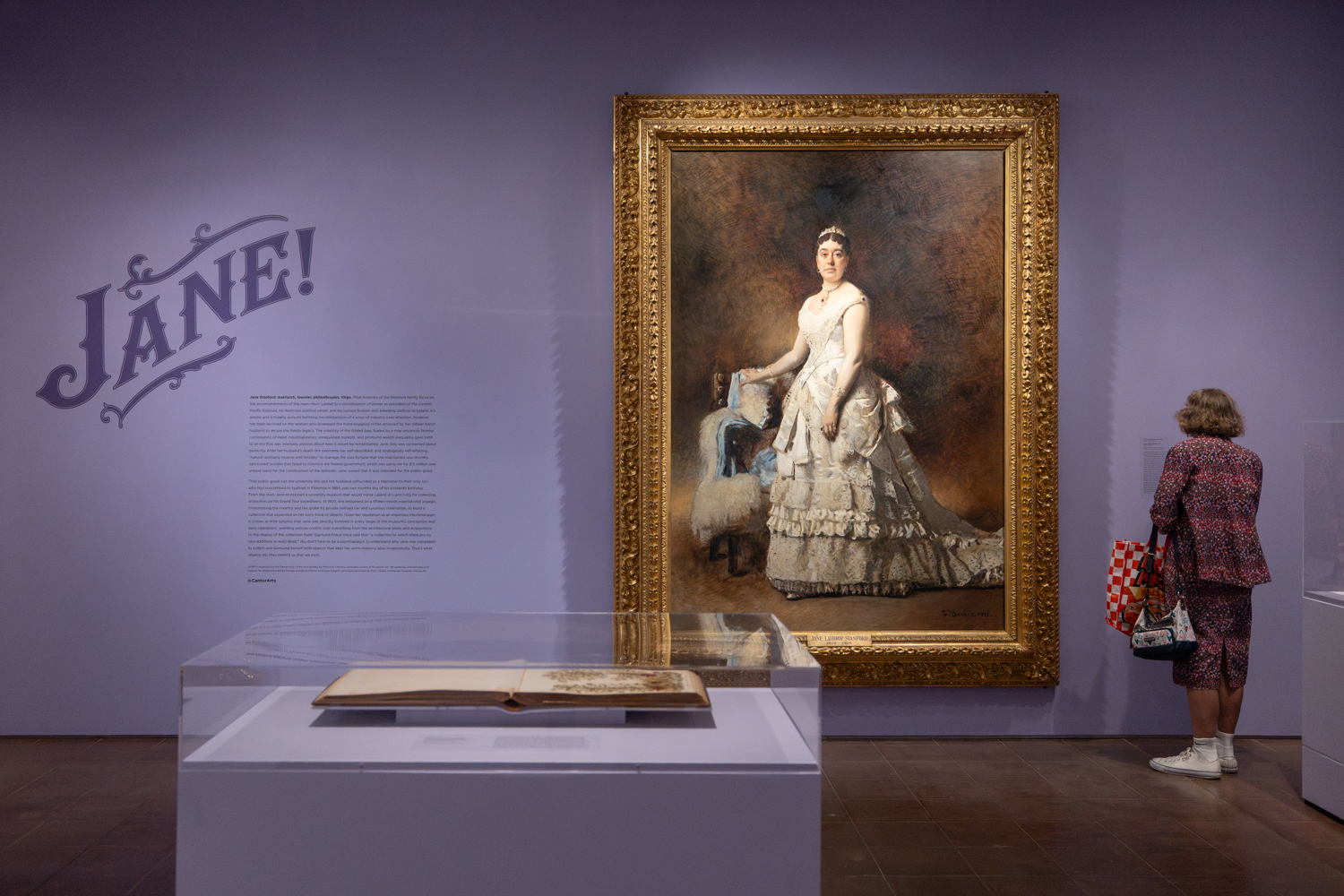
This fall, the Cantor Arts Center and the Anderson Collection present a diverse range of exhibitions, each offering unique insights into art practices and cultural narratives. From a contemporary feminist take on South Asian visual histories to an exploration of the unknown world of witchcraft, these shows engage viewers with artworks that shift perspectives. Here’s what awaits you.
Plan your visit
Visiting campus museums during the holidays? Check out fall and winter hours at the Cantor Arts Center and the Anderson Collection.
A career-spanning show
The Cantor Art Center presents a major survey of Shahzia Sikander, a New York-based Pakistani artist whose multi-media work depicts women, culture, and the effects of colonialism through an intersectional lens. Shahzia Sikander: Collective Behavior features 44 pieces from Sikander’s more than 30-year career, including mosaics, paintings, sculptures, and works on paper.
The exhibition is the first major solo show of the museum’s Asian American Art Initiative (AAAI), which works to advance public access to the work of Asian American artists.
Pieces such as A Slight and Pleasing Dislocation, II – an acrylic painting of a headless female figure with several arms holding items including a scroll, weapons, and the scales of justice – show Sikander’s ability to surface the tensions that arise from viewing the references in her work against different cultural touchstones, said Kathryn Cua, curatorial assistant with AAAI.
The painting is a nuanced take on the “self-rooted woman,” a recurring character in Sikander’s work. The original character is a figure with multiple limbs that begin and end in her body, illustrating the idea that women take their roots with them wherever they go.
“In all of her work, she’s really bringing women into the center and making them the main character of their own stories,” said Cua.
Shahzia Sikander: Collective Behavior is on view in the Freidenrich Family Gallery at the Cantor Arts Center through Jan. 25, 2026.
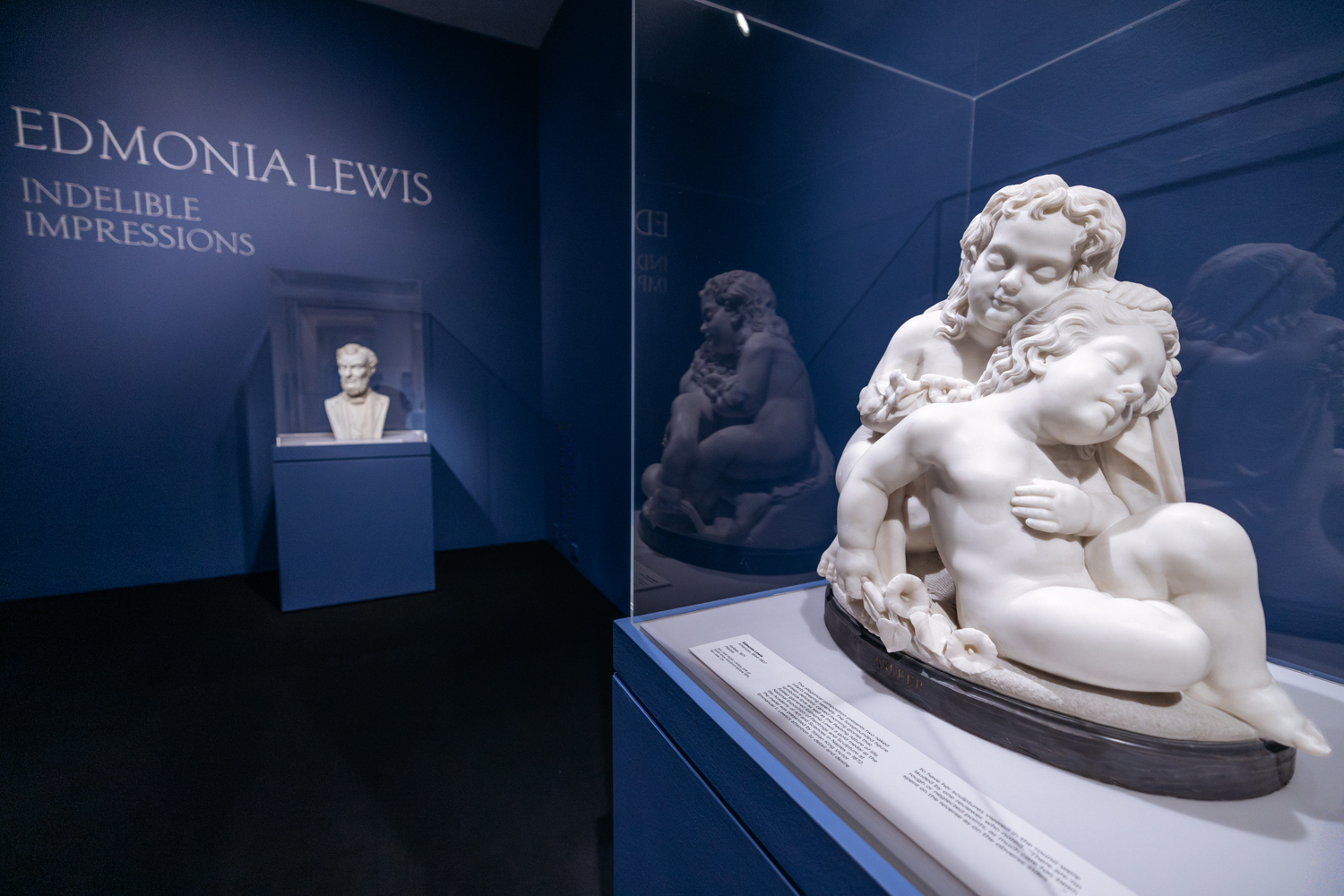
The three marble sculptures in “Edmonia Lewis: Indelible Impressions” are among the few surviving pieces the artist brought to the Bay Area from her studio in Rome, Italy, at the beginning of the Gilded Age.
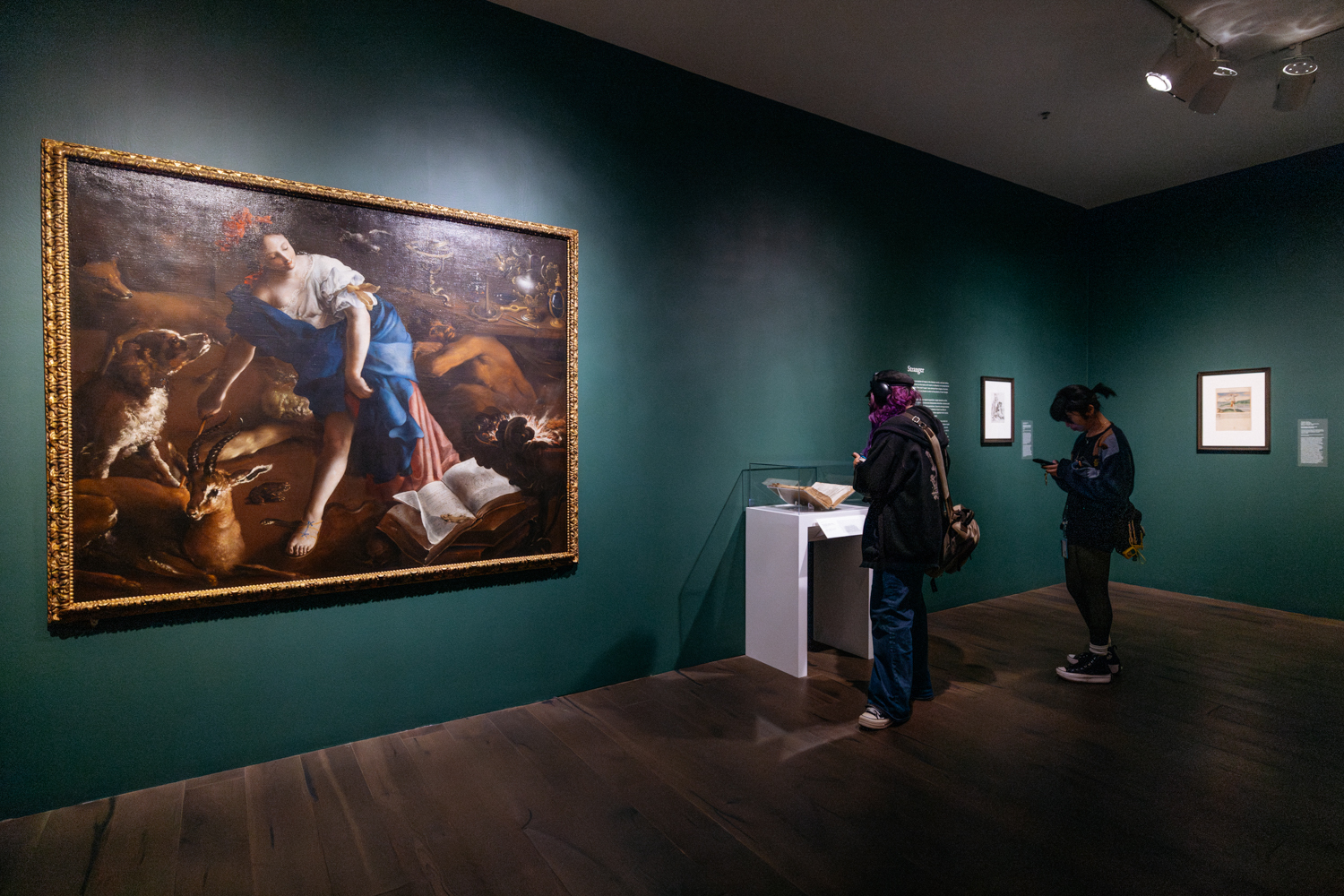
Works on display in “Cunning Folk: Witchcraft, Magic and Occult Knowledge” include “The Sorceress,” a 17th-century oil painting by the Italian painter Bartolomeo Guidobono, which references classical sorceresses Medea and Circe.
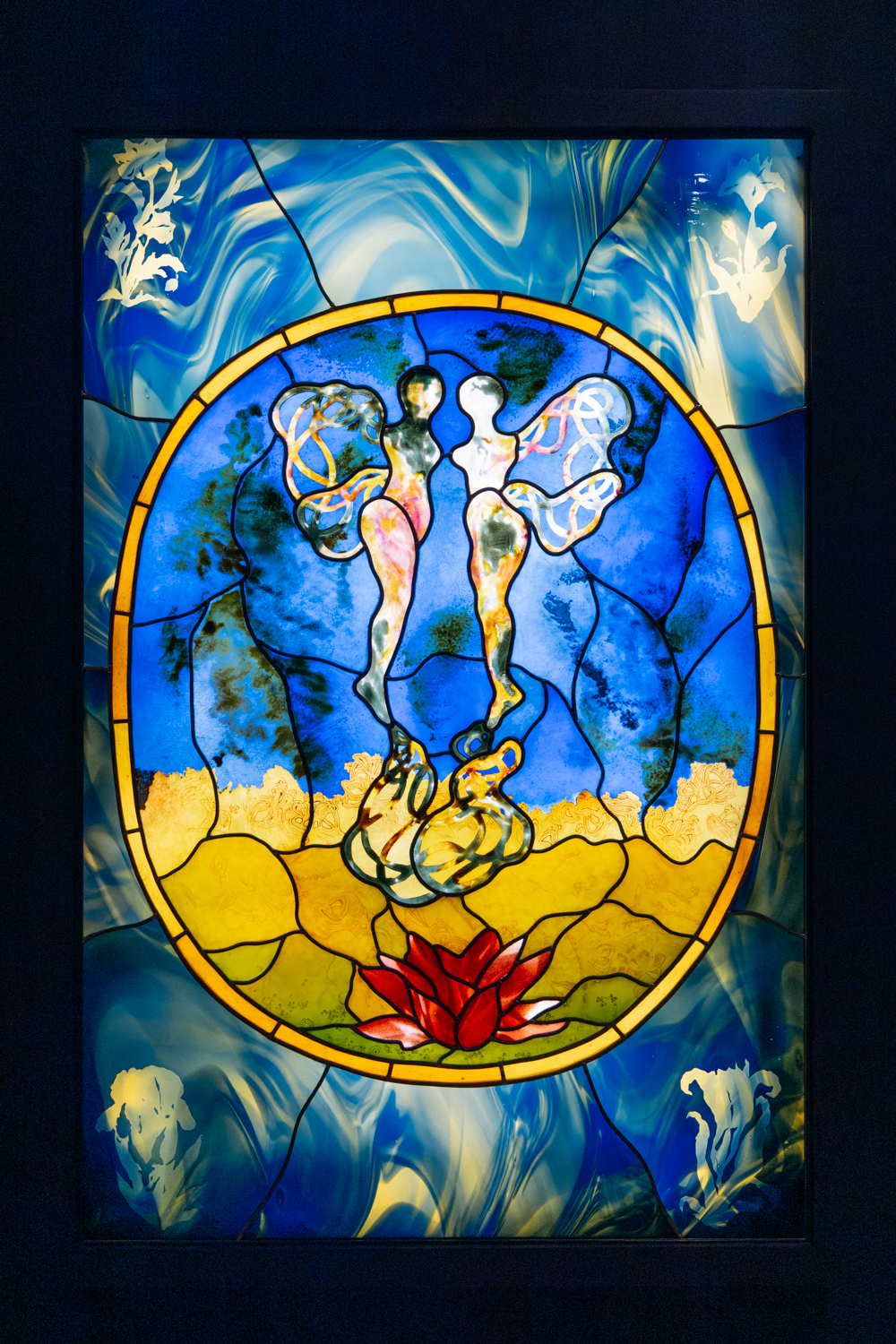
Sikander’s “Liquid Light II,” made of painted and etched glass, was created for a Venice exhibition and merges global trade histories with South Asian imagery.
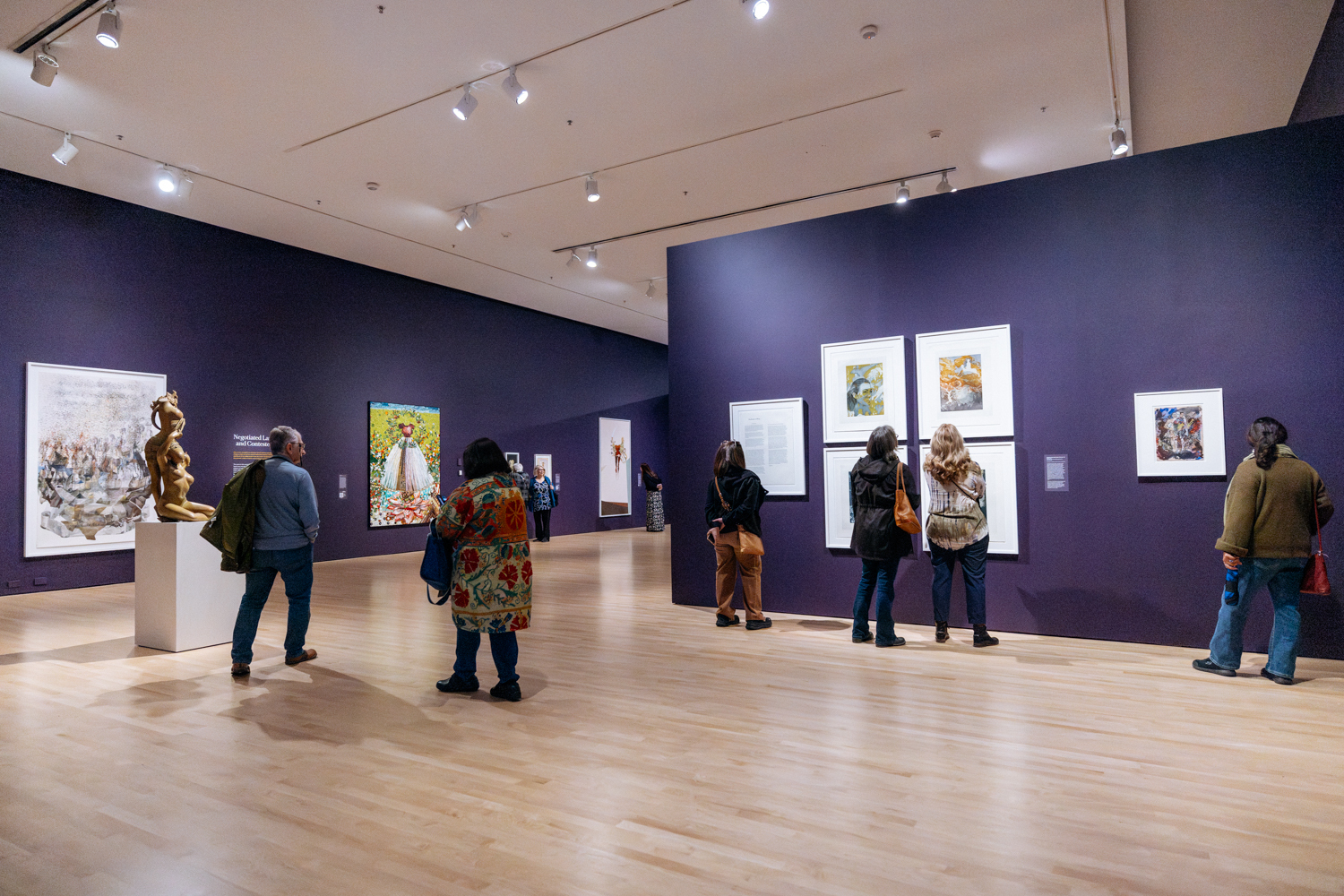
“Shahzia Sikander: Collective Behavior” spans Sikander’s more than 30-year career and is the largest and most comprehensive presentation of her work to date.
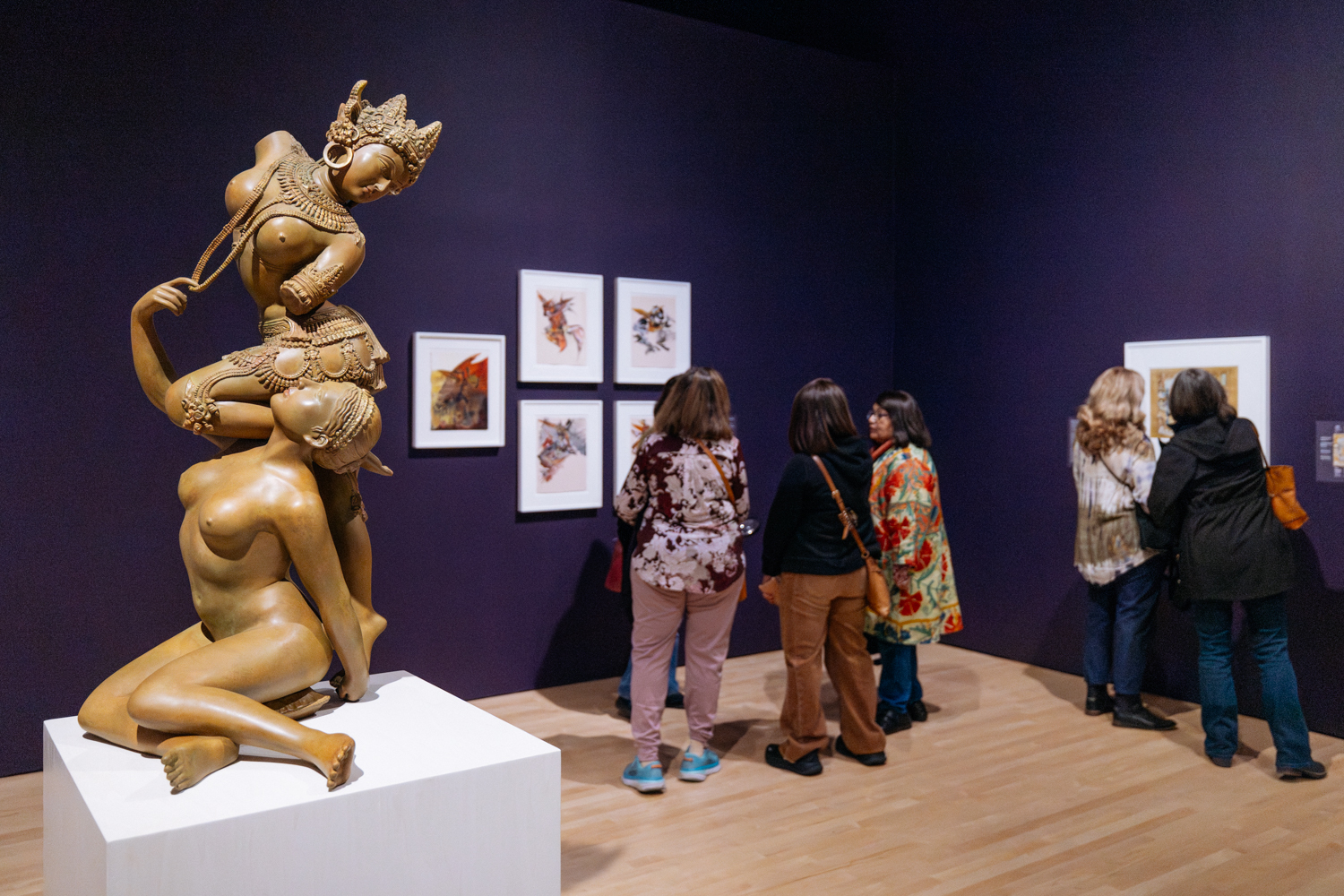
Sikander’s bronze sculpture “Promiscuous Intimacies (2020)” – her first foray into this medium – depicts a flirtatious encounter between the Roman goddess Venus and a Hindu celestial dancer.
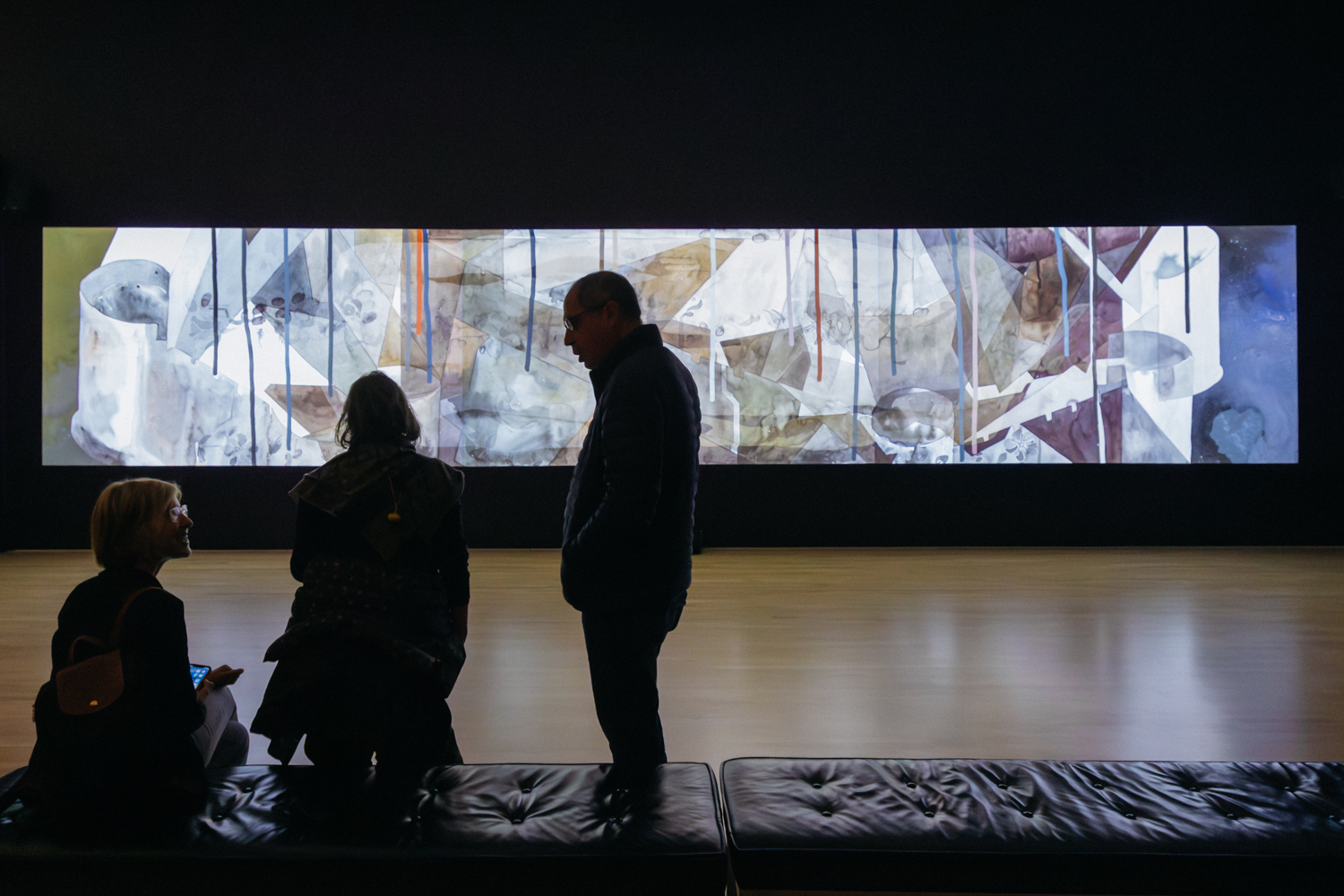
In “Parallax,” a three-channel, single-image HD digital animation with sound, Sikander depicts the conflicting regional interests in the Strait of Hormuz, a tense and strategic passage between the Persian Gulf and the Gulf of Oman.
Cosmic perspective
Another contemporary artist challenging perspectives through mixed media is Alteronce Gumby, featured at the Anderson Collection in his first West Coast museum exhibition.
The show presents nine works that utilize a combination of paint, canvas, glass, and semi-precious stones, among other materials. Characterized by dynamic uses of color and protrusions that break the surface, the pieces have an otherworldly effect.
“I think we’re in a moment historically of there being a lot of tension, and we need to find better ways to communicate with each other openly,” said Trisha Lagaso Goldberg, director of programming and engagement at the Anderson Collection. “Gumby’s work encourages us to take a cosmic or universal stance. It offers us an example of how to think with an open mind and with an open eye and an open heart.”
Supplementary to the show are Gumby’s short reflections on five artworks in the museum’s permanent collection, highlighting their influence on his craft. Several of Gumby’s featured works reference other artists on display at the Anderson.
For example, Gumby’s After Rothko is a direct response to Pink and White over Red (1957), a Mark Rothko painting in the museum’s collection that Gumby says slowed his breath and heartbeat as he observed it.
Alteronce Gumby is on view in the ground-level Wisch Family Gallery at the Anderson Collection through March 1, 2025.
All things occult
Snippets of witches’ ballads sung by musician and composer Leslie Lancaster Allison play every 10 minutes in the Cantor’s Ruth Levison Halperin Gallery, where Cunning Folk: Witchcraft, Magic and Occult Knowledge is on view. The show features 27 artworks primarily sourced from Stanford’s on-campus collections, and is dedicated to the art of occult knowledge, from amulets to witches’ brooms.
While “cunning folk” referred to a wise person who used magic for healing and protection in European communities throughout the early modern period (c. 1500-1750), the show’s title also references the Anglo-Saxon roots of the word “cunning, meaning “to know.”
“It’s a subject that can be scary, uncomfortable, and dark, but it’s about being able to transform and influence nature in ways you normally can’t,” said Sara Frier, the Burton and Deedee McMurtry assistant curator of prints, drawings, and academic engagement, who curated the exhibition to explore magic as a form of restricted knowledge.
“I hope the show inspires people to think about how we might project our anxieties and fears about what we don’t know about a certain person, or culture, and what that could result in,” Frier said.
Cunning Folk: Witchcraft, Magic and Occult Knowledge is on view in the Ruth Levison Halperin Gallery at the Cantor Arts Center through Feb. 22, 2026.
A courageous carver of marble
Three luminous, neoclassical marble sculptures make up Edmonia Lewis: Indelible Impressions at the Cantor Arts Center, showcasing the acclaimed 19th-century Afro-Native artist renowned for her talent, courage, and ingenuity. Despite its intimate size, the exhibition was recognized by the New York Times as one of 14 headliner shows this season.
“Edmonia Lewis was just an extraordinary person,” said Jennifer DeVere Brody, professor of theater and performance studies at Stanford, who curated the exhibit. “She traveled extensively in an era when that was not necessarily possible for Afro-Native women, and when she brought these beautiful sculptures to California, she made them available to the West Coast for purchase for the first time.”
The three pieces, entitled Awake, Asleep, and Bust of Abraham Lincoln, are among fewer than 100 sculptures Lewis made during her roughly 40-year career. DeVere Brody calls Asleep, which depicts two small children sleeping among flowers, some of Lewis’s “best and most delicate carving.”
“I think that every time she made one of those sculptures, it was a blow against a certain kind of system, a resistance,” said DeVere Brody, whose forthcoming book about Edmonia Lewis, Moving Stones, will be published next spring. “She carved her life out of her dedication to art and justice, and because of that, she’s someone who was well known during her time – and should still be well known in this one.”
Edmonia Lewis: Indelible Impressions is on view in the Lynn Krywick Gibbons Gallery at the Cantor Arts Center through Jan. 4, 2026.
Writer
Olivia Peterkin
Photographer
Andrew Brodhead