When the Hill-Maini Lab talks about reimagining the food system, they’re not just thinking about nutrients and sustainability, they’re thinking about aesthetics, emotion, and experience.
The Hill-Maini Lab, led by Vayu Hill-Maini, uses fungi like Neurospora intermedia to turn food waste into sustainable, edible products. By combining fermentation and gastronomy with bioengineering, the lab transforms agricultural byproducts such as soy pulp and oat milk waste into nutritious, umami-rich ingredients addressing food waste and improving food system efficiency.

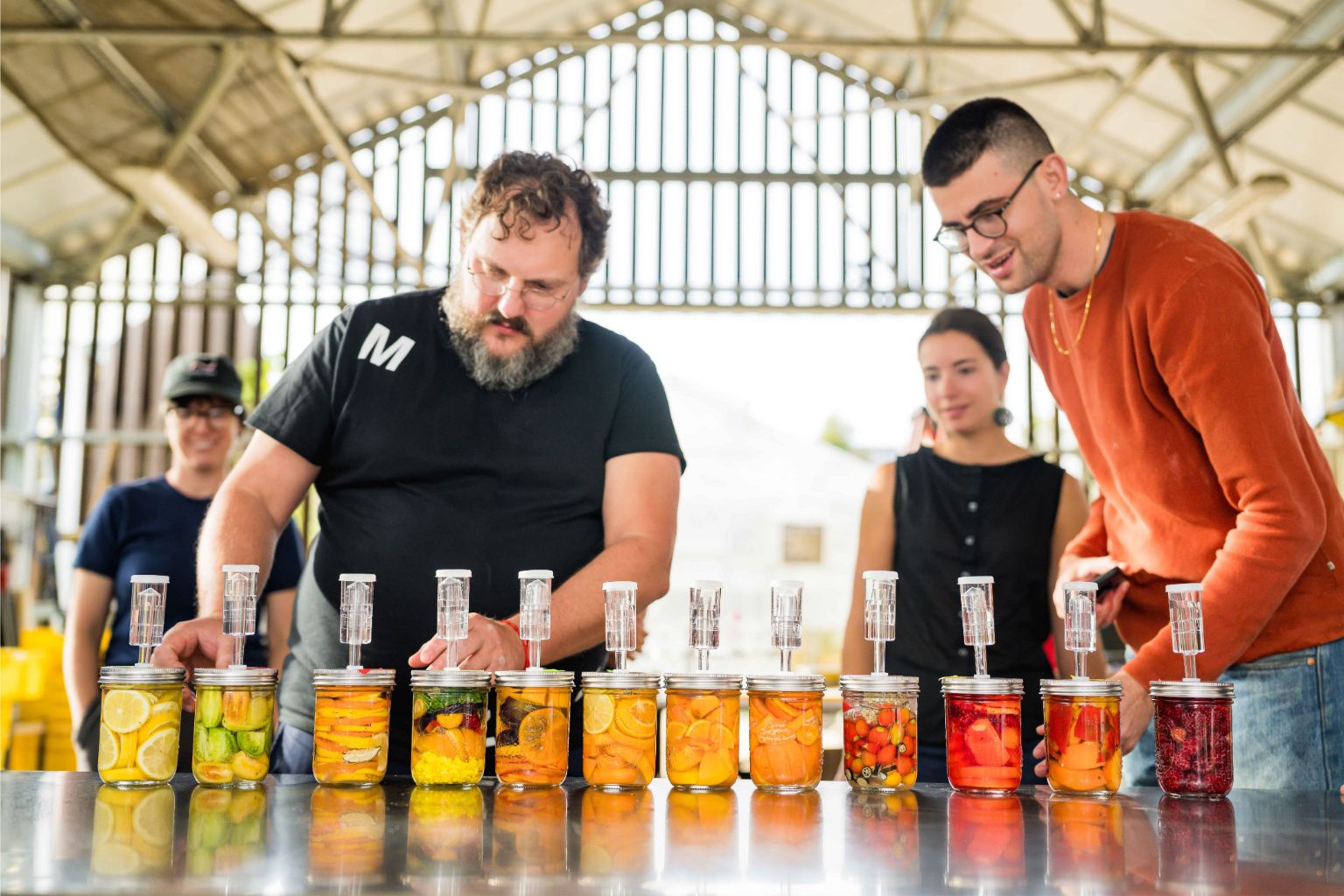
The Hill-Maini Lab leads a fermentation workshop at the O’Donohue Family Stanford Educational Farm. | Courtesy Hill-Maini Lab
This year, Stanford Department of Bioengineering, in partnership with the Doerr School of Sustainability and the Office of the Vice President for the Arts, has launched the Chef-in-Residence program with the Hill-Maini Lab leading the charge. “Our Chef-in-Residence program helps us think not just about technology, but about how the perspectives in art and design can make sustainable food desirable – beautiful and delicious,” explains chef-turned-scientist Vayu Hill-Maini, assistant professor of bioengineering. The program aims to bring the world’s best chefs to Stanford to learn, innovate, and collaborate in sustainable foods.
At the heart of the initiative is a simple idea: that the laboratory and the kitchen are both spaces of experimentation. The program, first conceived by Hill-Maini, invites chefs to come to Stanford to collaborate directly with scientists to explore how technology, creativity, and the human experience can shape the future of sustainable food. The program’s inaugural resident is Ramón Perisé Moré, Head of Creativity at Mugaritz, a two-Michelin-star restaurant in Spain’s Basque Country known for its boundary-pushing cuisine. “We’re building a common language between scientists and craftsmen,” Perisé says. “We want to create a bridge between what happens in the lab and what happens in the real world.”
Bridging the lab and the kitchen
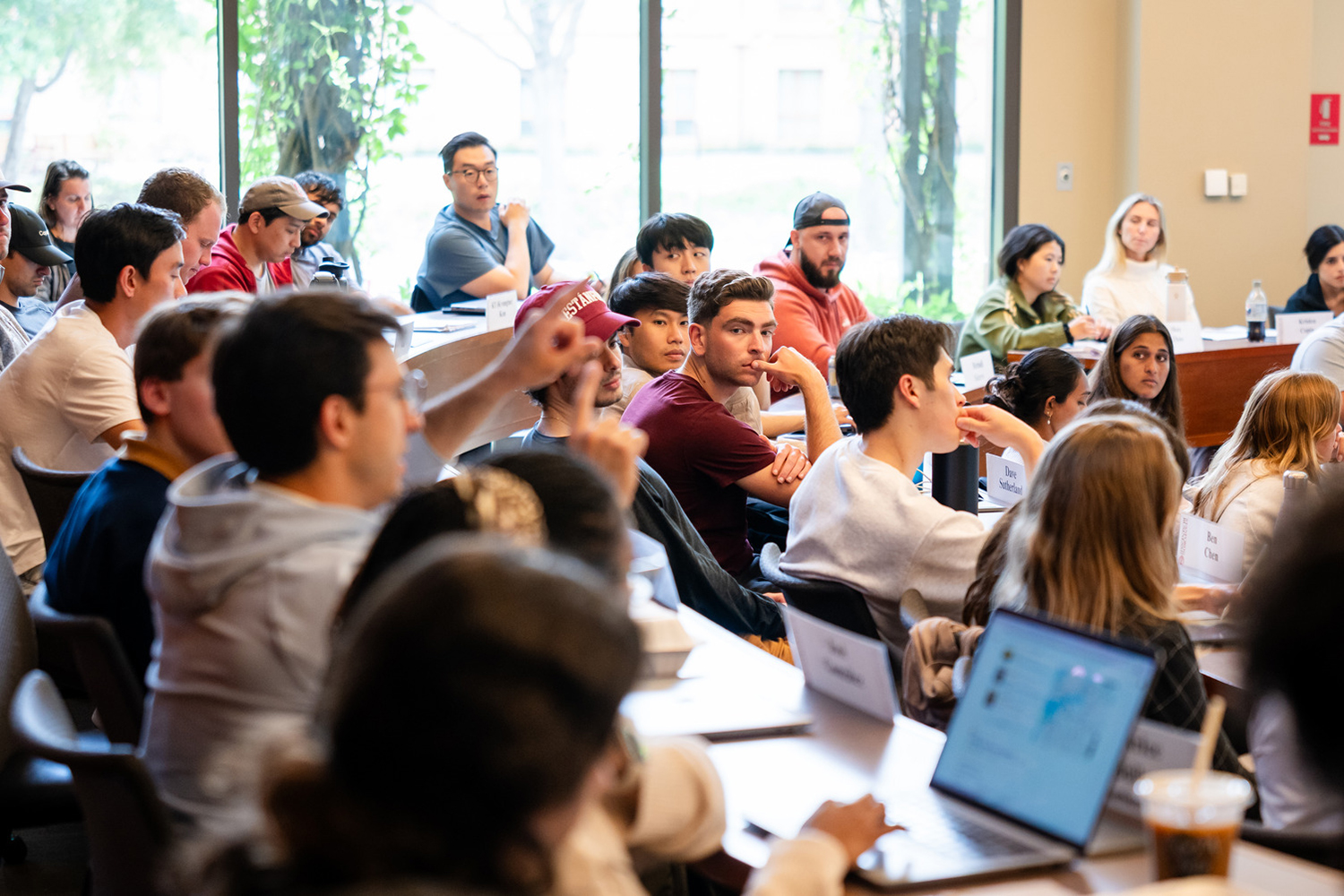
The Chef-in-Residence program facilitates a research environment that’s as curious and experimental as the kitchens of Mugaritz. The partnership gives students a new lens to explore creativity, while giving chefs the chance to apply scientific methods to their culinary craft. “I spend every day in the lab thinking how I can make our research more accessible. Does this work relate in a context people care about? That’s exactly what chefs are thinking about every day, especially at Mugaritz. They see their restaurant as a way to invite people to think about food clearly and critically,” says Taylor Nguyen, a postdoctoral researcher in the Hill-Maini Lab.
Our Chef-in-Residence program helps us think not just about technology, but about how the perspectives in art and design can make sustainable food desirable – beautiful and delicious.Vayu Hill-MainiAssistant Professor of Bioengineering
“I’ve recently begun my postdoctoral research, so I’m currently thinking of the right projects to pursue and the right questions to ask. Working with chefs Ramón and Jordi [Bross] has helped me tailor [my research] questions so that they go beyond the lab. I think that's really cool,” says Nguyen.
Hill-Maini hopes that this program sets the foundation for something longer term, where students have an opportunity to spend time learning at global restaurants, not because their project carries over, but because the culinary approach and mindset enrich their approach to science and research.
“With innovations in medicine, it’s obvious to people: Engineer a device, and people get it in the hospital. With innovations in sustainability, the human experience is just as important, and we have to design for it. We can’t just develop technology in a vacuum. Everybody has their own relationship with food. Whether it’s the flavor, texture, beauty – aesthetics are critical for us to have an impact that people relate to,” explains Hill-Maini.
From molecular gastronomy to genetic gastronomy
Food, Perisé notes, is deeply linked to our senses and emotions – which means new ideas in food can provoke instinctive resistance. “Food is something very primitive. When you find something unfamiliar, you may reject it by instinct. What we can do as chefs is take what’s being developed in the lab and present it in ways that feel familiar, so people are open to tasting it. That’s how we connect science with culture.” Perisé believes we are entering the era of what he calls “genetic gastronomy.” For many, the idea of genetic innovation in food may provoke hesitation; Perisé sees it as a continuation of a very old and traditional practice.
“Changes in DNA happen naturally,” Perisé says. “We’ve been selecting and transforming plants for thousands of years. The corn and tomatoes we eat today are completely different from their originals. The only difference now is that we have the knowledge to do it safely, thoughtfully, and quickly. You don’t have to be afraid of knowledge and technology – and it can even taste good. For sure, it will be delicious.”
For more information
This story was originally published by Stanford Bioengineering.
Writers
Helen Dang
Marly LeSene