As the U.S. defense secretary under presidents John F. Kennedy and Lyndon B. Johnson, Robert McNamara was a central figure in the Vietnam War. While he confidently carried out orders, behind closed doors, he came to believe – very early on – that the war he was charged with leading was unwinnable.
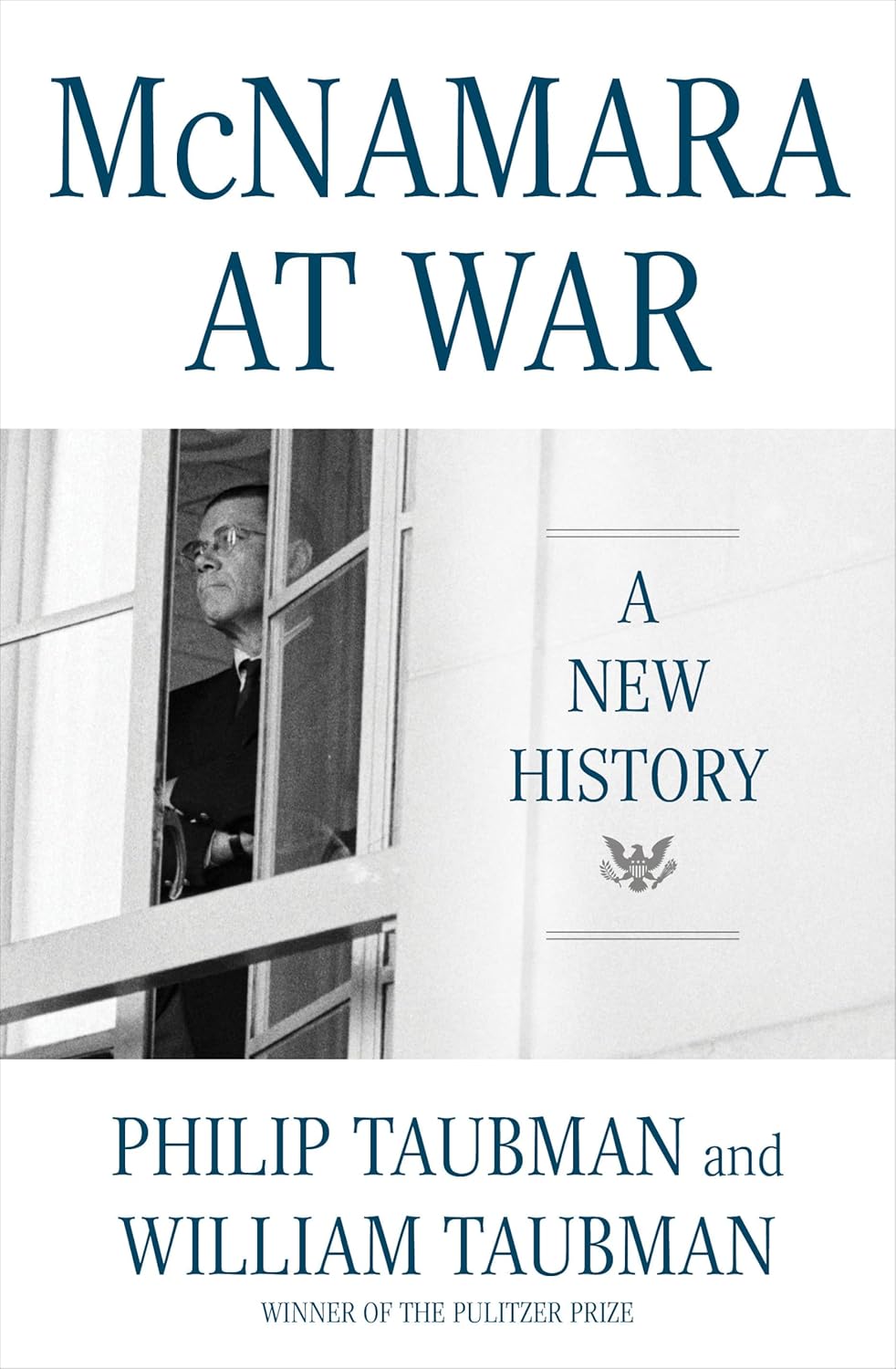
The journalist and Stanford alum Philip Taubman ’70, who is now an affiliate at the Center for International Security and Cooperation (CISAC), examines the contradiction between McNamara’s public and private positions in his new book, McNamara at War: A New History (W. W. Norton, 2025). Taubman draws on previously unavailable material – including letters from Jacqueline Kennedy and a private diary kept by McNamara’s closest policy advisor – to gain a deeper understanding of McNamara and the complex legacy he left on U.S. and world history.
Here, Taubman talks about why McNamara’s story still serves as a valuable lesson for policymakers about what happens when loyalty and moral misgivings collide and the importance of democratic oversight of war.
You frame the book as a political and psychological portrait built around McNamara’s contradictions. What are some of those paradoxes?
McNamara lived a double life. The most striking example of that played out during the Johnson presidency when he was a fierce proponent of the Vietnam War in the inner councils of the administration, while an opponent of the war in private conversations with colleagues and friends. In mid-1965, he vehemently advocated escalation of the American role in the war, helping to persuade Johnson to send tens of thousands of combat troops to South Vietnam. Yet, within months, McNamara concluded the war was militarily unwinnable. In April 1966, he told John McNaughton, “I want to give the order to get our troops out of there so bad that I can hardly stand it.” Throughout his remaining 22 months in the administration, McNamara advised Johnson to temper the intensity of the conflict and seek a diplomatic resolution, all while faithfully carrying out the president’s orders to expand the war.
Another paradox was the dichotomy between the public McNamara, a man overflowing with self-confidence, even arrogance, and the inner McNamara, an insecure man experiencing acute stress. His relentless effort to compartmentalize his life led to McNamara bottling up his emotions. At moments, the inner McNamara would break through the public veneer, and he would stun friends by openly weeping about the war.
If he believed the war was unwinnable, why didn’t he push harder to end it or resign sooner?
He pushed to de-escalate the war, but never could summon the nerve to tell Johnson to quit Vietnam and bring the troops home. He later largely attributed his continued service to Johnson to a sense of loyalty to the president. McNamara told Life magazine, soon after he left the Pentagon in 1968 to become president of the World Bank, that there was no higher loyalty in Washington than fealty to the president. He was dismissive of the idea – contained in the oath he took to assume the defense post – that the ultimate duty of Cabinet members is to support the Constitution. He also stayed on because he truly believed a North Vietnamese victory in South Vietnam would extend Communist influence in Southeast Asia and elsewhere. In addition, he feared that his resignation would give aid and comfort to North Vietnam.
What does this reveal about the limitations of democratic oversight of war and public accountability?
McNamara’s story makes clear that presidents and defense secretaries who commit America to war will inevitably fail if they do so without the sustained consent of Congress, the support of the American people, an adequate understanding of the history, culture, and political dynamics of the nation in which they are intervening, the limits of American military power, and a strategy to end the conflict.
Why did you want to write a book about McNamara now?
The project actually began in 2010, when Stanford history Professor David Kennedy informed me that Robert McNamara had left some interesting papers with his second wife upon his death in 2009. I had recently retired from The New York Times after 30 years as a reporter and editor and was affiliated with Stanford’s Center for International Security and Cooperation (CISAC). I was already working on another book at the time, but I flew to Washington to meet Diana McNamara and look at the documents. They were, indeed, fascinating, including a set of letters that Jacqueline Kennedy wrote to McNamara over several decades, beginning during John F. Kennedy’s presidency. The letters, in addition to revealing a close relationship between Jackie Kennedy and McNamara, made clear that he had told her he was an opponent of the Vietnam War even as he was prosecuting the war for Lyndon Johnson as defense secretary.
Thanks to the research work of a Stanford undergraduate, Anat Peled, who went on to become a Rhodes Scholar and is now a Wall Street Journal reporter in Israel, I was able to obtain a copy of a secret diary written by McNamara’s top Vietnam policy aide in 1966-67. The journal, kept by John McNaughton, detailed McNamara’s private misgivings about the war.
When I finished writing the biography of George Shultz, Ronald Reagan’s secretary of state (published by Stanford University Press in 2023), I turned my full attention to the McNamara project. By then, I had recruited my brother, William Taubman, professor of political science emeritus at Amherst College, to work with me on the McNamara book.
What lessons do you hope people – including current and future policymakers – might take from McNamara’s life to avoid repeating tragedies from the 20th century?
In policymaking, presidents of the United States are best served when they encourage robust debate and dissent about the prospect of intervening militarily abroad. There is a strong tendency among Cabinet members and other senior aides to defer to the president. It takes an enlightened leader to invite debate and listen carefully to differing opinions before sending America’s armed forces into action. John Kennedy did that during the 1962 Cuban Missile Crisis. By keeping an open mind about options, and by imposing a blockade on Cuba rather than bombing Cuba or invading it, he helped prevent the confrontation from escalating into a nuclear war with the Soviet Union.
On a personal level, presidents and their top aides should never lose sight of what their moral conscience tells them about the potential nature and cost of military action, and whether war is an acceptable and necessary response to foreign threats.
For more information
Philip Taubman is an affiliate at CISAC. Before joining CISAC in 2008, Taubman worked at The New York Times as a reporter and editor for nearly 30 years, specializing in national security issues, including U.S. diplomacy, intelligence, and defense policy and operations.
Writer
Melissa De Witte