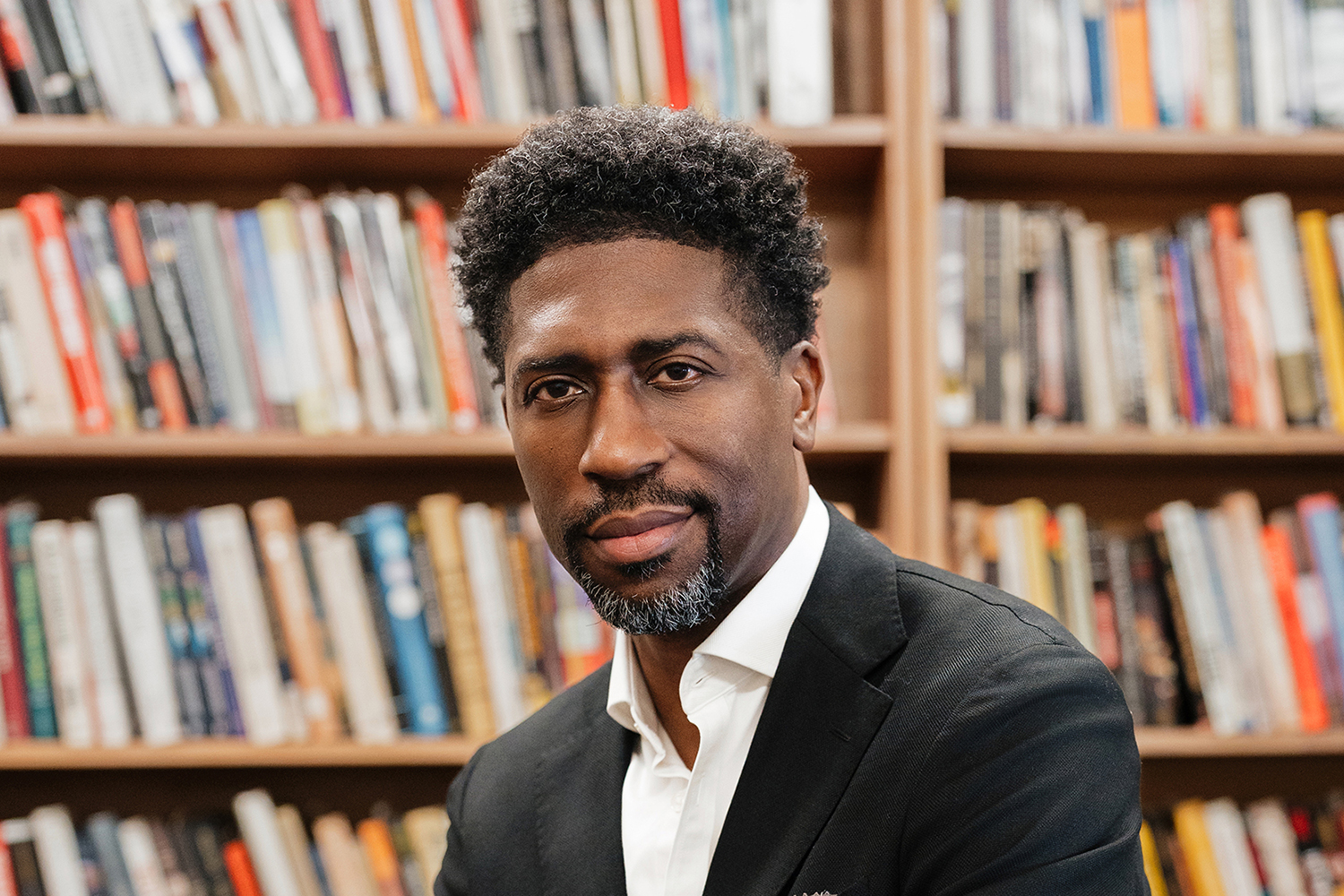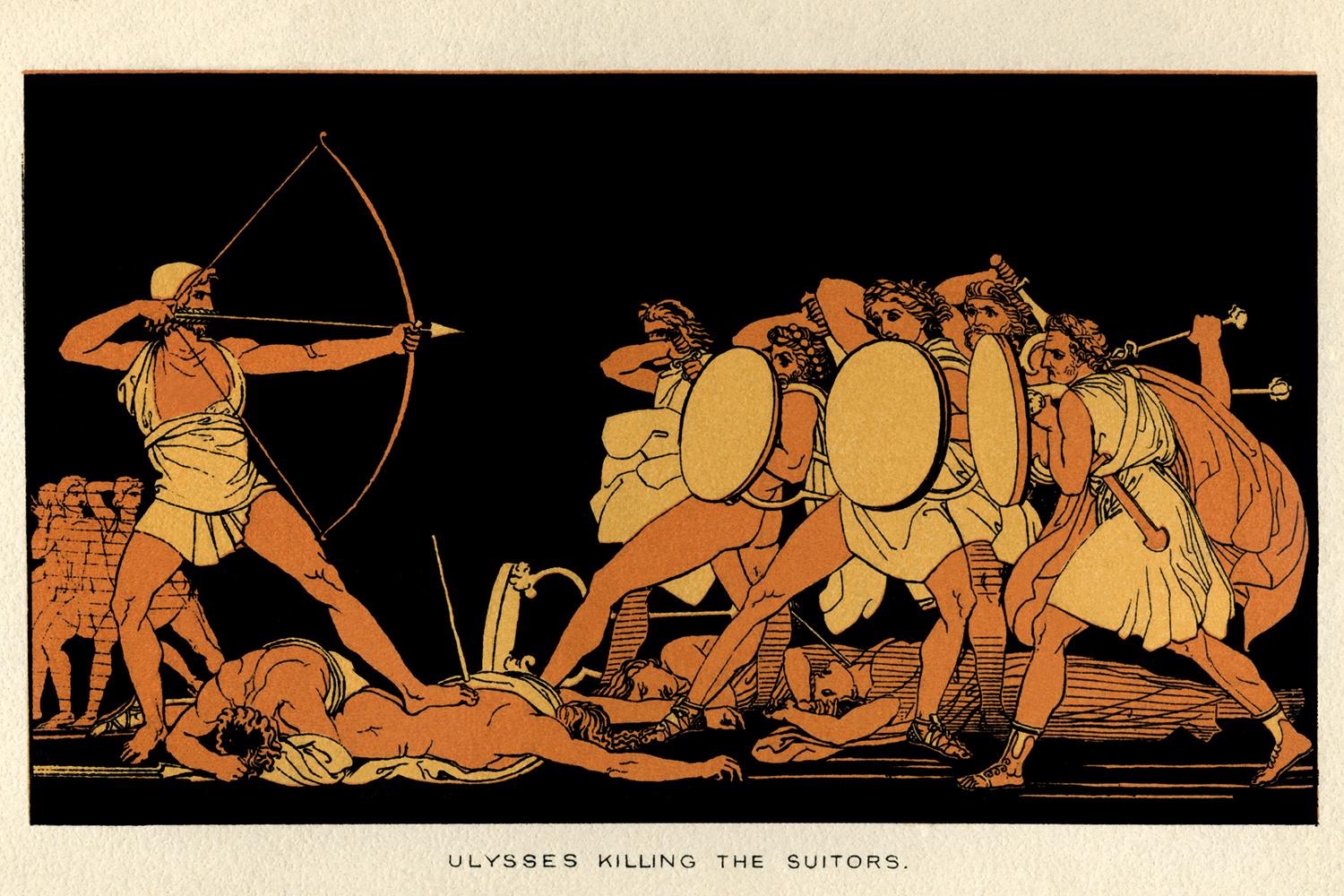
Christopher Nolan’s film, The Odyssey, is the latest adaptation of Homer’s epic poem about the Greek King Odysseus and his perilous voyage home following the Trojan War. Nolan joins a long line of artists retelling the hero’s journey, including Homer himself, who was already reworking an old tale for his 8th-century audience, says Stanford lecturer Miles Osgood.
Osgood, who teaches ENGLISH 133B: Storytelling and Mythmaking: Modern Odysseys, explains why artists keep returning to the voyage of Odysseus and his encounters with creatures like the Cyclops, Sirens, and monsters of his own making.
You teach how Homer’s poem has been rewritten countless times, from James Joyce’s Ulysses to Derek Walcott’s Omeros to Louise Glück’s Meadowlands to chapters from Ralph Ellison’s Invisible Man. What makes the Odyssey such an enduring and rich piece of text for artists to work with?
The key is that the Odyssey is already an adaptation. The poem’s opening asks the Muse to update a tale that has been around for centuries: Emily Wilson’s translation, which Christopher Nolan is using, goes so far as to say, “Tell the old story for our modern times.” That’s what Homer does for his 8th-century audience, and that’s what writers have kept doing since.
You can get a sense of the competing, existing versions of Odysseus’ adventure within Homer’s own epic. Along the way, other bards intervene with their renditions, gods and kings offer theirs, and Odysseus tells at least five variations of his own. This is what gives the hero his first epithet, “polytropon”: he is the man who contains multitudes – “a complicated man,” as Wilson renders him – and the character of many tropes.
So when we encounter modern takes on Odysseus that read like revisionist critiques – Joyce’s inquisitive pacifist, Ellison’s cave-dwelling “No-Man,” Glück’s cheating husband, Junot Díaz’s absent father, Margaret Atwood’s fugitive murderer – we have to remember that Homer did it first. All of these writers share in a tradition of ongoing adaptations, selecting and adjudicating different details of the story. That means experimenting with removing the gods and monsters or leaving them in – including the godlike and the monstrous inside Odysseus himself.
For someone whose first encounter with the Odyssey is Christopher Nolan’s new movie, what’s one thing you’d want them to carry into the theater?
Nolan’s trailers have leaned hard on the episode of the Trojan Horse, and that scene will be a good test of his movie as a whole. This is Odysseus’ most famous exploit, and it’s one of the Odyssey’s most complicated passages. Nolan has to consider who is telling the tale at any given moment – and why, and how.
In Book 8, Odysseus, disguised among a crowd of Phaeacians, asks a bard, Demodocus, to sing “the story of the Wooden Horse” exactly “as it happened.” When Demodocus gets to the point where Odysseus the warrior has emerged from his ambush and is about to mutilate Helen’s latest Trojan husband, the present-day Odysseus bursts into tears and the story stops. Is this an outpouring of genuine grief, or even guilt? Is it another cunning trick by a habitual liar? In either case, the interruption stops Demodocus short, but Homer persists. By way of a strange simile about Odysseus’ tears, he extends the scene, showing us a Trojan husband murdered and a wife taken into slavery. This is the moment – in present time, 10 years later, in Phaeacia – that Odysseus’ disguise drops. His audience is in awe, but the careful reader should be left unsettled.
Watch Nolan’s adaptation with that kind of care. Whose perspective are we following through each of these adventures? And where does the director insist on inserting himself, beyond what the bards before him have provided?
What’s the case for reading the Odyssey now – not as an assignment, but for pleasure?
I’m going to make the case that you have to read the epic twice: once for pleasure, and once for pain.
On a first reading, the Odyssey is supremely satisfying: beyond the most famous adventures of the Cyclops, Circe, the Sirens, Hades, and the Oxen of the Sun, this is also a coming-of-age story for Odysseus’ son, Telemachus; a story of Olympian gods quarreling to stop a cycle of postwar violence; and a story of revenge and reunion for Odysseus and Penelope, one of the most compelling couples in literature.
But once you’ve assured yourself of the journey’s happy ending, it’s worth returning to the hardships along the way. The most beautiful moments in the poem are tearful ones: Odysseus unable to hold the ghostly shade of his mother, who died while he was away; Telemachus, left alone for so long, disbelieving in his father’s return; 12 maids, facing their own execution, forced to carry out the bodies of the suitors; a civil war that breaks out in the final pages, after order seemed to be restored; a dog named Argos who never gets the reunion everyone else does.
In our own age of perpetual war and mass migration, any one of these scenes is timely. And as the ongoing adaptations continue to prove, all of them are timeless.
Once you’ve assured yourself of the journey’s happy ending, it’s worth returning to the hardships along the way. The most beautiful moments in the poem are tearful ones.
How could a movie improve on the source material, or at least do the poem justice?
There are qualities of Homer’s verse that certainly can’t be translated to screen: an array of “poly-” prefixed epithets for the hero that continually remind us of his manifold resources, strange stock phrases that turn the sea “wine-dark” or put words on “wings,” and extended similes that render the gods recognizable as swooping birds.
But all of these carefully measured phrases also remind us that Homer’s poem was meant to be memorized and recited, and that the original experience of the epic was that of a crowd at a show. In that respect, Christopher Nolan’s ability to market the Odyssey as a blockbuster – a spectacle that will sell out IMAX theaters – does something that a century of literary and cinematic adaptations has never quite achieved. Even if you can’t smuggle a silver mixing bowl of heady honeyed wine into your cineplex, I still hope this movie will give us something of the experience that Greek crowds sought out when they listened to their bards into the late hours of the night: collectively rapt, and a little intoxicated.
For more information
In addition to lecturing in the English Department and Continuing Studies, Osgood is a communications manager at the Ho Center for Buddhist Studies.
Writer
Melissa De Witte