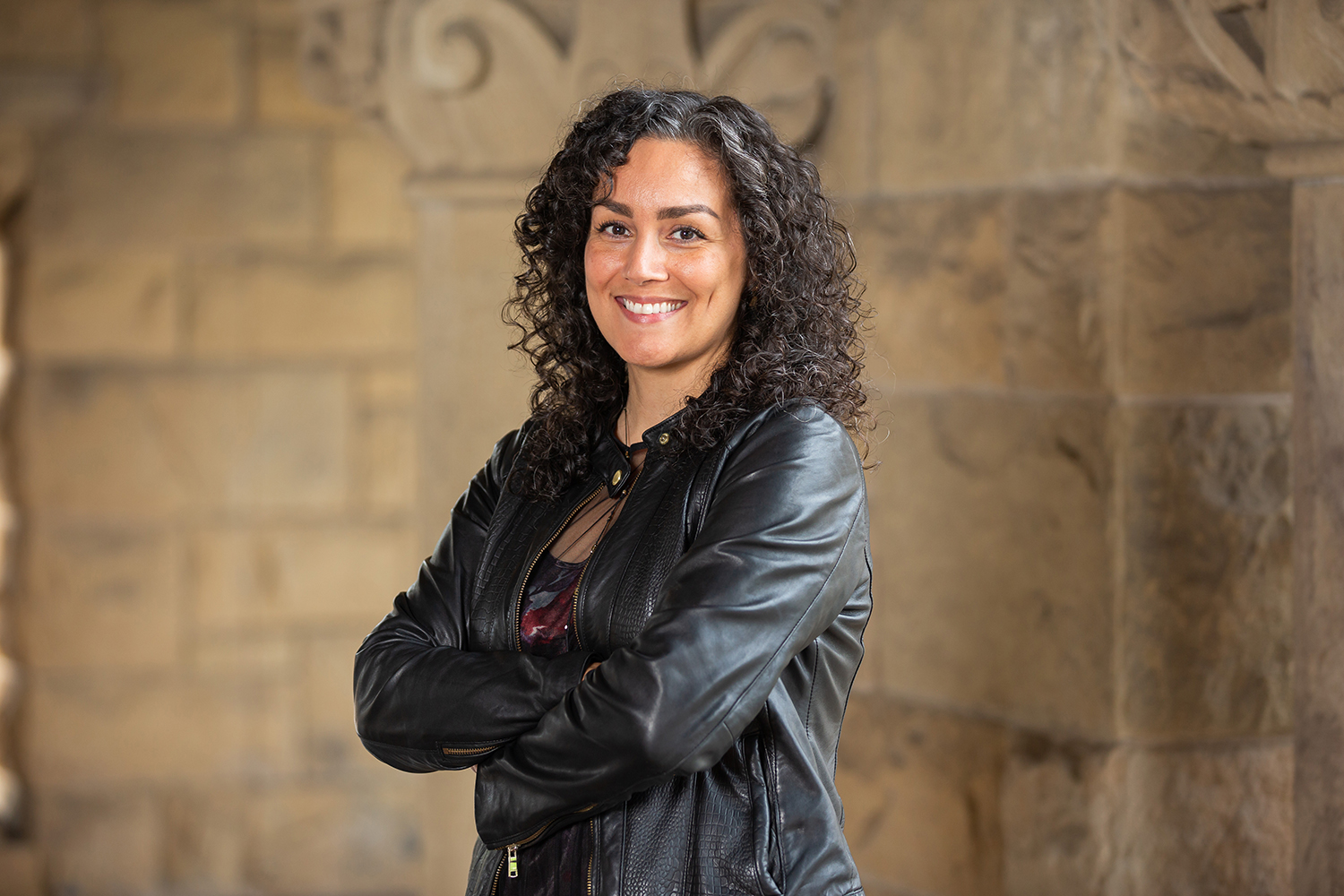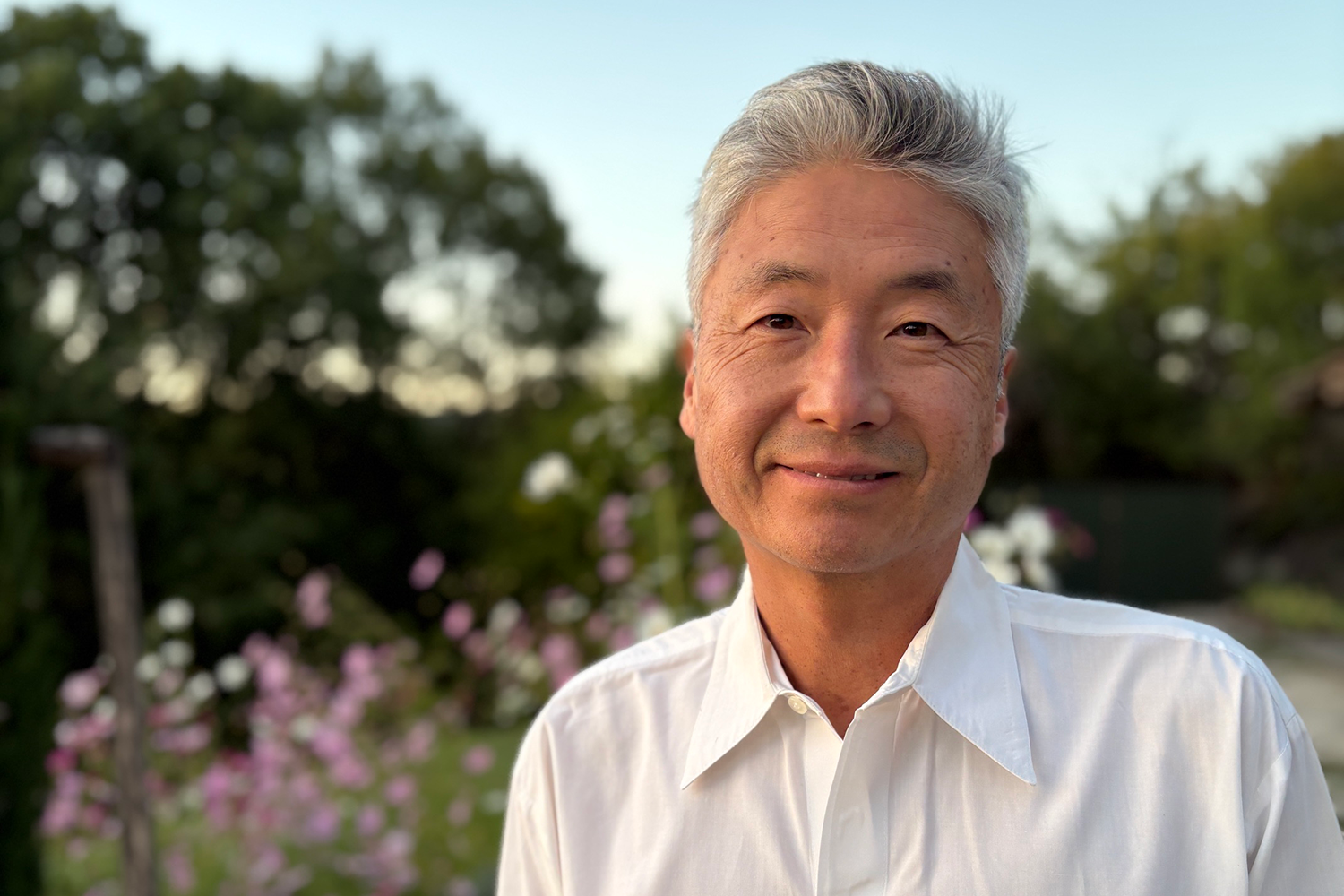
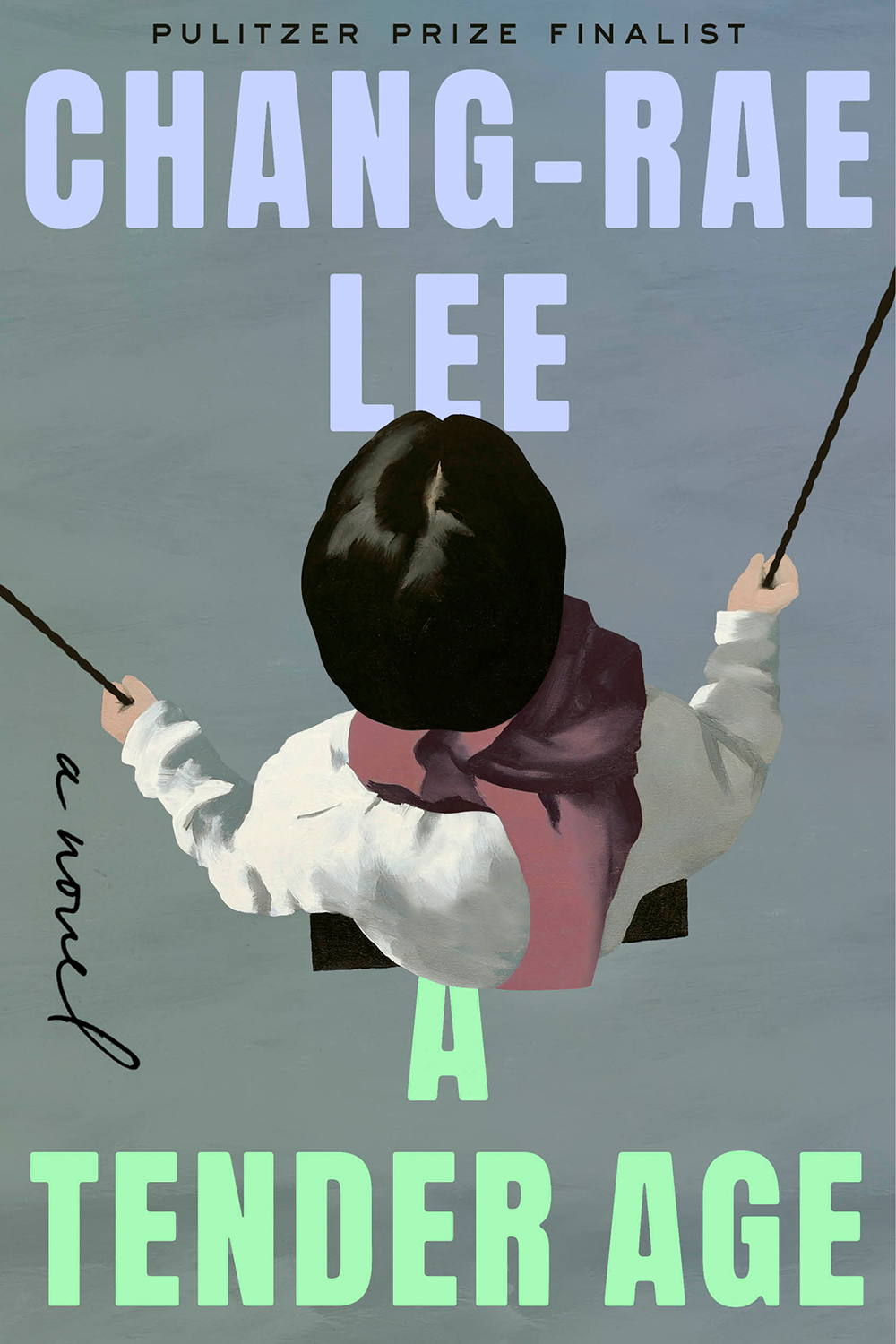
At 3 years old, Chang-rae Lee, the Ward W. and Priscilla B. Woods Professor and professor of English in the School of Humanities and Sciences, moved to the United States from Korea with his mother and his sister to join his father, a doctor. Growing up in Westchester County, outside New York City, he spent several summers at a Korean church camp, exploring the wilds of upstate New York. Perhaps not coincidentally, much of this description also applies to Jeon-Gi, the protagonist of Lee’s latest novel, A Tender Age (Riverhead Books), out this month.
The story largely concerns an eventful summer in the 11-year-old’s life as he learns the ways of his adopted country while away at camp, enduring fights, tragic mishaps, and a high-pressure relationship with his mother. The book is Lee’s seventh, following such works as his 1995 debut Native Speaker, which earned a PEN/Hemingway Award; The Surrendered (2010), a finalist for the Pulitzer Prize; and On Such a Full Sea (2014), a finalist for the National Book Critics Circle Award. This new work is his first with a narrator whose background so closely matches his own, allowing the exploration of very personal themes.
We spoke with Lee about how the novel came to be and why now was the time for his most autobiographical work.
This Q&A has been edited for clarity and length.
Congratulations on the publication of the novel. Does that feeling ever get old?
It doesn’t get old. At this point, it’s more of a feeling of relief. Novel writing is so hard; it continues to be difficult, especially for those my age and older [Lee just turned 61]. So it’s more a sense of gratitude to the gods that it’s done.
How did your personal experience at summer camp inspire A Tender Age?
I’m speaking autobiographically now, which bleeds a lot into the book. For me, that was a magical two weeks where we were in the world but not in the world. The feeling of brotherhood that we had was something that I think we all appreciated, even though we were quite young, even though we weren’t able to articulate it. But I think we all understood that it was something special – not always joyous and fun and wonderful, but special.
You’ve said this book is “closer to the bone” than any other you’ve written. Why write such a personal novel now?
I never thought that I would. I thought I wasn’t interested in that. There are so many things that I want to write about that have nothing to do with me except my interest in them.
What changed?
Maybe it is that time of life when you’re starting to review things more. My daughters now are young women, in their 20s, but I’m thinking about them more as children because I miss their toddlerhood, their childhood years. You just naturally start comparing that to what you had and what you experienced.
Also, this novel is a historical novel in a certain way. I’ve always been interested in that particular time of American immigration history. For my generation of Asian immigrants, it was the adolescence of our time here, and so to me it seemed quite a rich time to rethink and to review how we thought of ourselves and what we looked forward to.
You’ve written autobiographical essays. Why did you want to write this story as a novel as opposed to nonfiction?
I’m just too restless in what I want from a story. I don’t want to be limited by my experience. Even though I teach a class in memoir writing and autobiography, I tend to encourage the students to invent a little around the margins. We’re not reporting on historical truth about ourselves, which is kind of impossible anyway. I think it’s more interesting to dream a little and to invent a little. Maybe that gets closer to the core of what you’re really feeling about that time, which is a truthful feeling, even if it’s not the truth of what happened.
[This] is a historical novel in a certain way. … For my generation of Asian immigrants, it was the adolescence of our time here, and so … it seemed quite a rich time to rethink and to review how we thought of ourselves and what we looked forward to.
I am a novelist more than anything else. I don’t just want to document things. The documentation leads me to what I’m truly interested in or curious about – and still wrestling with.
How did you develop Jeon-Gi and his voice?
It took me a few tries to feel comfortable with his voice because it’s not a novel told by an 11-year-old. It’s told by a man through the body and soul of an 11-year-old. It’s a bit of a dance.
I didn’t want to be trapped in an 11-year-old’s consciousness, language, and views of the world, but I wanted to be completely aligned with that consciousness. He was a boy that had so much self-belief and also – I don’t know what the best word is – a kind of absence, in terms of his sense of responsibility and morality. I liked the idea that he was really open to whatever might happen in a funny way.
That segues well into a passage that struck me as I was reading. Jeon-Gi says, “In a certain way, the world was made up of people like Mickey [a kind boy] and people like me, and how unfair it was that the people who lied, who cheated, who did terrible secret things, knew more about the truth of it all than those who simply went about their good and decent way.” Do you agree with that?
I don’t want to, but I do. I agree with that.
This is where Jeon-Gi is going in his life. He’s becoming less tender during the course of the book. He’s understanding something about the world and only because he’s recognized it in himself. I think he still has hope for the world, but maybe a little light has gone out in his own heart for himself. That’s a reckoning that isn’t necessarily devastating. Maybe it’s empowering. He knows it’s a dark power.
And yet, as a reader, you still root for him.
I always hold out a lot of hope for my characters. Whether I admire them or I’m disgusted by them or just bemused by them, I always have hope for them, and maybe Jeon-Gi as much as any of my characters.
There’s something about that time, both in terms of his age and that era. There wasn’t the technology we have now.
Maybe that’s why certain moments, even if they didn’t feel so saturated at the time, feel saturated afterward because that’s all you have left. In my own life, I think about the bicycle that I had back then. Because I don’t have a photograph of that bicycle, I see it so well.
If a friend of yours from childhood were to read this book, would there be moments or characters they would recognize?
Oh, absolutely. But I think most people won’t really recognize themselves because I’ve changed everyone to suit my purpose.
How did Stanford support you in the writing of the book?
I teach a class that I really enjoy called Asian American Autobiography, in which we read memoirs and autobiographical essays by Asian American writers, and then people write their own. Teaching that class and reading all those student essays over the last five or so years has really put me in tune with autobiography. Many of my students’ essays are about childhood because the writers are only 19 or 20 years old. That time of life and its kinds of issues and sets of emotions were definitely knocking about my head all these years. I’m sure it influenced my choice to write a whole novel about a kid.
Book event
Lee will discuss the book at Kepler’s in Menlo Park on Friday, Aug. 21, at 6 p.m. Get tickets.
For more information
This story was originally published by Stanford School of Humanities and Sciences.
Writer
Paul L. Underwood