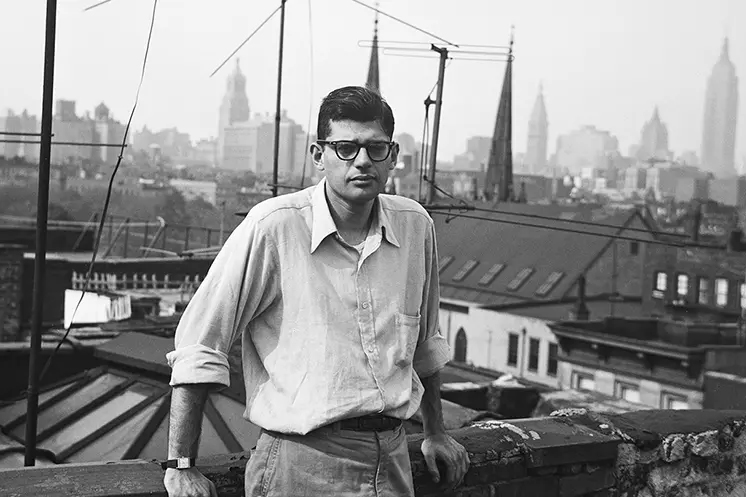
Stanford University Libraries have acquired the collection of Alfred G. Aronowitz (1928-2005) for the Archive of Recorded Sound.
A fixture on the New York underground art scene, Aronowitz was one of the first journalists to write about the Beat poets with his 12-part series “The Beat Generation,” published in the New York Post between 1958 and 1959.
His Pop Scene column in the Post established him as a distinctive voice in music journalism and opened the door to candid interviews and close relationships with jazz musicians, rock stars, and many others whose voices are woven throughout the collection of letters, postcards, and taped interviews.
An acute cultural observer, Aronowitz introduced Allen Ginsberg to Bob Dylan, and Bob Dylan to the Beatles.
Courtesy Myles Aronowitz
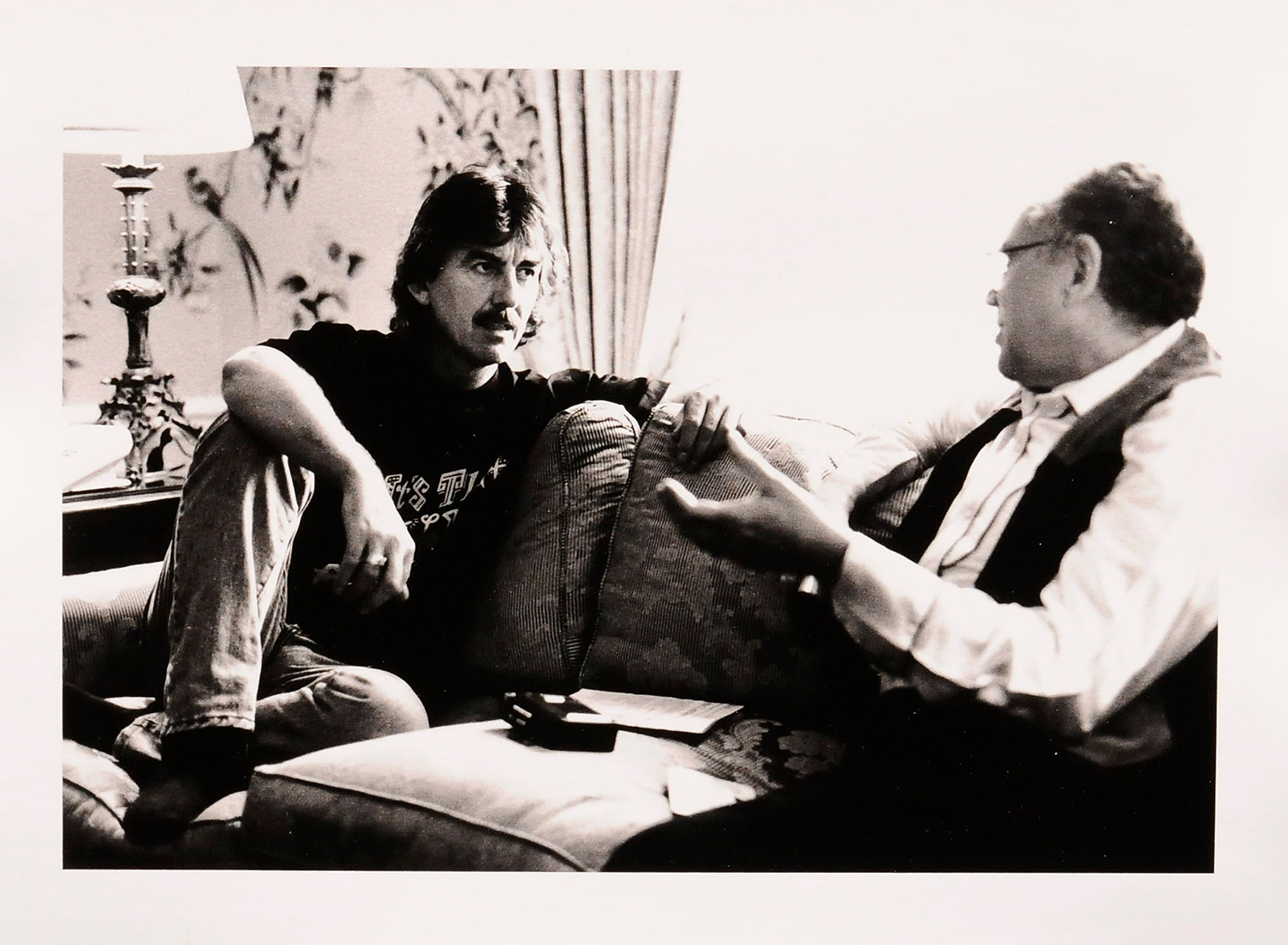
Al Aronowitz and George Harrison at the Pierre Hotel in New York City, Oct. 16, 1992.
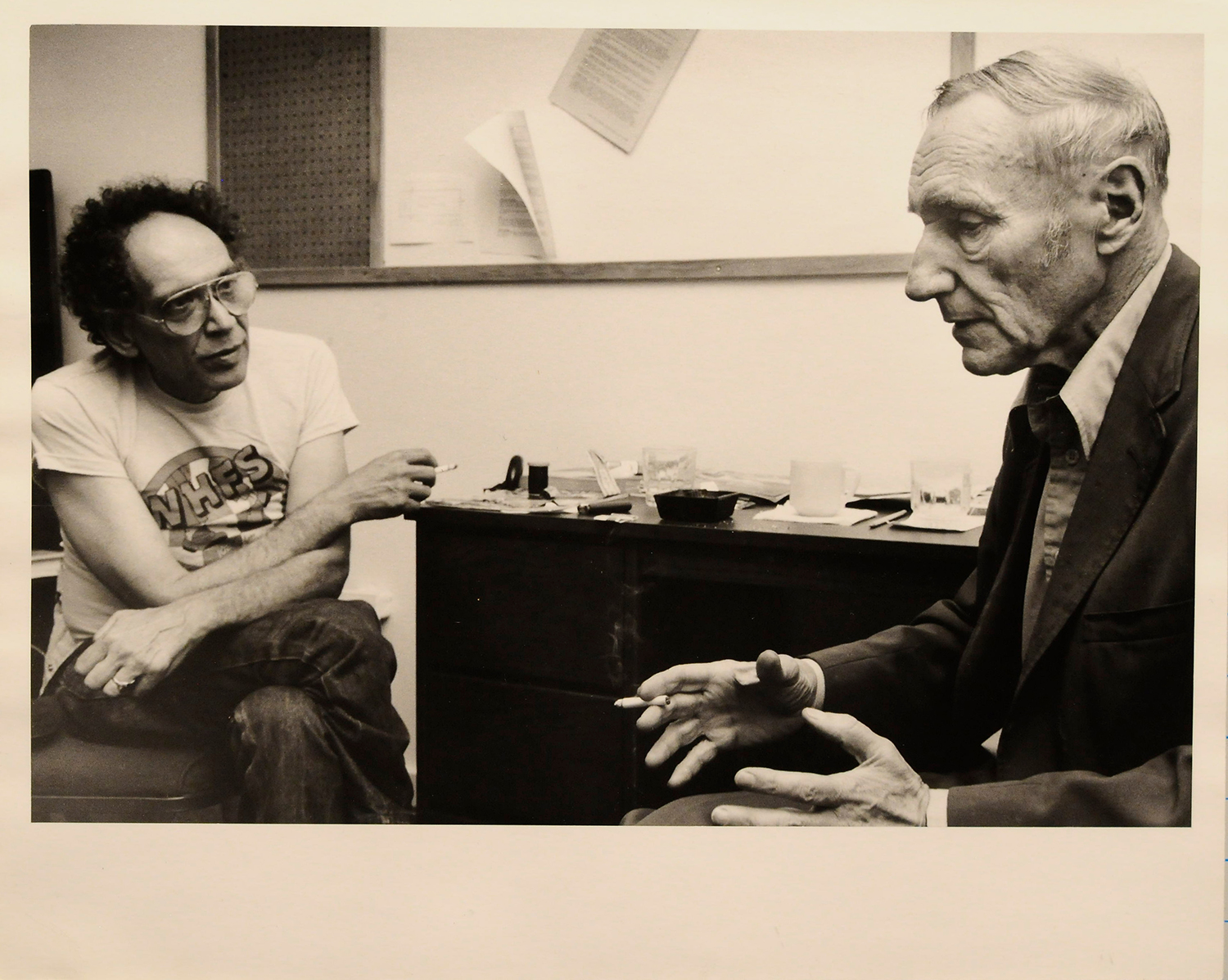
Aronowitz with William Burroughs in Boulder, Colorado, 1982.
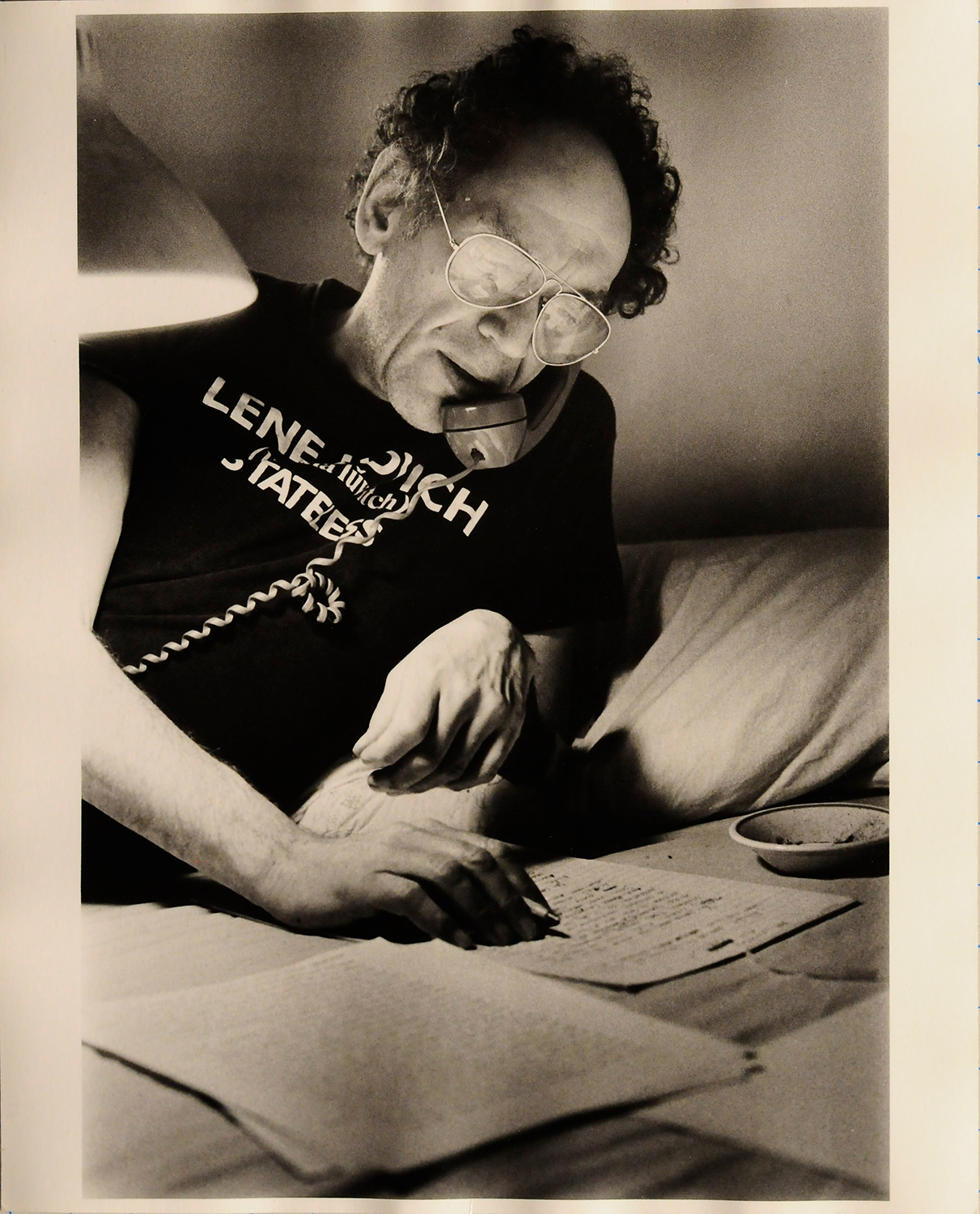
Aronowitz doing some writing on his bed.
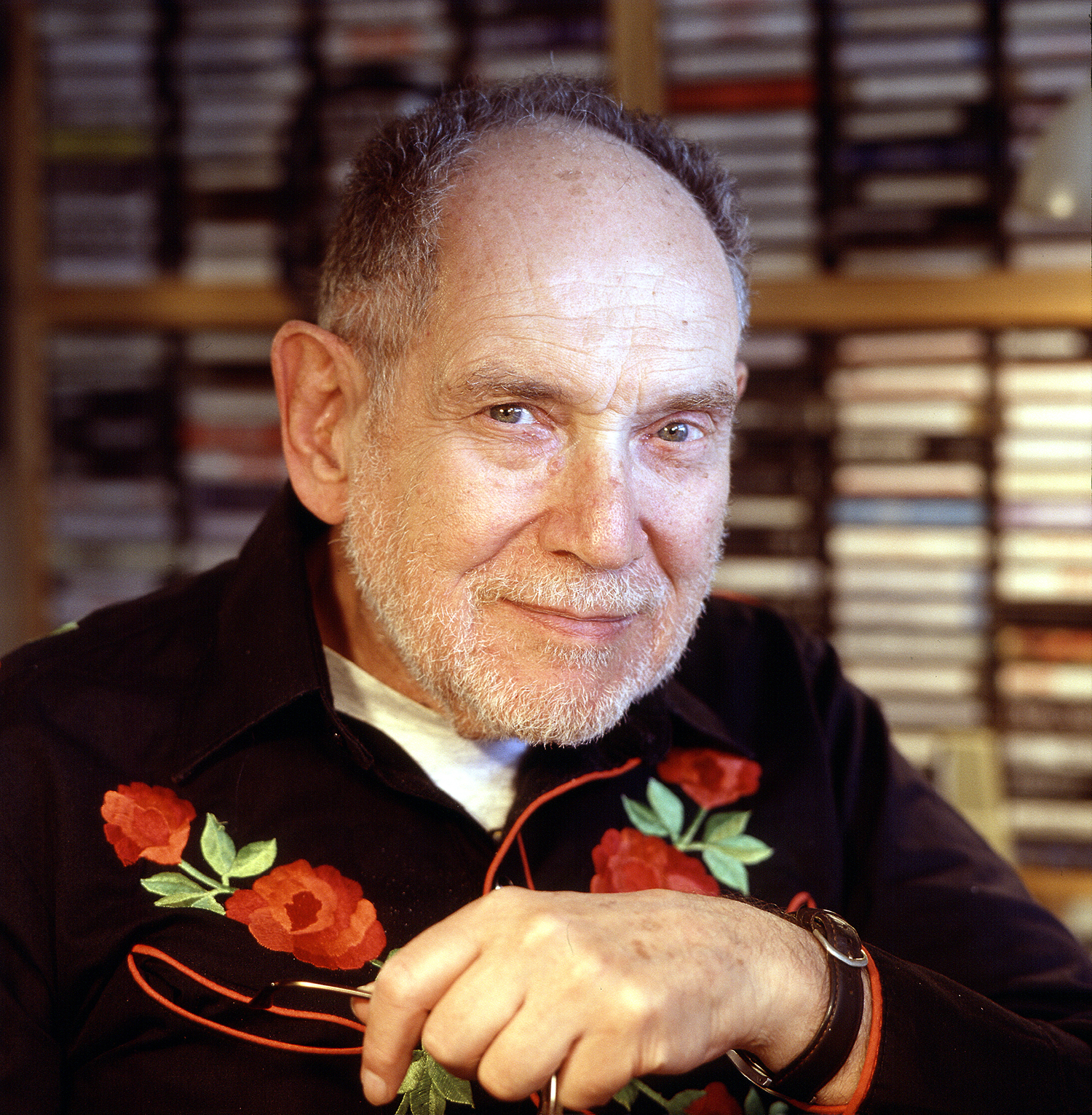
The journalist later in life.
“Aronowitz and Ginsberg were especially close friends, and their collections at Stanford complement each other and invite concurrent and comparative study,” said Michael A. Keller, the Ida M. Green University Librarian. “The Aronowitz collection also includes ephemera and interviews from the Bay Area Beat literary scene, documenting a pivotal countercultural moment and adding another facet to Stanford’s unparalleled collections in California history.”
The collection’s resonance with the Allen Ginsberg papers, also housed at Stanford Libraries, was a key reason the Aronowitz family decided to place the collection at Stanford. Another factor was the Libraries’ strength in historic audio preservation.
“Mid-20th-century materials can be surprisingly fragile,” said Tamar Barzel, head librarian of the Music Library and Archive of Recorded Sound. “Stanford’s expertise will ensure long-term preservation for dozens of unique master recordings, demo tapes, and original interviews with innovative artists including Ray Charles, Ornette Coleman, Bob Dylan, Wallace Berman, and Lawrence Ferlinghetti.”
A new look at an iconic era
J. Christian Greer, a lecturer in American studies in the School of Humanities and Sciences, said almost none of Aronowitz’s published writings have been reprinted, which has left a unique lens on the period largely inaccessible to researchers.
“Aronowitz’s proximity and intimacy with the Beats writers undercuts the mythmaking and media frenzy that later swallowed Allen Ginsberg, William S. Burroughs, and especially the king of the Beats, Jack Kerouac,” he said.
Aronowitz’s unpublished correspondence with musicians, authors, filmmakers, and visual artists offers scholars an opportunity to re-evaluate post-war American counterculture. “The street-level ’60s revealed in Aronowitz’s correspondence will be very different from our received picture of that era,” said Andrei Pohorelsky, assistant professor of music.
Students in Pohorelsky’s course, Yesterday & Today: The Beatles as History, will be able to experience collection items firsthand.
“It’s hard to imagine another college class where students could read the original manuscript from Aronowitz’s 1964 Saturday Evening Post article on the Beatles’ arrival in New York City, listen to archival interview tapes, see letters from George Harrison, and knit together a narrative based on press kits, itineraries, and other primary sources,” said Barzel.
The street-level ’60s revealed in Aronowitz’s correspondence will be very different from our received picture of that era.Andrei PohorelskyAssistant Professor of Music
The interviews complement Aronowitz’s working drafts and notes, which make up the core of the collection. There is also a trove of evidence testifying to his ubiquitous presence on New York’s arts scene. Highlights include the earliest known film footage of the Velvet Underground, a band Aronowitz originally managed; notes scribbled on paper plates for his Saturday Evening Post article on Woodstock; unreleased film scripts and footage by underground filmmakers Shirley Clark and Barbara Rubin; and a manuscript of Aronowitz’s unpublished book on the Beat Generation, annotated by Jack Kerouac.
Communication Professor Fred Turner said the Aronowitz archive is a welcome addition to the Libraries’ other counterculture collections, which support visiting scholars as well as those at Stanford. “Its special value is that it links journalism, music, and literature in a way they were lived, but are rarely studied,” he said of the collection. “Aronowitz’s career allows folks to look across domains that are usually siloed in the academy, and shouldn’t be.”
The collection will be open to research after processing is complete.
For more information
Fred Turner is the Harry and Norman Chandler Professor of Communication in the School of Humanities and Sciences.
Media contact
Anh Ly, SUL Assistant University Librarian for External Relations: anhly@stanford.edu