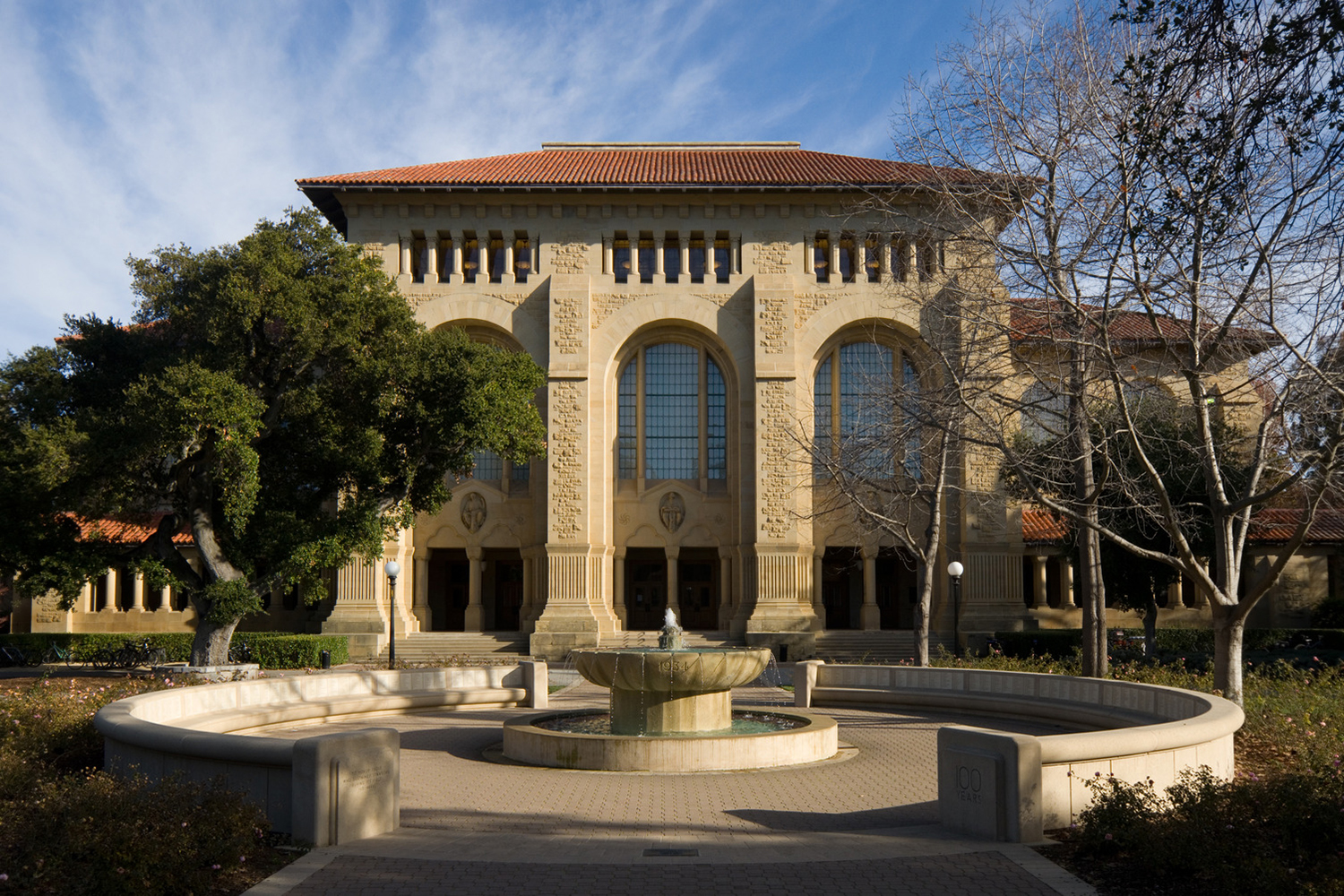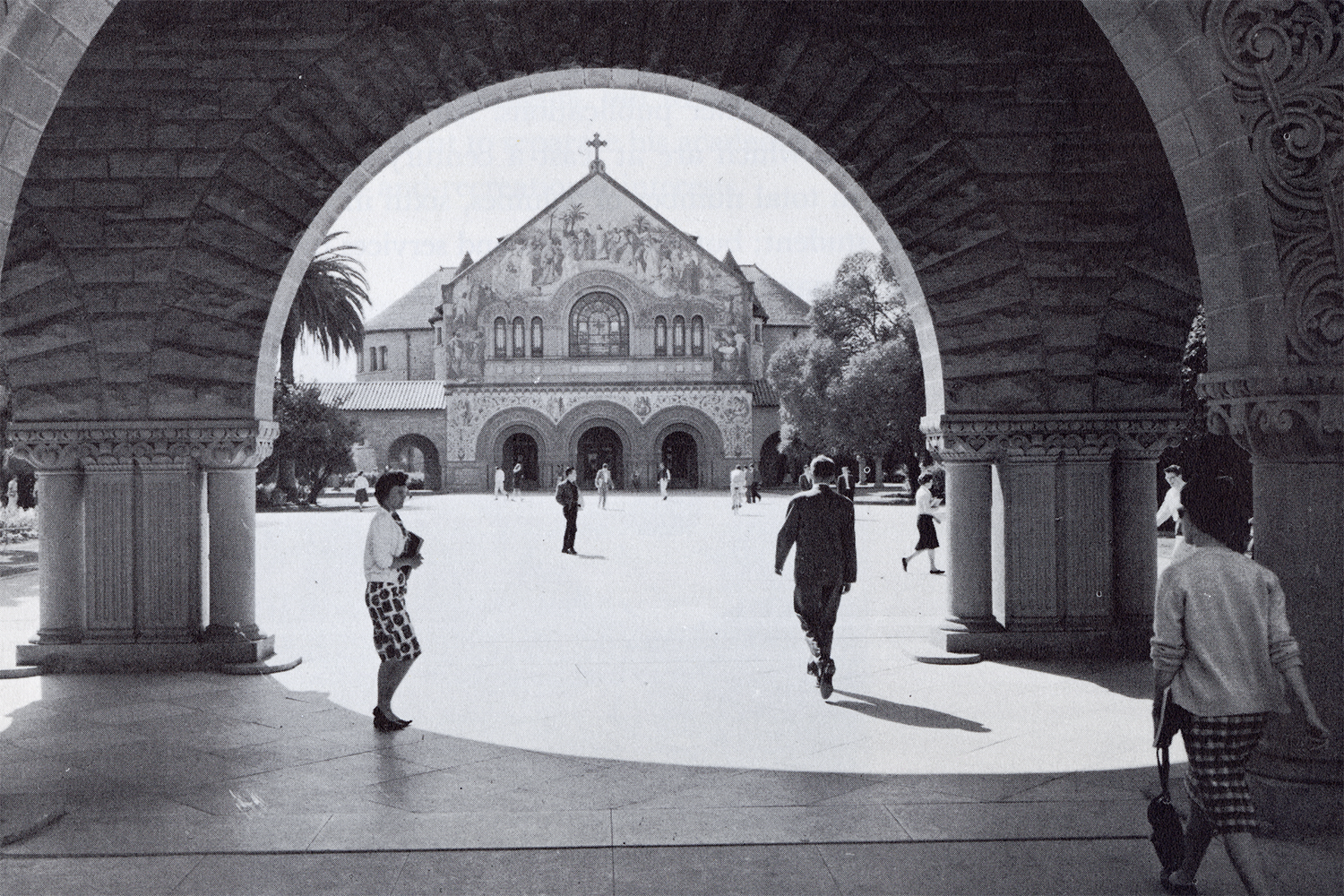
In the spring of 1961, Stanford’s planning office commissioned a series of campus photographs for a three-year development campaign that President Wallace Sterling called “our boldest venture since the university was founded.”
Ansel Adams was one of four photographers on the project, whose shot list included iconic architecture, prominent faculty, and scenes of campus life. Select images were used in a promotional booklet called The Case for Stanford. Others were printed and displayed in a third-floor conference room in Encina Hall, along with a 25-foot motorized model of future Stanford, with Tresidder Memorial Union among proposed new additions.
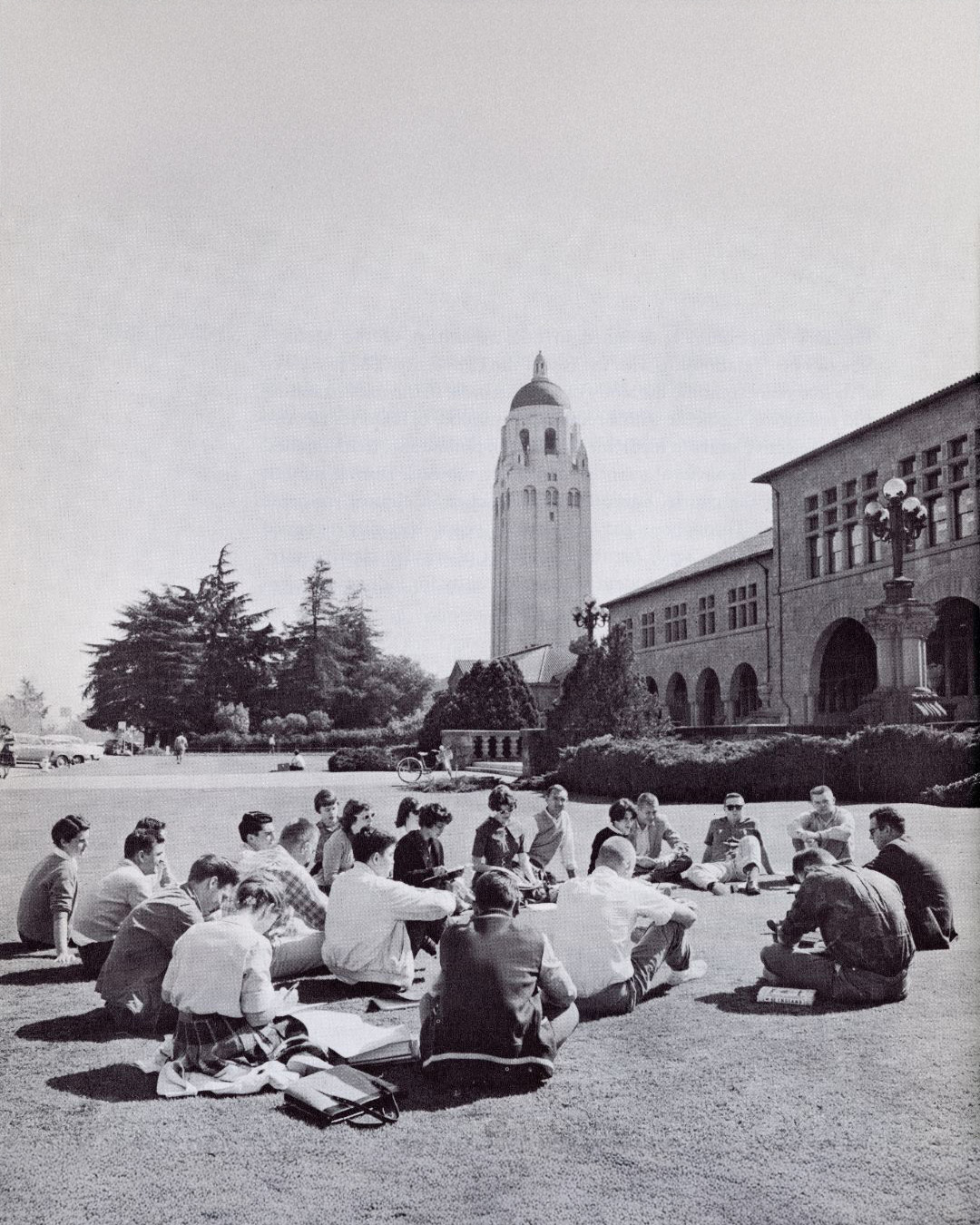
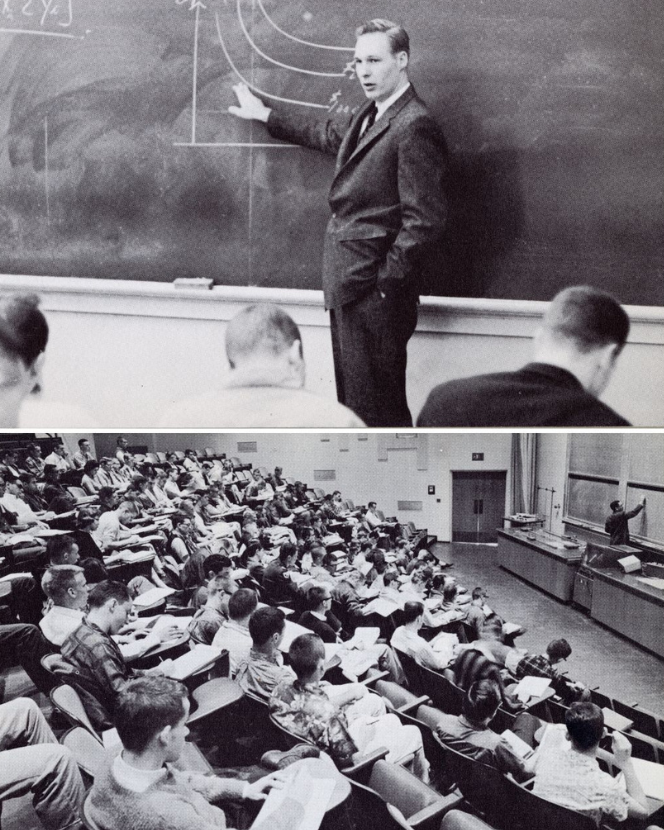
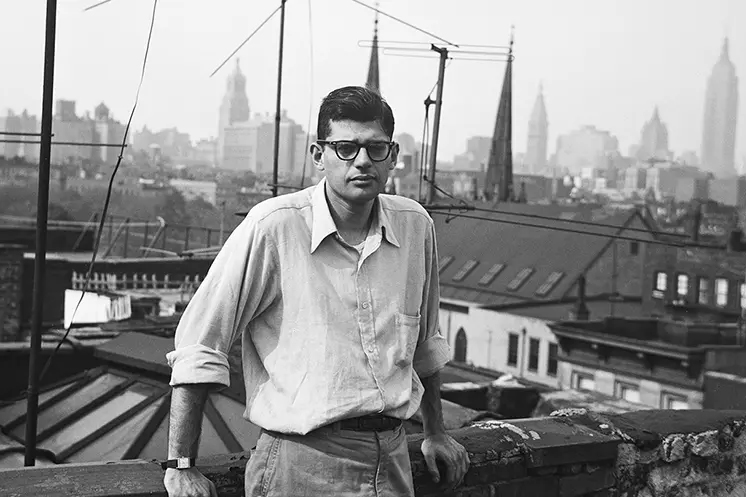
Stanford Historical Photograph Collection. Courtesy of Department of Special Collections & University Archives, Stanford University Libraries
The project’s contact sheets were preserved in the Stanford University Archives and later scanned along with more than 16,000 other historical photographs in one of Stanford University Libraries’ first large-scale digital imaging projects in the early 1990s. That’s where journalist and photographer Charles Russo found them in 2017, essentially hiding in plain sight.
“The Stanford photo archives are a field day for finding cool stories; there are so many interesting things in there,” he said. “I stumbled across those photos and I just knew there was a good story behind them.”
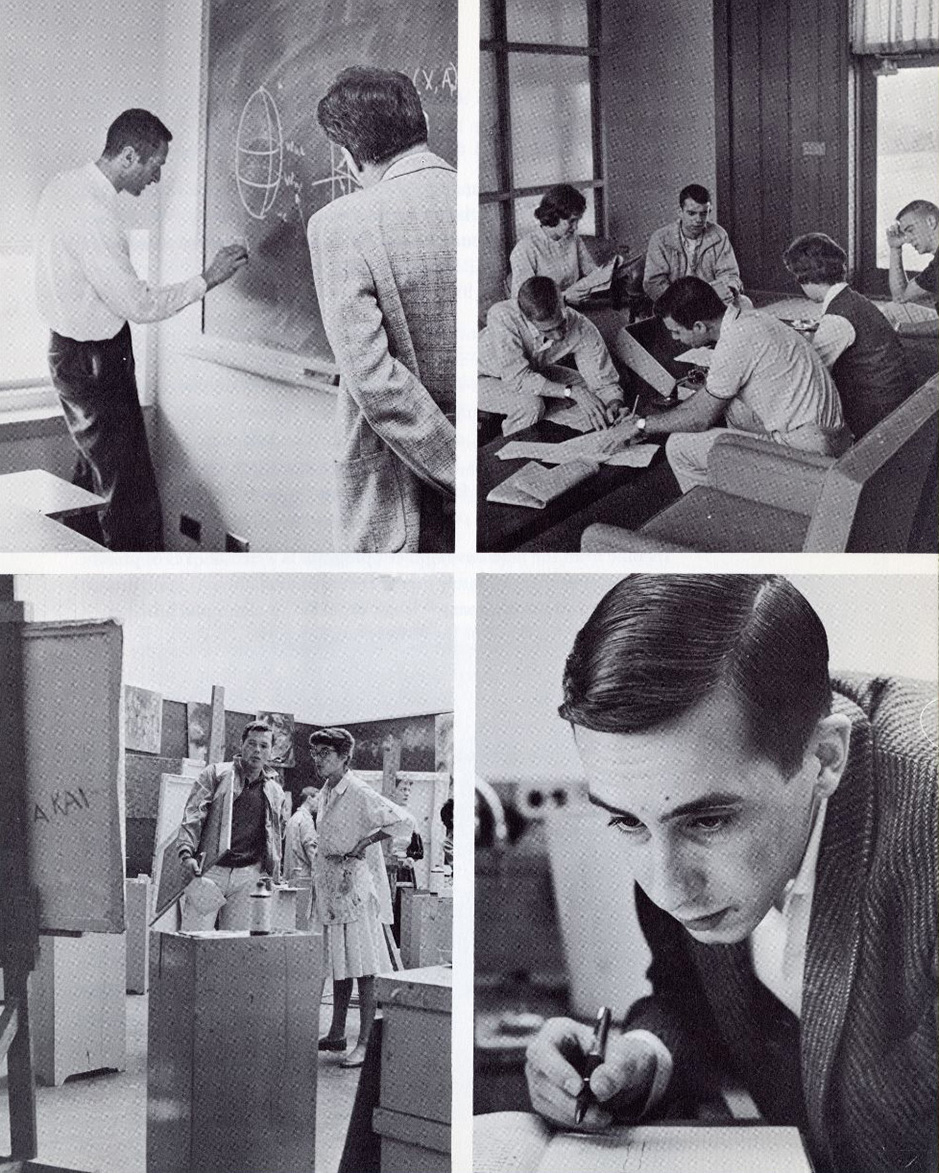
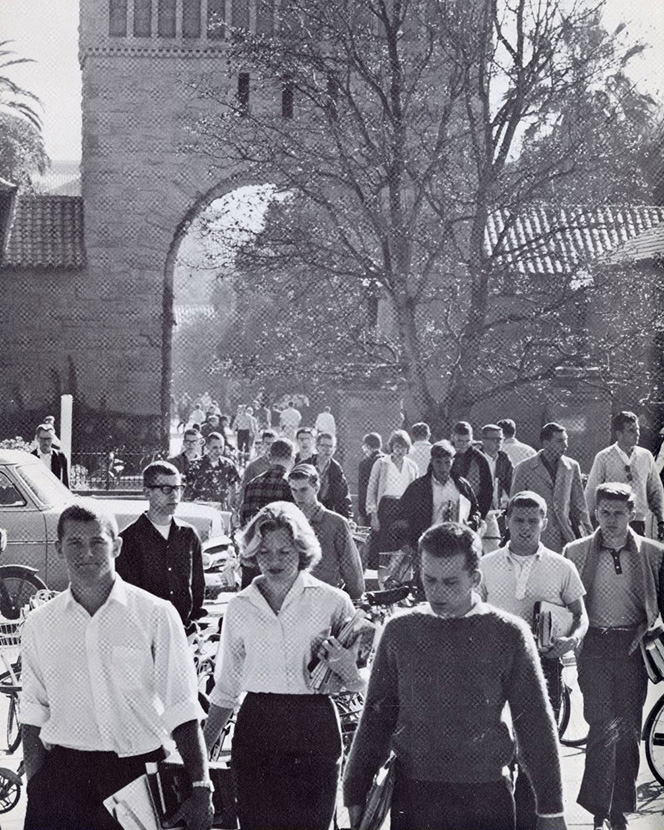
Stanford Historical Photograph Collection. Courtesy of Department of Special Collections & University Archives, Stanford University Libraries
The Stanford project wasn’t recorded in Adams’ photo log, so over the next eight years, Russo spoke to historians, archivists, and biographers to track down the details of the long-forgotten assignment. The resulting story, published Sept. 3 in SFGate, spurred a “mountain” of reader feedback, including from academics and professional photographers. Like Russo, they were fascinated by the window the found collection offers into Adams’ lesser-known commercial work.
“It gives a richer view of him as a photographer, and it gets back to that very human angle of him needing these jobs to make a living,” Russo said.
“I kind of saw it as like, you could listen to a band’s greatest hits over and over again, but if you really love the band, it’s worth listening to their B sides, right?”
Browse 134 pages of proof sheets from the 1961 project, preserved by Stanford University Libraries.
Writer
Charity Ferreira