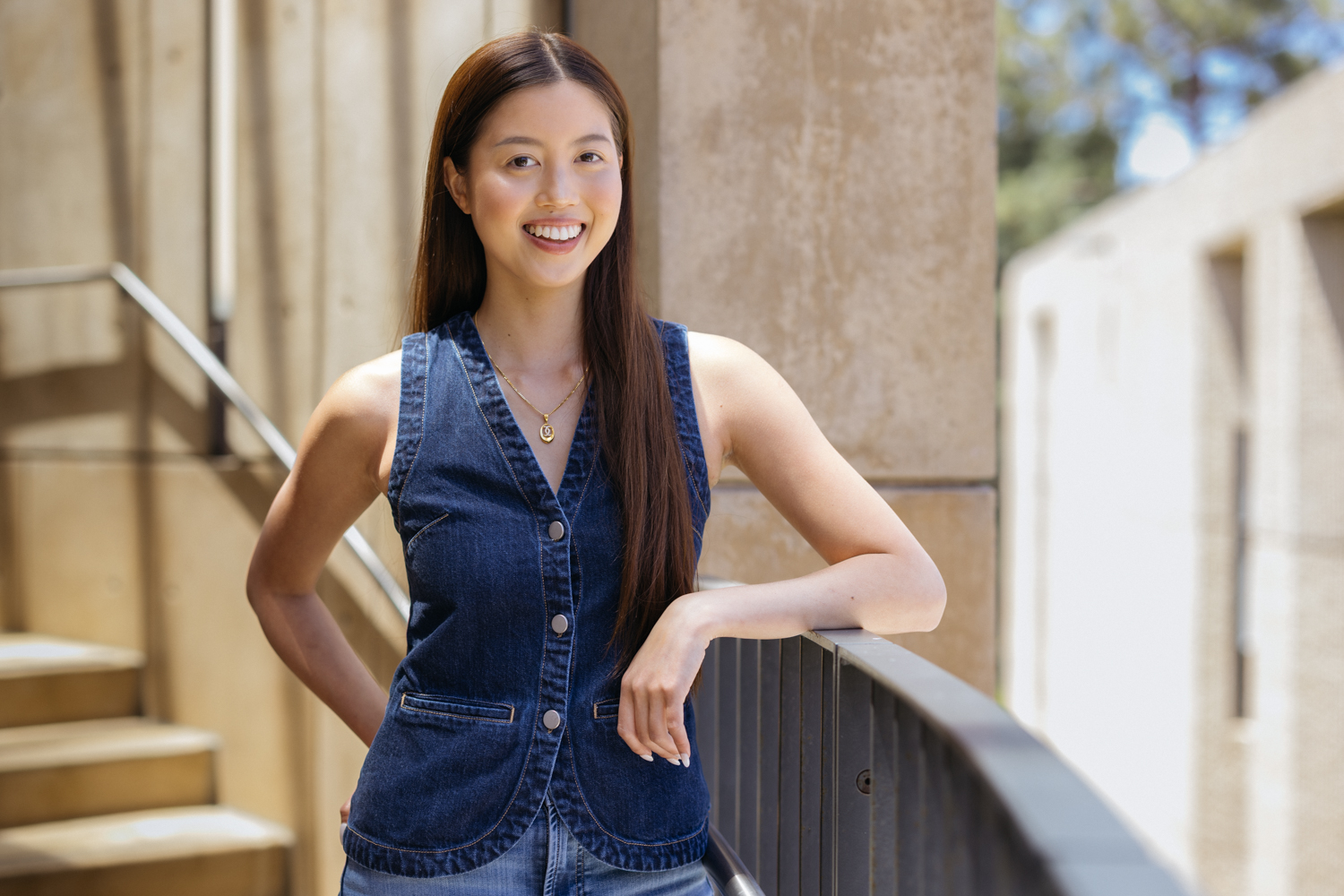
California agricultural towns like the one where Jasmine Gonzalez grew up commonly produce such stories: Born to a mother, 15, and father, 17, who were just kids themselves, Gonzalez had to grow up quickly. She embraced education as a way forward.
Not everyone’s story unfolds as fortuitously as that of the first-generation college graduate who, at the prompting of passionate teachers and counselors, took her curious, problem-solving mind to the University of California, Los Angeles, rather than somewhere she felt she might “fit in better.”
There she found her passion, working with free medical clinics serving the hardscrabble areas of Los Angeles that reminded her of the challenges she had seen back in Bakersfield – the ones she had grown up around herself: addiction, gang violence, domestic abuse, teen parenthood.
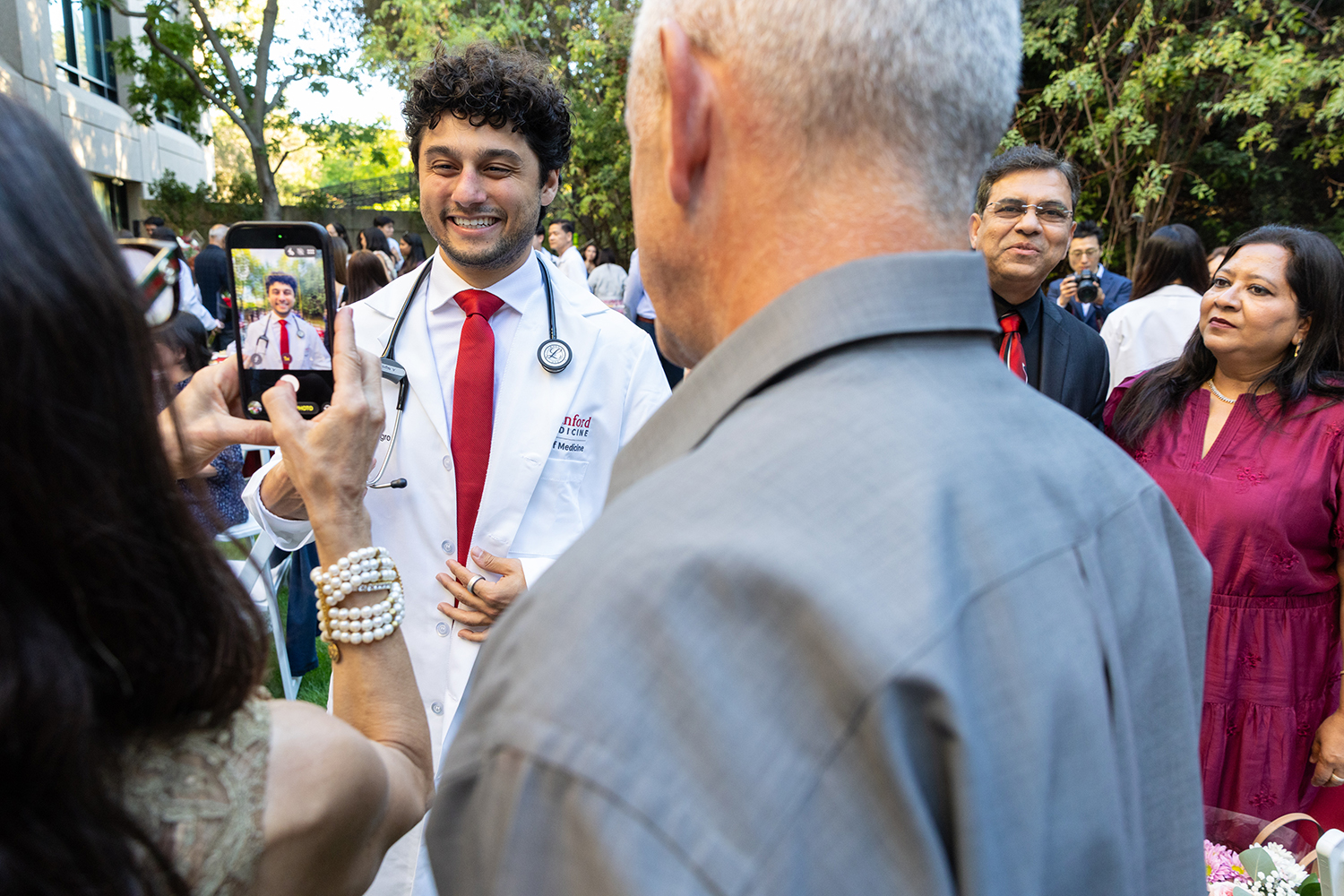
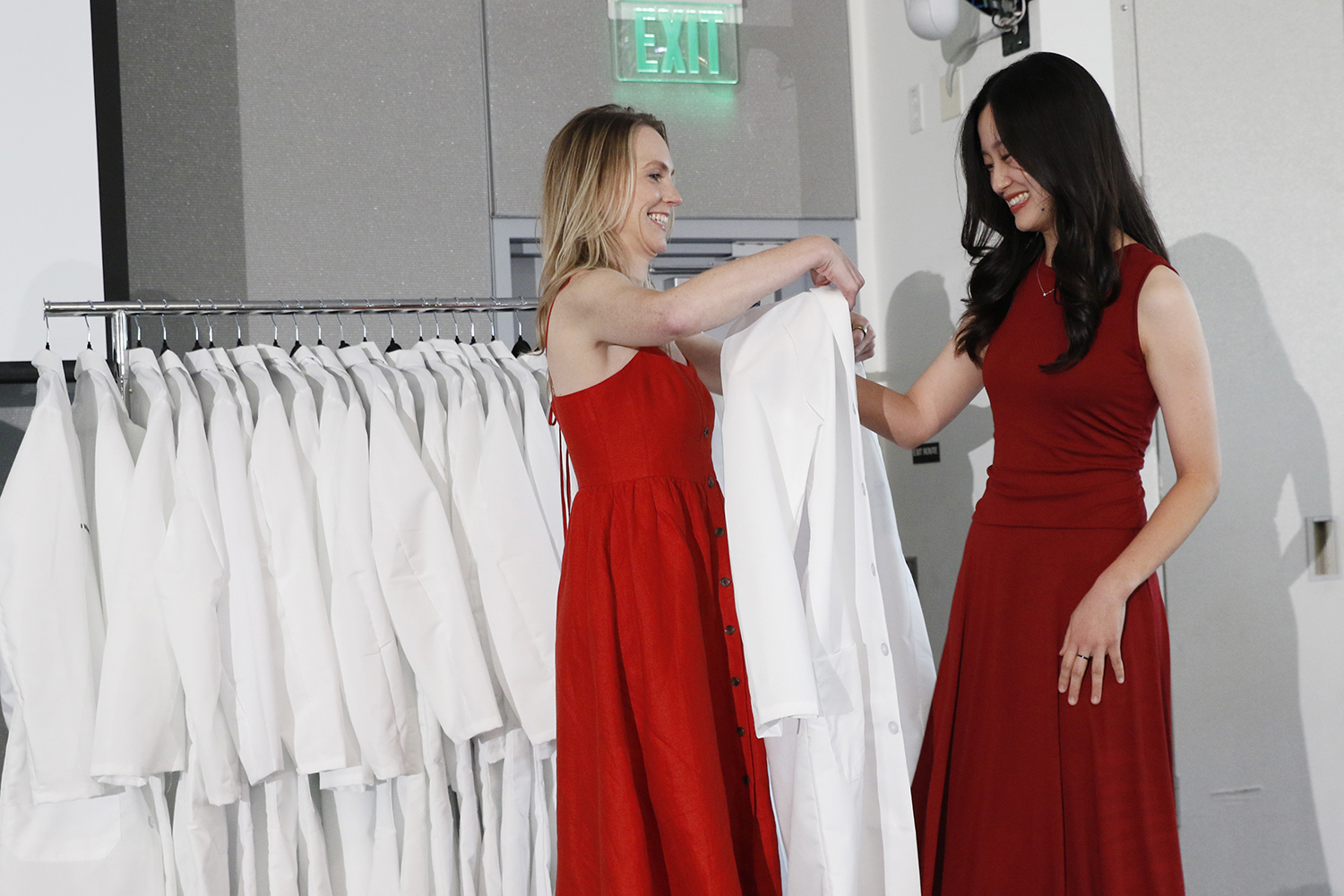
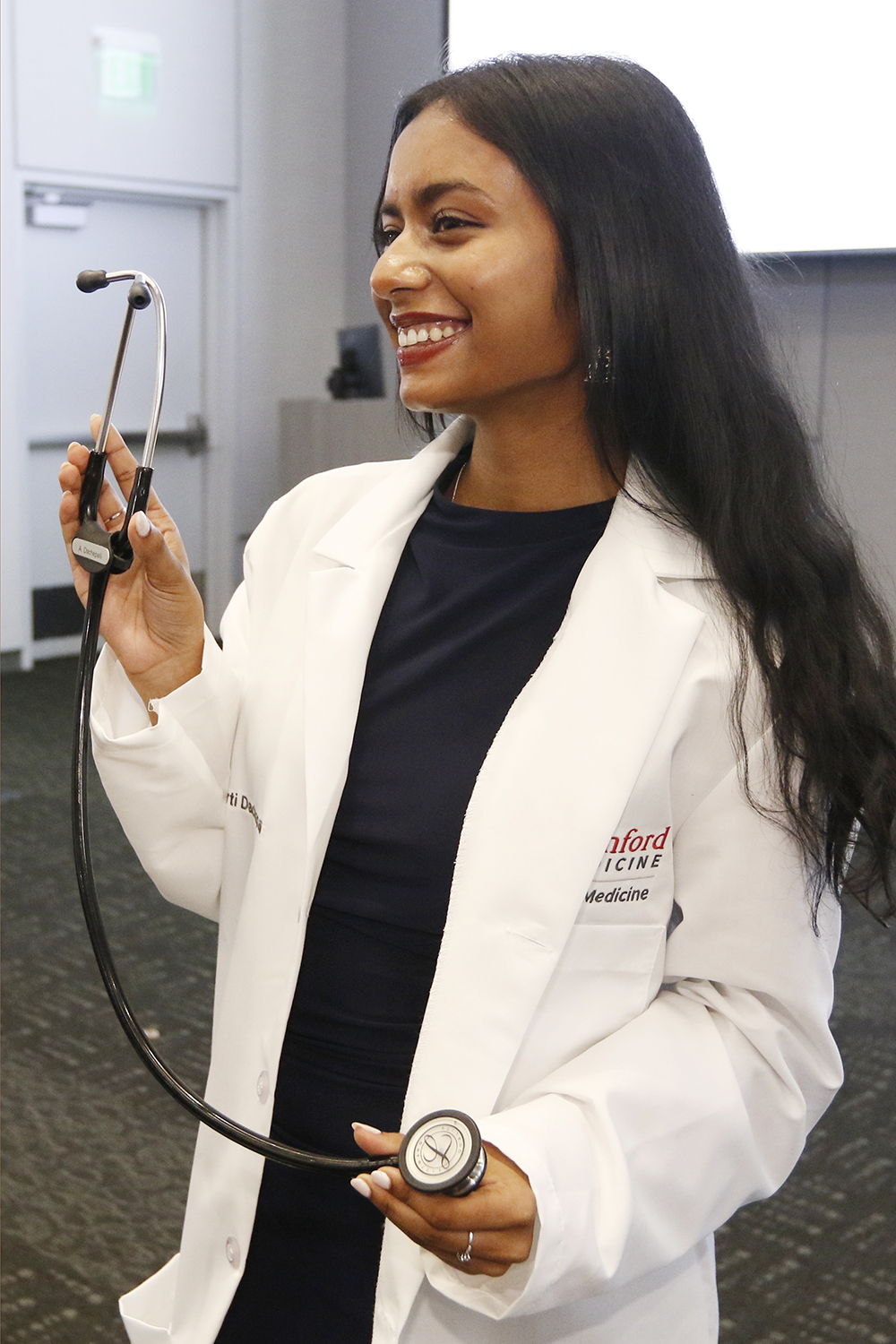
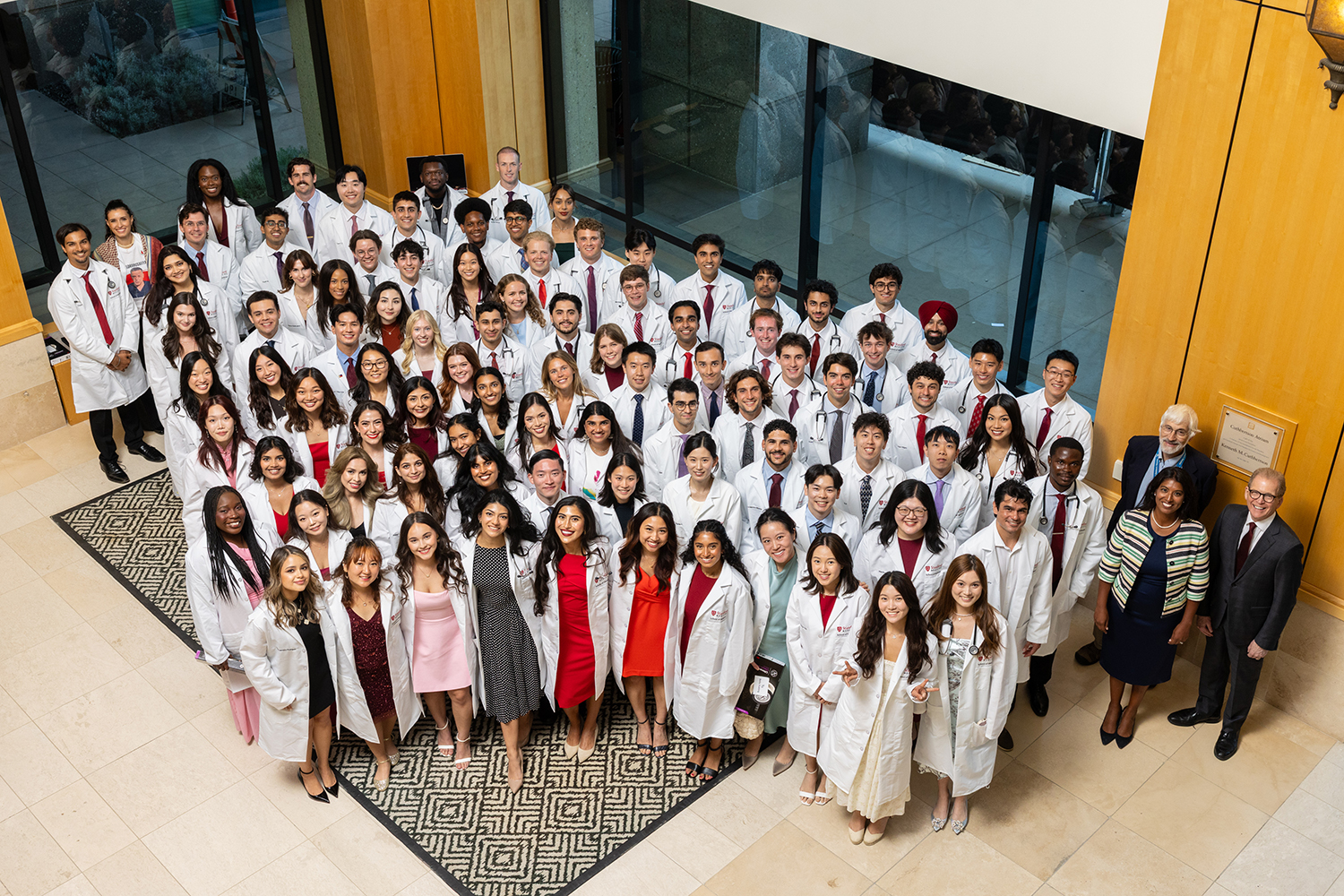
As she donned her new Stanford Medicine white coat and was handed her stethoscope on Aug. 21, in one of two ceremonies christening the incoming class of clinicians-in-training, both her parents looked on proudly and cheered their soon-to-be-physician daughter.
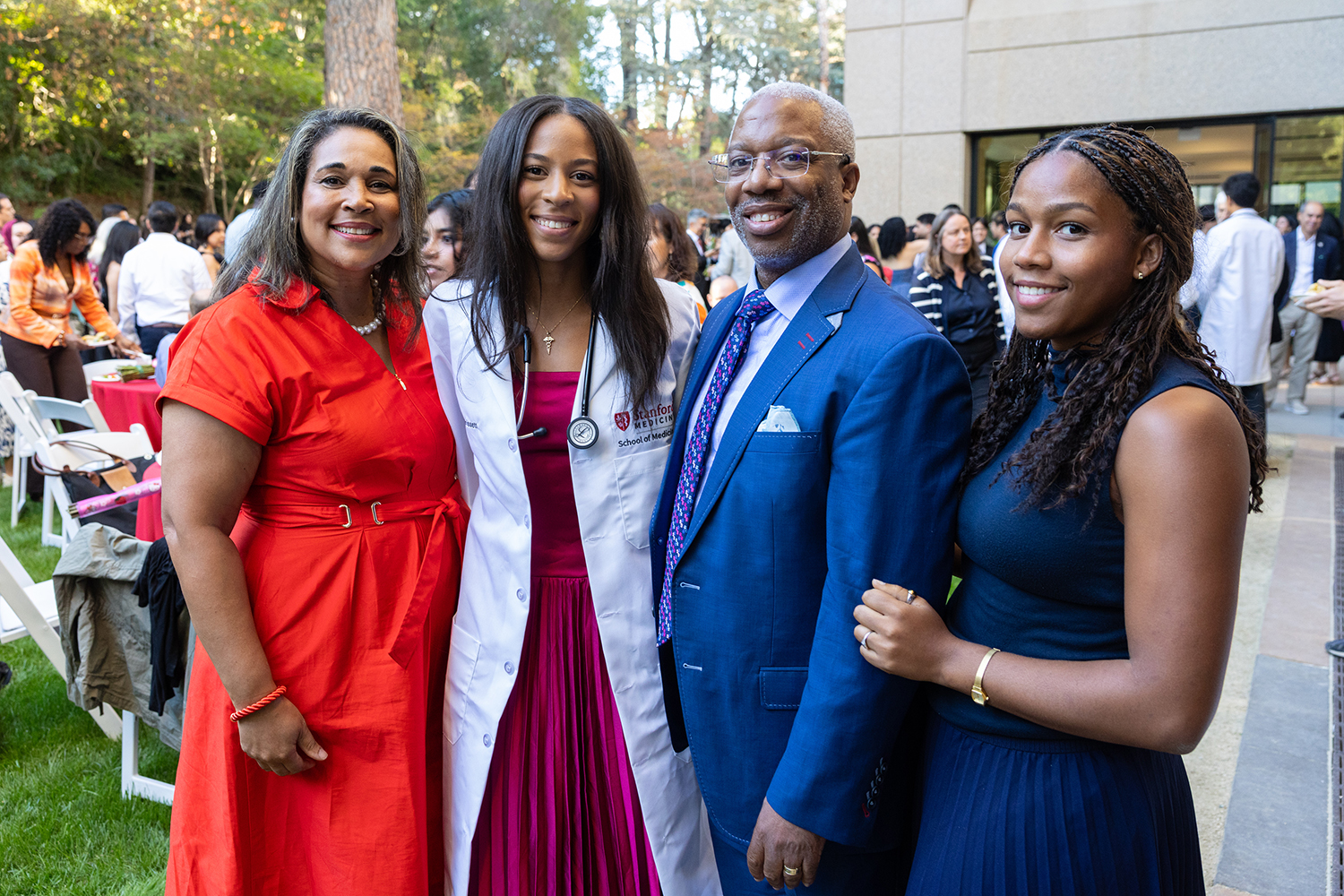
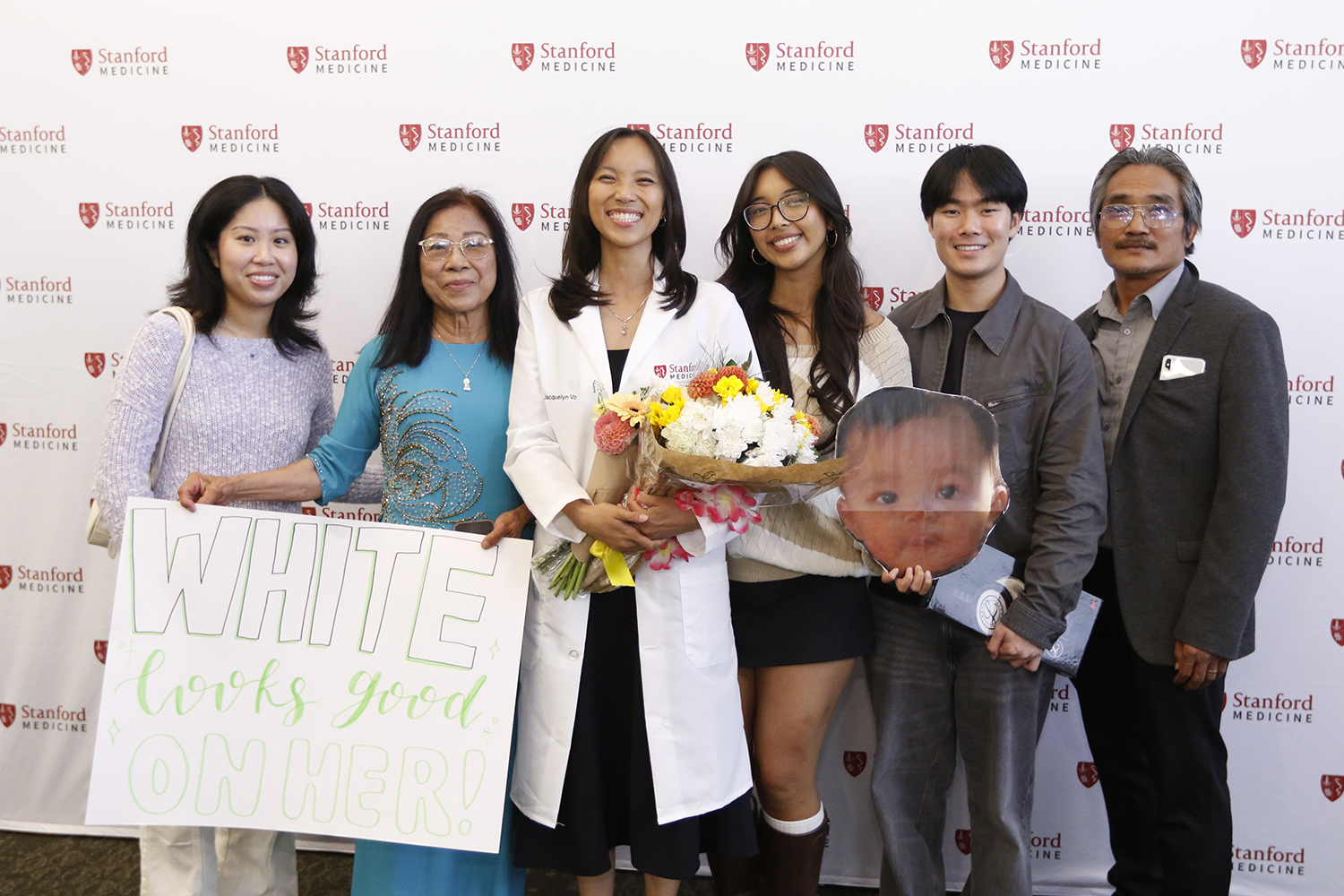
Gonzalez reflected on a journey she couldn’t have navigated alone – much like the 89 other new doctors-in-training who brought along their own adoring, and vocal, support groups.
“There are a lot of people in situations like mine, and the ones that both my parents came from, but not enough of those people get to spaces like the one I’m entering,” she said. “My dad tells me I’m the light at the end of his tunnel. I want to continue to be that, not just for my parents but also for my patients.”
Support systems and unique pathways to medicine were overriding themes at both the MD ceremony at Stanford University’s McCaw Hall and the master’s in physician assistant studies ceremony at Berg Hall, where 29 PAs-to-be took the stage. Both groups slipped into their coats and took the stethoscopes that symbolize the magnitude of their chosen paths – then cited the Stanford Medicine affirmation, the pledge that codifies their commitment to humanitarian care.
But duly noted throughout both ceremonies was the importance of their commitment to self-care and keeping their support systems activated.
“There will be hard days ahead. There will be moments of self-doubt, exhaustion, and uncertainty,” said guest speaker Ethan Nicholls, MD, president of the Stanford Medicine Alumni Association Board of Governors. “But remember, you are here to learn, to grow, to make mistakes, to bounce back, and to become better. Above all, remember that you are not on this journey alone.”
MD student speaker Brian Zhang implored the new class to “laugh often, call your family, and seek out joy and peace.” Talking about support that extends beyond fellow students, professors, alumni, and staff, he added: “Always remember that you are who you are today because of the family sitting among us who have lifted and supported you every step of the way.”
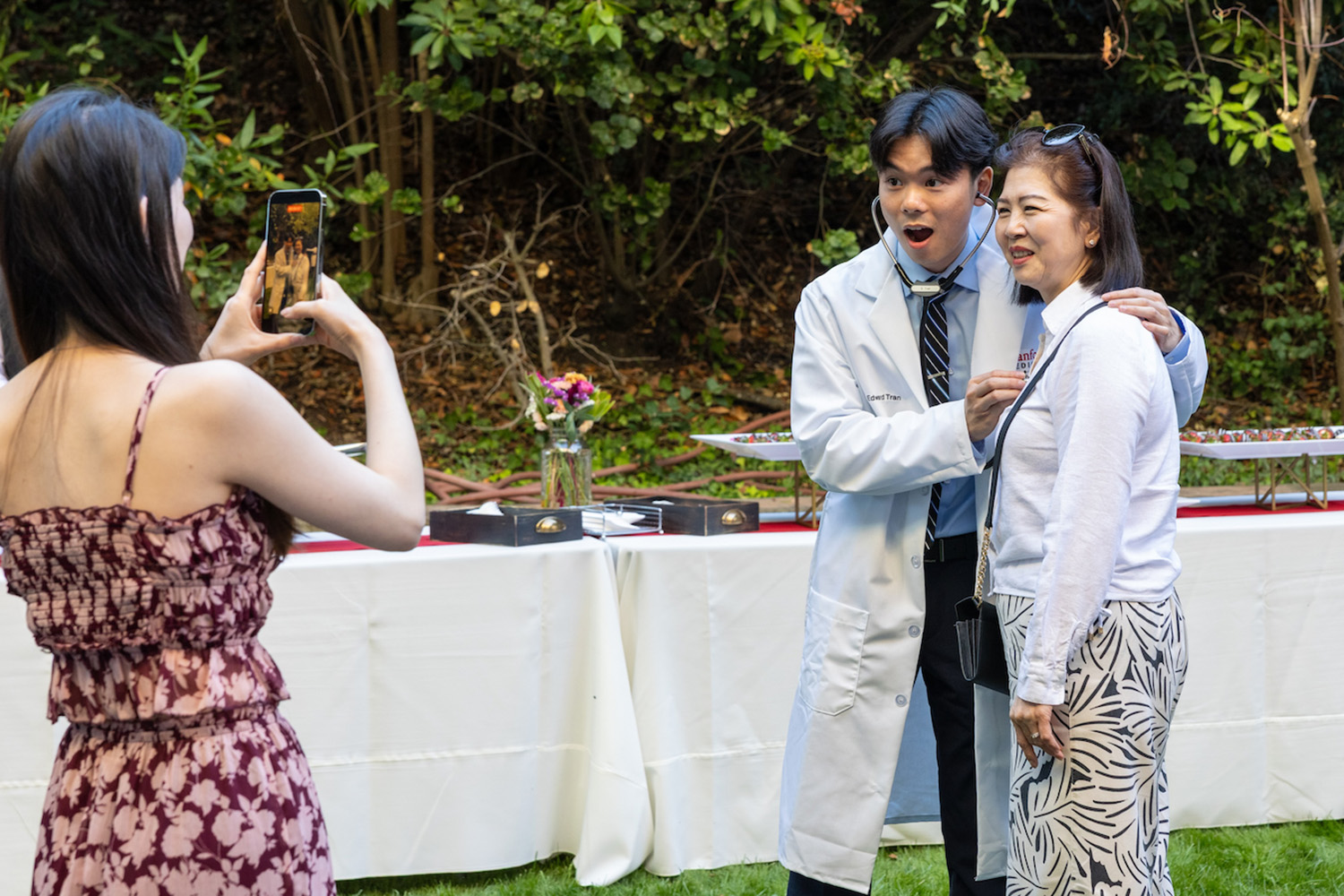
Incoming MD and PA students mark the start of their clinical training. | Steve Fisch
An early inspiration
New PA student Kyle Schuck gives major thanks to his adoptive parents, who were in the audience at Berg Hall, as well as to his biological mother, who died of an aortic aneurysm when he was 10. Though they struggled financially, Schuck never questioned his biological mother’s love. She had escaped an abusive relationship, moving across the country with his brother and sister while he was in her womb. “I could’ve taken a lot of anger from it,” he said. “Instead, it gave me perspective I wouldn’t have otherwise had.”
Most formatively, Schuck felt taken care of and consoled by the hospital care team who broke the news to him and his older siblings the day his mother died. Now, he is ready to pursue his full-circle calling after serving as a combat medic in the U.S. Army airborne unit.
“I want to work in pediatrics,” he said. “I’ve been told I have an ability to connect with kids and make them feel heard and safe. And I guess that was my first experience, seeing doctors, nurses and staff be that way not just with my mom but with us as kids as well. It was a pivotal experience.”
Channeling Olympic lessons
Paige Madden, a three-time U.S. Olympic swimming medalist who’s entering the PA program as a Knight-Hennessy scholar, leaps into these new waters with deep knowledge of how to lead others and how to lean on the support of teammates, coaches, and loved ones.
That’s what a path that results in two silvers and a bronze from the Tokyo and Paris Summer Games will do to a human. “Those years instilled in me a deep appreciation for lifelong learning and overcoming challenges,” Madden said.
When it comes to the pursuit of medicine, particularly in an academic setting, Madden said she gained inspiration from her parents, who met while sailing, then produced two accomplished “water babies” – her and her brother, also a collegiate swimmer. In her hometown of Mobile, Alabama, her father is a family medicine practitioner, and her mother teaches accounting at the University of South Alabama.
In her personal experience with PAs, including while being diagnosed at age 13 with the autoimmune condition Hashimoto’s disease, Madden has come to a conclusion: “Ultimately PAs are like the team captains – and that excites me.”
Changing medicine with stories
MD student Simar Bajaj was 9 when his favorite uncle was deployed to the Middle East as a U.S. Air Force radiologist. His uncle relayed stories of his care of those wounded during his stint in Afghanistan – even members of al-Qaida and the Taliban.
“I was so confused. I said, ‘Why are you taking care of the enemy, uncle?’” said the Knight-Hennessy scholar. “He told me, ‘Look, Simar: It’s not my job to decide who is good and who is bad. My job is to care for every patient who comes to me.’”
It was the spark that ignited Bajaj’s critical thinking about health care, as well as the equity equation: Who gets it and why? What are the barriers for many? And why are so many conditions stigmatized?
It led him from a degree in chemistry and the history of science at Harvard College to studying global health science and epidemiology at the University of Oxford to a year at The New York Times exploring the cross-section of journalist and physician.
That’s ultimately where he sees his opportunity for effecting change, for helping get at the bigger questions his mind refuses to look past, both as a budding physician and as a human.
“Public health debates excite me, and I have a passion for storytelling,” Bajaj said. “It’s about how you can help inform and provide data for some of these debates we’re having. It’s seeing that through line between research and policy.”
Telling ‘the story’ of disease
Dania Ahmed, a Medical Scientist Training Program (MSTP) MD-PhD student, saw within her South Asian family a reluctance to approach illness or death head-on. “I often heard ‘Allah na kare,’ an Urdu phrase meaning ‘God forbid,’ as if naming the fear might make it real,” she said.
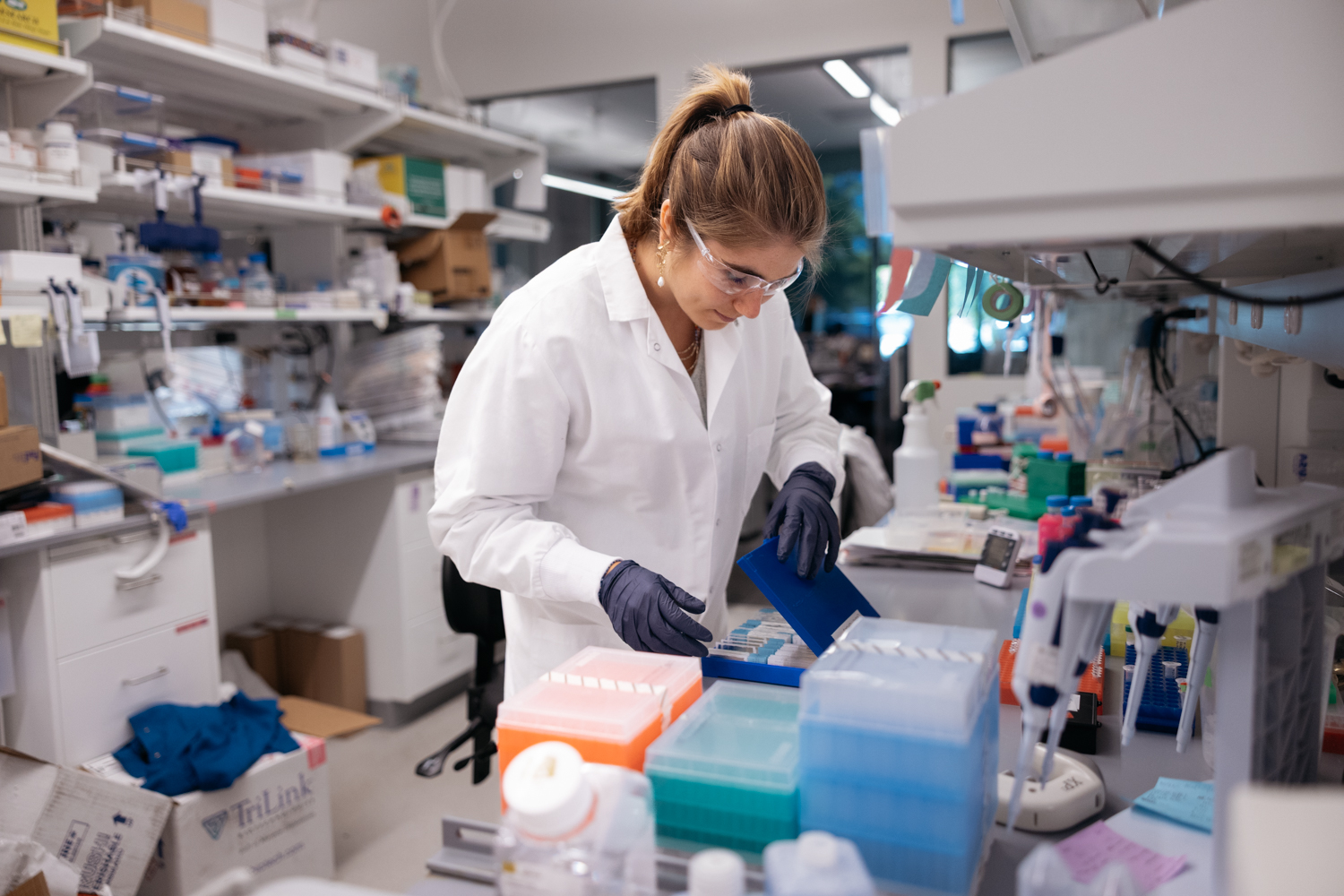
Knowing of very real cardiovascular issues in her family made Ahmed want to study the heart, then find ways to bridge the translational gap from a research environment to the clinic. “I could take the stories of disease I had witnessed in my family and ask what was happening underneath them, down to the level of a single cardiomyocyte, then use that knowledge to imagine a different outcome,” she said.
She began to do that as an undergraduate, at the University of Washington’s Institute for Stem Cell and Regenerative Medicine. Using cardiomyocytes derived from patient-specific induced pluripotent stem cells, the team identified a rare mutation to the MYH7 gene encoding beta myosin, a motor protein responsible for cardiac contraction.
“For the first time, I saw how science could be led by the specific needs of a person,” she said. “Using gene-editing techniques I helped our lab develop, I explored how different variants in proteins responsible for cardiac contraction might explain unpredictable phenotypes that may present in the clinic. This work allowed me to uncover how sarcomeric protein dynamics change under disease conditions.”
Ahmed said she had learned an even more important overarching lesson: How we tell the story of a disease can change how we treat it – and how it’s received.
“It could be easy to look back at my family’s reluctance to confront sickness and see it as negligence. However, I’ve come to see that sometimes the hardest part of illness is not the diagnosis itself, but the uncertainty surrounding it,” she said. “As a physician, I want to help shift my patients’ fear, not by erasing it, but by transforming it into understanding.”
The power of translational medicine
Most Stanford medical students elect to extend their training over five or more years to pursue in-depth research. Between 35% and 40% of MD students graduate with dual degrees, including MD/PhD degrees in basic science disciplines and MD/master’s degrees in related areas such as biomedical informatics or community health.
Lloyd Minor, MD, the Carl and Elizabeth Naumann Dean of the School of Medicine and vice president for medical affairs at Stanford University, considers that a differentiator for institutions like Stanford Medicine – particularly at a moment when translating research into therapies has never been more critical for one simple reason.
“Giving hope to patients and their families where none may have existed before,” he told the MD class. “Physicians and scientists at academic medical centers worldwide have played an indispensable role in these advances, driving much of this progress through curiosity-driven basic discovery, translational research and clinical insights. This is a sustained effort. Individuals dedicate their careers to better understanding biological systems for disease progression. Their work builds on their mentors’ breakthroughs, and their trainees, in turn, will benefit from what they added to the storehouse of human knowledge. At Stanford Medicine, we look to translate these discoveries in order to predict, prevent, and cure disease.”
Student speaker Holly Ellingson told the new PA class she likens Stanford to “the fanciest all-you-can-eat buffet, but for opportunity, research projects, world-renowned facilities – and famous academics you didn’t realize you were supposed to know.” And she warned, “The greatest tragedy is that you cannot fit it all on your plate, and trust me, I have tried.”
Susan Jameson, LPD, clinical professor of pediatrics and associate dean of the PA program, spoke directly to the students’ family and friends at the PA ceremony, telling them about the struggles the white-coated newcomers will face in a program that admits just 3% of applicants and takes three years to complete.
“I want to make sure you understand the significance of this moment,” she said. “To be selected to our program, these students demonstrated academic excellence and a commitment to their community. There are going to be difficult days ahead; they will be challenged intellectually and emotionally. They will need your support over the next three years. Please make them a priority.”
Like many others around her, new MD-in-training Gonzalez felt the love and support as her journey began. She said that getting out of her agricultural hometown helped her think more deeply about the struggles of people like her parents and the systemic challenges that abound. For instance, teenage pregnancy: “Especially in the Latino community, sexual health is not a topic.”
Having seen the suffering in her community, right at home, in her own life, Gonzalez said she feels uniquely equipped to insert herself into the equation and make a difference. She’s looking at primary care with a focus on the correctional environment, where she knows how easily lives can become untracked.
“How can I change the trajectory of someone’s life,” she said, “so they don’t go down those paths of hardship that can be very challenging to navigate? I want to be part of that change in communities like mine.”
For more information
This story was originally published by Stanford Medicine.
Writer
Mark Conley