In brief
- Stanford researchers supported a study in Senegal showing rice-fish coculturing reduces disease-carrying snails while boosting rice yields by over 25 percent.
- The intervention introduced native fish species into rice fields, offering potential income through fish sales and lowering schistosomiasis risk for farming families.
- This approach could scale across disease-endemic regions, addressing health, food security, and poverty with one sustainable agricultural solution.
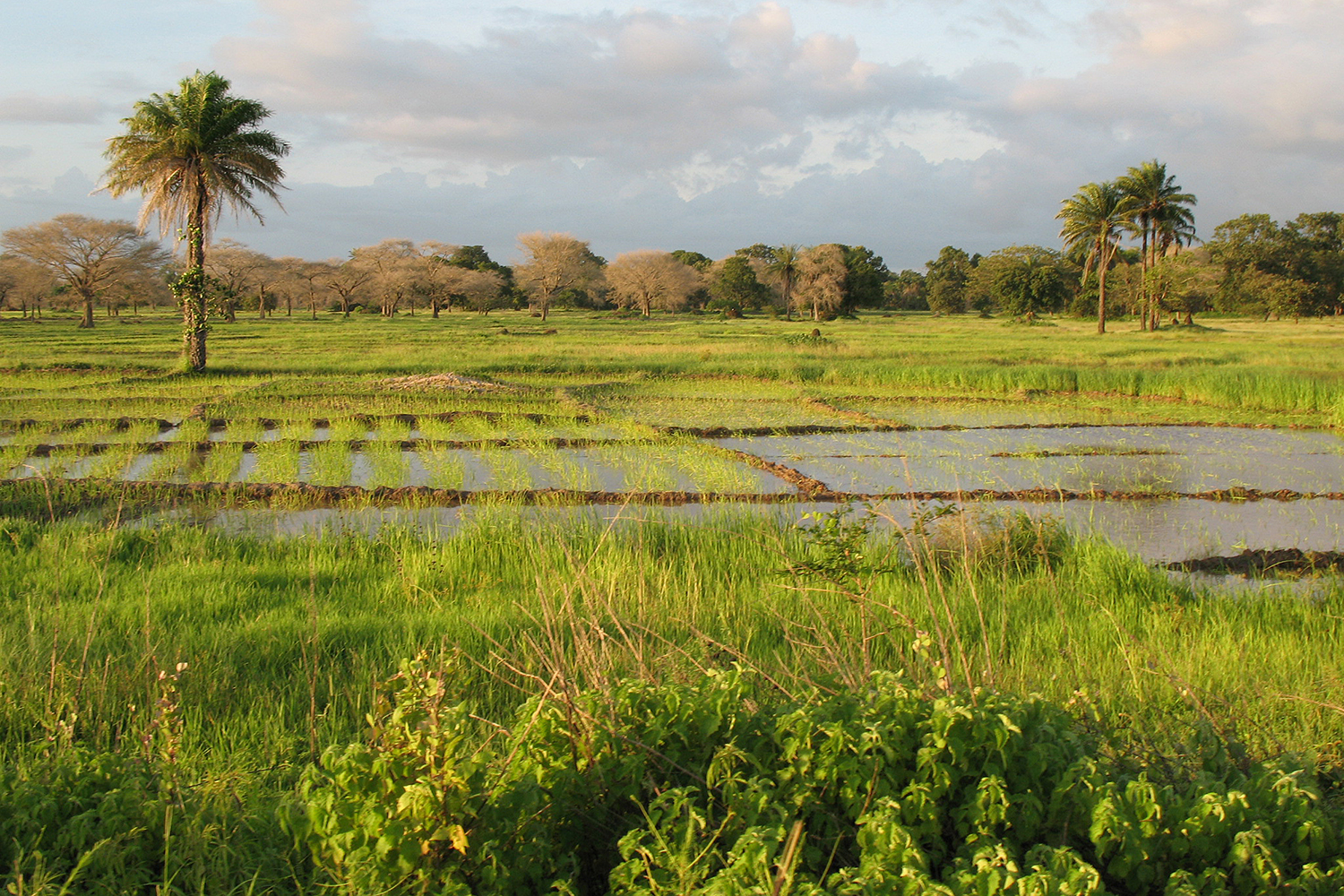
Despite decades of mass drug administration campaigns, schistosomiasis remains one of the world’s most widespread neglected tropical diseases. Rice farmers and their families are particularly at risk, as the parasitic worms that cause the disease are spread by freshwater snails found in the standing water of rice fields.
New research published in Nature Sustainability has explored how rice-fish coculturing – an intervention technique that introduces fish into the rice fields – could help reduce disease incidence and poverty along the northern Senegal River basin, a hot spot for schistosomiasis.
“This research points to a new way of thinking about agriculture,” said study coauthor Giulio De Leo, professor of oceans and of Earth systems science in the Stanford Doerr School of Sustainability and co-director of the Stanford program for Disease Ecology in a Changing World. “It’s about farming systems that not only grow more food, but also improve human health and support the environment.” The research received funding from the Stanford Sustainability Accelerator based in the Doerr School. Years earlier, De Leo and Stanford colleagues received funding from the Stanford Woods Institute for the Environment for a related project to reintroduce native snail-eating prawns to local water sources.
Researchers used data from more than 400 households in rural Senegal and found that the children of rice farmers had higher prevalence of the disease than children of non-farmers, indicating the increased risk of contracting the disease that rice farmers and their families face. And while there is a drug that can treat the disease, it cannot prevent reinfections, which will continuously occur and contribute to a cycle of poverty and disease.
“In Senegal, adding native fish to rice fields helped reduce disease risks while increasing yields and farmer income,” said De Leo, a senior fellow at the Stanford Woods Institute for the Environment.
This research … is about farming systems that not only grow more food, but also improve human health and support the environment.Giulio De LeoProfessor of Oceans and of Earth Systems Science
To reduce disease transmission, the research team led by Jason Rohr of the University of Notre Dame introduced African bonytongue and Nile tilapia into rice fields, two native fish species that naturally suppress snail populations by eating snails or competing with them for resources. Through two trials, the team found that although the fish were not actively fed, both species thrived.
The researchers found that fields containing both fish species had fewer of the snails that host the parasite that causes the dominant form of schistosomiasis in the region. Fewer snails could reduce the risk of infection faced by rice farmers and their families.
But benefits of the intervention reached beyond disease transmission. The research team also found the intervention increased rice yields by more than 25% and improved the soil nutrients of the rice fields, all while offering a potential secondary source of income through the sale of harvested fish.
“What is most meaningful to me about this work is that we’re taking an agricultural technique used in other regions and expanding it to infectious disease transmission,” said Emily Selland, lead author of the study and graduate student at Notre Dame. “We can tackle schistosomiasis and also support the development of these communities by designing a sustainable and multidisciplinary solution.”
Researchers believe the initial findings are encouraging, and additional work is already underway.
“The next step is determining how this approach can be scaled across schistosomiasis-endemic rice-growing regions. If these results hold, rice-fish coculturing could become a model for addressing health, food security, and poverty simultaneously,” said Rohr.
For more information
In addition to De Leo, Rohr, and Selland, other study co-authors include Alexandra Sack, formerly of Notre Dame; Nicolas Jouanard, Amadou Guisse, Momy Seck, and Louis Dossou Magblenou of Station d’Innovation Aquacole; Andrea J. Lund of Stanford University; David López-Carr of the University of California, Santa Barbara; and Molly J. Doruska and Christopher B. Barrett of Cornell University.
The study was also funded by the National Science Foundation and the Notre Dame Poverty Initiative.
Adapted from a press release by Brandi Wampler, associate director of media relations at the University of Notre Dame.
This story was originally published by Stanford Woods Institute for the Environment, part of Stanford Doerr School of Sustainability.
Writer
Rob Jordan