In brief
- Rangelands support 500 million people worldwide, feeding their herds of cattle, sheep, goats, and other animals.
- Limiting overgrazing on rangelands and supplementing livestock diets with feed could boost soil carbon storage and cut emissions from ruminant burps, depending on factors such as the supply chains for the feed.
- Accounting for effects of improved grazing on supply chain emissions could reduce total climate mitigation potential globally, but impacts vary widely across regions.
A new study offers the most comprehensive assessment to date of how altering livestock grazing practices across the world’s rangelands could help reduce climate-changing greenhouse gas emissions.
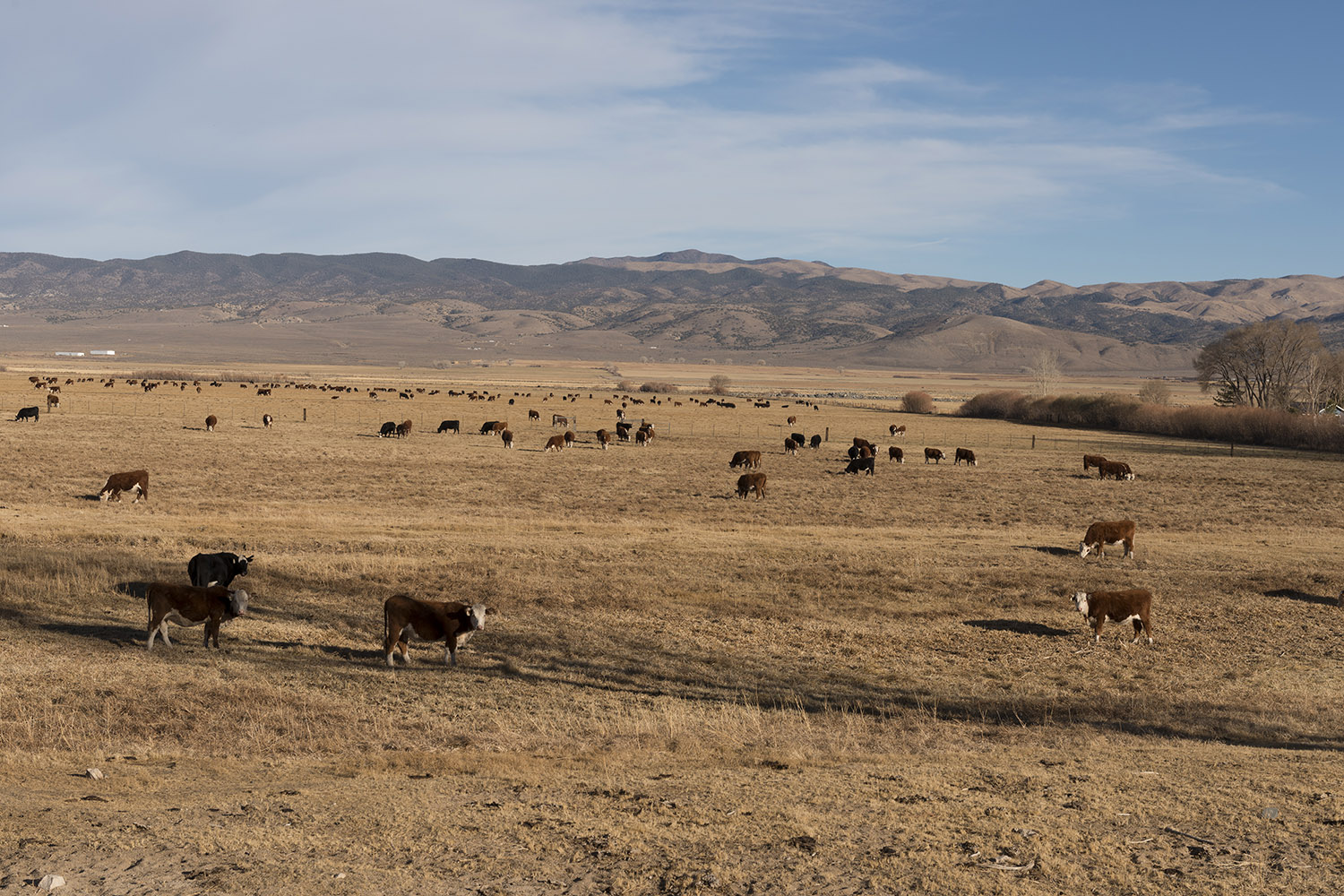
Rangelands, which include grasslands such as prairies and savannas, cover about half of Earth’s surface. Generally poorly suited for crop farming, these lands host native vegetation that supports around 500 million people worldwide, feeding their herds of cattle, sheep, goats, and other animals.
Scientists and policymakers are seeking ways to improve how rangelands are grazed to address climate change by boosting plant growth and capturing more carbon dioxide, while maintaining livestock production. This strategy typically means preventing overgrazing, which damages root systems and causes erosion.
The new study, published June 11 in Science, reveals that reducing grazing and then supplementing animals’ diets with feed creates additional emissions that, in some regions, can undermine intended climate benefits. Researchers reached this conclusion by accounting for livestock feed supply chains, international trade networks, emissions from the livestock themselves, and land-use changes associated with growing feed crops such as corn, barley, oats, and soybeans.
“Our study adds important new context to estimates of how much carbon can be stored in soils through improved grazing practices in rangeland regions,” said lead study author Robert Powell, a PhD student at Cambridge University who is affiliated with the Fire Ecology Lab of Adam Pellegrini at Stanford. “In short, the picture is a lot more complicated in real life when you take a broader, systems-level view.”
The benefits of regenerative agricultural practices may come with trade-offs such as increasing emissions somewhere else in the supply chain. Lunch is never entirely free.Steve DavisProfessor of Earth System Science
The study found that altering rangeland grazing could sequester an additional 2.2 billion tons of carbon dioxide equivalent per year, or about 4% of current annual human emissions. When accounting for emissions from feed production to maintain livestock, and from the animals themselves, the net climate benefits dropped by up to 31%.
The study’s region-specific findings can help agribusinesses and countries choose rangeland grazing practices that will cut emissions targets and move them closer to their climate goals.
“We’ve known that feed and supply chains are important sources of emissions from livestock production, but how they interact with potential mitigation of rangeland grazing has never been shown before,” said Pellegrini, the study’s senior author and an assistant professor of Earth system science in the Stanford Doerr School of Sustainability.
A data-rich approach
The new research results are part of Pellegrini’s broader work examining how disturbances such as overgrazing, wildfires, and droughts impact carbon storage and ecosystem health. His research spans from fire management in forests and peatlands to understanding how natural systems can be harnessed to reduce or permanently store greenhouse gas emissions.
For the new study, Powell, Pellegrini, and co-authors including Steve Davis of Stanford gathered data from more than 200 previously published studies measuring how much carbon dioxide plants at 300 sites globally transfer into the soil through their roots, decaying leaves, and other detritus.
The researchers also compiled data on what livestock eat in different areas and how different feed mixes influence the animals’ digestion-related emissions of methane from burps and nitrous oxide released when bacteria break down feces and urine. Animals that have their forage swapped out for feed tend to produce less of these potent greenhouse gases.
Additional data included the types of feed given to animals to supplement their diet when foraging is reduced to avoid damage from overgrazing, and the supply chains for the feed. The researchers also accounted for trade policies between nations importing and exporting feed, which influence transportation-related emissions.
“Our study highlights the reality that the benefits of regenerative agricultural practices may come with trade-offs such as increasing emissions somewhere else in the supply chain,” said Davis, a professor of Earth system science who leads the Sustainable Solutions Lab at Stanford. “Lunch is never entirely free.”
Sustainable solutions for rangeland and livestock
The researchers used these data to develop a full systems-level emissions model. The results suggest that land-use changes tied to feed production are a major factor in how effective grazing management can be as a climate solution. For example, Europe tends to import a lot of its animal feed from Brazil, where agricultural production can involve heavy deforestation that releases large amounts of carbon, Powell said. Feed produced in the U.S. Midwest is considered less carbon-intensive, partly because the region’s forests and natural prairies were converted to cropland long ago.
Moving forward, the researchers said they hope the findings can inform the agricultural sector, policymakers, and other stakeholders looking to reduce emissions. “Natural climate solutions are very context-dependent, so you have to take local conditions into account when implementing, as we’ve seen here with rangeland grazing,” said Pellegrini. “We’re showing what pathways, such as where your feed comes from, might be the most important.”
Powell and Pellegrini would like to expand the assessment framework further to include rapidly evolving data related to the impacts of climate change – for instance, plant productivity influenced by regional warming – and geopolitical upheaval that affects fertilizer production and other agriculture-related variables.
“This study is giving us a picture of where we’re at now, not necessarily where we’re going to be in five or 10 years,” said Pellegrini, the Volpi-Cupal Faculty Fellow in Climate and Nature-Based Solutions.
“It is a snapshot,” said Powell, “but our study highlights these critical issues for rangeland grazing optimization, now and in the decades to come.”
For more information
Davis is also a senior fellow in the Doerr School of Sustainability’s Precourt Institute for Energy. Co-author Courtney Currier is a postdoctoral scholar in the school’s Department of Earth System Science.
Co-authors not mentioned above are affiliated with University of Cambridge; Aalto University; Zhejiang University; University of Natural Resources and Life Sciences, Vienna; Harper Adams University; Tsinghua Shenzhen International Graduate School; AMAP, University of Montpellier; University of Yaoundé; International Joint Laboratory DYCOFAC; Massachusetts Institute of Technology; University of Aberdeen; Hebei University, Baoding; Animal Production and Health Division (NSA); Food and Agriculture Organization of the United Nations; Chinese Academy of Forestry; and the National Forestry and Grassland Administration, Beijing.
This research was supported by the Natural Environment Research Council, United Kingdom Research and Innovation, and the European Research Council.
This story was originally published by Stanford Doerr School of Sustainability.
Media contacts
Adam Pellegrini, Stanford Doerr School of Sustainability: afapelle@stanford.edu
Josie Garthwaite, Stanford Doerr School of Sustainability: (650) 497-0947, josieg@stanford.edu
Writer
Adam Hadhazy