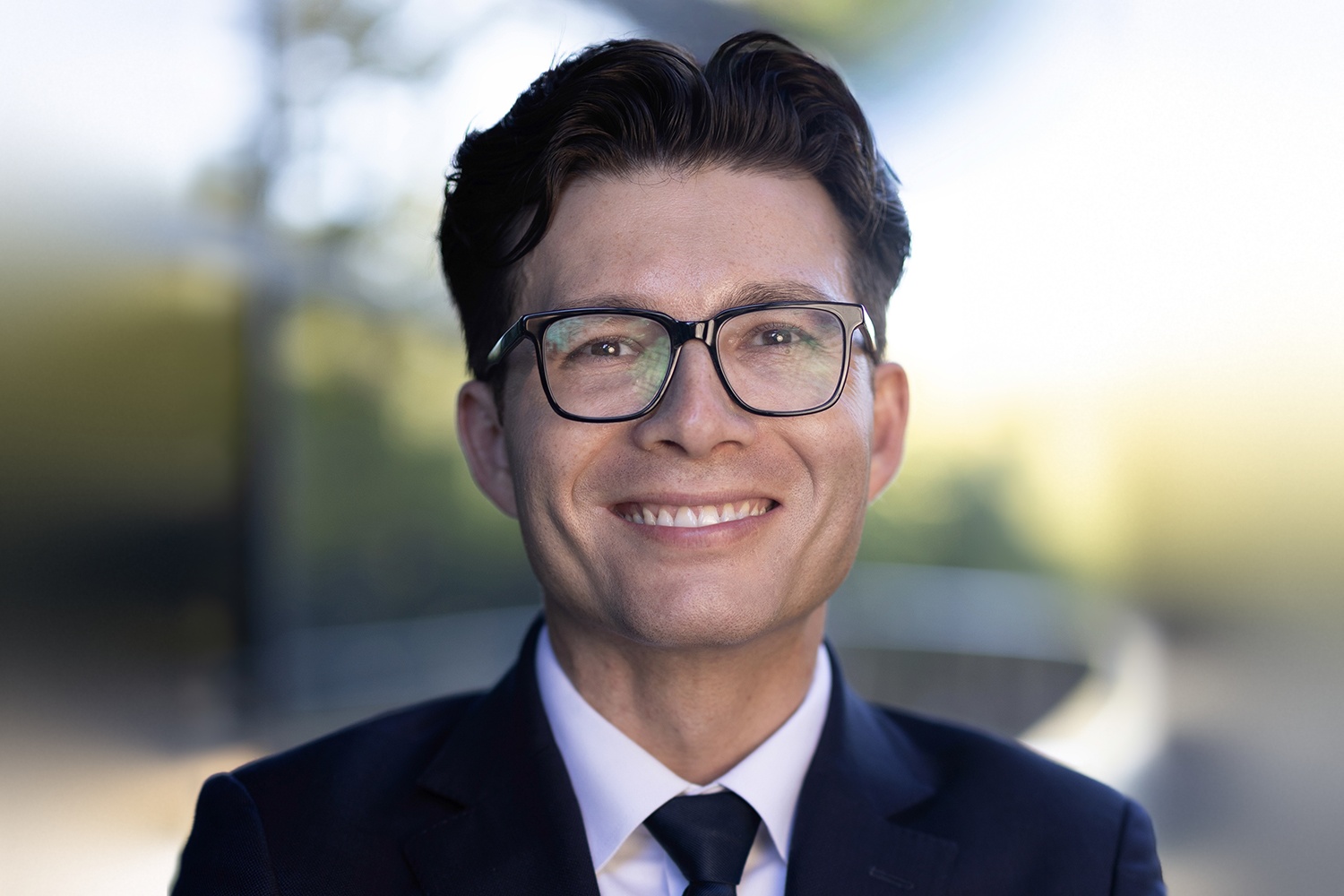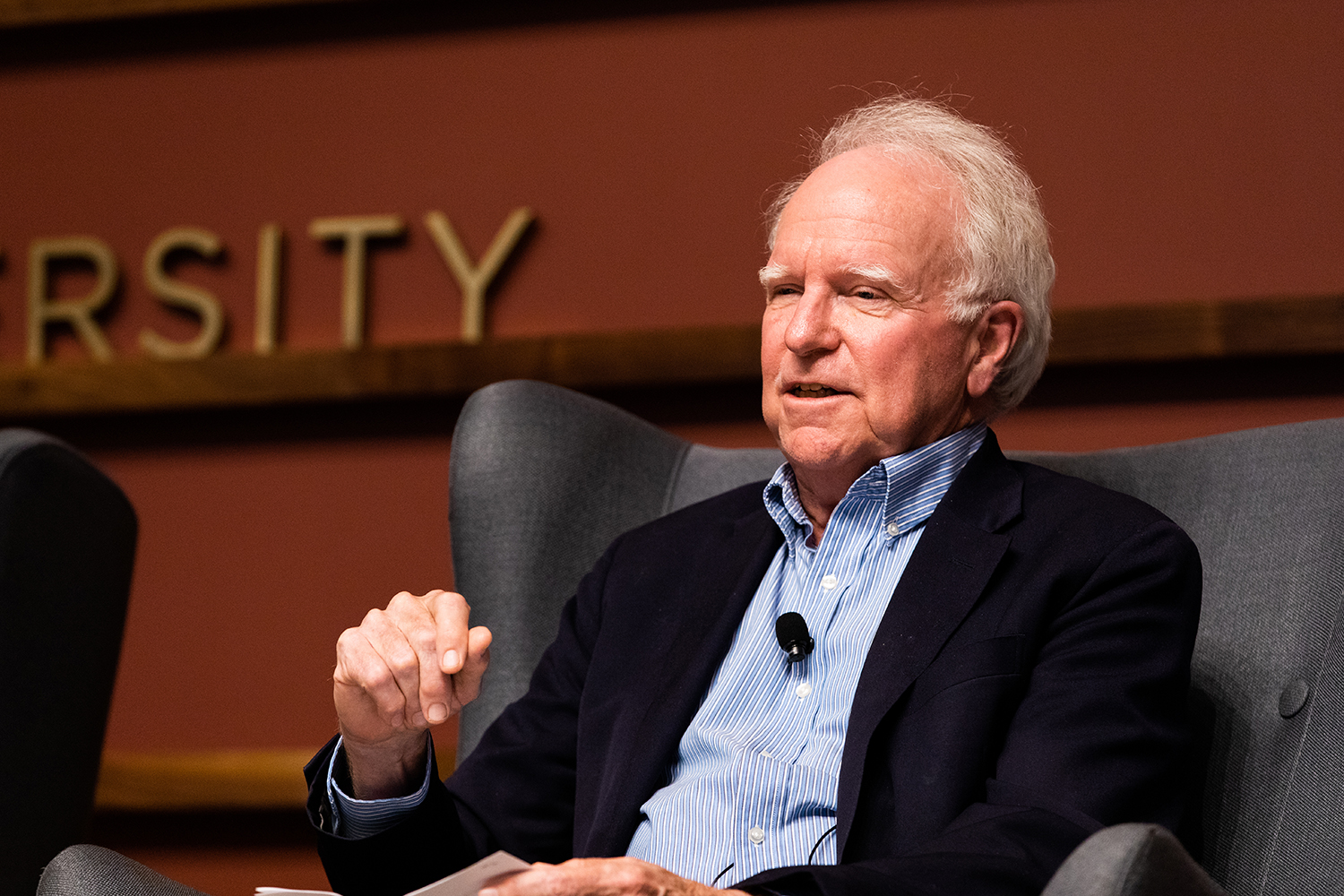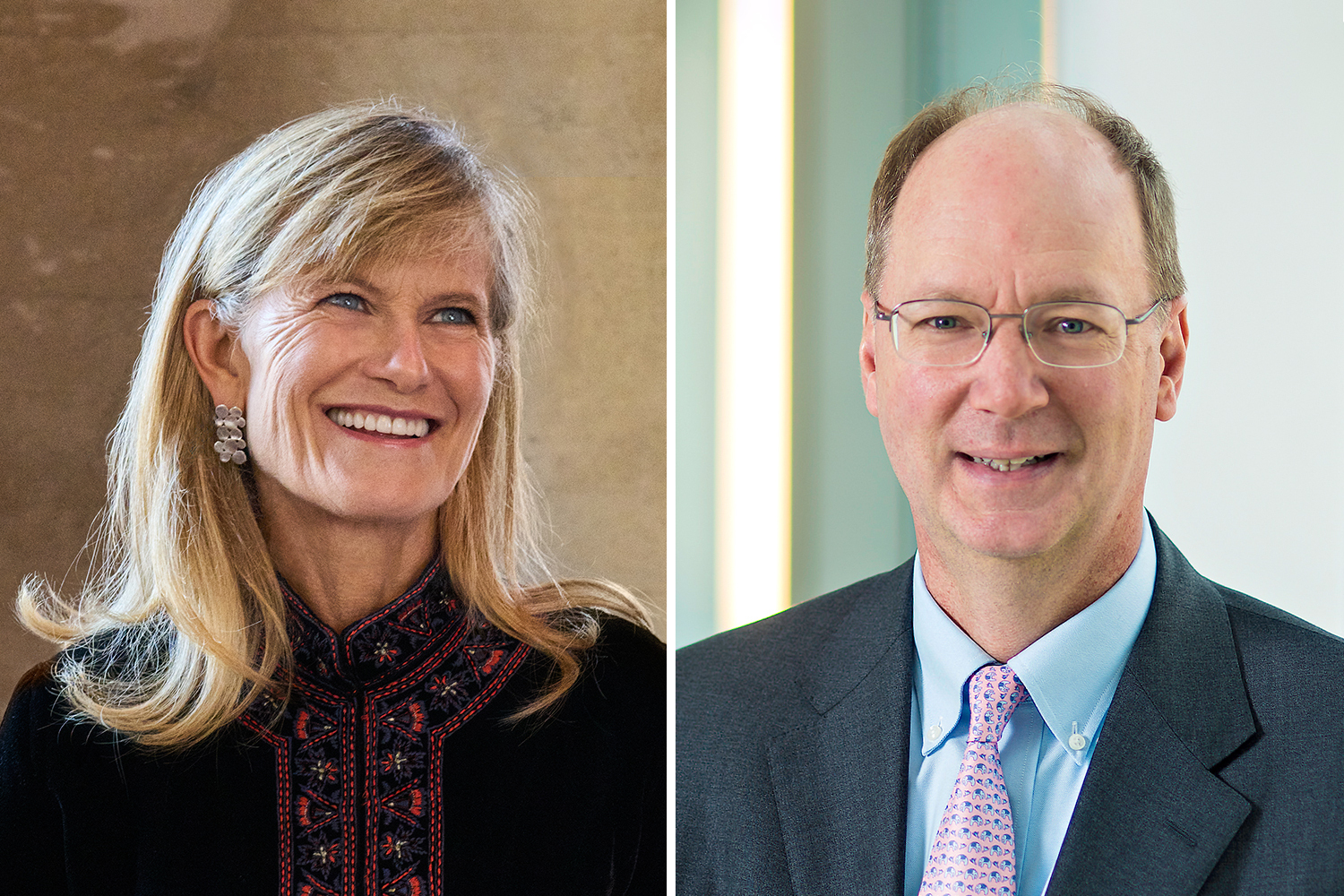
Stanford alumni Jacqueline Novogratz, founder and CEO of Acumen, and Paul R. Williams, co-founder and president of Public International Law and Policy Group, are this year’s recipients of the Stanford Award for the Advancement of the Common Good.
The award celebrates Stanford undergraduate and graduate alumni from across sectors and disciplines whose service improves lives, strengthens democracy, and promotes civic engagement.
Novogratz, MBA ’91 (Public Management Program), has uplifted underresourced communities by integrating business knowledge and entrepreneurship to develop solutions for global poverty. Williams, JD ’90, has shaped peace processes in some of the world’s most intractable conflicts and built an organization that has been “lawyering peace” around the globe for 30 years.
Jacqueline Novogratz
Jacqueline Novogratz was determined to serve in a way that mattered when she moved to Rwanda at age 25. She began by listening to a group of women who would go on to co-found with her the nation’s first microfinance bank, Duterimbere.
“We dreamed of a bank that would give women true economic opportunity and lead to new generations who could be part of the economy,” Novogratz said. “We failed many times but had the courage to get up and try again. The ones who make change are the ones who not only dare but build the courage and resilience to stay in the game.”
Novogratz has spent decades transforming how institutions address poverty, insisting that dignity, agency, and long-term sustainability must be at the center of development. As founder and CEO of the global impact investment organization Acumen, she advanced the model of “patient capital,” investing in social enterprises and developing ethical leaders to build markets that provide essential services – healthcare, education, agriculture, and clean energy – to communities worldwide.
“At Acumen, dignity – freedom, opportunity, feeling seen, and believing you can contribute – is fundamental,” Novogratz said. “We see dignity, not just income, as the opposite of poverty. That informs everything.”
In 2006, Novogratz launched the Acumen Fellowship to identify solutions-oriented builders working to address poverty. There are now 2,000 Acumen Fellows worldwide.
“Leaders are not born. They are made,” Novogratz said. “In the end, we are measured by our character – how we show up for people, whether and how we give more than we take, how much human energy we release in the world.”
Novogratz was living in Rwanda when she applied to Stanford Graduate School of Business to deepen her understanding of business and try new approaches to building markets for people with low incomes.
“Stanford gave me time to dream and to meet people and professors who inspired me and still do,” Novogratz said, highlighting the mentorship of the late John Gardner, the first Miriam and Peter Haas Centennial Professor in Public Service, and the late former university president Richard Lyman and his wife, Jing Lyman, among others. “All three imprinted me deeply and were among the biggest gifts Stanford gave me.”
She also gained technical and leadership skills, and “the confidence to walk into rooms, not simply as the nonprofit leader who wanted to disrupt systems, but as someone who understood the tools and requirements and language of business.”
To date, Acumen has impacted nearly 800 million people by investing $364 million in 241 companies serving low-income communities across Africa, Latin America, South Asia, and the United States.
Novogratz founded and directed The Philanthropy Workshop and the Next Generation Leadership Programs at the Rockefeller Foundation. She has also inspired audiences through her TED presentations and as the author of The Blue Sweater and Manifesto for a Moral Revolution: Practices to Build a Better World.
“Moral leadership is to make hard decisions that serve others, not just yourself,” Novogratz said. “Every day, I am honored to work with amazing leaders grounded in moral imagination – the humility to see the world as it is and the audacity to imagine what it could be.”
Novogratz said the award feels both humbling and like a call to action. “We’ve shown the power of using investment as a means, not simply an end in itself. The world needs a reimagined capitalism and new approaches to leadership. I am just at the beginning of a new chapter, and this award is a call to do more, and to do it now.”
Paul R. Williams
People often ask Paul Williams how he remains hopeful while working to bring peace and justice to the world’s most complicated and violent conflicts, including in Kosovo, Iraq, Syria, Nepal, Sierra Leone, Sudan, and Ukraine.
“We wake up, we read in the newspaper about all of these terrible things happening, but then we turn on the computer and start working on them,” he said. “What gives us hope is that we’ve seen how a well-drafted peace agreement can become durable and affect millions of lives.”
Williams co-founded the Public International Law and Policy Group (PILPG), which provides pro bono legal support and has shaped peace agreements, post-conflict constitutions, and war crimes prosecutions in more than 30 countries. He has served as a senior associate with the Carnegie Endowment for International Peace and an attorney-advisor in the U.S. Department of State. He is also a member of the Council on Foreign Relations and has served as a counsellor to the executive council of the American Society of International Law.
Williams was 29 and working on his PhD at the University of Cambridge when he was asked to serve as a legal advisor to the Bosnian delegation at the Dayton Peace Accords. Williams had been vocal in the media on Bosnian issues but wasn’t working with a firm at the time.
Seeing a need, Williams and his wife conceived of a global pro bono law firm to assist in peace negotiations and prosecute war crimes. He recruited former classmates and friends from the State Department and secured support from the Carnegie Endowment to launch it.
“It was very much a Stanford way of approaching problems in the world, which is you go out and you do something, and then the institutional infrastructure grows up around that,” Williams said. “PILPG has always moved into spaces where there’s a need.”
As a Stanford law alum, Williams said the university internalized a commitment to excellence, social entrepreneurship, and a belief that students could do anything, citing the mentorship of professors including the late John H. Barton, the George E. Osborne Professor of Law, Emeritus, and Barton “Buzz” Thompson, Jr., the Robert E. Paradise Professor of Natural Resources Law.
“It was the belief that young professionals could make a difference, could change the world, and had something to add to the conversation,” Williams said.
Williams has carried that mentorship forward as the Rebecca I. Grazier Professor of Law and International Relations at American University. Further, hundreds of PILPG alumni now serve in senior positions at the State Department, United Nations, and International Criminal Court.
“My students are twice as smart and innovative as I am,” Williams said. “If I can share what I’ve learned, encourage them, and create opportunities for them, the impact they can have is astronomical – that’s why I invest so much in mentoring.”
This past year, his research assistants co-authored chapters in Williams’ most recent book and prepared a companion children’s book featuring his dog, Scrappy, who travels through time to learn lessons on peacebuilding.
Williams said public service was an ethos of his upbringing and education. “It wasn’t something you do for a couple of hours on the weekend,” Williams said. “It was something you embed in whatever you do so it gets ingrained in your DNA to be making a difference.”
Williams has also advanced international law through his scholarship, authoring or co-authoring books including Lawyering Peace, Research Handbook on Post-Conflict State Building, The Syrian Conflict’s Impact on International Law, and Peace with Justice? War Crimes and Accountability in the Former Yugoslavia.
“I feel genuinely, deeply honored to receive this award,” Williams said. “Seeing the previous recipients and knowing my fellow Stanford alumni, they do amazing work around the globe. It’s a profound honor to be singled out for this award.”
For more information
The Haas Center for Public Service and Stanford Alumni Association created the award in 2021 to honor alumni who use their education and experience to address society’s most urgent challenges and positively impact communities. Stanford invites the university community to nominate living alumni, from recent graduates to those with established careers in public service. A committee of alumni, faculty, and staff reached a strong consensus for this year’s award winners.
Thompson is also a senior fellow at the Woods Institute for the Environment and a professor of environmental social sciences at the Stanford Doerr School of Sustainability.
Writer
Chelcey Adami