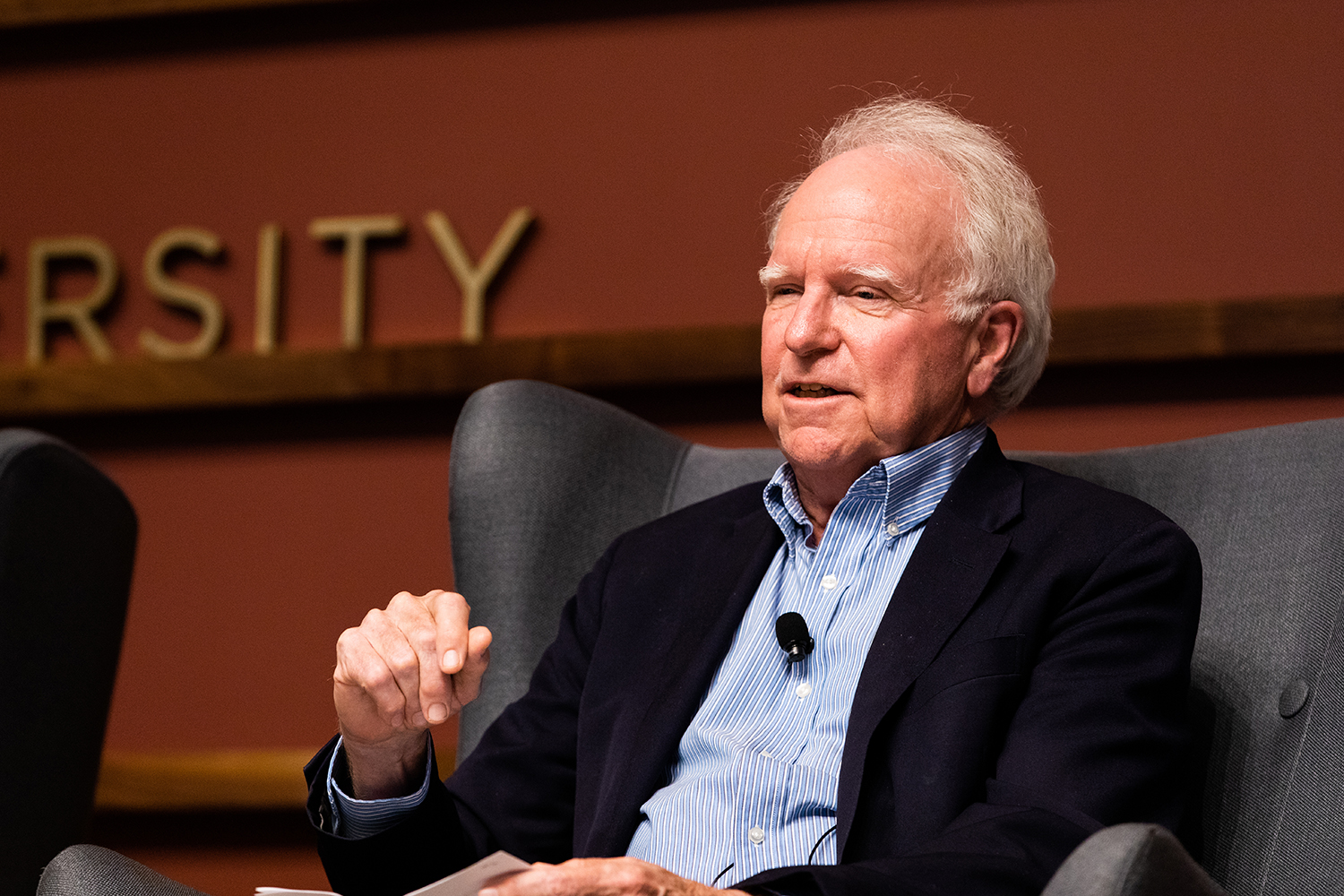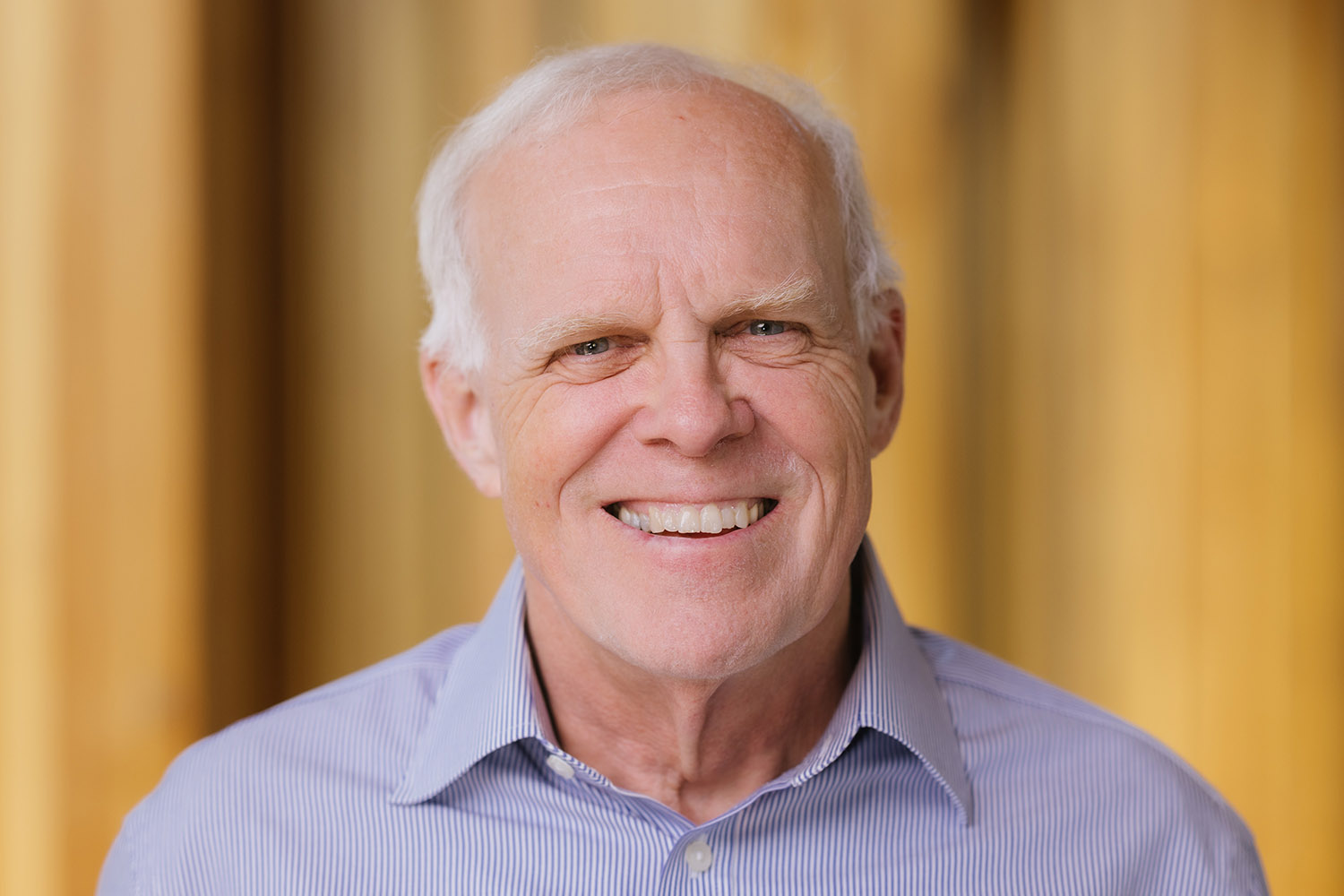
Stanford president emeritus and computer scientist John L. Hennessy has been awarded the 2026 Marconi Society Lifetime Achievement Award, which honors individuals who have made significant contributions to communications and information technology and have positively shaped society and the next generation of communications technology experts.
Hennessy, the James F. and Mary Lynn Gibbons Professor in the School of Engineering, is a pioneer in computer architecture who, in 1981, brought together researchers at Stanford to develop a technology called the Reduced Instruction Set Computer (RISC), which enabled computers to operate faster, more efficiently, and more cheaply.
“I want to congratulate John for this richly deserved recognition,” said Stanford President Jonathan Levin. “John saw how a simplified architecture could improve computer processing, and his contributions to the field transformed modern computing in ways that impact people around the world every day. It’s the same vision, deep thoughtfulness, and commitment to furthering people and institutions that have made him such an excellent leader over his many decades at Stanford.”
In 1984, Hennessy helped bring this technology to market and co-founded MIPS Computer Systems. RISC’s efficient design is found in most of the laptops, smartphones, and tablets people carry today.
“The award is for lifetime career achievement, and I have spent my career at Stanford, where I have had the opportunity to work with exceptional colleagues and students. They truly share this award,” Hennessy said.
In 1998, Hennessy co-founded Atheros Communications, an early force in WiFi technology, and chaired its board until 2010. He and David Patterson of the University of California, Berkeley, co-authored two internationally used textbooks on computer architecture.
“John Hennessy’s impact on computer science and engineering is legendary,” said Jennifer Widom, the Frederick Emmons Terman Dean of the School of Engineering. “His invention of RISC architecture redefined modern computing, and it was just the start of what has become one of the most influential careers in technology. In his many leadership roles at Stanford and in industry, John has modeled a culture of rigor, innovation, collegiality, and deep engagement that has shaped not just entire fields but the many people who continue to drive them forward. I’m thrilled to congratulate him on this well-deserved honor.”
Hennessy will be honored at the Marconi Awards Gala on Nov. 6, 2026, in San Francisco, alongside 2026 Marconi Prize winner Robert Calderbank of Duke University.
The Marconi Society was founded in 1974 in honor of the Italian scientist Guglielmo Marconi, who received the 1909 Nobel Prize in physics with Karl Ferdinand Braun for their contributions to wireless telegraphy, a technology that transformed mass communications and eventually led to the radio. Today, the society continues to honor innovators who have made major advances in communication.
In the announcement of the award, John Janowiak, president and CEO of the Marconi Society, called Hennessy “one of the most consequential figures in the history of technology and higher education,” adding, “The Marconi Society is proud to recognize someone who doesn’t just advance technology, but advances the people and institutions that build our future.”
Hennessy has been on the faculty of Stanford University since 1977. He was the inaugural Willard R. and Inez Kerr Bell Professor of Electrical Engineering and Computer Science. He was chair of the Department of Computer Science, dean of the School of Engineering, and university provost before serving as Stanford’s 10th president from 2000 to 2016, leading the university through extraordinary growth in multidisciplinary research and teaching.
He is also co-founder and Shriram Family Director of Knight-Hennessy Scholars, a fully endowed, multidisciplinary leadership development program for graduate students at Stanford, and co-chair of the Advisory Council and special advisor to the Stanford Institute for Human-Centered Artificial Intelligence (HAI).
He is chairman of the board of Alphabet and serves on the board of trustees of the Gordon and Betty Moore Foundation.
He and Patterson received the Turing Award in 2017 and the Charles Stark Draper Prize for Engineering in 2022.