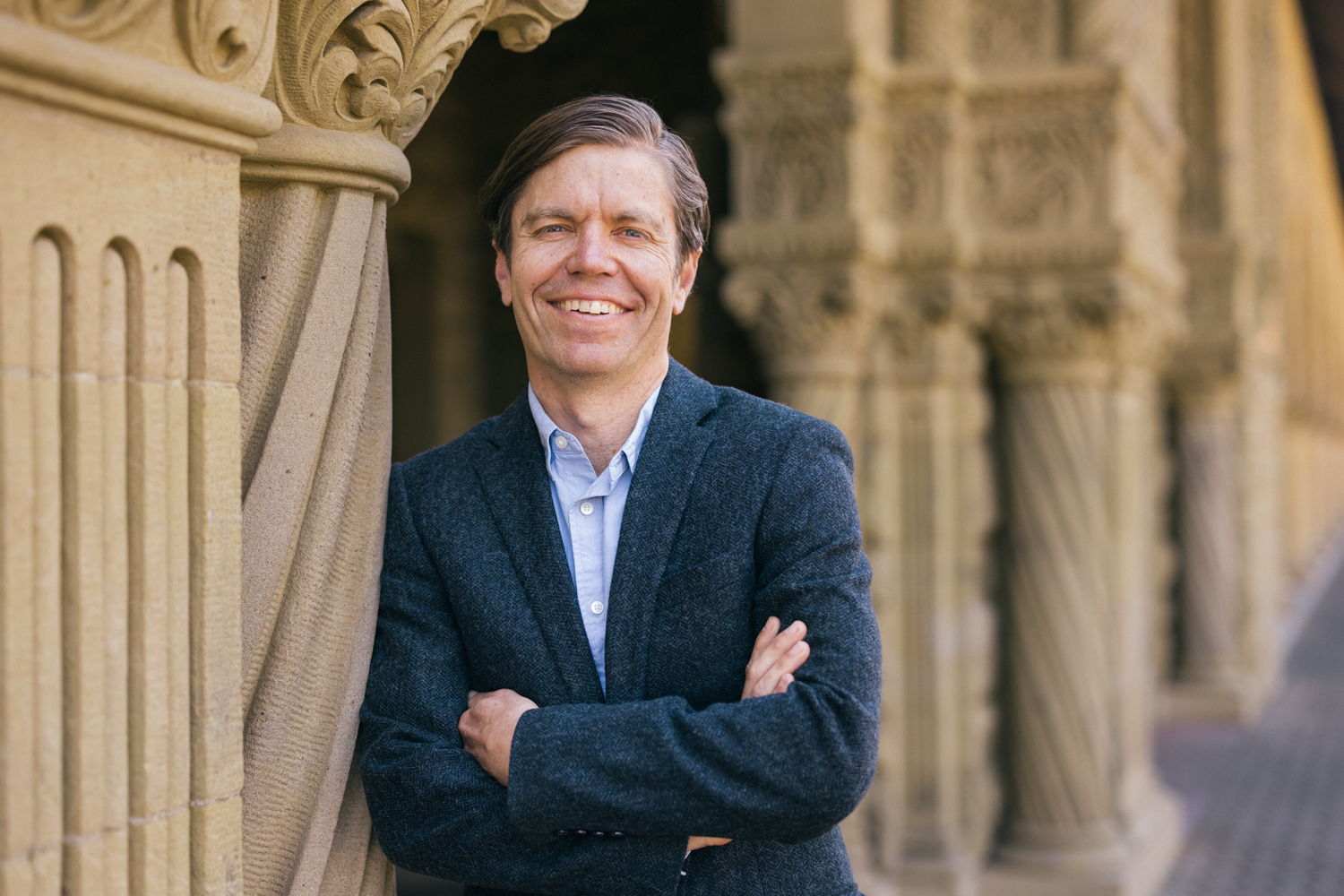
David Rehkopf, a professor of epidemiology and population health, sociology, and medicine at Stanford University, will become the new director of the Stanford Center on Longevity in August. He succeeds Professor Laura Carstensen, who is stepping down after nearly two decades as the center’s founding director.
“I am honored to continue the vital work that the center has been doing for almost 20 years. During this time, we have witnessed a positive shift in public interest toward healthy and productive longevity. The center has significantly contributed to changing the conversation from merely focusing on the length of life to emphasizing the quality of those years,” Rehkopf said.
Carstensen, who will continue teaching and dedicating more time to research in her Life-span Development Laboratory, said she can think of no one better suited to lead the center in the coming years. “David’s distinguished academic record and innovative ideas about longevity, coupled with his collegiality and devoted mentorship, ensure his effective leadership,” said Carstensen, who is a professor of psychology and of public policy. “I look forward to seeing all that he will accomplish.”
David Studdert, vice provost and dean of research and professor of health policy and of law, said Rehkopf’s expertise in the field of population health will expand on the important work Carstensen started. “Laura has built an exceptional organization, and under David’s leadership, I am confident it will continue to produce, facilitate, and translate research that supports healthy aging around the world.”
People are living longer, and many institutions haven’t adapted to this change, so the Center on Longevity has become a leading voice in researching and drawing attention to this important issue.David RehkopfIncoming Director, Stanford Center on Longevity
Rehkopf, who joined Stanford Medicine in 2011, is the director of the Stanford Center for Population Health Sciences. He researches how the decisions made by businesses and governments shape trajectories of healthy aging. Much of his work is in the area of prioritization research, using large-scale data and mathematical models to understand what policies and programs work best and for whom, in order to guide future investments in healthy aging. In order to support more precisely estimating these impacts, he draws on his prior experience in molecular biology, to show how risk factors affect biological processes of accelerated aging.
“People are living longer, and many institutions haven’t adapted to this change, so the Center on Longevity has become a leading voice in researching and drawing attention to this important issue,” he said.
Founded in 2007, the Center on Longevity is recognized internationally for advancing research, education, and public engagement that supports and promotes health and equity across the growing human lifespan. As humans age, Rehkopf said, most seek financial security, good health – especially cognitive – and engagement with family and friends.
“It’s important for societies to consider how they support people to achieve those things in a century-long life and to see all the potential for the years after retirement,” he said.
But many institutions, business practices, and policies, he noted, were designed for an era when retirement meant living just a few more years and have largely failed to adapt. As a result, many people today are missing out on positive opportunities that come with living longer. So, the center regularly works with policymakers and the business community, both of which, Rehkopf said, have important roles to play in healthy aging.
“While living longer is important, the center has focused on the often-overlooked question of how businesses and institutions can facilitate thriving as people age, so that engagement is really important and unique, and one thing that excites me most about the role,” he said.
Under his leadership, Rehkopf said the center will continue to focus on identifying and sharing solutions. “We can draw on the fantastic work that is being done, and new ideas for what should be done differently, evaluate their impacts empirically, and then amplify what works and what doesn’t work.”
The journey to healthy longevity, he added, intersects with nearly every discipline, and many Stanford faculty make vital contributions supporting the center’s mission. “The center will engage with faculty across those disciplines, from biomedical to the social sciences and the physical sciences – disciplines that can contribute to the mission of healthy longevity.”
For more information
Rehkopf is also a professor, by courtesy, of pediatrics and of health policy.
Writer
Alex Kekauoha