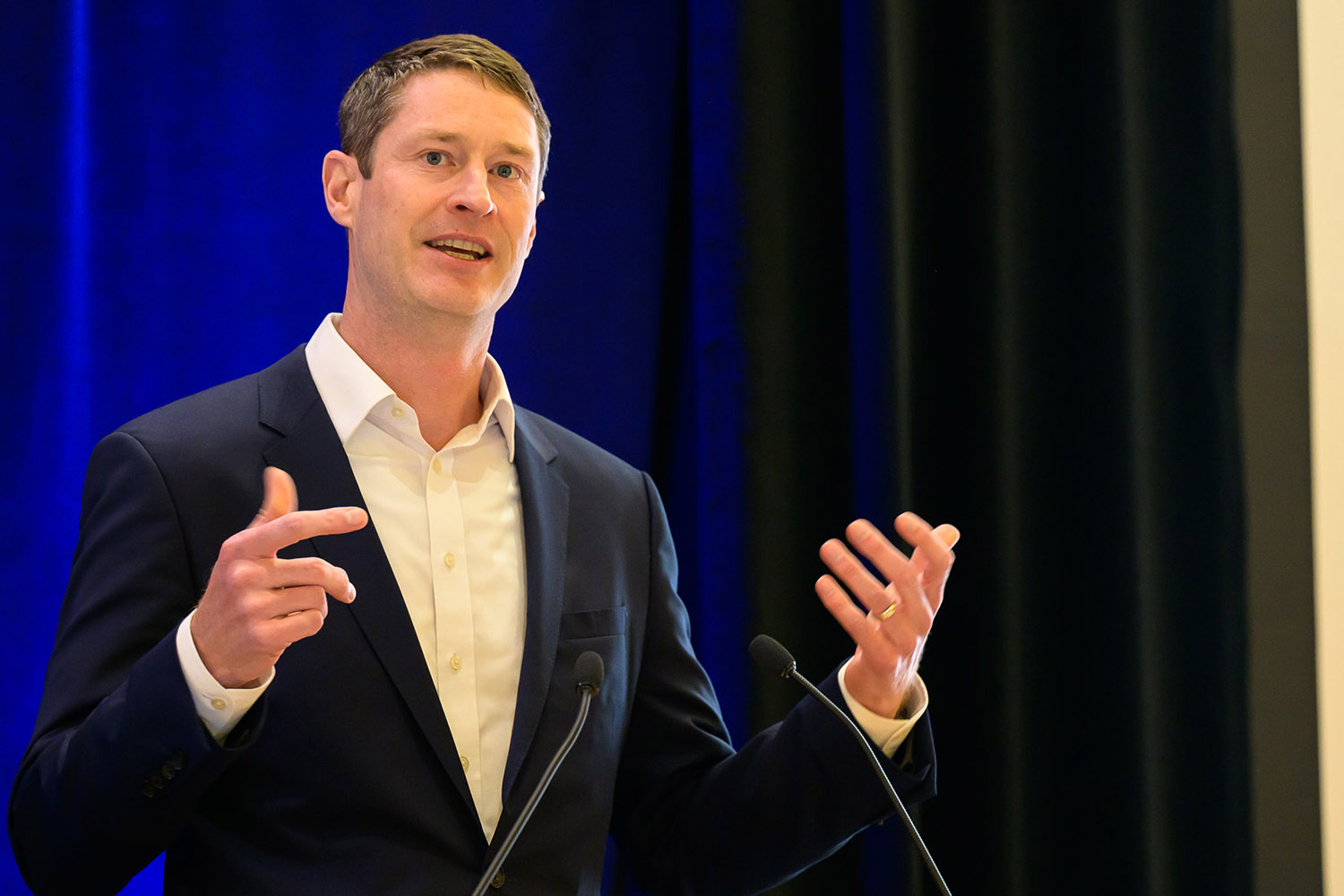
For nearly two decades, Jack Baker has bridged theory and practice as a faculty member in civil and environmental engineering, helping engineers make better-informed decisions about designing buildings and infrastructure to withstand natural hazards.
Now, Baker is addressing what he sees as a critical gap in the research enterprise: the ability to communicate complex technical work effectively. His new book incorporates research from communications, cognitive psychology, and design thinking, in addition to experiences with his own advisees and thousands of presentations, papers, and proposals.
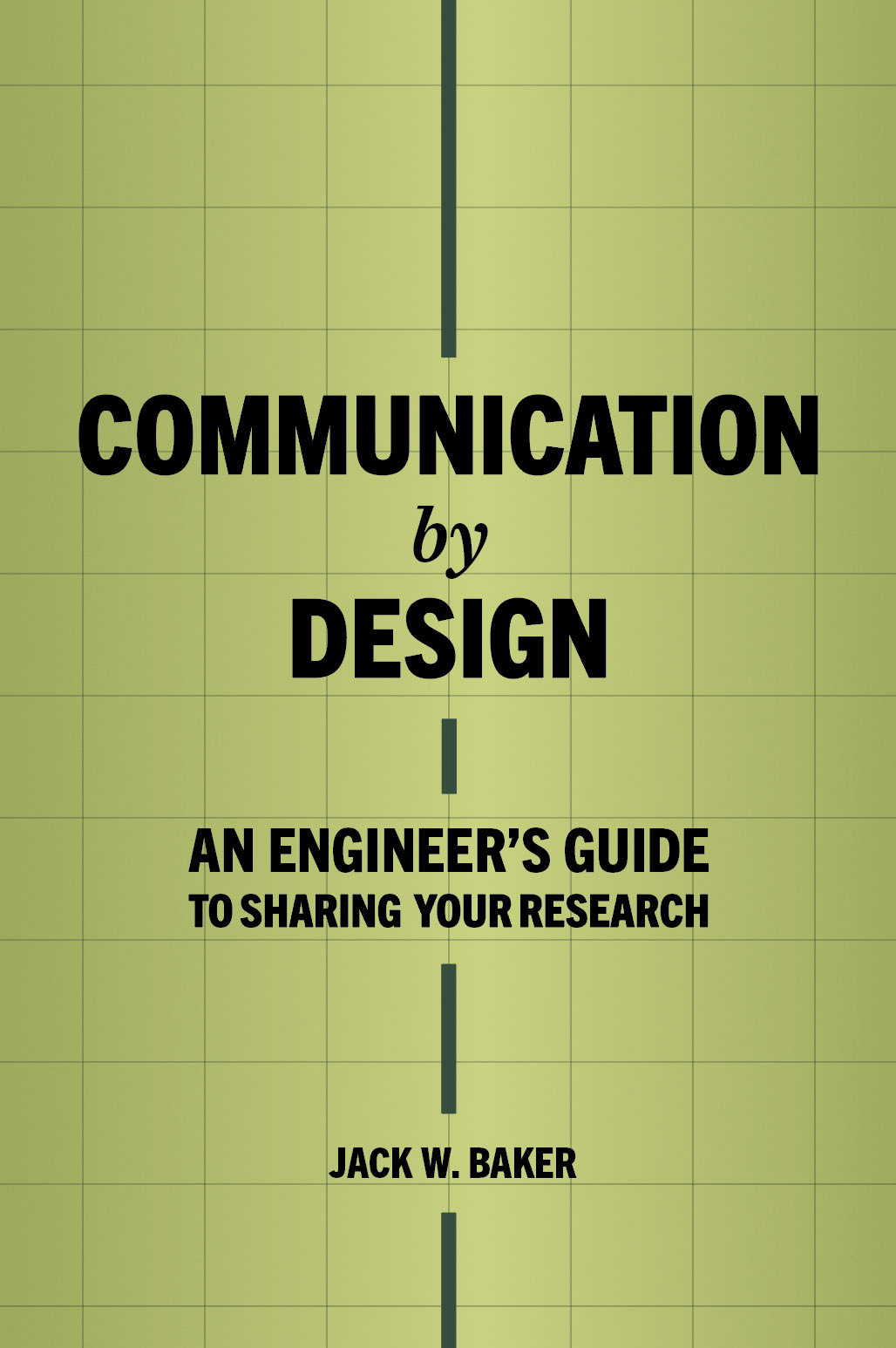
“Think of this as a field guide from a fellow traveler,” Baker writes in the author’s note at the beginning of the book, Communication by Design, which was published June 3. “I hope these ideas help your best technical work get the attention it deserves.”
Baker brings a systematic approach to communications, which he describes as “a design problem,” applying the same rigorous, methodical thinking of his engineering projects to the challenge of helping researchers amplify their impact.
“Your actual listener isn’t just checking their phone because they are tired; they are checking out because you relied on context they don’t possess,” Baker writes. “They want to learn something useful, but they need help bridging the gap between your expertise and theirs.”
In the following conversation, lightly edited for clarity and brevity, Baker discusses his experience applying research methods to communication.
What inspired you to write this book about communicating research?
Stanford’s just full of so many amazing researchers and problem solvers, and we have world-class infrastructure on the scholarship side, and I felt that there was a gap – that we could use more attention and more formal frameworks around how to communicate that work. Getting our ideas in front of the world is so important to what we’re doing, and having more guidance on these aspects of scholarship is critical.
Who is this book for?
I’m really trying to help anybody who needs to communicate any type of research or findings or insights or data in a meaningful and compelling way. So that’s a huge audience, and I suspect most of the readers are probably going to be in academia. But I’m hopeful that this will also be of service to folks in industry and nonprofits and the government.
What’s your core message about simplifying complex ideas?
I’ve come around over the years to see that simple doesn’t mean dumbed down; it means that your message is clear. For many of our scholars, their first instinct is to describe everything they did in the chronological order that they did it. You need to think about what your goal is, and brainstorm and take a little while to think about the best processes for communicating these ideas.
Can you walk us through the book’s framework?
It has five stages: empathize, define, brainstorm, prototype, and test. The idea is to start with empathizing. You need to think deeply about your audience: What do they know? What are they going to be on board with? What are they going to be skeptical of? What do they need from you? And try to put yourself in their shoes.
You’re the expert in your work. But you need to get out of that expertise you have and think about the person who’s listening to you. Then you want to think about what you’re trying to achieve. What are you trying to communicate? Are you trying to motivate action? Are you trying to inform somebody with a new idea?
Can you share an example of how this approach works in practice?
For part of the book, I talked to the 2025 Stanford winner of the 3 Minute Thesis competition, Favour Nerrise, a PhD student in electrical engineering. She was kind enough to talk about her preparation process, and it mirrored this system I was advocating for.
She opens her presentation by asking the entire audience to clap in unison.
And then she talks for a while about how reactions – like clapping in unison – slow in Alzheimer’s patients and those with neurodegeneration, and moves into how she is working to study and engage with this problem. And then she closes by having everybody clap again, and talks about how these are the moments and capabilities she’s trying to serve with her research.
It’s so memorable, and it’s so engaging, and you can’t help but be captivated by the work she’s doing. But when I talked to her, she said she didn’t add the clapping until one of the very last iterations of her presentation. Her early drafts were really in the weeds of what she was doing, and not why she was doing it.
She kept getting this feedback and thinking about how she could reposition things, and she decided late in the process to add the audience interaction, even though it was a little risky because she had to depend on them. I think it’s a beautiful example of feedback and testing paying off immensely.
Favour Nerrise’s presentation won 1st place and People’s Choice in the 2025 3 Minute Thesis competition. | Video by Office of the Vice Provost for Graduate Education; Image by Andrew Brodhead
What has the research process been like for you personally?
It’s always a little uncomfortable to dig into a new field and give up your hard-earned expertise gained over many decades, but it’s also kind of invigorating. I relish the challenge of teaching myself, and then ultimately trying to repeat that knowledge back in some sort of framework that I hope will serve the reader.
For more information
Baker is the William Alden Campbell and Martha Campbell Professor and Professor of Civil and Environmental Engineering.
This story was originally published by Stanford Doerr School of Sustainability.
Media contact
Danielle Torrent Tucker, Stanford Doerr School of Sustainability: dttucker@stanford.edu
Writer
Danielle Torrent Tucker