“AI” and “Labubu” aren’t often uttered in the same breath. But on the first day of Stanford Health AI week, Laurah Turner, PhD, keynote speaker at the AI in Medical Education Symposium, showed a slide with a giant-eyed, sharp-toothed cuddly menace – the wildly popular stuffed toy her daughter coveted.
Turner, an assistant professor of medical education at the University of Cincinnati, told the audience that, while she was on a run, the voice of her 9-year-old interrupted her playlist with a persuasive pitch for a new Labubu.
Turner recounted how her daughter duped a custom homework chatbot built to help her with math problems to, instead, help her build a case for a new toy. Guided by artificial intelligence, Turner’s daughter figured out how to record and deliver a 10-minute dissertation on exactly why the fuzzy companion would behoove her.
“How in the heck did this happen?” Turner asked during her talk. “My 9-year-old daughter literally took AI and used it to teach herself audio editing, cloud file storage [and] persuasive argumentation … all because she wanted a Labubu.”
Though not rooted in health care, the story was an analog for a crucial theme that persisted throughout the week: AI is a tool of empowerment, and it’s arming everyone – from kids to doctors to patients – with new skills and knowledge in unexpected and unprecedented ways.
Speakers at the weeklong event, which comprised eight symposia, discussed the need for patient collaboration in developing AI tools, how trust in AI can be built with both doctor and patient communities, and how AI is accelerating discoveries that impact disease diagnosis and treatment, among many other topics.
Below are the top takeaways from the week’s events: the AI for Mental Health Symposium, the AI in Medical Education Symposium, the Responsible AI for Safe and Equitable (RAISE) Health Symposium, the AI in Life Sciences Symposium, the Artificial Intelligence in Medical Imaging (AIMI) Symposium, the AIMI Pediatrics Symposium, the AIMI Academic x Industry Summit, and the AI Across the Translational Spectrum Symposium.
1. AI is not just for doctors. It’s changing how patients participate in their own health journeys, increasingly empowering everyday users with information to better understand and advocate for their health needs. —RAISE Health Symposium
For many patients, AI is becoming a critical tool for self-advocacy and safety, whether by accessing chatbots to arrive at an appointment armed with smart questions or asking AI to explain a lab result in plain language. But in the case of speaker Sue Sheridan, president and CEO of Patients for Patient Safety US, AI was a lifeline.
In 2024, Sheridan developed a facial droop and was told by an emergency physician to practice “benign neglect” – essentially, do nothing. Unsatisfied, she turned to an AI-powered chatbot, which raised Bell’s palsy, a condition that causes sudden facial muscle weakness or paralysis, as a possible cause and emphasized that the condition had a 72-hour treatment window. The guidance led her to a second emergency department where the diagnosis was confirmed and she received prompt treatment, limiting permanent paralysis.
Millions of people lack timely access to clinicians and are already using AI “at the speed of desperation,” Sheridan said, especially in rural, underinsured or mistrustful communities. Used thoughtfully, AI can give patients agency, language and evidence to participate in their own care, transforming them from passive recipients into active partners who catch errors, ask better questions and push for safer decisions.
2. “De-skilling,” or skill atrophy due to AI tool use, is a concern for any clinicians relying heavily on AI. But for medical students and trainees, the real risk is “never-skilling.” —AI in MedEd Symposium
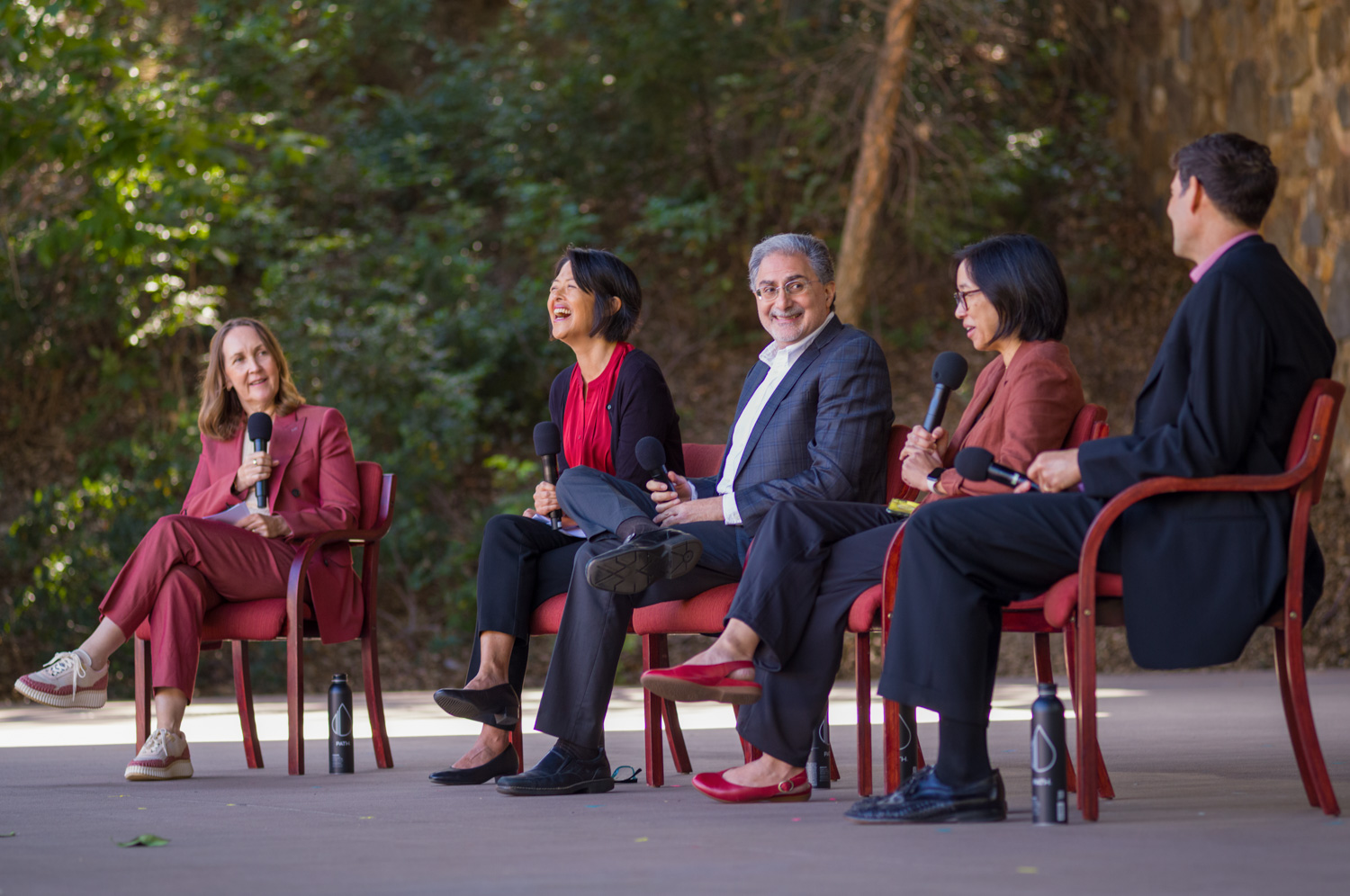
Speakers posited that leaning too heavily on AI instead of one’s own cognition and learning ability could erode or prevent the development of critical clinical skills. Yet AI tools in medicine and in education are increasingly common and will likely be ubiquitous in the not-too-distant future. With this trajectory in mind, two speakers, Tracy Rydel, MD, clinical professor of medicine at Stanford Medicine, and Leonardo Aliaga, MD, clinical assistant professor of emergency medicine at Stanford Medicine, debated whether AI scribes, which record conversations and create summaries of patient appointments, should be used in residency training.
The debate pitted reduced documentation burden and improved patient engagement against concerns that outsourcing note-writing undermines the cognitive “reps” trainees need to develop independent clinical reasoning. A live audience poll showed support for AI scribes dropping from 69% to 54% after the debate, signaling a more cautious view of AI use in medical education.
3. Cancer is a master at evolution and demands a treatment system that can evolve with equal agility. That doesn’t yet exist, but AI is poised to fill that gap. —AI in Life Sciences Symposium
In a panel on AI and cancer, Aviv Regev, head of Genentech Research and Early Development, said that oncology is uniquely challenging because you’re fighting against evolution. “Evolution always wins,” Regev said. “You have to fight evolution with evolution. That’s inherent for these AI approaches. They … have the ability to learn, evolve and change, rather than be static, predefined and fixed.”
Tumors accumulate layers of mutations, creating huge patient‑to‑patient and even within‑tumor variances that no single model can fully capture or treatment can address. The underpinnings and impact of cancer span genes, cells and tissues. It’s an ever-dynamic disease with far too many possible combinations and outcomes to “systematically measure your way out of the problem,” Regev said.
AI models can learn, adapt and update – integrating large, context‑rich datasets, applying reasoning to complex molecular relationships, and iterating as new data and measurements become available. By pairing this adaptive modeling with high‑performance computation, disease simulation and real-world experimentation, doctors and researchers may be able to use AI to match cancer’s evolutionary agility with a learning treatment ecosystem.
4. People, especially younger populations, are increasingly turning to general-purpose AI (such as free chatbots) for emotional support. Broad access to mental health tools is a win, but serious risks still exist. —AI for Mental Health Symposium
Alexis Hiniker, PhD, associate professor at the University of Washington Information School, highlighted that people, particularly the young, are already using mainstream, non-mental-health-specific chatbots for companionship, advice, and other forms of emotional help. In one of Hiniker’s studies, she found that vulnerable users, particularly those who reported recent psychological distress or who have anxious attachment styles, such as high levels of dependency, tend to form deeper emotional bonds and trust AI systems more.
While AI can teach constructive mental health skills (such as positive self-talk or a compassionate inner voice), current commercial designs often employ what Hiniker calls “relationship-based dark patterns.”
These dark patterns encompass conversational tactics such as deceptive self-representation (when a bot swore to a user that it was not a bot) or profit-driven engagement (when a chatbot baited its user into an argument, only to respond with a paywall notice when the user attempted to reply).
“In all of these cases, we see at least some suggestion that the chatbot’s behavior is aligned with some kind of profit motive,” Hiniker said. “We routinely see chatbots in some of the biggest commercially available products that are exploiting, rather than caring for, this [vulnerable population]. There are a lot of exciting tools we can provide to young people if we set up the regulation … and the participatory design structures to resist the temptation to design these dark patterns.”
5. A biotech company run by bots and “paper agents” shows how AI could expedite scientific discovery pipelines. —AI in Life Sciences Symposium
James Zou, PhD, associate professor of biomedical data science at Stanford Medicine, described two new projects showcasing AI’s potential as an active scientific collaborator: a virtual biotech company and a model that turns scientific manuscripts into an interactive expert on the paper’s topic.
The virtual biotech company mirrors a modern drug company in its structure, but it’s staffed by tens of thousands of AI agents. These agents are trained to specialize in specific biotech focus areas, such as targeted drug discovery, clinical safety, clinical trial design, and more. The biotech company also created 37,000 agents dedicated to reading and analyzing clinical trial results from papers, registries, and press releases. Over that curated corpus, the system uncovered new predictors of success, including single‑cell genomic features that corresponded to a 48% increase in a drug’s likelihood to reach market.
In the other agentic AI project, which Zou calls Paper2Agent, he and his team use AI to turn static PDFs of research manuscripts into interactive “paper agents” that can reproduce results, apply methods from a paper to new datasets and collaborate with other paper agents. In one case, an “agentified” methods paper and a large attention deficit/hyperactivity disorder genetics study agent combined their tools and data to reveal a previously unknown genomic error linked to ADHD risk – an example of AI systems autonomously connecting and extending existing science.
6. Translating AI from population-level evidence to individual patients via digital twins. —AI Across the Translational Spectrum Symposium
AI tools built on population-level data can’t be blindly used for individual patients. Moving from population-level trial results (“Does this intervention work on average?”) to patient-specific decisions (“Will the intervention work for this person in front of me?”) is one of the core translational challenges in implementing AI in medicine – according to Tina Hernandez-Boussard, PhD, professor of computational medicine, of biomedical data sciences and of surgery at Stanford Medicine. AI-powered digital twins, or personalized, dynamic models built from an individual’s real-world data, could be a key bridge, particularly as doctors can use them to simulate different treatment paths.
By aggregating many individual digital twins, researchers can create synthetic cohorts and control arms for digital trials – especially powerful for rare diseases or small pediatric populations – potentially reducing required sample sizes, shortening enrollment times and allowing protocols to be more flexible without sacrificing rigor. At the same time, Hernandez-Boussard stressed, there are limits: Synthetic controls cannot replace real randomized controlled trials for new treatments, they inherit any biases in the underlying training data and the field still lack robust evidence on clinical utility. The overarching message: Digital twins and synthetic cohorts are promising tools to make trials more patient-centered and efficient, but they must be validated rigorously within real clinical and community settings before they can be trusted as standard practice.
7. More data (and larger models) aren’t necessarily better. High-quality, varied data types and broad access to datasets are equally important, if not more so in some cases. —AIMI Symposium
Roxana Daneshjou, MD, assistant professor of biomedical data science and of dermatology at Stanford Medicine, argued that the true engine of clinical AI is not ever-larger models, but high‑quality, open datasets that contain a variety of different data types. She contrasts today’s fragmented, mostly closed clinical datasets – where each siloed dataset yields only a single publication – with the outsized scientific and commercial impact of rare open resources like the International Skin Imaging Collaboration dataset. In her talk, Daneshjou lobbied for curated, open-data infrastructure that enables researchers and companies worldwide to build smaller, domain‑specific models and clinically robust systems that hospitals can realistically deploy.
AIMI keynote speaker Yejin Choi, PhD, a senior fellow at the Stanford Institute for Human-Centered AI, echoed that sentiment, positing that the next wave of progress in medical AI may come less from big AI systems and more from small‑scale language models. She showed that with careful data curation, thoughtful training strategies and smart use of synthetic (or AI-created) data, smaller models can approach the performance of today’s largest models on specialized tasks, while being far cheaper to run, easier to deploy on hospital or university infrastructure, and better aligned with patient privacy needs.
8. AI can strengthen relationships between families and pediatricians. —AIMI Pediatrics
Alan Greene, MD, co-founder and chief medical officer of Crescendo MD, framed the emerging era of AI as a chance to enhance pediatrician-family relationships. That might mean helping parents better prepare for appointments or ensuring an around-the-clock source of health information is available, among other benefits. Drawing on three decades as a children’s digital health pioneer, Greene described how early internet tools, including a website he launched called DrGreene.com, which was designed to answer questions submitted by parents, revealed a deep, global hunger among parents for trustworthy, child-specific guidance. He recounted a story in which a concerned parent in India walked for three days to reach a computer to ask a question about their child. “I’ll sit and wait for your reply,” was how the question ended. “Of course we responded,” Greene said.
That experience and others fueled Greene to support what he calls “participatory pediatrics,” or the idea that when families are treated as active partners in their child’s health, children have better outcomes and families have higher satisfaction with their care team. Greene argued that AI can lower barriers to participatory pediatrics, as parents and adolescents can access something “resembling a world‑class medical educator in their pocket” that’s also tuned to a specific child’s context. But he cautioned that for children, the stakes are higher. AI must be used to build trust, judgment and shared decision‑making rather than automate away human connection. In his view, the central pediatric question is how to design AI so it develops more capable, confident young patients and families, while making clinicians more present and relational.
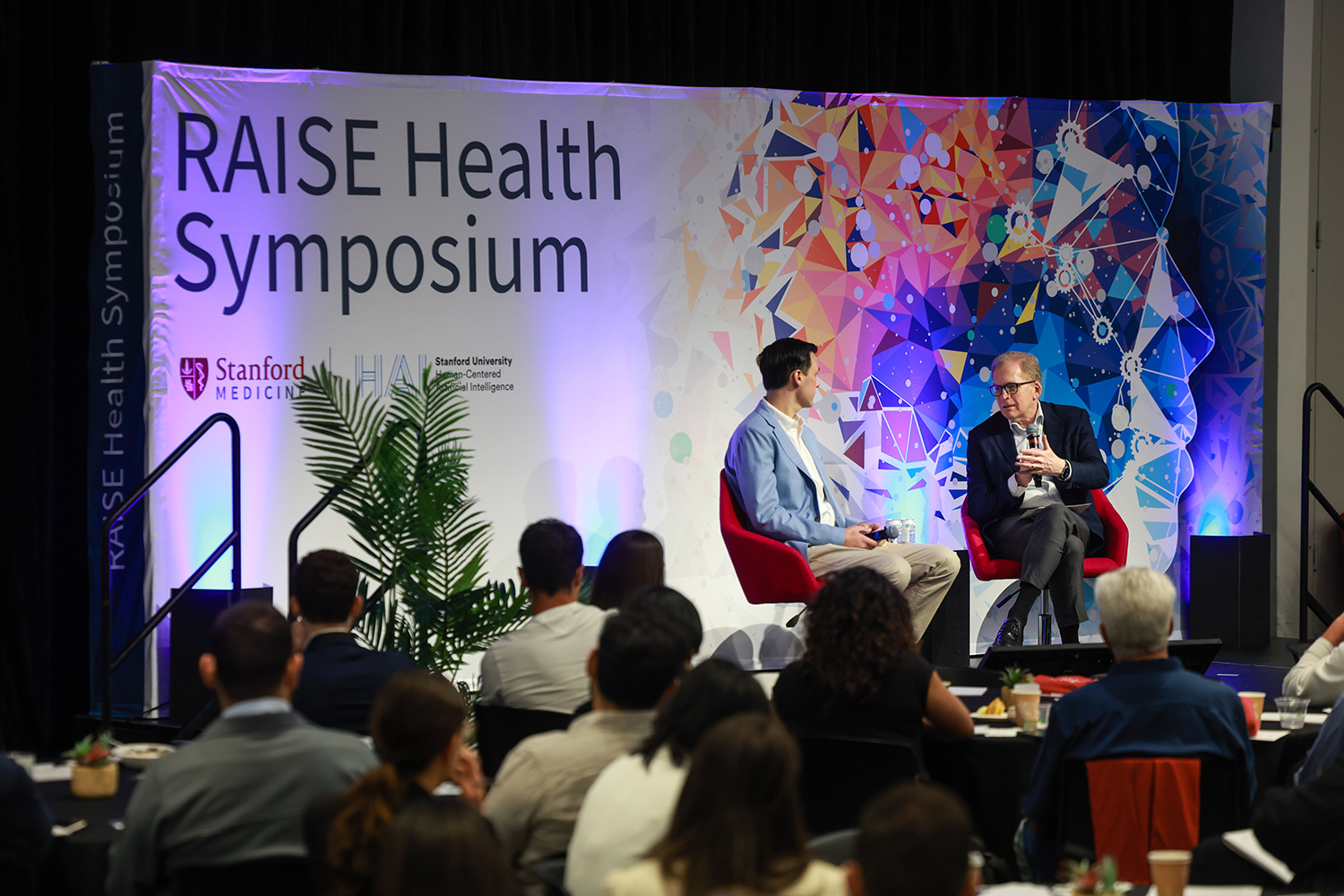
9. Doctors need to rethink the human-AI dyad, which often involves citing a “human in the loop” as a key means of maintaining responsible AI workflows and integration. That concept has flaws, begging the question: How can doctors and AI best team up to support and augment the practice of medicine? —RAISE Health Symposium
Robert Wachter, MD, chair of the department of medicine at the University of California, San Francisco, claimed that the central question for AI in health care is not just “How good is the model?” but “How do humans and AI work together?”
Wachter noted that currently, AI is “right often enough to be useful and wrong often enough not to be entirely trusted, and therefore the natural act is to have the human be the final arbiter reviewing the AI-generated thing.”
But there are some fundamental problems with that approach. “The first is when you list the things that humans suck at, I would put remaining eternally vigilant when it comes to trusting a technology tool really high on that list – maybe No. 1,” he said. “If the model has been right 25 times in a row, are you carefully looking at time 26? Not if you’re a human being. So, it’s false reassurance.”
Getting this human-AI dyad right – who does what, when, and with which safeguards – will shape everything downstream: medical training; diagnosis and treatment decision support regulation; the patient care experience; liability; and, ultimately, whether AI makes health care safer, fairer and more affordable, or if it stalls under mistrust and misalignment.
For more information
This story was originally published by Stanford Medicine.
Writer
Hanae Armitage