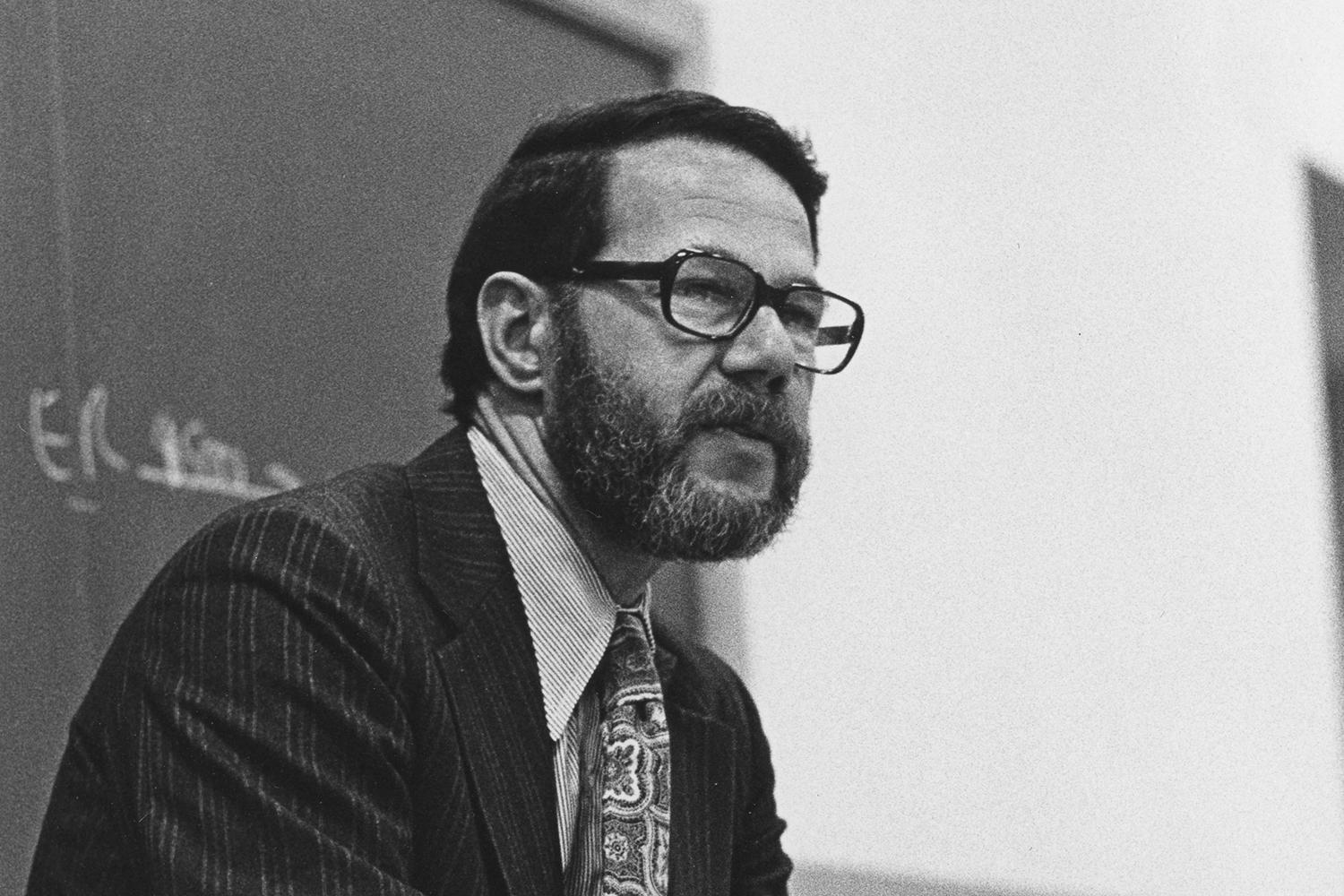
Ronald A. Castellino, MD, former chair of diagnostic radiology at the Stanford University School of Medicine and a pioneering figure in oncologic radiology, died April 22, 2026, in Atherton, California. He was 88.
Castellino spent more than a quarter-century at Stanford, from 1965 to 1990, helping transform the practice of cancer imaging and establishing oncologic radiology as a distinct subspecialty. His meticulous research and clinical innovations fundamentally changed how physicians detect, stage, and monitor malignancies, his colleagues said.
“Dr. Castellino forged a new path at Stanford Medicine,” said Lloyd Minor, MD, the Carl and Elizabeth Naumann Professor for the Dean of the School of Medicine and vice president for medical affairs at Stanford University. “By creating the radiation oncology specialty, he provided a new focus for residents and physicians and brought patients a higher level of care. His contributions to Stanford Medicine, medical education, and patient care were many.”
Born Feb. 18, 1938, in Queens, New York, to Leonardo and Henrietta Castellino, his upbringing reflected his parents’ heritage and cultural backgrounds and helped define his global perspective. In 1947, Castellino moved to São Paulo, Brazil, where he attended the São Paulo Graded School and became fluent in Portuguese.
Castellino earned both his undergraduate and medical degrees from Creighton University in 1963. He returned to Brazil with his new wife, Joyce, serving for two years in the Peace Corps as the American physician for volunteers. In 1965, he arrived at Stanford Medicine to begin his residency training in radiology.
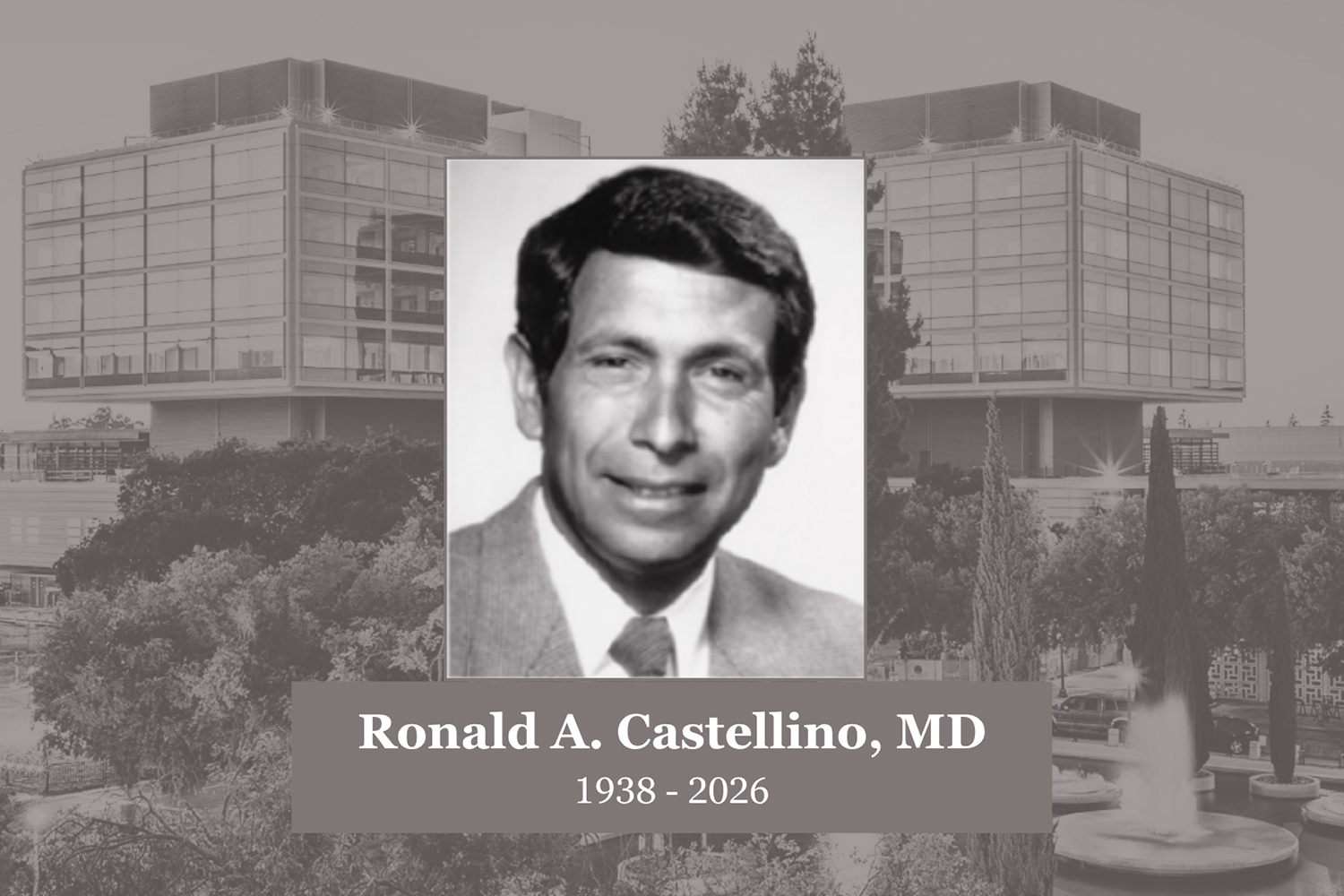
Courtesy Stanford Medicine
Building a new subspecialty
Castellino rose through the academic ranks at Stanford Medicine, becoming assistant professor in 1968, associate professor in 1974, and professor in 1981.
In 1970, Castellino, recognizing that cancer patients required specialized radiologic expertise, established Stanford Medicine’s first oncologic radiology section. The initiative provided dedicated diagnostic support for oncology patients and integrated training for radiology residents in cancer diagnosis.
Castellino also served as chair of diagnostic radiology from 1981 to 1989, playing a pivotal role in reorganizing the department when it split into two sections: diagnostic radiology and radiation therapy. This restructuring, accomplished with the support of colleagues including Malcolm Bagshaw and Henry Kaplan, better reflected the diverging paths and specialized needs of each discipline.
He also developed a long-range program for the then-emerging technology of magnetic resonance imaging that included installation of both clinical and research units, culminating in what would become the Richard M. Lucas Center for Imaging.
Shortly after the late Gary Glazer, MD, took over as department chair in 1990, he remarked that “[Castellino] has been responsible for developing our department over the past decade to the point where it is now near the pinnacle of academic radiology departments.”
Throughout his career, Castellino made significant contributions to the field, particularly in lymphangiography – a method that uses contrast dyes and X-rays to visualize the lymphatic system. His studies represented some of the earliest large-scale trials evaluating the sensitivity and specificity of imaging tests against the gold standard of surgical pathology. He contributed chapters to National Cancer Institute monographs and established lymphangiography and diagnostic imaging protocols that became standard practice worldwide.
“Starting as a Stanford radiology resident and eventually becoming chair, he built a career defined by quiet confidence, fairness, and a steady ability to make others feel supported and capable, even in a demanding academic environment,” said his son Jeff Castellino. “He maintained long-standing professional relationships and was deeply committed to the department’s growth.”
Castellino’s impact was recognized with Guggenheim fellowships in 1974 and 1985; his election to Alpha Omega Alpha medical honor society; and receipt of the Mosby Medical Scholarship Award during his training. After taking leave from Stanford Medicine in 1990, he continued to advance the field of cancer imaging as chair of diagnostic radiology at Memorial Sloan Kettering in New York.
A life beyond medicine
Besides his scientific achievements, colleagues remember Castellino for his dedication to teaching and mentoring the next generation of radiologists, his collaborative spirit in working across specialties, and his unwavering commitment to improving patient care through rigorous science. Friends will remember his lively conversations and his love of a spirited debate.
To those closest to him, Castellino’s imprint went far beyond his professional legacy. He was an avid tennis player, a steady golfing partner at the Menlo Country Club, and an enthusiastic bridge player. He was also a talented pianist who brought music and laughter to those around him.
To his grandchildren, he was Opa, who always had a smile on his face when they walked through the door. To his sons, he was Dad, who hosted Sunday barbecues and offered support during tough times.
Castellino is survived by his wife, Joyce, of 63 years; his sons, Jeff, Rob, and Anthony; their spouses; and five grandchildren.
For more information
This story was originally published by Stanford Medicine.
Media contact
Lisa Kim
Tel 650-723-6696
likim@stanfordhealthcare.org
Writer
Lina Cheuy