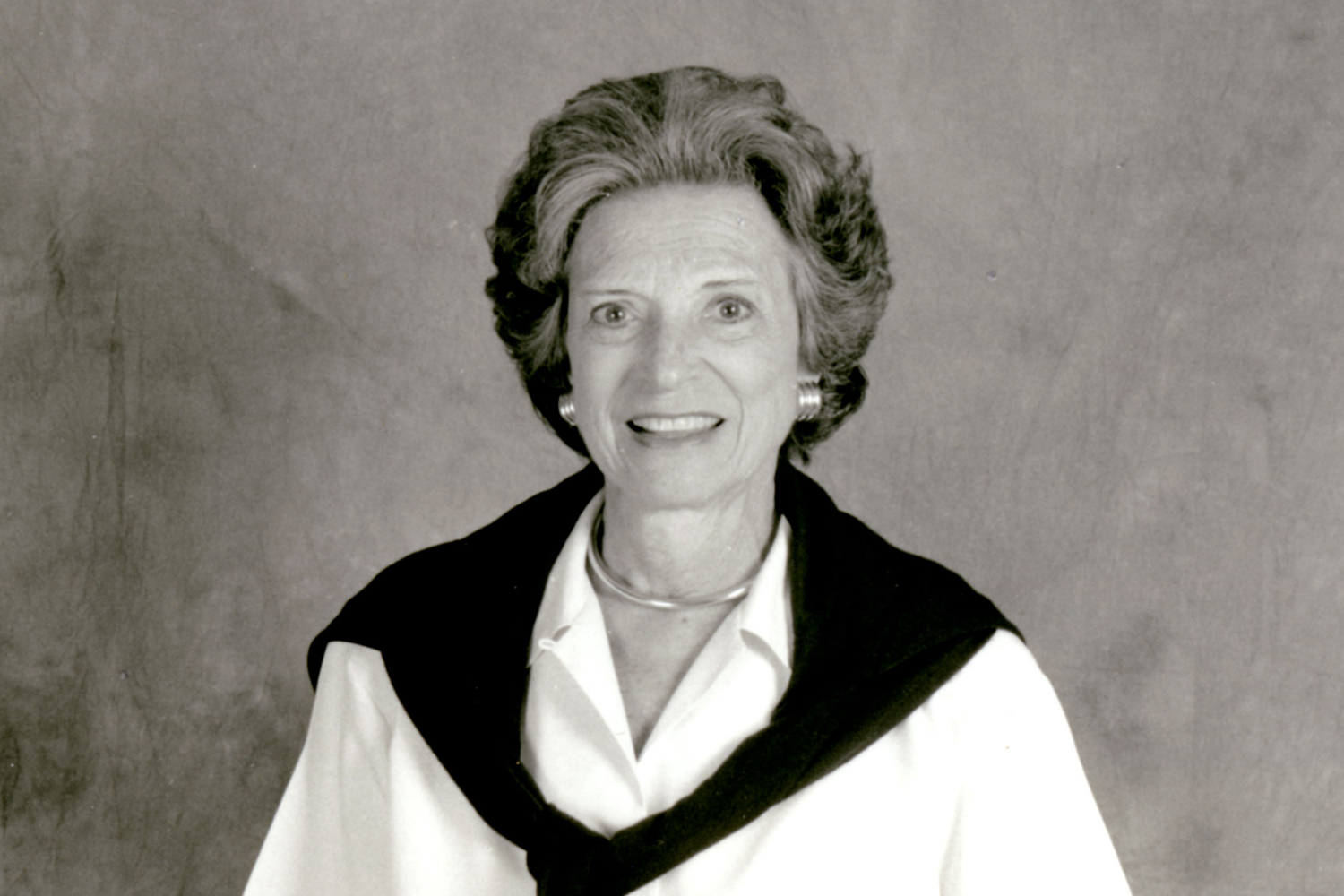
Doris Fisher, ’53, a dedicated Stanford benefactor and pioneering entrepreneur, passed away on May 2 at the age of 94.
One of the first women to graduate from Stanford with a degree in economics, Doris Fisher and her husband, Donald Fisher, co-founded the Gap in 1969 and soon became prominent collectors of contemporary art. Their passion and generosity significantly enlivened the arts at Stanford and throughout the greater San Francisco Bay Area.
The same year the Gap opened, Fisher began her volunteer service for Stanford. Over four decades, she took on numerous roles, including as a member of the Board of Trustees, The Stanford Challenge Leadership Council, the Stanford Arts Advisory Council, the Cantor Arts Center Director’s Advisory Board, and the Stanford Alumni Association Board of Directors. In addition to supporting the arts at Stanford, she contributed to athletics, the Graduate School of Business, the Hoover Institution, undergraduate education, and Stanford Medicine.
“Doris Fisher was a visionary entrepreneur and a dedicated Stanford volunteer and benefactor,” said Stanford President Jonathan Levin. “She will continue to inspire future Stanford students and alumni, and the many individuals she touched through her generosity and service.”
Filling a gap in retail
Born in San Francisco in 1931, Doris Lee Feigenbaum was the middle child of Dorothy Feigenbaum and California state legislator B. Joseph Feigenbaum. She graduated from Stanford in 1953, earning a bachelor’s degree in economics with honors. Fisher showed early signs of leadership during her time on the Farm, serving as president of the Associated Women Students.
She began dating Donald Fisher, a lifelong family friend, during her senior year at Stanford, and the couple married shortly after her graduation. Together, they opened a small San Francisco shop selling Levi’s jeans and records, which grew into the international retail giant, Gap, Inc. They were equal partners from the start, each making identical investments in their first store.
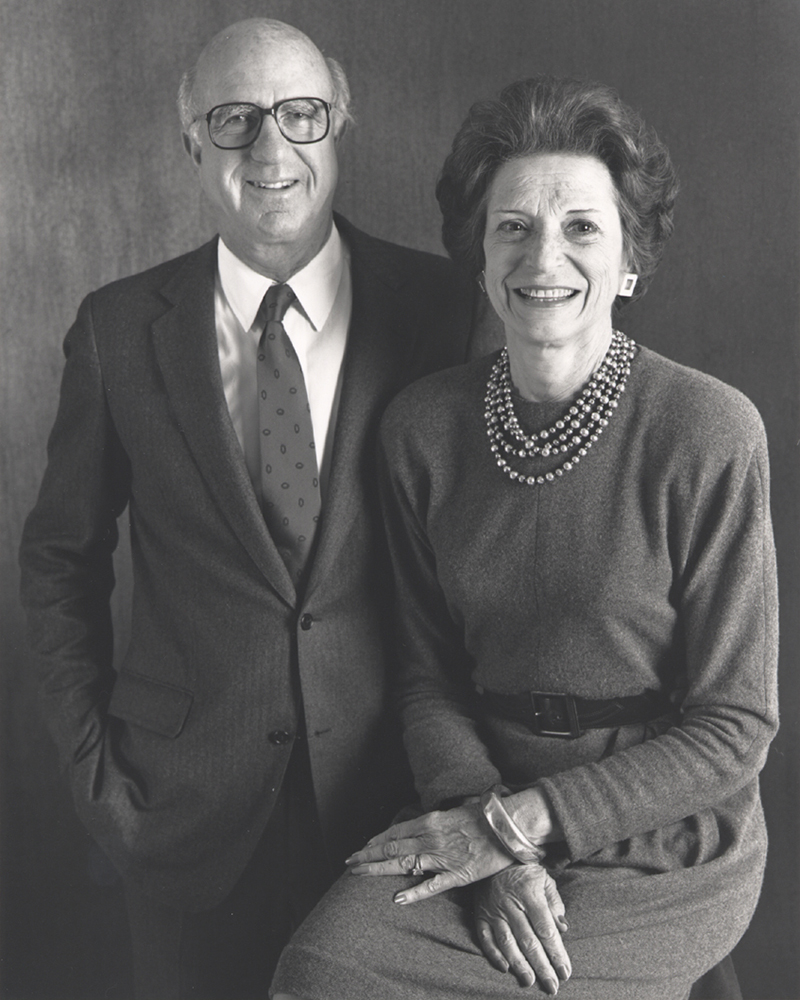
Don and Doris Fisher | Courtesy Fisher family
“Doris’ excellent visual sense put the Gap on the map in terms of style,” wrote Donald Fisher in his 2002 memoir Falling into the Gap. “Doris saved the business by picking a selection that helped us become known for having great fashion sense. She did that for many years. Her exceptional taste is very evident in our collection.”
A passion for sharing art
While her success with the Gap reflected her innate aesthetic sensibilities, Fisher’s appreciation for contemporary art developed more gradually. Of her many college friends, she remained particularly close to her former roommate Peggy Walker, ’53, who majored in art history and helped shape the Fishers’ early art collection.
“I never grew up looking at art because I didn’t have an arts-oriented family. … Don and I only got interested in art when we decided to decorate the Gap’s offices,” Doris explained in a 2015 interview with the Wall Street Journal. “We had some art in our home, Currier and Ives prints, but nothing big, so my former college roommate Peggy Walker started helping us.”
From their humble beginnings collecting prints on Walker’s advice, the Fishers eventually amassed what is widely regarded as one of the most impressive private collections of contemporary art, containing more than 1,100 high-quality pieces. The couple agreed early on never to buy art unless they both liked it, resulting in a collection with significant works by Alexander Calder, Anselm Kiefer, Agnes Martin, Gerhard Richter, and Andy Warhol. Their partnership with the San Francisco Museum of Modern Art (SFMOMA) to present the monumental Fisher Collection led to an expansion of the museum, making it one of the largest modern art museums in the United States.
After Walker passed away from cancer at age 49, the Fishers began contributing to cancer research, providing major support for Stanford Hospital’s Cancer Center, which opened in 2004.
The Fishers supported the arts at Stanford through numerous generous gifts and loans of art over decades. They were instrumental in rebuilding the campus museum following the 1989 Loma Prieta earthquake and continued to enrich the Cantor Arts Center through contributions and noteworthy art loans, including sculptures, paintings, and works on paper. Among their gifts was a series of lithographs by Ellsworth Kelly, which they presented in honor of then President Gerhard Casper.
“Doris was as ambitious for Stanford as she was in her own pioneering career,” said Casper, who served as president from 1992 to 2000. “She challenged Stanford to be better, and her efforts and advocacy helped us become better.”
While the SFMOMA expansion was still underway, the Fishers loaned Richard Serra’s monumental steel sculpture Sequence to Stanford. During the installation, Doris Fisher regularly visited campus to observe the extensive work required to erect a sculpture weighing more than 200 tons. Initially on loan to the Cantor from 2011 to 2015, Sequence is now on long-term view on the Cantor’s North Lawn.
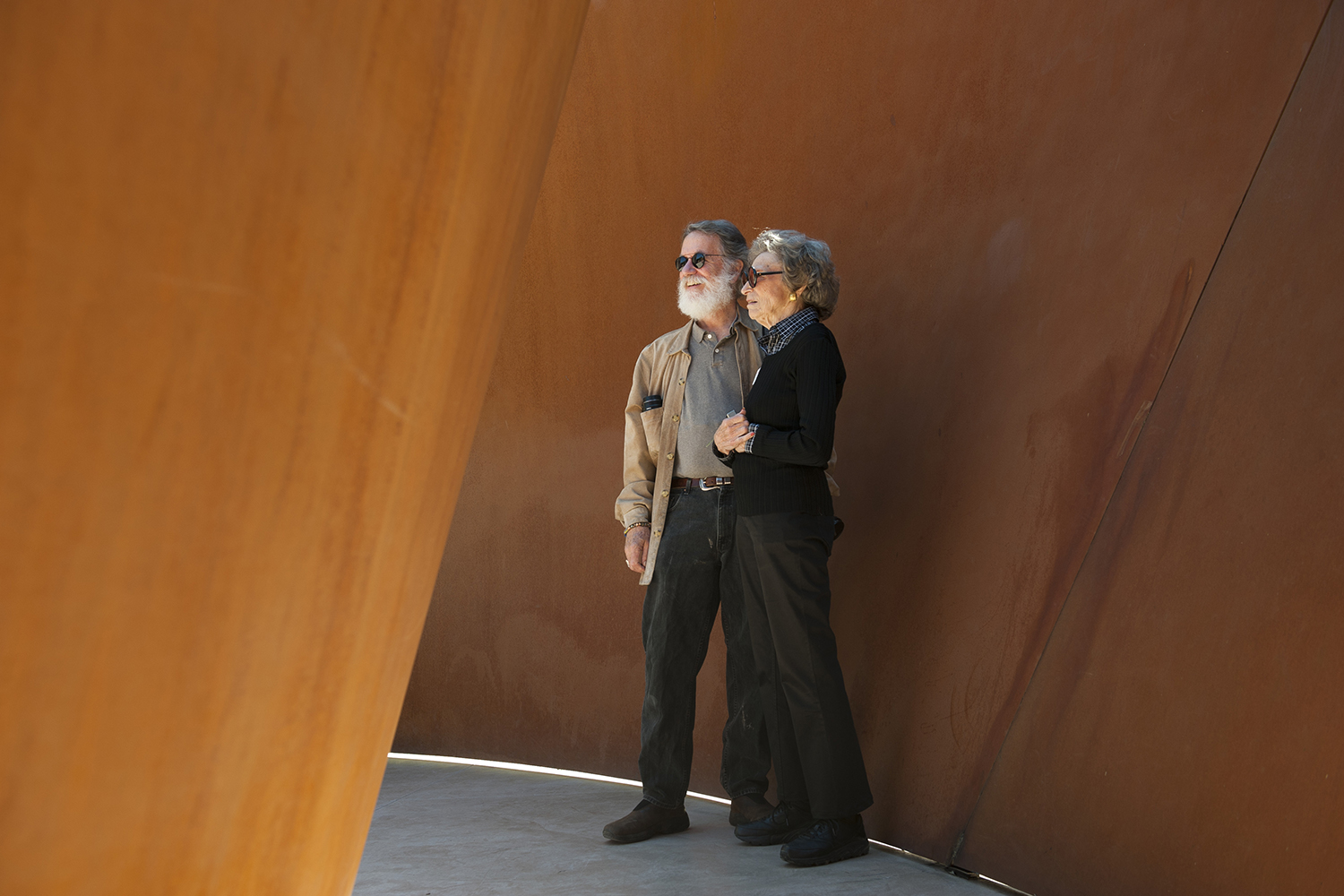
Doris Fisher and Tom Seligman, former director of the Cantor Arts Center, view Richard Serra’s sculpture Sequence. | Linda A. Cicero / Stanford News
“Doris and Donald took great pride in making exceptional works of public art accessible, as evident by their legacies at both SFMOMA and Stanford,” said Veronica Roberts, the John and Jill Freidenrich Director of the Cantor Arts Center. “Every day, I am privileged to watch visitors experience Sequence on the Stanford campus and see how it widens their understanding of what art can be.”
“Some art collectors prefer to keep their collections private, but not the Fishers,” she added. “I first saw their extraordinary collection when I babysat their grandchildren for an afternoon during high school. The collection made a big impression on me, but what impressed me even more was Doris’ dedication to her family and others.”
Among Doris Fisher’s longtime friends was the sculptor and environmental artist Beverly Pepper. After Pepper died in 2020, the Fisher family donated one of Pepper’s outdoor sculptures, The Stanford Columns, in honor of Doris and her enduring friendship with the artist. The sculptures stand across from the Anderson Collection along Lomita Drive.
“The Stanford Columns, a highlight within our outdoor public art collection, exemplifies how Doris made art accessible to the entire university community and visitors from across the world,” said Vice President for the Arts Deborah Cullinan. “Her vision and generosity helped create a profound sense of place on campus – a place of curiosity, creativity, and connection.”
A life of service and philanthropy
In 2006, Fisher was awarded the Gold Spike Award, the Stanford Alumni Association’s highest annual honor, for decades of exceptional and significant service to the university. The award citation praised her sense of humor, warm heart, and intellectual curiosity, noting her “great ability to go to the core of matters and cause results.”
Her counsel aided the university through numerous initiatives. For example, she helped develop Stanford’s Parents’ Program (now Stanford Parents and Family Engagement) and liaised between the university and SAA when the alumni association became a university division. She also served on numerous alumni reunion committees and spearheaded several class giving campaigns that achieved record-breaking participation.
“When I think of Doris, I think of the times she’d enter a meeting – elegant and dignified with a very commanding presence – and walk right up to me and say, ‘I read that report, and I think we can do a better job,’” remembers SAA President Howard Wolf. “She was the opposite of indifferent. She was direct and honest without a scintilla of posturing because she cared so deeply.”
Fisher’s philanthropy also extended to public education and Stanford’s Center for Research on Education Outcomes. In 2000, the Fishers established the nonprofit KIPP Foundation, which has benefited thousands of students nationwide by supporting KIPP public charter schools.
“Doris Fisher’s fearless spirit and tireless dedication to improving the world around her will be remembered and cherished by all who had the privilege to know her,” said John L. Hennessy, who served as Stanford president from 2000 to 2016. “She lived a life marked by profound generosity and a commitment to making a difference.”
Doris Fisher is survived by her three sons and daughters-in-law – Robert Fisher, MBA ’80, and Elizabeth Fisher; William Fisher, MBA ’84, and Sakurako “Sako” Fisher, ’82; and John Fisher, MBA ’89, and Laura Meier Fisher, ’88 – 10 grandchildren, many of whom are also Stanford alumni, and 13 great-grandchildren. Her husband, Donald Fisher, predeceased her, passing away in 2009.
Writer
Anna Morrison