The ceremony started above ground. On the afternoon of Wednesday, May 6, students performed a traditional Chinese lion dance, meant to bring good luck, near the engineering quad before oversized scissors cut a thick red ribbon. Both rituals welcomed a new chapter for the facility three stories below.
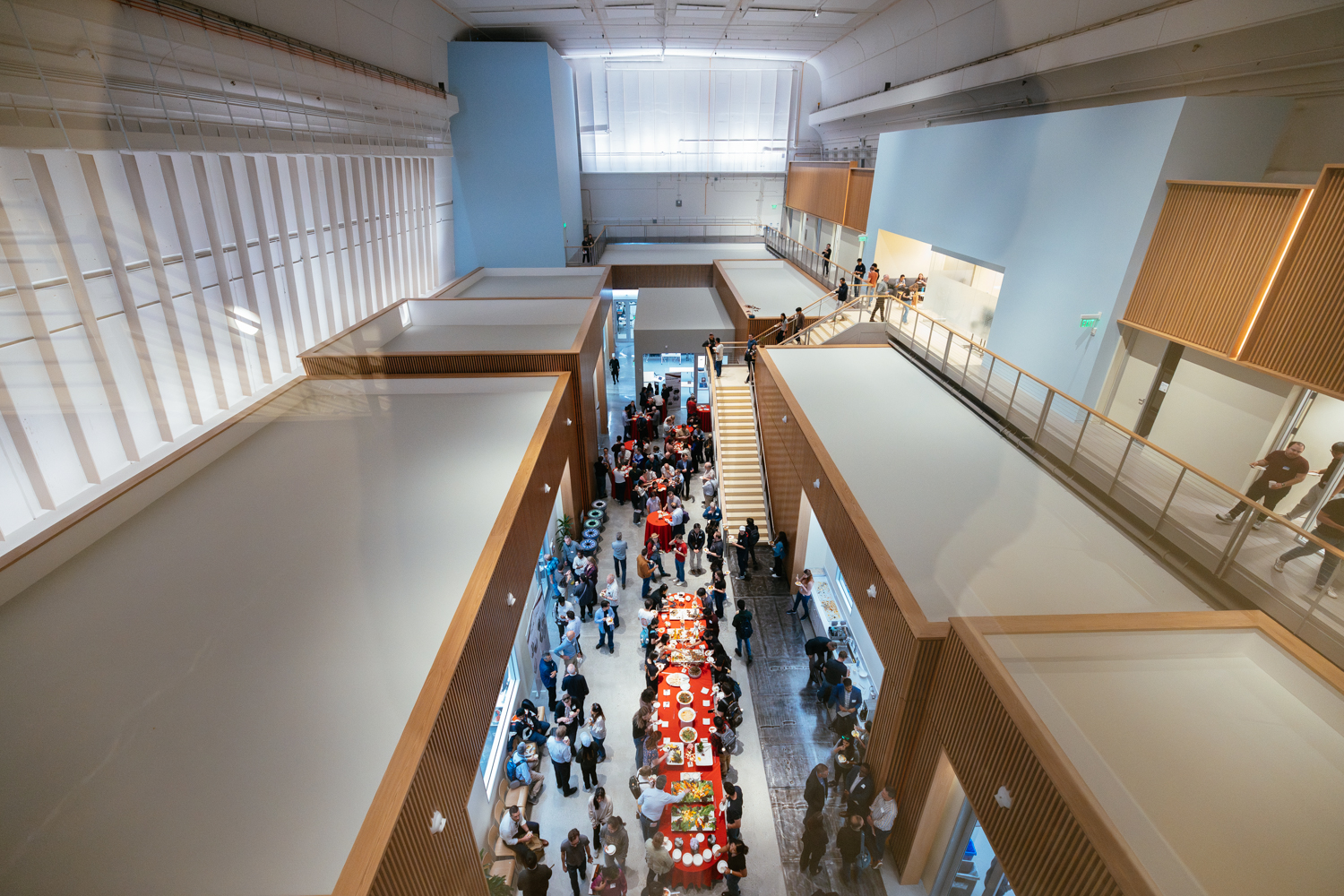
Once the site of physics experiments that helped confirm Einstein’s theory of gravity and search for dark matter, the 29,600-square-foot underground space is now officially home to the Deep Lab, Stanford’s new nanocharacterization facility.
Standing outside its main entrance, Provost Jenny Martinez highlighted the transformation of this historic but underused facility into a hub for nanoscale research and engineering.
“Nothing is in shorter supply on our campus than space,” Martinez said. “Finding a good use for this space and making it available to the entire research community is really an example of the kind of wonderful work that we can do when we come together as a university.”
The $29 million renovation was supported by the Provost’s Office, the Vice Provost and Dean of Research (VPDoR), the School of Engineering, the School of Humanities and Sciences, and the Doerr School of Sustainability. VPDoR David Studdert, who could not attend, said in written remarks that the Deep Lab “will help generate bold new ideas, train students, and attract outside users from industry and other universities. Above all, it will be a place of discovery.”
The Deep Lab represents an expansion for nano@stanford, formed last year through the merger of the Stanford Nano Shared Facilities (SNSF) and the Stanford Nanofabrication Facility (SNF). Yuri Suzuki, the Stanley G. Wojcicki Professor of Applied Physics, is the director of the newly combined unit, which supports multidisciplinary research at the nanometer scale – billionths of a meter, the units used to measure the width of DNA’s double helix and the thickness of semiconducting crystals in advanced electronics.
The new space houses nano@stanford’s headquarters, a teaching lab for hands-on education, and a growing suite of instruments, including microscopes capable of identifying individual atoms.
Andrew Brodhead
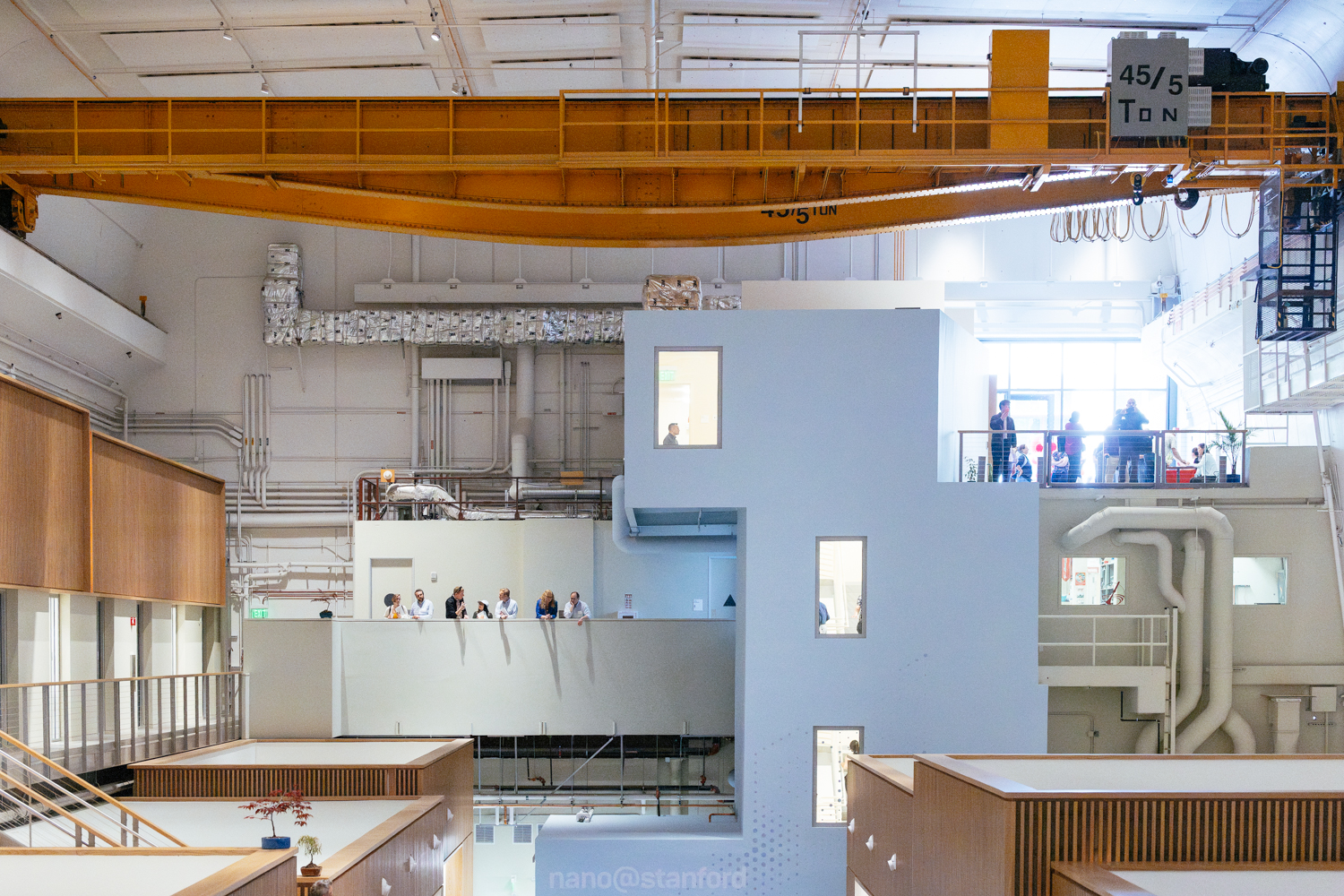
The Deep Lab’s 29,600 square feet of underground space houses nano@stanford's headquarters, a teaching lab, and a growing suite of instruments, including microscopes capable of identifying individual atoms.
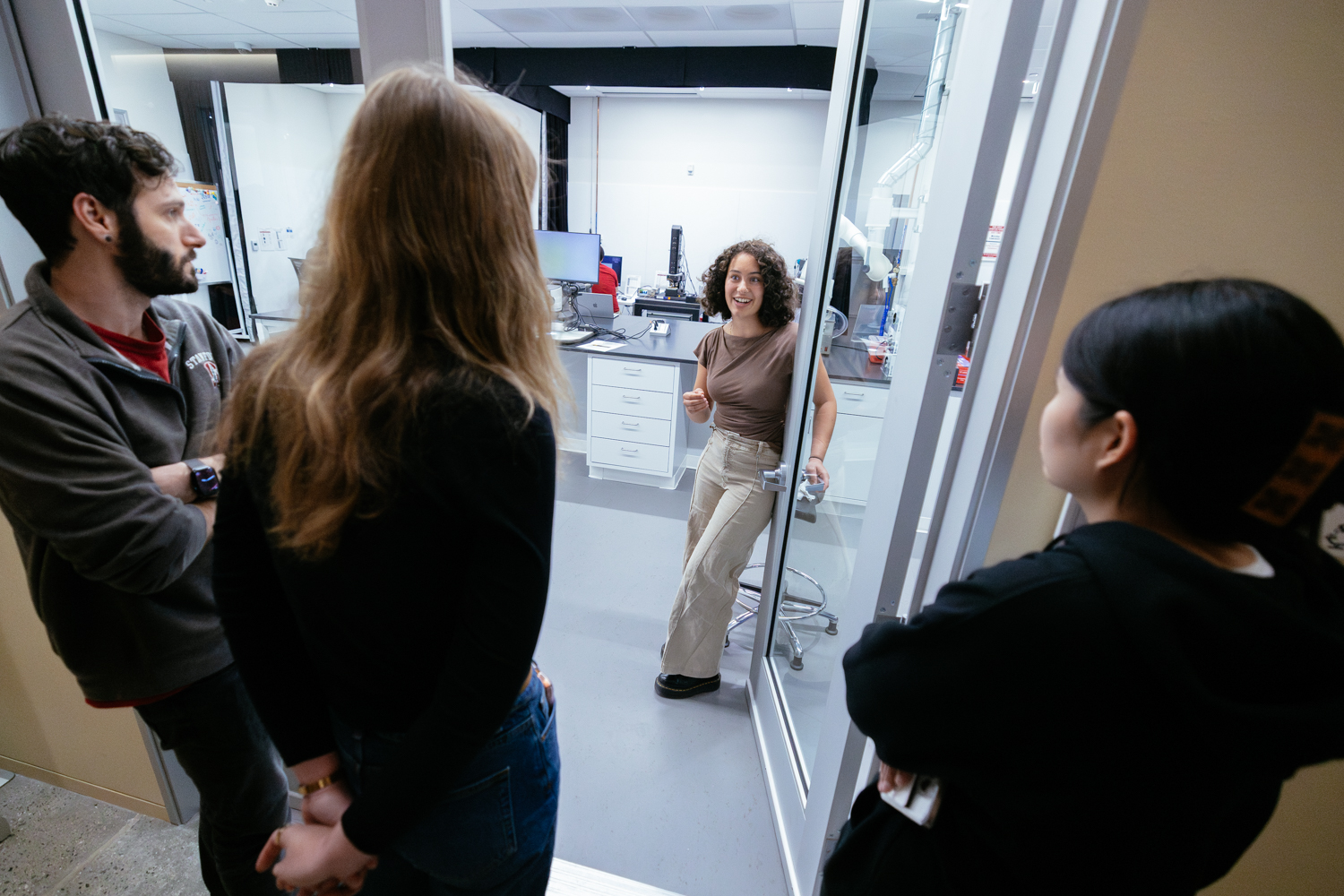
By embedding teaching space within shared research facilities, the Deep Lab expands hands-on laboratory experiences for undergraduates, graduate students, and other Stanford researchers.
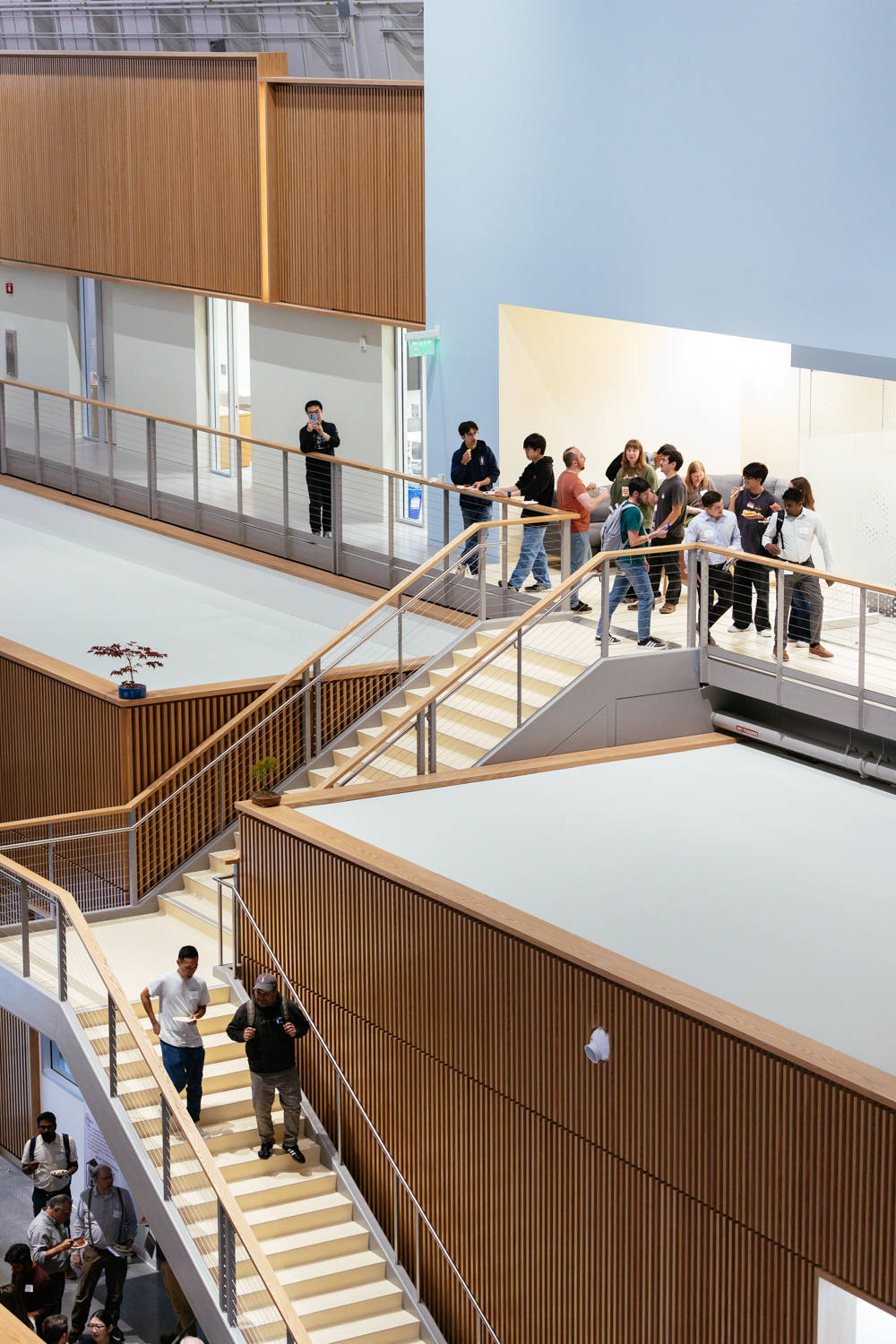
The Deep Lab’s uniformly quiet underground environment has improved the performance of instruments sensitive enough to be disrupted by foot traffic, ventilation, and sound.

A May 6 ceremony welcoming the Deep Lab began with a traditional Chinese lion dance, meant to bring good luck to the new facility.
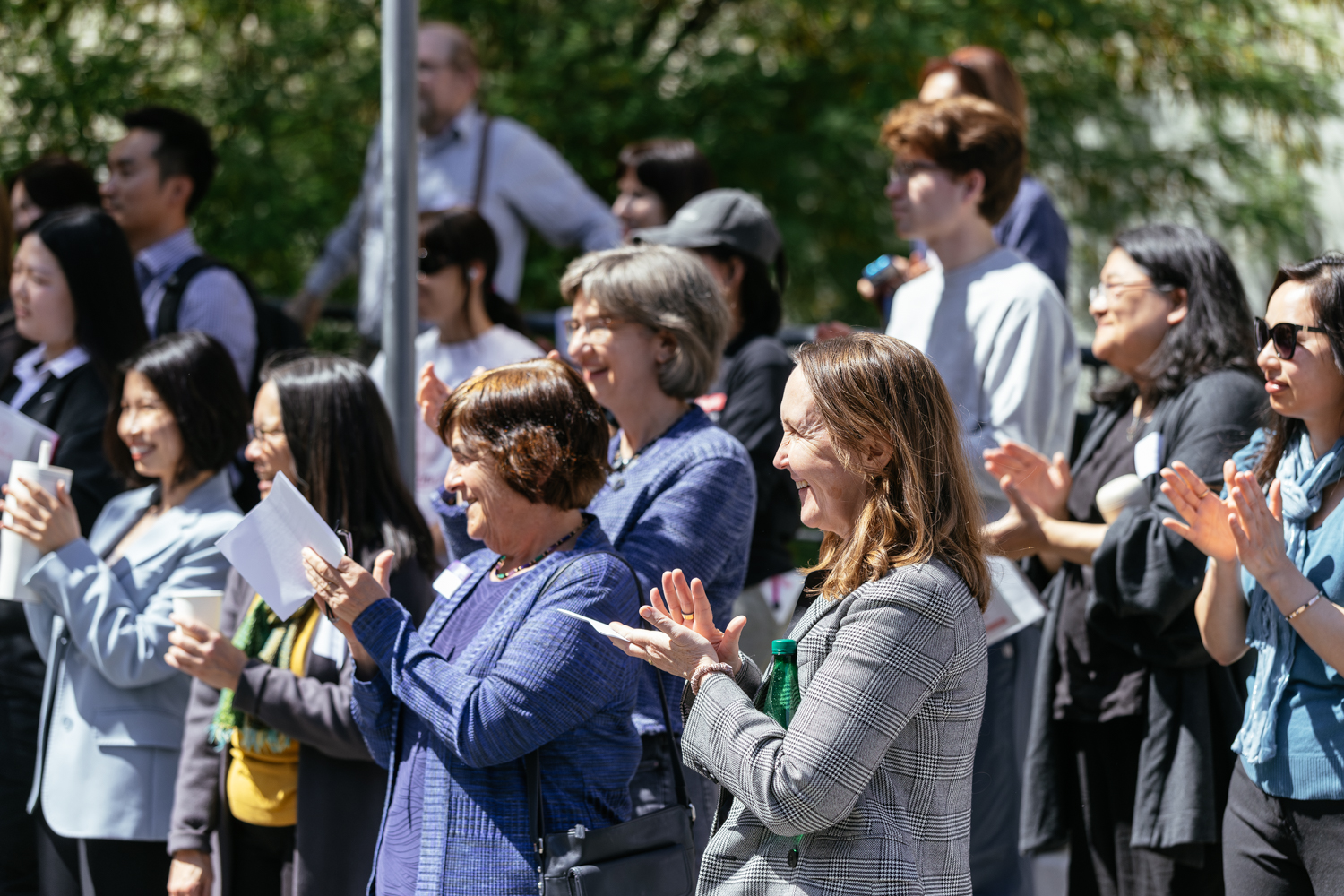
Researchers and staff celebrating the Deep Lab’s opening included nano@stanford Managing Director Mary Tang, School of Engineering Dean Jennifer Widom, and Provost Jenny Martinez.
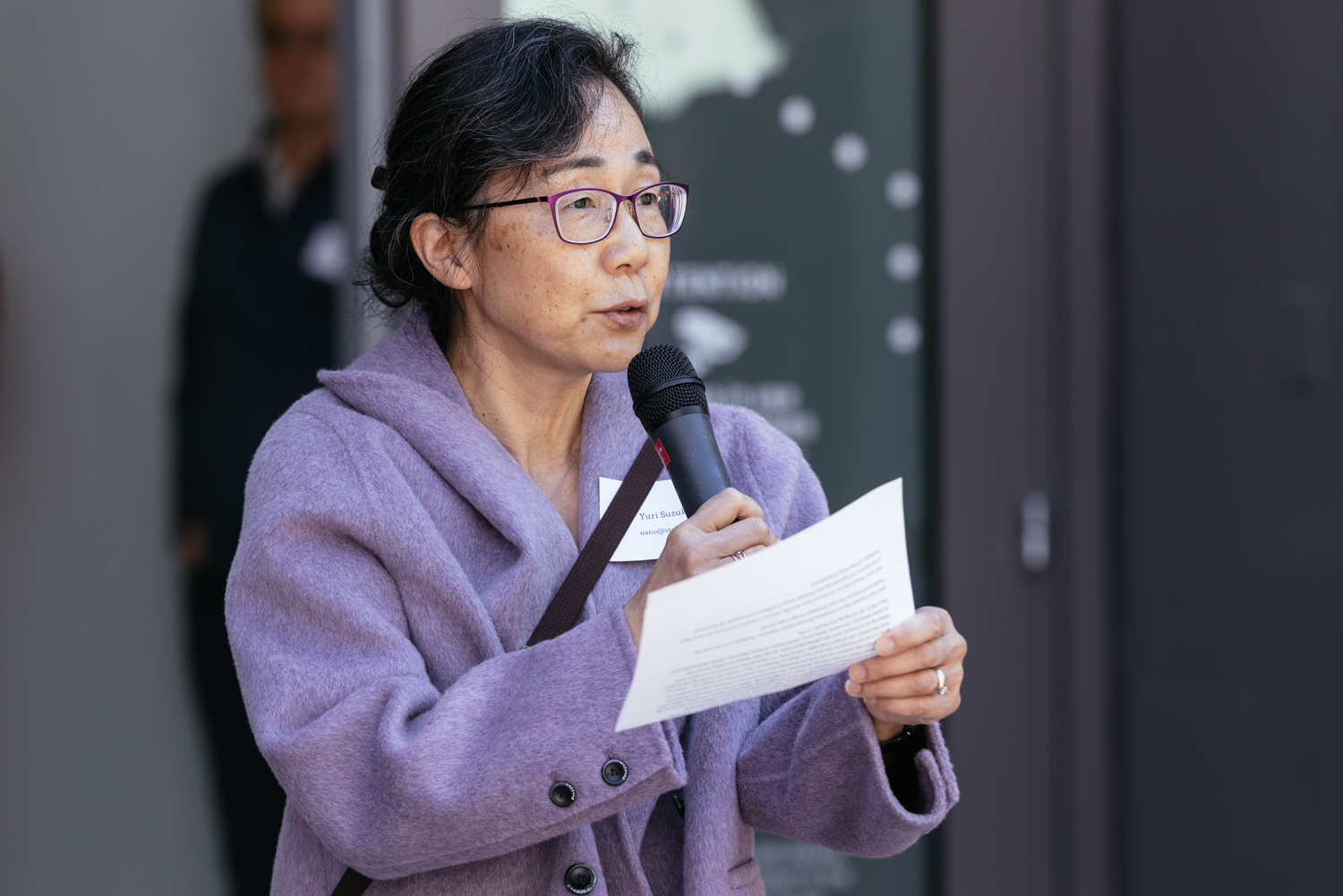
Yuri Suzuki, the Stanley G. Wojcicki Professor of Applied Physics, is the director of the newly combined unit.
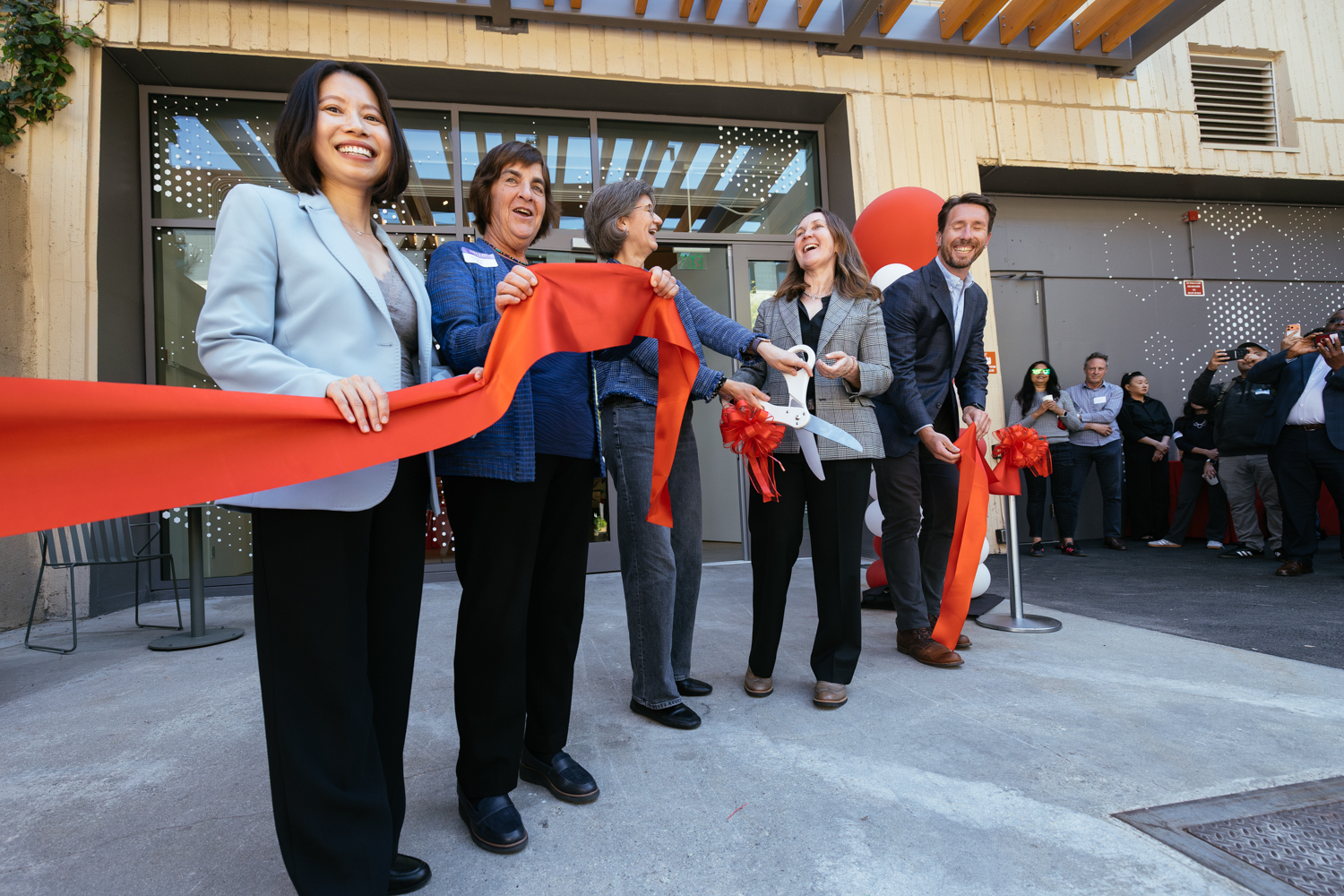
A ribbon cutting officially opened the Deep Lab, Stanford’s new nanocharacterization facility.
Repurposing and expanding
The Deep Lab occupies the former End Station 3. Built in 1972, this facility was designed to house a detector for the university’s original linear particle accelerator, which preceded the SLAC National Accelerator Laboratory. The detector was never installed, but physicists found other uses for the space. Experiments conducted there contributed to the invention of the free electron laser, supported a NASA project called Gravity Probe B that helped confirm parts of Einstein's general theory of relativity, and hosted testing for the Cryogenic Dark Matter Search.
Eventually, the space fell into disuse and became storage. When Serena Rao, senior associate dean of finance and administration for VPDoR, learned of End Station 3, she saw an opportunity. The VPDoR had made shared research platforms – instruments available across disciplines rather than confined to a single field or lab – a strategic priority, and the underground space offered a rare chance to advance that goal without expanding the university’s footprint.
“It underscores our belief that shared facilities are the rising tide that can lift many scientific boats,” Rao said.
Away from the noise
Research with atomic force microscopy (AFM) is already benefiting. This technique uses a finely tipped probe that moves over a sample to produce a three-dimensional image and characterize such properties as electrical potential. Foot traffic, ventilation, and even voices can disturb these measurements.
Before Deep Lab opened, the AFMs and other instruments overseen by lab manager Christina Newcomb were spread across four buildings with differing vibration levels. Deep Lab’s uniformly quiet environments have improved their performance as much as fivefold, she said. “To have each of the instruments performing well is a huge advantage for getting reproducible, high-quality data.”
Newcomb acquired one new AFM two years ago, in anticipation of the move, and another in January. Both instruments bring new capabilities to campus. The earlier arrival uses a laser to analyze chemistry. Funds from Stanford’s Community of Shared Research Platforms (C-ShaRP) supported its purchase, along with that of an optical photothermal infrared microscope for studying microplastic particles that have infiltrated human tissues.
Beyond the new equipment, consolidating her instruments in one place keeps Newcomb closer to the work and makes her more available to the researchers who depend on it. “It’s a win-win for the users and for me,” she said.
It underscores our belief that shared facilities are the rising tide that can lift many scientific boats.Serena RaoSenior Associate Dean of Finance and Administration for VPDoR
A napkin sketch
Andrew Barnum, who manages nano@stanford’s transmission electron microscopes (TEMs), didn’t like the initial layout for his instruments’ new space. So, he sketched another on a napkin – this time reserving individual spaces for each TEM alongside a common area where operators could sit together, an arrangement meant to encourage collaboration.
A few months later, he was surprised to see his drawing reflected in the architectural blueprints.
“In a lot of lab spaces, everybody’s in their own separate space,” he said. “Very few labs have common spaces, but I’ve always really enjoyed them.”
Nano@stanford has acquired three new TEMs, two already installed in the Deep Lab. These two are simpler to operate, more flexible, and less expensive to use, making the technique more accessible to researchers without TEM expertise. “The idea is that people can start doing these sorts of experiments as part of more routine research,” Barnum said.
When the third – a Nion UltraSTEM – comes online, it will rank among the highest-resolution TEMs in the world. Users will be able to fabricate materials in an attached nanofactory, then transfer them directly into the microscope, avoiding exposure to the outside environment that could risk contamination.
Teaching meets research
The Deep Lab also makes room for education. A dedicated teaching lab on the other side of the instrument floor features an open seating area and instruments for hands-on demonstrations. A movable glass wall can divide these sections into two when needed, and monitors at the front can project images from instrumentation there or elsewhere in the facility.
Traditionally, universities allocate space separately for research and education, even though the two are intertwined. The Deep Lab takes a more holistic approach, said Mary Tang, nano@stanford’s managing director. “By having the teaching space embedded in the shared facilities, we have an opportunity to really bridge research and education in one physical space.”
The Deep Lab also creates opportunities to engage outside users, including the small Bay Area companies that frequent nano@stanford’s facilities. “Perhaps we take an advanced piece of equipment on a loan basis, and maybe that equipment provider is running a beta test that gives our students access to the very latest technology,” she said. “These are the types of things we would not be able to do if we did not have this space.”
Writer
Wynne Parry