In brief
- The new Commons will provide 30,000 square feet of public space by reimagining and renovating buildings in the central campus.
- A repurposed bookstore and post office and the new Student Barn will anchor the project.
- Extensive community feedback and research have shaped designs.
- Construction is expected to start in 2027.
- A major gift for the Commons already is funding expanded student activities.
New and transformed buildings, augmented by extensive outdoor spaces, will create the Commons – the first steps in Stanford’s initiative to reimagine the Campus Center.
The project will bring a variety of big and small gathering spaces to an area that has been largely unchanged in appearance and function since the 1980s. The Commons will offer new opportunities for socializing and for celebrating existing traditions – and will provide coming generations with places in this time-honored part of campus to create new ones.
Current plans call for construction to begin in 2027, with completion by early 2030.
New spaces and structures
The project will transform existing structures and create new ones, with enclosed and open-air areas and extensive outdoor lighting that will enable evening activities without the need for rental equipment. As a result, students, faculty, and staff will have access to about 30,000 square feet of revitalized space, available in a range of configurations across 3 acres in the center of campus.
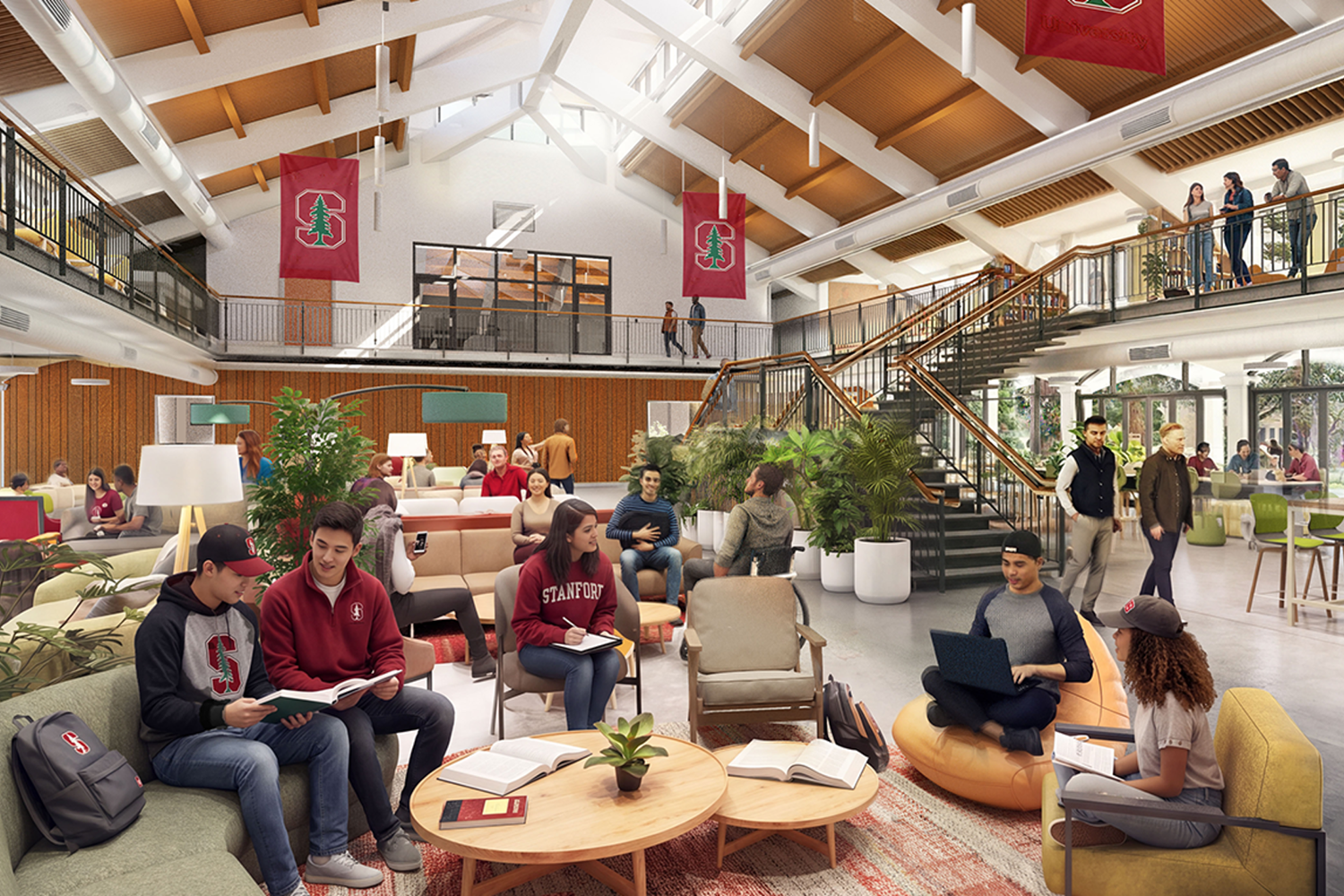
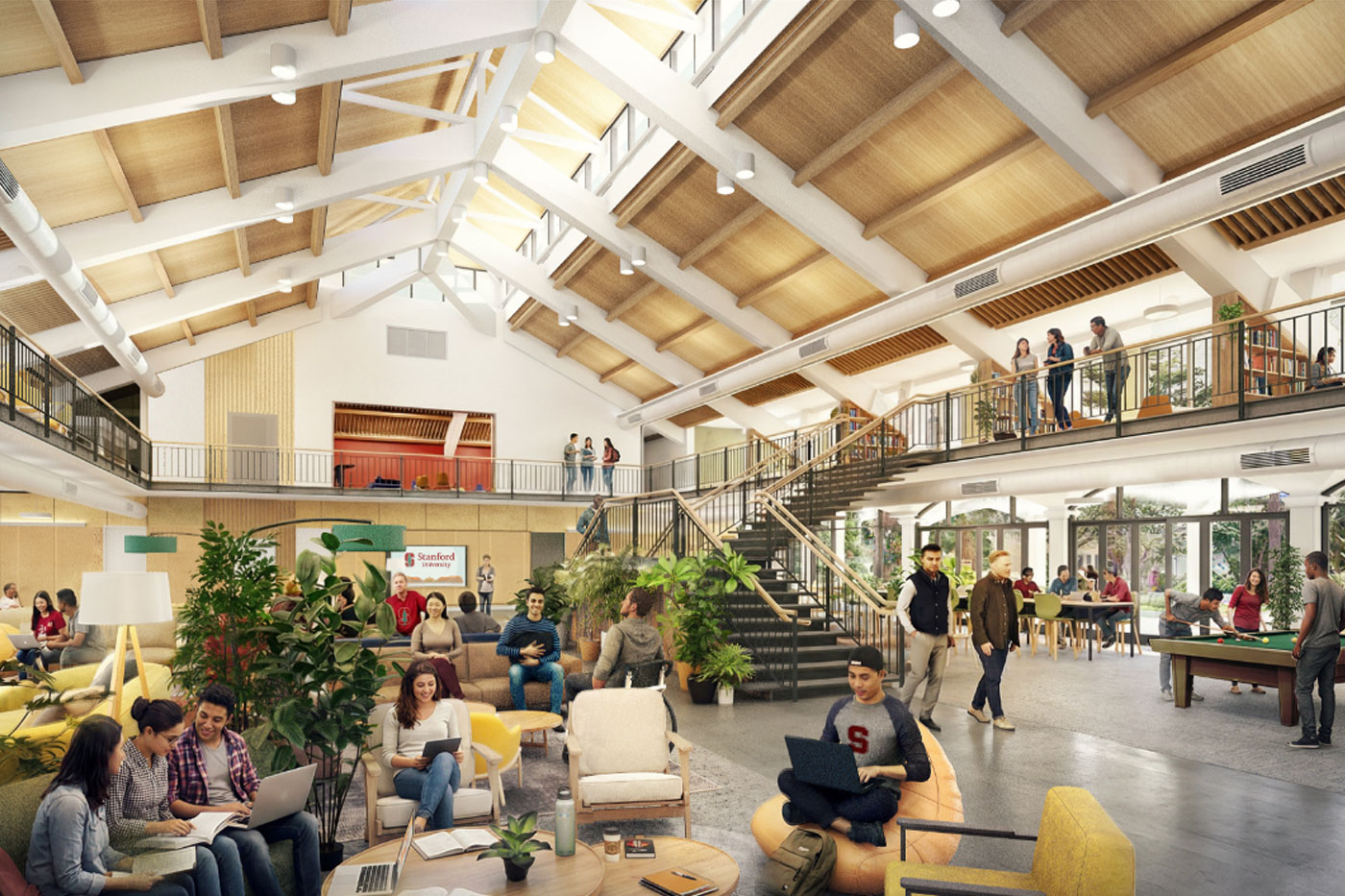
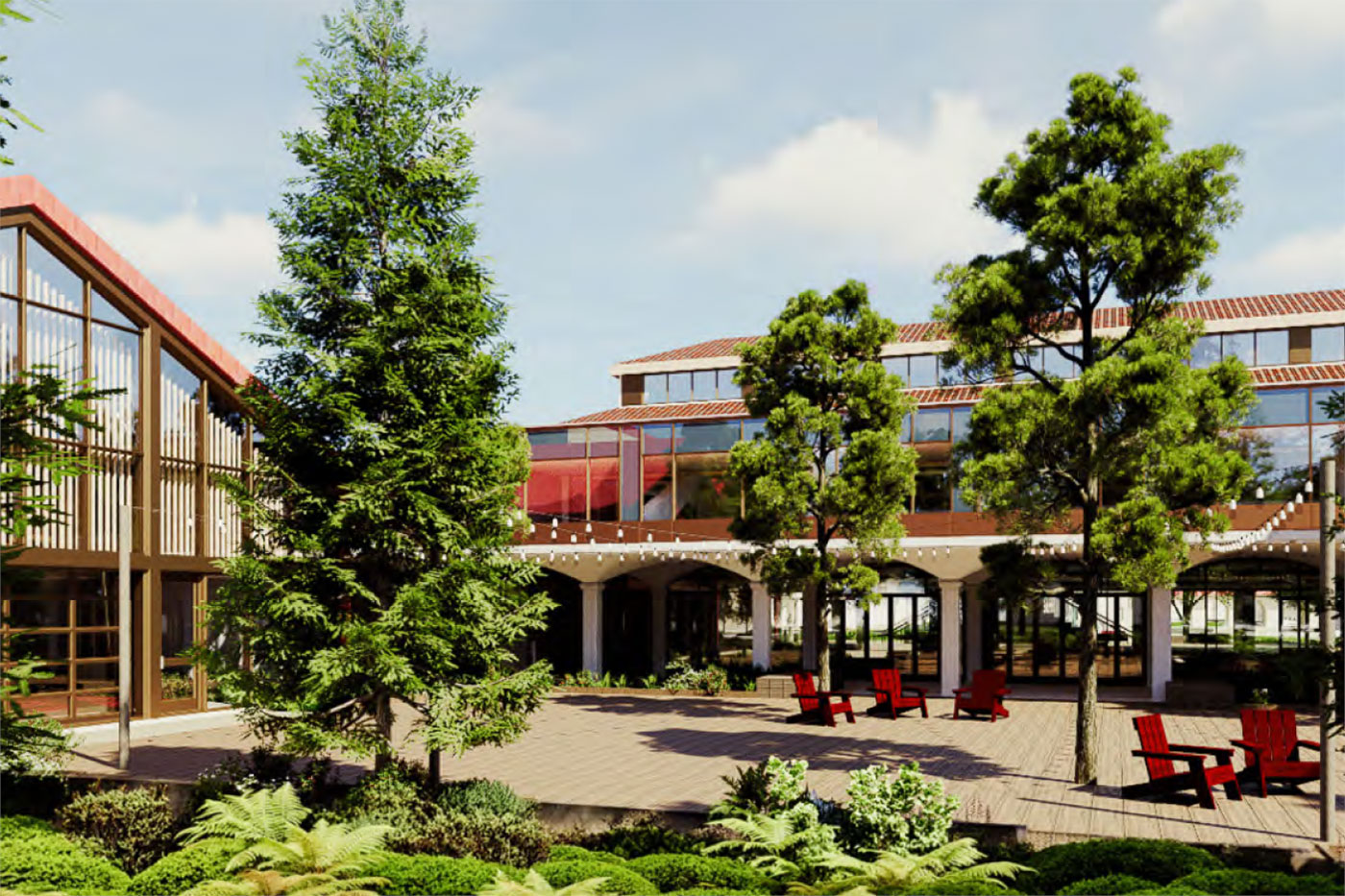
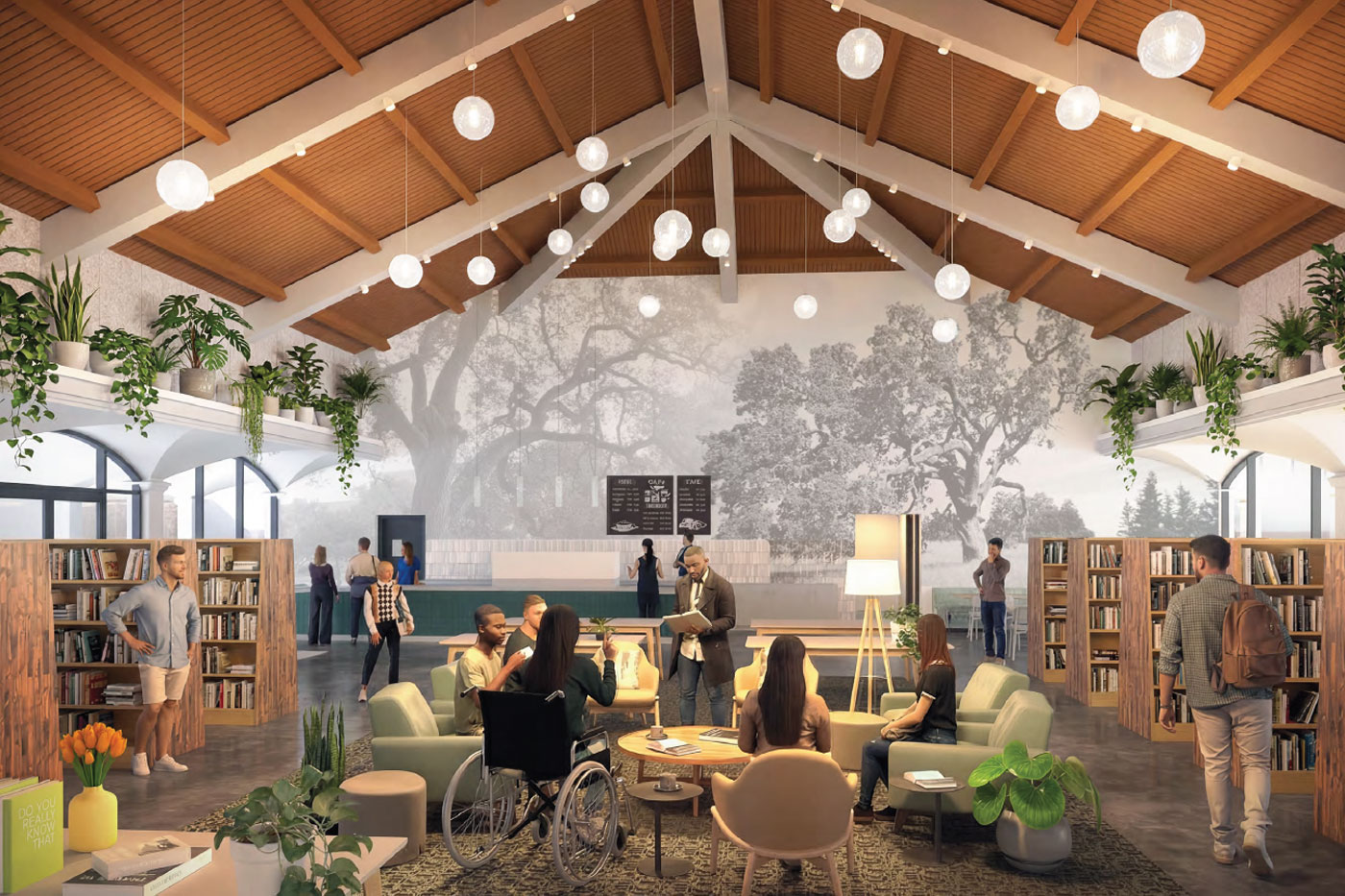
- Commons Great Room: A comprehensive renovation of the present-day bookstore will replace racks of apparel, books, and gifts with two levels of open spaces, meeting rooms, nooks, and a media room. This area will feature a variety of flexible seating and late-night hours for students. Removal of the 1970s addition, the area behind the main staircase and the basement, will create a wall of windows opening onto the new Garden Deck with a view of Meyer Green.
- Bookstore and Café: The post office, where generations of pre-internet students mingled mid-morning to pick up packages and letters from home, will become a more intimate hub for books and conversation. Mailboxes and shipping counters will give way to a smaller, curated bookstore with faculty publications and a small café with grab-and-go food and drink options. The space will also be available for lectures, book talks, and other cultural events.
- Stanford Student Barn: This new building, near the current bookstore and post office, will have two large reservable rooms, prioritized for students. Customizable spaces will be available for gatherings, practice sessions, and other activities.
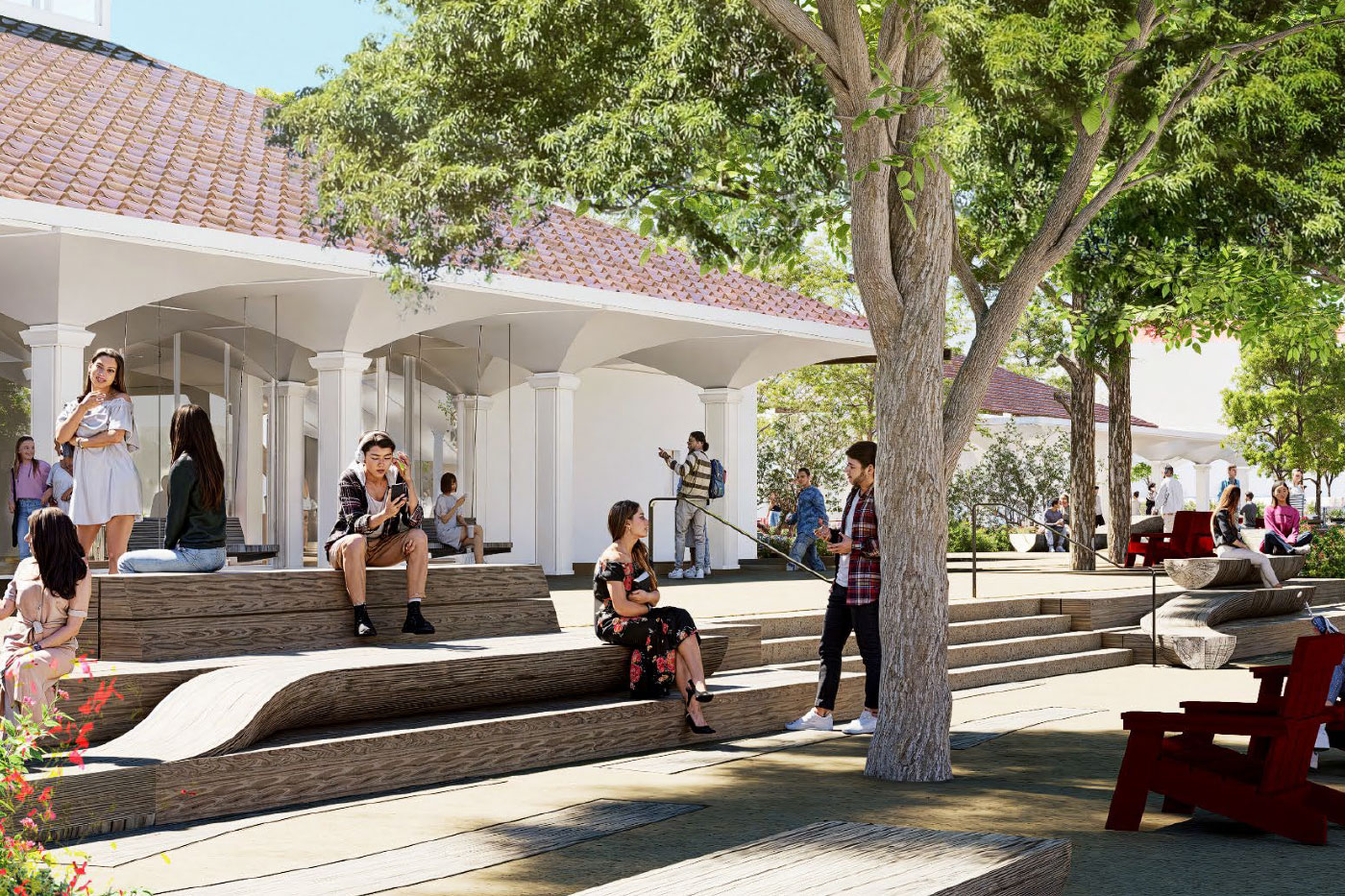
- Garden Deck: The Student Barn and Great Room will form two sides of a tree-shaded deck offering event spillover space and everyday seating with views of Canfield Court, Meyer Green, and Stanford Law School. It will occupy space reclaimed from part of the current bookstore footprint.
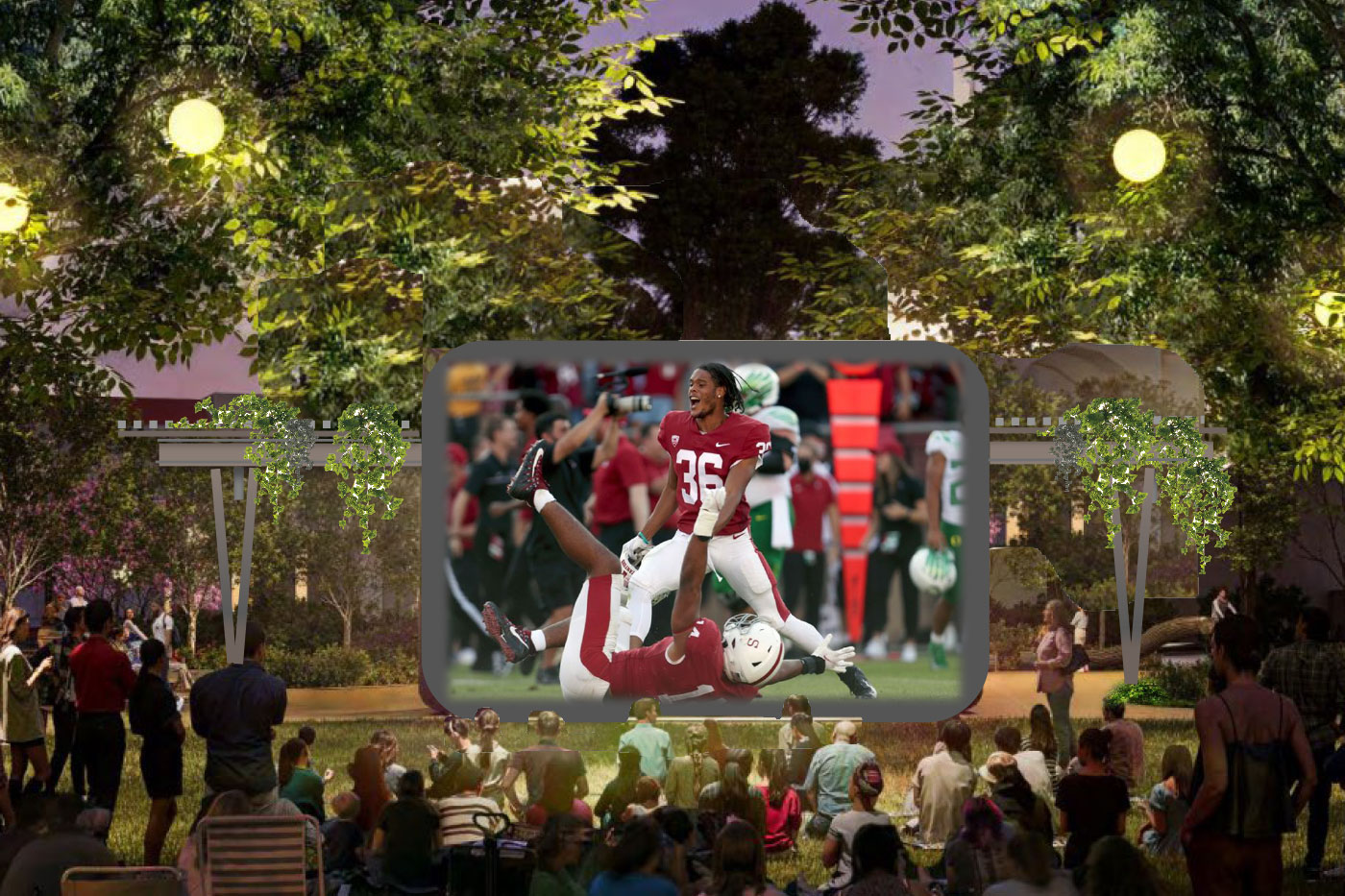
- Trellis: A flexible space, with a covered area for large events near the south end of White Plaza, will add to the refreshed landscape.
The broader area around the Commons has long been the setting for Big Game rallies, New Student Orientation, and other significant activities. Campus organizations hold events, musicians perform, and farmers market vendors offer food and artisan goods there. The White Memorial Plaza Fountain, known to many as “The Claw,” remains a popular spot for fountain hopping, socializing and sunning, and fresh-air studying.
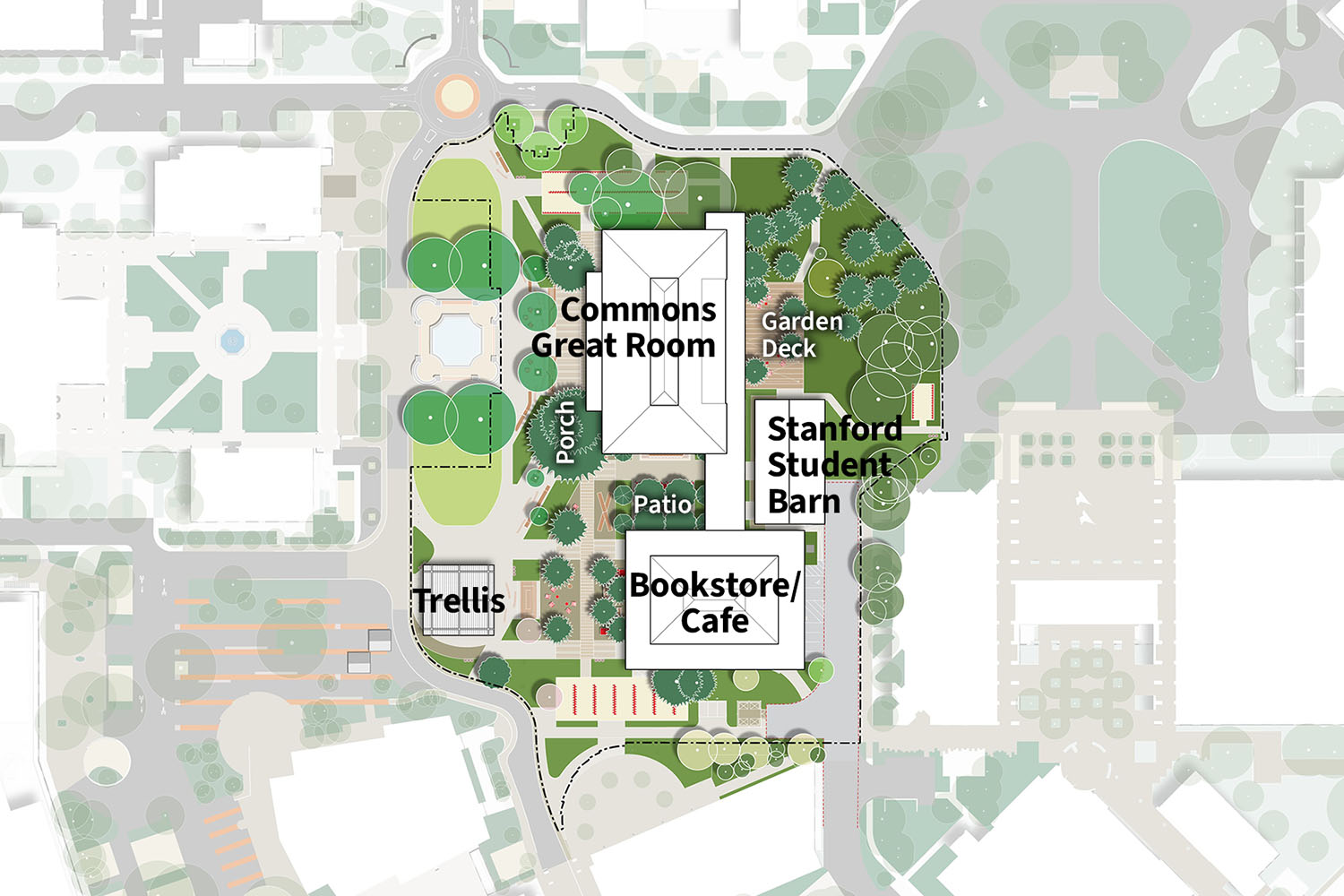
Site plan | LMN Architects
“Our vibrant community thrives on connection,” said Provost Jenny Martinez. “These new venues at the heart of campus will give us more opportunities to come together, both for planned performances and gatherings – and for the kind of serendipitous encounters and spontaneous conversations that make Stanford so special. I’m excited to see future generations of Stanford students make the Commons their own.”
Stanford’s Board of Trustees has provided concept and site approval, enabling planners and architects to move ahead on specific designs. Next up is board approval of the detailed designs, followed by authorization for construction once the plans are final.
Spaces to ‘engage, learn, and play’
The origins of the project date to 2019, when Stanford identified the need to create and revitalize community spaces in the central campus. Planning stopped during the pandemic and resumed in 2024 with extensive outreach, resulting in suggestions from across the university community.
The plans reflect feedback received from a variety of sources, including:
- An advisory committee of students, faculty, and staff representatives who met regularly with planners and architects in 2023-2025.
- Surveys, periodic open houses on-site and at Stanford Redwood City, and an online comment tool that enabled campus community members to learn more about the project and make suggestions.
- Pilot programs and focus groups that provided crucial feedback about what will serve the community well.
- Research on other universities and public spaces that further informed ideas on approaches that could work well at Stanford.
A significant lead gift from an anonymous donor will be used for renovations and construction. The gift already provides ongoing funding for activities in existing spaces aimed at enhancing student experiences, strengthening community ties, and weaving new threads into the fabric of campus life. Pilots, such as a COLLEGE night event outside Memorial Auditorium and Portal & Piazza, are informing plans for enclosed and open-air spaces in the Commons.
Construction of the Commons will proceed after the enhancement of some existing community gathering areas. The university is upgrading patios at Old Union, the Nitery, and the Clubhouse, and enhancing exteriors at the Clubhouse and Native American Cultural Center. The student-run On Call Café and the Pavilion at White Plaza have already brought new options for socializing and connecting.
“Great spaces, much like our favorite hosts, set the stage for people to come together to engage, learn, and play,” said Vice President for the Arts Deborah Cullinan, a member of the project advisory panel. “At the Commons, Stanford is creating a place where vibrant buildings and public space nurture curiosity and community, encourage new connections, spark fresh ideas, and inspire collective experiences at the heart of campus.”
Intermediate steps
The campus community will see changes in the area before and during construction. Other areas will be unaffected.
- The U.S. Postal Service’s on-campus lease ends this fall, and the building will be renovated into the new bookstore and café. This post office offers counter service and 10,000 mailboxes – fewer than 500 of which are currently rented. A private company, Postal Annex, will take over those services and add more services at a new Tresidder location opening before the post office closes. (Stanford Mail & Package Services manages campus mail distribution, which will not be affected.)
- To improve safety and decrease congestion at public spaces at the front of the bookstore, two bicycle paths running north-to-south through White Plaza will be consolidated into a single route across from the existing bookstore.
- Sales of apparel and other bookstore merchandise will shift to other locations.
- During construction, a number of spaces, including the Claw fountain, grassy areas, and the Dinkelspiel stage, will remain open.
- The area will continue to have visible, accessible space for free expression and convenings during and after construction.
“A commons is a place where you go to see friends, meet new people, watch something unexpected, or just do your own thing without being alone,” said Professor Dan Edelstein, who has also served on the advisory committee. “But we have to create the conditions for these kinds of interactions and surprises. We’re fortunate to have these amazing spaces to reimagine, as we revive the heart of Stanford’s campus.”
The Commons project is the first phase of improvements to Stanford’s Campus Center, an area extending from Meyer Green to Lake Lagunita. More information about the Commons, including renderings of how the buildings and outdoor spaces will look, and the Campus Center is available on the project website.
Writer
Chris Peacock