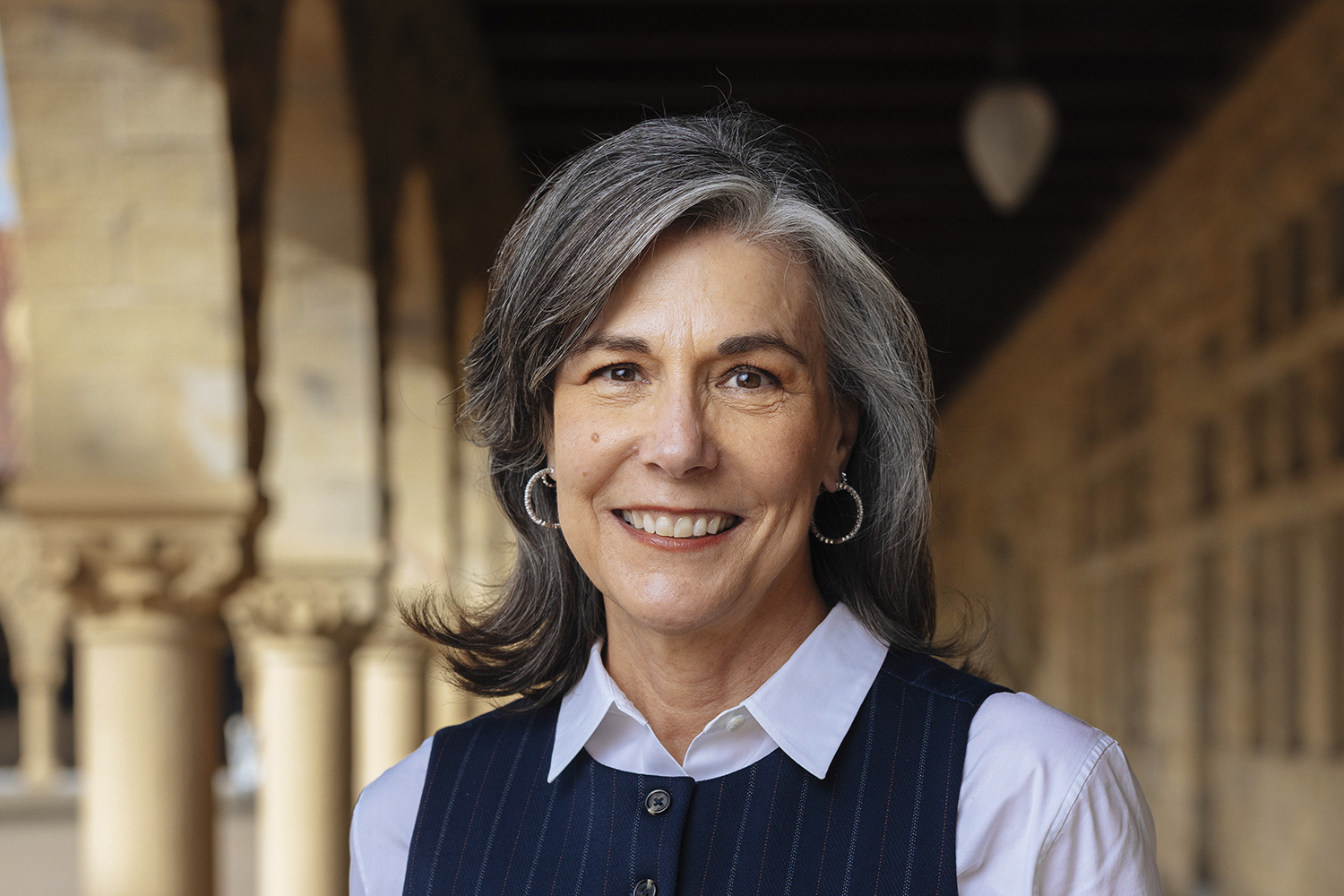
A year ago, Whitney McNair stepped into the center of planning for Stanford’s future, assuming the role of senior associate vice president and StanfordNext project executive.
McNair brings more than a dozen years of municipal government experience to StanfordNext, the university’s plan to meet its future academic, housing, transportation, sustainability, and infrastructure needs on the existing academic portion of campus lands. That background, in addition to 20 years of prior leadership roles at Stanford and in the private sector, helps her understand what the university needs to remain a global leader in research and education, and what municipalities, counties, and local residents need from Stanford in return.
StanfordNext’s planning process will shape a new General Use Permit (GUP), a long-term land use entitlement that is overseen by Santa Clara County and designed to align with state, county, and local priorities.
Prior to leading this effort, McNair was senior associate provost, Faculty Staff Housing at Stanford and served as a senior land use planner in Land, Buildings & Real Estate. Before joining the university, she co-founded a successful urban planning consulting firm.
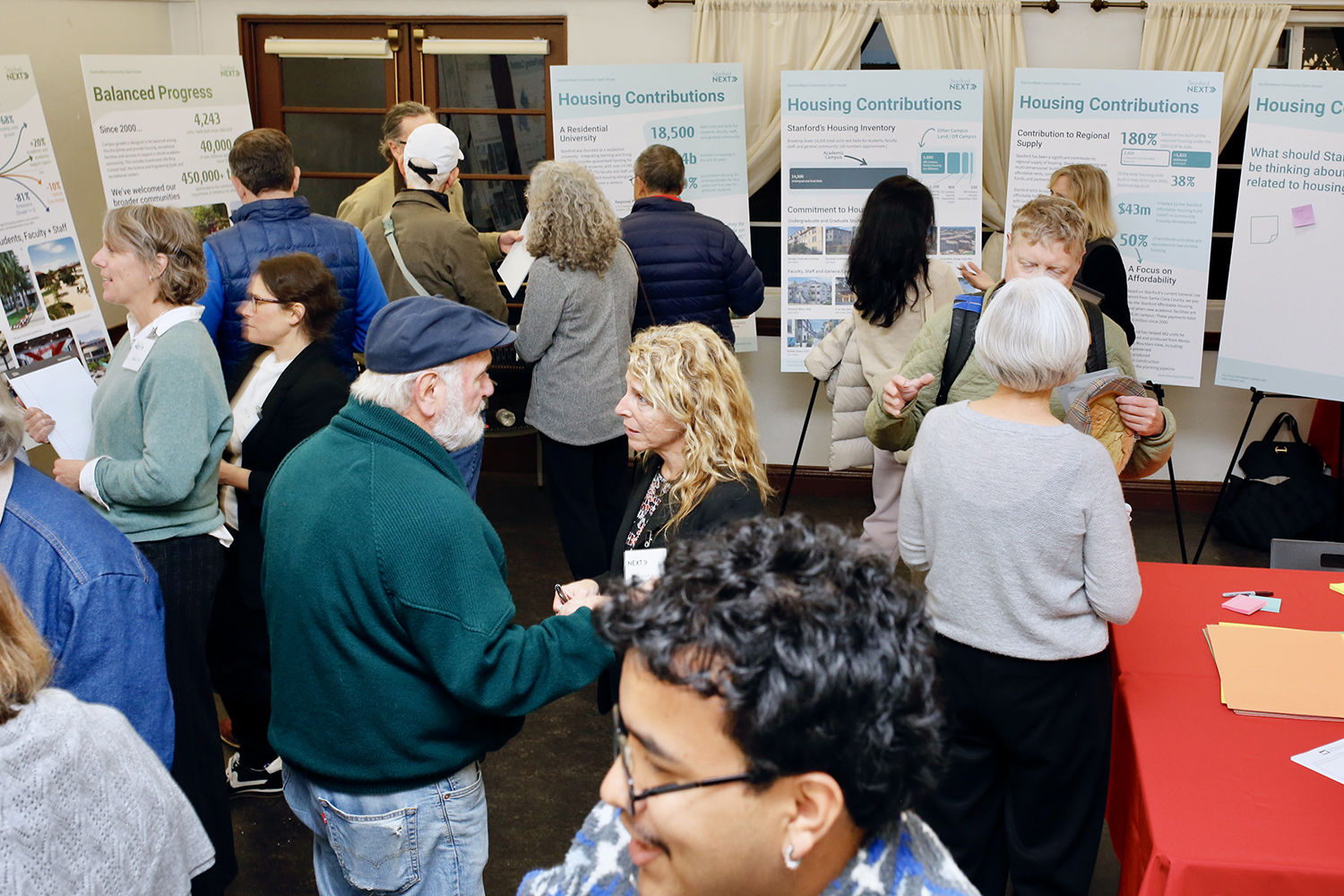
A recent StanfordNext open house in Palo Alto. | Noah Christman
Below, McNair talks about StanfordNext and how the university is engaging its neighbors and the campus community as a vital component of the effort.
Why does Stanford need additional facilities?
The university has nearly exhausted the net new academic space allowed under the current GUP, approved 25 years ago. This has prompted us to pursue StanfordNext and a new land use permit to unlock the next generation of teaching, research, student, and living spaces on the Stanford campus.
Addressing the world’s most urgent challenges requires complex research in modern facilities designed for innovation. Breakthroughs in fields like sustainability, medicine, and artificial intelligence depend on interdisciplinary collaboration. Creating state-of-the-art spaces for discovery on the Stanford campus is essential to achieving our mission of continued leadership in research, education, and innovation.
We’re also looking at how to expand access to a Stanford education, which might mean a larger undergraduate class. If we go that direction, we’d need new student housing, classrooms, and other facilities that support student life.
What are your goals for StanfordNext?
We’ve organized the work around five principles. We want Stanford to remain a place where important research and innovation happen. Growth needs to be purposeful – it has to serve the academic mission, not just happen for its own sake. We want to continue our leadership on addressing big regional challenges: housing, transportation, and sustainability. Whatever we do has to work for our neighbors, not just for us. And we’re committed to protecting the natural open spaces and historic buildings that make this campus what it is.
Stanford previously applied for a new General Use Permit in 2016 and ultimately withdrew its application a few years later when an agreement couldn’t be reached with Santa Clara County. How is that experience informing StanfordNext?
We are committed to working closely with the community to ensure Stanford’s planning is done in collaboration with our neighbors, local jurisdictions, and other important stakeholders.
Creating state-of-the-art spaces for discovery on the Stanford campus is essential to achieving our mission of continued leadership in research, education, and innovation.
We’re creating a more defined vision and scope to better articulate why we need additional academic space and housing. We are developing clearer priorities for addressing housing, transportation, and academic needs, and aligning those priorities with county and state goals. And we are focusing on early and consistent stakeholder engagement with a commitment to transparency and communication.
How are you engaging the Stanford community and campus neighbors?
The engagement process began over a year ago with meetings involving internal and external stakeholders to understand perspectives on Stanford and regional issues. More recently, we began convening the StanfordNext Advisory Council (SNAC), which brings together community leaders from various sectors to meet regularly and help inform the plan.
The initiative has now entered a more visible phase as we’ve begun offering more outreach opportunities for local residents, community groups, county and city officials, and faculty, staff, and students. The first of these was open houses in Palo Alto in December and on campus last month. We also launched a project website and will be sending newsletters at key milestones to keep stakeholders informed and engaged.
How has the first year gone?
We’ve had very positive and constructive early engagement with the community, especially at our open houses and the initial meetings of the SNAC.
There is a lot of appreciation for the university’s academic mission and its positive impact locally and globally. There’s also a deep interest in StanfordNext and how the university’s eventual plan can meet the needs of Stanford, our neighbors, and the broader region. I really appreciate the early feedback from our neighbors, which is so important in helping us shape the plan.
I’m also very grateful for the level of commitment and support from everyone on the StanfordNext project team and elsewhere across the university. This is a big undertaking that will require contributions from many partners, and the high degree of early internal engagement has provided a huge boost as we’ve launched this effort.
What’s next for the project?
We’re currently focused on engaging with and listening to the campus community, our neighbors, the County, and other stakeholders as we develop the GUP application. I encourage anyone interested in StanfordNext to visit the website and sign up to stay informed and get involved!
We will continue working on and refining the application through the spring, with a focus on creating a plan that reflects stakeholder feedback. Our goal is to finalize the application over the summer and submit it in August. That will kick off the environmental review process and County public hearings, which we anticipate will take until 2028 to complete. Our outreach activities will continue throughout the County’s review process.
Writer
Joel Berman