Consider these two actions, both illegal: hiring someone to commit murder and buying drugs. The first happens so rarely that it isn’t even accounted for in FBI crime statistics. But the second? It’s a national crisis.
Here’s the key difference between the two crimes. Nobody wants to be murdered, but drug users want their fix and will find ways to get it.
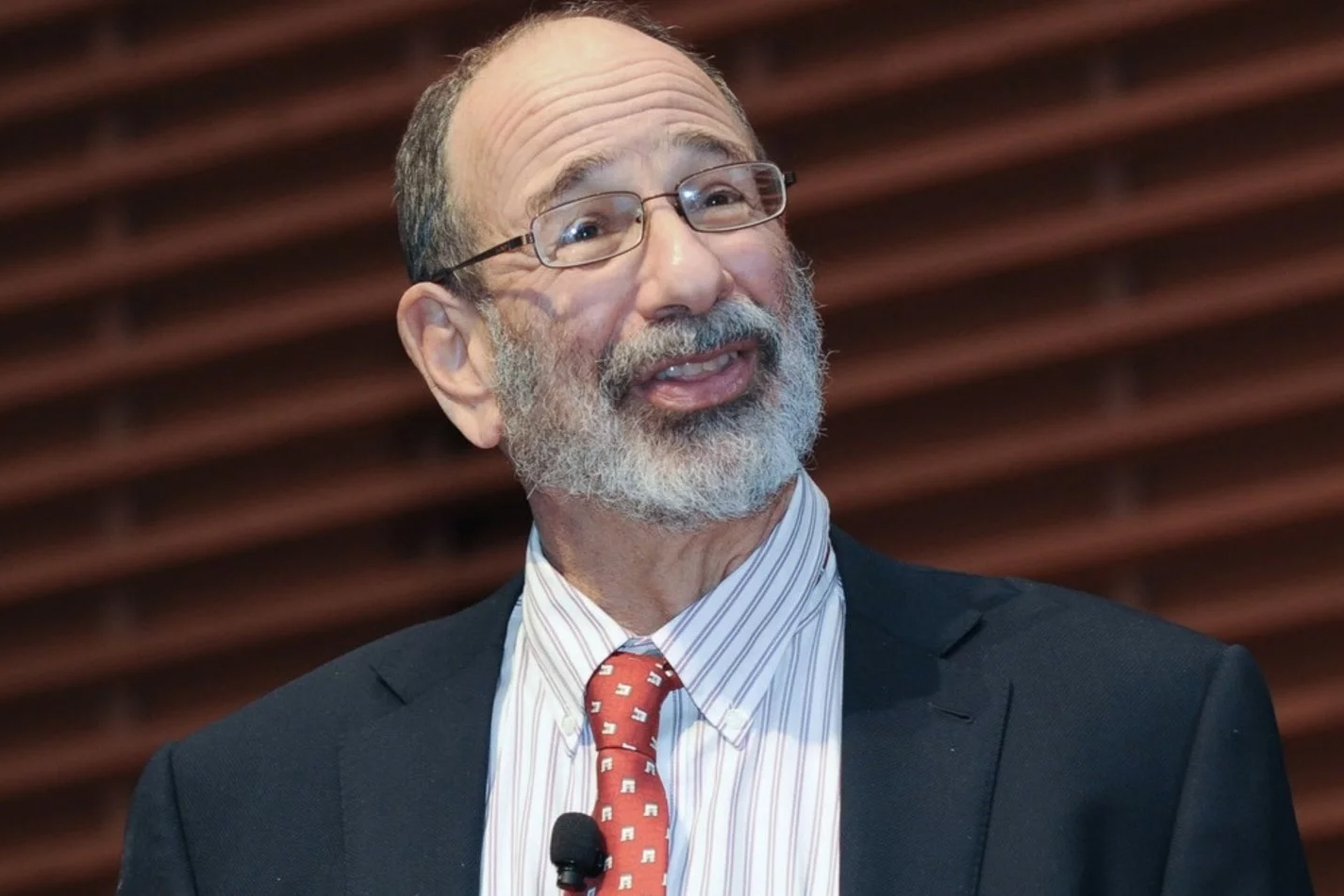
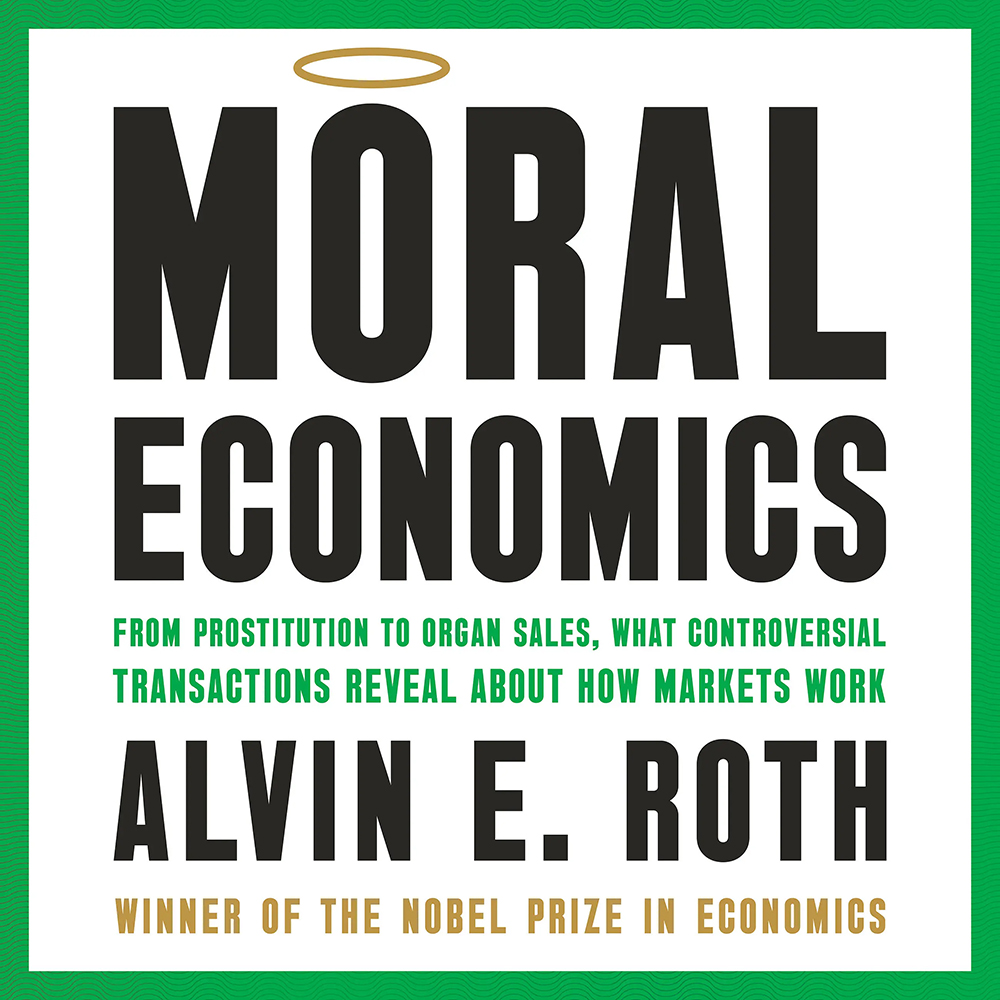
That fundamental distinction is at the heart of a new book by Stanford economist Alvin Roth, who won the Nobel Prize in 2012 for his pioneering work redesigning markets for kidney donations, job placement for early-career doctors, and public-school choice. In Moral Economics (Basic Venture), Roth tackles a thorny question: What happens when markets collide with morality?
Roth examines what he calls “repugnant transactions.” These are deals where all parties are willing participants, but others think they shouldn’t be allowed for moral or religious reasons (repugnance, Roth writes, is different from disgust). Think, for example, abortion, prostitution, surrogacy, recreational drug use, physician-assisted suicide, and same-sex marriage – all morally fraught issues that Roth explores through the lens of economics. In doing so, he sheds new light on why some market bans succeed while others fail, often spawning dangerous black markets.
“Simply banning controversial markets and then putting your fingers in your ears doesn’t mean they don’t exist and that some aren’t broken,” says Roth, the Craig and Susan McCaw Professor and professor of economics at the Stanford School of Humanities and Sciences, and a senior fellow at the Stanford Institute for Economic Policy Research (SIEPR). “I argue that we need to carefully consider regulating controversial markets in ways that acknowledge human desires and behaviors while implementing safeguards that minimize harms to vulnerable groups.”
The economics of repugnance
Roth uses a California ban on the sale of horsemeat to illustrate how repugnance shapes laws. Sixty percent of state voters passed the law in 1998, but Roth points out that criminalizing the sale of horsemeat was considered necessary because there was demand for it. As a result, one group’s repugnance became another group’s restriction.
And that becomes a recipe for a broken market that moves underground. Whether it’s prostitutes and clients, drug dealers and users, or patients and donors in kidney exchanges – the common ingredient is that the participants don’t see themselves as victims in the transaction. Roth makes the case that black markets lead to serious unintended consequences without safeguards ensuring people don’t get harmed or accountability if they are.
We need to carefully consider regulating controversial markets in ways that acknowledge human desires and behaviors while implementing safeguards that minimize harms to vulnerable groups.Alvin RothProfessor of Economics; Senior Fellow, SIEPR
Roth contrasts murder-for-hire with drug dealing to underscore the power of demand. Bans on both carry severe penalties, yet the effects of criminalizing both are vastly different. More than 100,000 deaths a year are attributed to opioid overdoses, and more than 40 percent of federal prisoners are serving drug-related sentences, according to Roth. Yet, there are only about 20,000 murders a year, almost none of which were committed by hitmen.
Roth emphasizes that he isn’t making a moral judgment about drug bans; he’s making an empirical observation about policy effectiveness, and the potentially harmful consequences, when there’s demand for repugnant transactions.
Repugnance, Roth says, isn’t static or universal. It used to be, for example, illegal to charge interest on loans and indentured servitude was once acceptable. And while surrogacy and kidney exchanges are allowed in the U.S., they are illegal in many other countries. Laws on prostitution also vary widely: Selling sex is largely banned in the U.S., but it’s legal in some form in many countries, including Germany, Japan, and Thailand.
A framework for policy analysis
Rather than prescribing what should be legal, Roth suggests the answer to the moral economics dilemma is to evaluate tradeoffs using evidence. For example, does prohibition reduce behavior? What are the unintended consequences of banning a market? And would regulations better achieve society’s goal?
Morality, money, and markets
On the podcast Econ To Go, Alvin Roth speaks with host Neale Mahoney about what happens when morality and markets collide.
Focusing on evidence over ideology, Roth says, is especially important in the U.S. today given the rollback on protections around abortion, same-sex relationships, and other controversial policies where morals are invoked. “Presidents lecturing popes didn’t used to happen,” Roth notes.
New debates will emerge, too. For example, Roth predicts that improving the market for human migration will soon be necessary as climate change drives people out of drought-ridden countries. And he says sports betting will likely become a bigger problem given the explosion in the types of wagers that can be made, which he thinks will fuel rates of gambling addiction.
“We can’t resolve these challenges using moral argumentation,” Roth says. “Just because you’re not willing to talk about the economic trade-offs in repugnant transactions, doesn’t mean there aren’t any. It just means you’re not talking about them.”
For more information
This story was originally published by the Stanford Institute for Economic Policy Research.
Writer
Krysten Crawford