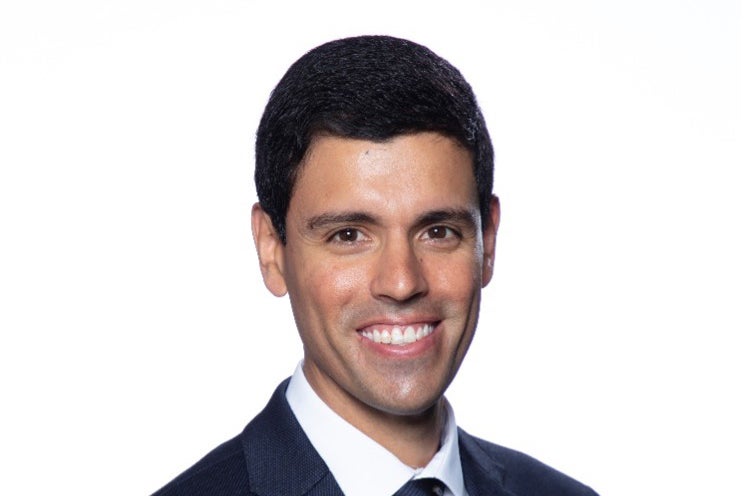
Disruptions in the Strait of Hormuz have led to surging gas prices across the U.S., and according to Stanford economist Neale Mahoney, consumers won’t see relief anytime soon because pump prices tend to shoot up like a rocket when crude oil rises but drift down like a feather when it falls.
Here, Mahoney explains how a crisis thousands of miles away affects what Americans pay at the pump – and why increased domestic oil production has not shielded consumers from these shocks.
Mahoney is the Trione Director of the Stanford Institute for Economic Policy Research.
Oil exports are booming. Why aren’t gas prices falling?
Over the past two decades, technological advancements in fracking and horizontal drilling led to a “shale revolution,” helping the U.S. transition from a major oil importer to one of the world’s largest oil exporters and making the global economy somewhat less reliant on oil from the Middle East. However, since oil is bought and sold on a global market, and the price of a barrel of crude in Texas tracks closely with the price of a barrel in Saudi Arabia or the North Sea, increased U.S. production has not significantly shielded U.S. consumers from global oil prices. Instead, in response to lower imports from the Gulf, U.S. producers have increased exports to partially fill the gap, with the benefits flowing to American oil companies and the economies of oil-producing states, not to U.S. consumers at the pump.
Can you break down what determines the price consumers see at the pump?
The price you pay at the pump is built up from four main components. Slightly more than half of what you pay covers the cost of crude oil. The rest goes to refining, which turns crude oil into gasoline; distribution and marketing, which covers getting the gasoline from refineries to your local station; and federal and state taxes. Because crude oil is the largest single component, and because it’s priced on a global market, swings in global oil prices are the main reason gas prices move up or down.
Why do prices seem to rise faster than they fall?
Economists call this pattern “rockets and feathers”: pump prices shoot up like a rocket when crude oil prices rise, but float down like a feather when crude oil prices fall. It’s a well-documented empirical regularity in gasoline markets. The leading explanation centers on consumer behavior. When gas prices are rising, drivers notice and pay close attention to where they fill up. They will drive across town to find a cheaper station. That extra shopping forces stations to compete, and price increases are quickly passed through. When gas prices are falling, drivers pay less attention and shop around less. Stations face less pressure to undercut each other, and prices drift down slowly.
Does this mean that even when the Strait of Hormuz reopens, gas prices won’t come back down quickly?
First, even when the Strait reopens, oil fields, refineries, and export facilities will all need to come back online. Some have been idled or running at reduced capacity, and others have been damaged by Iranian missiles and drones. Ramping production back up will take weeks to months. Second, even after production normalizes, global oil inventories will need to be rebuilt. Until inventories return to normal levels, supply will remain tight and prices elevated. Third, even once crude oil prices come down, retail gas prices will float down slowly because of the rocket-and-feather pattern. Putting all of this together, we and other experts project it may take a number of months once the Strait reopens before gas prices come close to where they were before the war.
For more information
Mahoney is also a George P. Shultz Fellow at SIEPR and the TG Wijaya Professor of Economics in the School of Humanities and Sciences (H&S).
Writer
Melissa De Witte