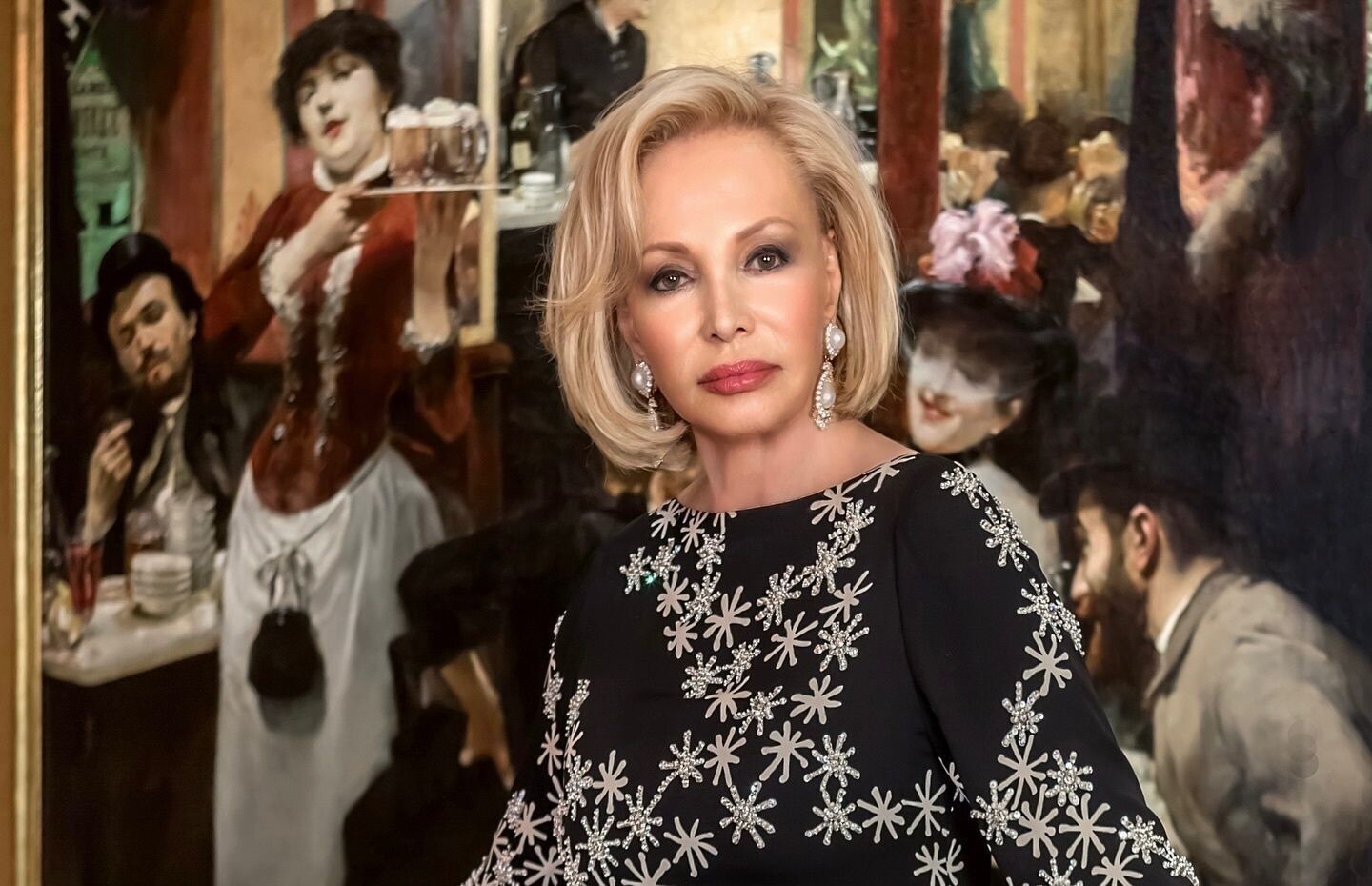
Iris Cantor, a collector and philanthropist whose contributions to museums, universities, and institutions shaped art history and scholarship, died on Feb. 22 in Palm Beach, Florida. She was 95.
Cantor’s patronage, fueled by the foundation she and her husband, Bernie, founded in 1978, reached institutions around the world, including the Metropolitan Museum of Art, the Brooklyn Museum, the Los Angeles County Museum of Art, and the Musée Rodin in Paris.
Gifts to Stanford spanning nearly three decades – including 183 sculptures by Auguste Rodin and foundational support for the Iris. and B. Gerald Cantor Center for Visual Arts – transformed the arts on campus and made the university a haven for Rodin research.
“The Cantors’ generosity made it possible for Stanford to open doors to Rodin and to the museum’s collection for millions of students, faculty, and visitors from around the world,” said Stanford University President Jonathan Levin. “Today, the Iris & B. Gerald Cantor Center for Visual Arts and its adjacent sculpture garden are the centerpiece of our flourishing campus arts district. The transformation that Iris, Bernie, and their foundation enabled over the decades is profound.”
An enduring vision for education, health care, and the arts
Iris Cantor, born Iris Bazel, grew up in Brooklyn, New York, where childhood visits to the Brooklyn Museum inspired a lifelong love of painting and sculpture. She began her career in finance on Wall Street, where she met her husband, B. Gerald Cantor, founder of the securities brokerage Cantor Fitzgerald, Inc.
She became a partner in her husband’s “magnificent obsession”: the art of French sculptor Auguste Rodin (1840–1917). Together, they assembled one of the largest private collections of his work and dedicated themselves to sharing it with the public. In 1978, they established the Iris and B. Gerald Cantor Foundation, which has donated more than 430 Rodin works to dozens of institutions worldwide, endowed galleries and sculpture gardens, funded research and publications, and organized major exhibitions. After Bernie Cantor’s death in 1996, Iris assumed the role of chairman and president of the Cantor Foundation, and steward of its legacy.
“One of the guiding principles I embraced alongside Bernie is that fine art should be accessible to the public and, to the greatest extent possible, part of our daily lives,” she said in a 2022 interview with the Metropolitan Museum of Art.
The Cantors’ prolific donations and long-term loans of Rodin sculptures to Stanford include such works as The Thinker, The Gates of Hell, Monumental Head of Balzac, and The Three Shades, as well as related objects and ephemera. The gifts made Stanford a key center for Rodin scholarship, first led by the late art Professor Albert Elsen, and inspired cross-disciplinary interest and collaboration. In 2014, James Chang, a Stanford professor of plastic and reconstructive surgery, collaborated with the Cantor Arts Center on an exhibit about the various maladies evident in the sculptures’ hands, from Charcot-Marie-Tooth disease to a ganglion cyst.
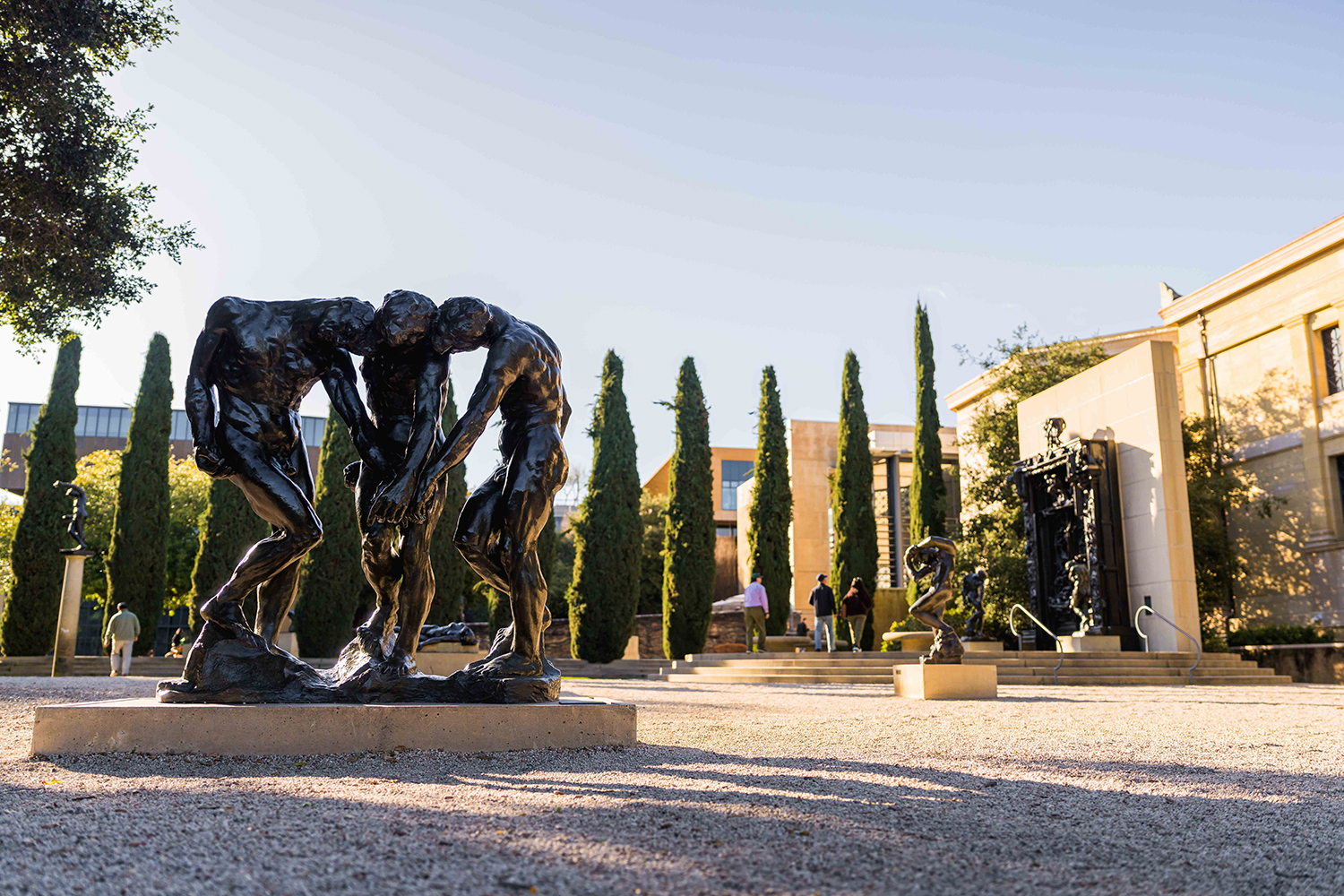
The Rodin Sculpture Garden at Stanford contains 20 monumental bronzes, including many of Rodin’s most celebrated works. | Harrison Truong
In 1989, the Loma Prieta earthquake damaged the Stanford University Art Museum, forcing it to close. The Cantors donated $10 million toward its renovation and expansion, which included a new 40,000-square-foot wing. The museum reopened in 1999 as the Iris & B. Gerald Cantor Center for Visual Arts.
“Iris Cantor’s philanthropic vision and stewardship of the legacy of Auguste Rodin have made a profound and indelible impression at Stanford,” said Veronica Roberts, the John and Jill Freidenrich Director of the Cantor Arts Center. “The Rodin collection remains one of the crown jewels of the museum and an enduring source of wonder and inspiration for the public.”
Having lost a sister to breast cancer, Cantor was also passionate about women’s health care. She established women’s health programs and centers at the University of California, Los Angeles, including a breast imaging center that integrated research and education with primary care.
Centerpiece of the Stanford arts district
On any given day in the Rodin Sculpture Garden at Stanford, students and visitors can be observed sketching sculptures that stand close enough to touch. Established in 1985 and modeled after the Bagatelle Gardens in Paris, the 1-acre garden contains 20 monumental bronzes, including many of Rodin’s most celebrated works. Anchoring its eastern end is The Gates of Hell, a massive bronze cast in 1981 using the lost-wax process favored by Rodin.
Iris Cantor co-produced a documentary chronicling the four-year casting process at the Coubertin Foundry in Saint-Rémy-lès-Chevreuse, France; the 53-minute film, Rodin: The Gates of Hell, was recognized with several awards. The film advanced Rodin scholarship and also had a broader impact on art history, said Patrick Crowley, the Cantor Art Center’s associate curator of European art, and the museum continues to screen it for educational purposes.
“Iris Cantor understood the importance of elucidating a fiendishly complex process like bronze casting for museum goers. So much of it is invisible – it’s happening inside a hot furnace and it’s a very specific alloy, and there’s something alchemical and almost magical about it,” he said. “What’s special about the film is that it walks the viewer through that process while highlighting the drama surrounding the pour, where anything can go wrong despite the best-laid plans. And so much of what’s interesting about Rodin is how his choices, like not sanding down the unfinished seams in his work, make his process visible.”
Cantor held honorary doctorates in fine arts from College of the Holy Cross and Laguna College of Art+Design, as well as an honorary fine arts degree from Brooklyn’s Pratt Institute. In 1985, she and her husband were awarded the National Medal of Arts by President Bill Clinton.
For more information
Learn more about Iris Cantor’s life and legacy, as well as the work of the Cantor Foundation, at cantorfoundation.org.
Writer
Charity Ferreira