In brief
- Young Stanford entrepreneurs won $50,000 to develop an innovative gene therapy approach for facioscapulohumeral muscular dystrophy, a rare disease with no current cure.
- Team leader Heloise Hoffmann, who has the disease herself, is driven by a personal mission to find treatments for the FSHD community.
- Stanford's Undergraduate Entrepreneurship Program provides mentorship, funding, and lab access to help turn student biotech ideas into potential therapies.
Heloise Hoffmann, ’26, is a bioengineering major and self-described optimist who doesn’t back away from a challenge.
“If you have a dream, what is stopping you from going out and giving it your best shot to make it happen – especially if it’s a dream that you really believe in and that you think other people should believe in too?” said Hoffmann. “If you can dream it, you can do it!”
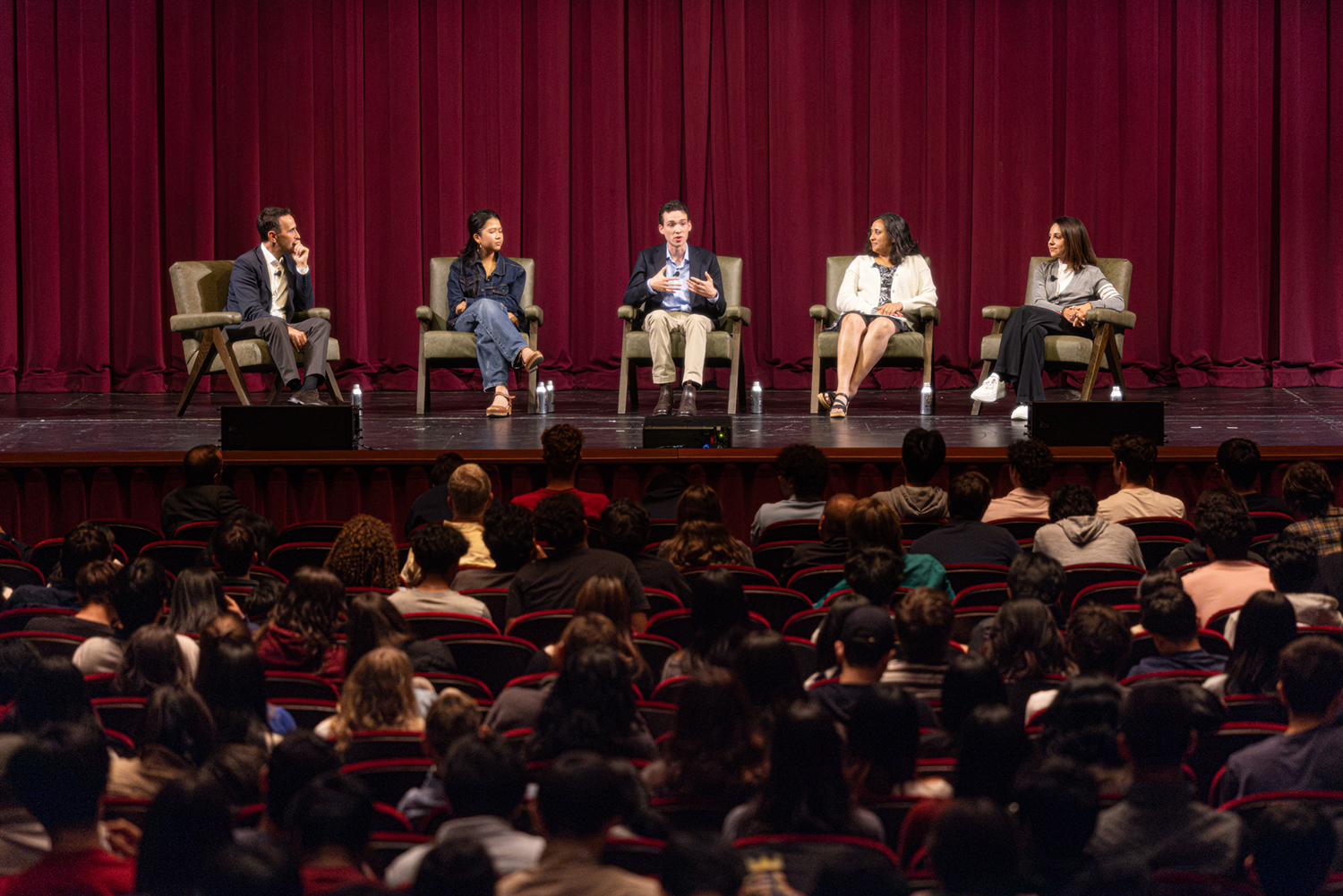
She has embraced that outlook to the fullest during her time as an undergraduate. In January 2025, Hoffmann and her teammates won the Sarafan ChEM-H Undergraduate Entrepreneurship Program (UEP) pitch night and have been working hard to turn their proposed gene therapy from a dream into reality.
Through the UEP, undergraduates polish a biotech idea with expert coaching from volunteer Stanford faculty, entrepreneurs, and venture capitalists. At the end of the months-long program, each team pitches their idea to a mock panel of potential investors. The winning team receives $50,000 to carry out their proposal, using the advanced scientific instrumentation and expertise within the Nucleus and Innovative Medicines Accelerator (IMA) at Sarafan ChEM-H.
The UEP is led by Mark Smith, former industry chemist and director of medicinal chemistry at the Nucleus and IMA. Now in his tenth year leading the program, Smith has seen a variety of students come through his doors and knows talent when he sees it. Watching the winning team grow and develop their technology in the lab over the past year has been especially inspiring for him.
“I knew from our first meeting that this was a winning team,” said Smith. “Heloise is amazing. She knows all the scientific literature and operates at the level of a graduate student. And yet, she is so humble and genuine that you can’t help but get behind her mission. I can’t imagine how accomplished she’ll be 5 or 10 years from now.”
Turning a dream into an actionable plan
For Hoffmann, that mission is a personal one that is close to her heart. She has a rare genetic disease called facioscapulohumeral muscular dystrophy (FSHD), a disorder that causes progressive muscle weakening and degeneration and for which there is no cure.
“Growing up, I had this fascination with nature. And what better way to understand nature than science? But, I had a lot of different interests, too. I think the diagnosis of FSHD jolted me into action and made me realize that I could use science to make a difference in this community that means so much to me. There’s no better motivation than chasing my cure and working alongside others to do so,” said Hoffmann.
Once at Stanford, Hoffmann quickly got involved in FSHD research. She joined iGEM, one of the largest synthetic biology competitions for undergraduates. She and her team of fellow undergraduates worked over the summer to design and build a project from scratch, a hands-on research experience that contributed to their growth as independent scientists.
There’s no better motivation than chasing my cure and working alongside others to do so.Heloise Hoffmann, ’26
“When you’re in the lab, time stops,” said Alice Finkelstein, ’27, Hoffmann’s friend and teammate in iGEM and the UEP. “It’s incredible to have the opportunity to get lost in the moment and explore and carry out our plans. Then, suddenly, you step outside, and it’s dark!”
After iGEM, Hoffmann and Finkelstein applied to the UEP, an experience that brought a translational component to their work and taught them about the entrepreneurial process.
“One of the biggest takeaways was learning how to convey our message in a way that other people could understand and resonate with,” said Finkelstein. “It’s a completely different thing to learn how to turn your idea into an actionable plan and pinpoint the key experiments you need to show your value – that this is an idea worth believing in.”
Making progress toward a new gene therapy
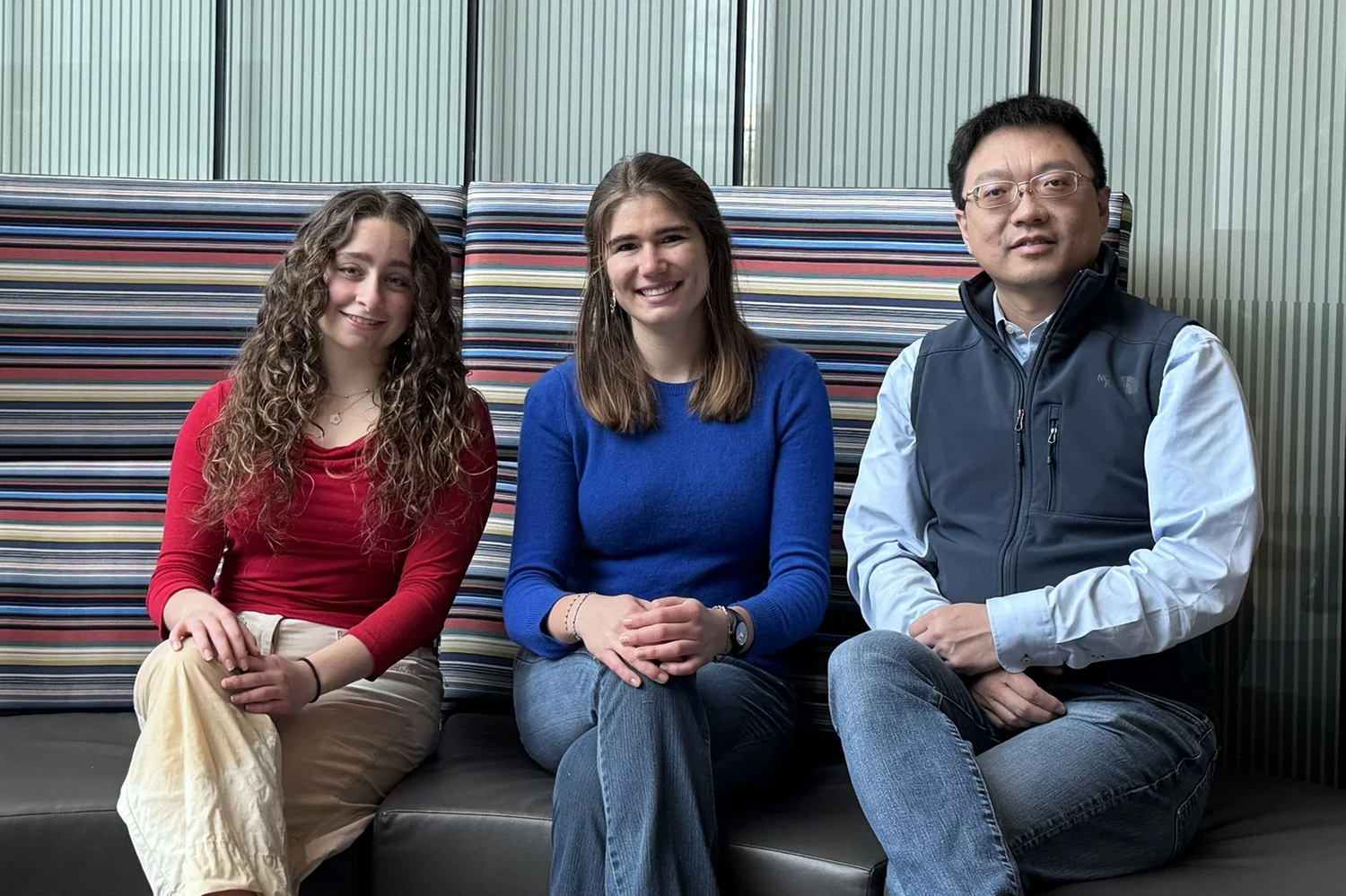
Since Hoffmann, Finkelstein, and teammate Michael Liu, ’27, won last year’s UEP competition, they have been working hard in the lab to develop preliminary data for their technology. They are pursuing a gene therapy approach and have had some promising preliminary results.
The genetic basis for FSHD is a transcription factor called DUX4, which is active during early embryonic development but then is turned off in healthy cells. In FSHD patients, the off-switch malfunctions, causing DUX4 to activate a cascade of genes that should stay silent in adulthood. Their proposed solution is simple. They asked, what if DUX4 could be engineered to turn its target genes off instead of on?
On the protein engineering side, they are currently mentored by Stanley Qi, associate professor of bioengineering and expert in genome engineering technologies. In parallel, they are working with Fabrizia Urbinati, director of the cell and gene therapies group at the IMA. She is helping the team pilot a delivery system that will specifically bring their therapeutic cargo to skeletal muscle.
“Heloise and Alice are doing more than just building a tool,” said Qi. “Their strategy to safely reprogram a pathological cellular state through rational engineering is precisely the kind of approach we need to move the needle on rare diseases like FSHD. It has been a privilege to mentor Heloise and Alice as they navigate the complexities of translating an idea into a therapeutic candidate. Heloise’s personal mission brings a level of focus and urgency to the lab that is truly inspiring, and the UEP provides the perfect ecosystem to turn that individual drive into a viable path toward a cure.”

After Stanford, both Hoffmann and Finkelstein are planning to pursue an MD/PhD path as physician-scientists. In the meantime, they are trying to make as much progress as possible on their project.
“This project, made possible in huge part by the UEP, has been a defining characteristic of my journey at Stanford – not just academically and professionally, but also personally, and has enabled me to feel like I’m doing all I can to fight this disease,” said Hoffmann. “At the end of the day, it is such a privilege to have this funding, infrastructure, support, and mentorship from some of the key players in the field, and it would be a shame not to take advantage of that and make a real difference for FSHD.”
For more information
Stanley Qi is also an Institute Scholar at Sarafan ChEM-H and a member of Bio-X, the Cardiovascular Institute, the Maternal and Child Health Research Institute, the Stanford Cancer Institute, and the Wu Tsai Neurosciences Institute.
This story was originally published by Sarafan ChEM-H.
Writer
Anna Koster