Sometimes the worst part of getting sick isn’t the runny nose, the headaches, or the grumpy stomach – it’s the fatigue, that hazy feeling that you probably don’t have the energy to make a cup of coffee, let alone make it to work.
Most of the time, that fatigue passes, but for some people it can last months or years – a stark reality highlighted by the emergence of long COVID.
But why we get fatigued – and why that fatigue can last long after an infection is gone – remains unclear. In large part, that’s because no one is quite sure how our brains sense we’re ill in the first place. Answering these questions requires wide-ranging collaboration between experts in neurobiology, immunology, pathology, and more, disciplines that all too often remain within traditional departmental silos.
Now, the Wu Tsai Neurosciences Institute at Stanford has convened a cross-disciplinary research team to tackle this problem – alongside four other major questions in the field – as part of its Big Ideas in Neuroscience Program.
Since 2014, the Big Ideas program has been challenging Stanford researchers from wide-ranging scientific backgrounds to come together, break down barriers, and tackle some of the biggest questions in neuroscience. Big Ideas projects have covered everything from brain development to addiction to the possibility of making our brains young again – an endeavor that laid the groundwork for the Knight Initiative for Brain Resilience housed at Wu Tsai Neuro.
For its third round of Big Ideas projects, Wu Tsai Neuro is supporting five new teams with equally ambitious plans for the field.
Three of these projects reflect a growing emphasis on neuroscience questions that explore issues relevant to our daily lives – not only how sickness affects our behavior, but also how we decipher and produce language and how pregnancy shapes and is shaped by the brain. Other projects continue the tradition of applying interdisciplinary expertise to devise new technologies to accelerate neuroscientific research, including one team that will engineer genetic tools to make the living mouse brain clear as glass and another team that will use genetics and artificial intelligence to better understand how the brain responds to stress.
“I’m proud that we’re funding such a wide spectrum of research,” said Kang Shen, the Vincent V.C. Woo Director of the Wu Tsai Neurosciences Institute, the Frank Lee and Carol Hall Professor, a professor of biology in the Stanford School of Humanities and Sciences, and a professor of pathology in the Stanford School of Medicine. “These projects include faculty from ten departments in Stanford Humanities and Sciences, Medicine, and Engineering. It’s a testament to the breadth of faculty expertise Wu Tsai Neuro covers. That’s the essence of the Institute.”
Life and how we live it
A central goal of the Wu Tsai Neurosciences Institute is to use our growing knowledge of how the brain gives rise to mental life and behavior to promote human well-being. Three of this round’s Big Ideas projects will tackle that goal head-on.
The Stanford Neuro-Pregnancy Initiative
One such effort will study how the brain and body interact during pregnancy, something that’s received relatively little attention until now.
Indeed, researchers don’t know much about how the brain changes during pregnancy or how that might be connected to other physiological or behavioral changes, said Nirao Shah, a professor of psychiatry and behavioral sciences and of neurobiology at Stanford Medicine who spearheaded the effort.
Shah, an expert in sex differences in behavior, said the team was motivated by links they’d seen between gene expression and behavior over the course of the ovulatory cycle in mice. That got them wondering whether there were similar links in pregnancy, “but the more we poked the research literature, the more we realized that not much is known about how the brain coordinates pregnancy,” Shah said.
Shah's colleague Longzhi Tan agreed. “This has barely been measured before,” said Tan, an assistant professor of neurobiology at Stanford Medicine.
To learn more, Shah will work with Tan, who studies the genomic structure and function of brain cells, and Katrin Svensson, an associate professor of pathology whose work focuses on circulating hormones that affect our physiology and metabolism.
By combining their diverse expertise, the researchers hope to pave the way for therapeutics that could treat a wide variety of pregnancy-related concerns, such as miscarriage, severe nausea, preeclampsia, and post-partum depression.
A new precision neuroscience of language
A second team will tackle something so commonplace most of us don’t think about it: language.
“My dream is that we’re going to have two outcomes from this,” said Laura Gwilliams, a faculty scholar at Wu Tsai Neuro and Stanford Data Science and an assistant professor of psychology in Stanford’s School of Humanities and Sciences. “One is that we’re going to be able to provide, for the first time, a comprehensive theory of language neuroscience, from the single neuron level to the whole-brain level.
“The second is the translational outcome. We want to use our basic science results to guide optimal implants for brain-computer interfaces so that patients who can’t speak can communicate again,” Gwilliams said.
There’s a critical need for both pieces. Around a quarter of a million people have a communication disorder stemming from neurodegenerative disease, strokes, cerebral palsy, and more. But to understand and treat those disorders, researchers need to bridge gaps between the different scales at which they study language.
“The neural code for language is implemented at the single-cell level all the way up to brain-wide circuits, requiring neural measurements that operate at each commensurate scale,” said Gwilliams.
To link those together, Gwilliams, who studies speech comprehension, is teaming up with brain-computer interface experts Jaimie Henderson, the John and Jene Blume - Robert and Ruth Halperin Professor and a professor of neurosurgery at Stanford Medicine, and Frank Willet, an assistant professor of neurosurgery at Stanford Medicine, as well as Cory Shain, an assistant professor of linguistics in Stanford Humanities and Sciences, who uses neuroimaging and computational methods to study language in the brain. Together, this Big Ideas team will conduct experiments using multiple techniques simultaneously, which will help them integrate what’s known about language processing across scales. That could, in turn, aid clinical efforts to restore speech to people with paralysis or other conditions.
Immunomodulation of gut-brain interactions
Then there’s that fatigue project.
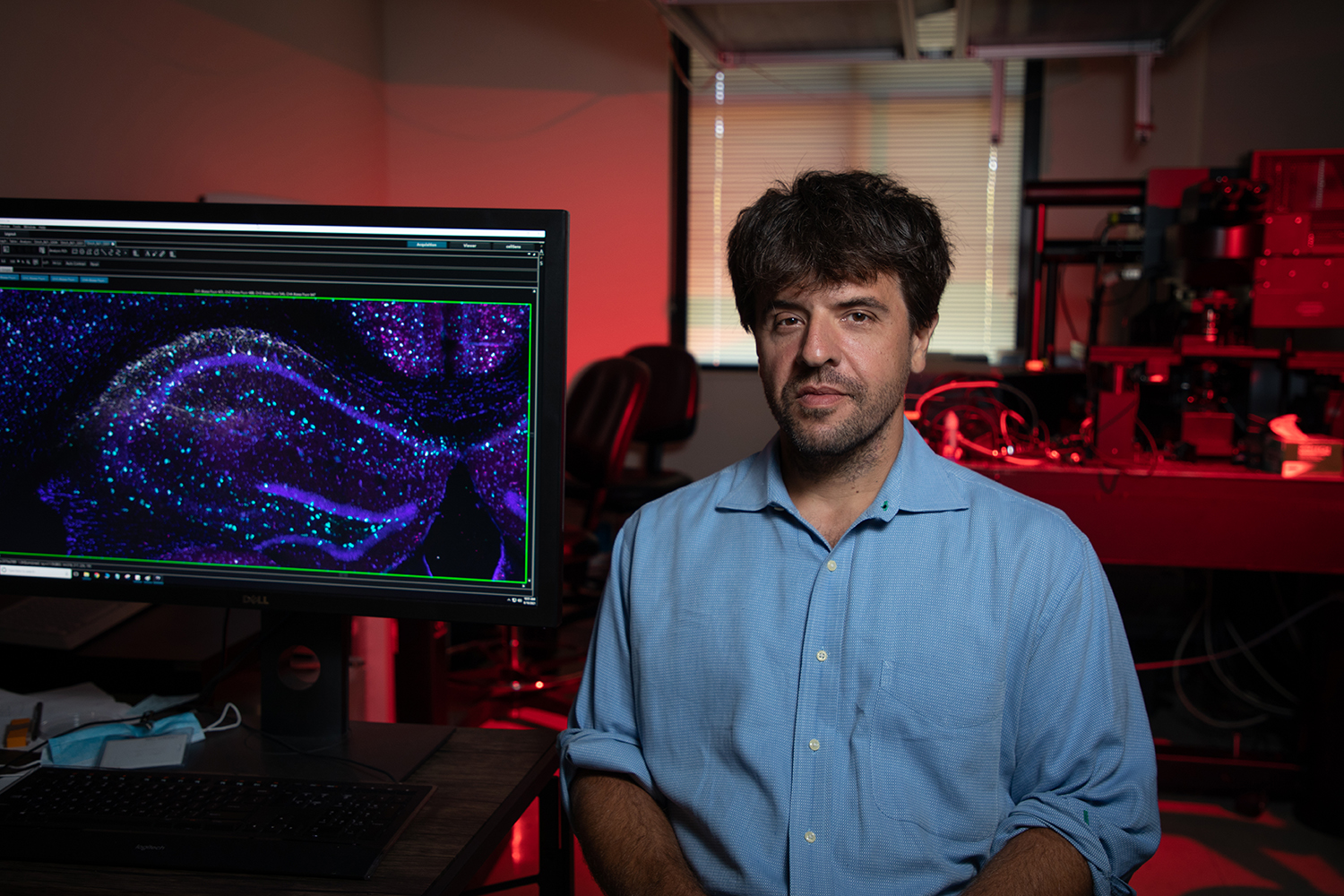
The idea originated at the 2024 Wu Tsai Neuro retreat, during which the institute challenged the research community to identify major open questions in the field that a cross-disciplinary Big Ideas project could address. One brainstorming session brought together Julia Kaltschmidt, a Wu Tsai Neuro Faculty Scholar and professor of neurosurgery at Stanford Medicine, who studies neural circuits of the gut, and Luis de Lecea, a professor of psychiatry and behavioral sciences at Stanford Medicine, who specializes in the brain circuits of sleep and wakefulness. As they got talking, they realized there were potential connections between sleep, sickness, and the gut that were worth investigating.
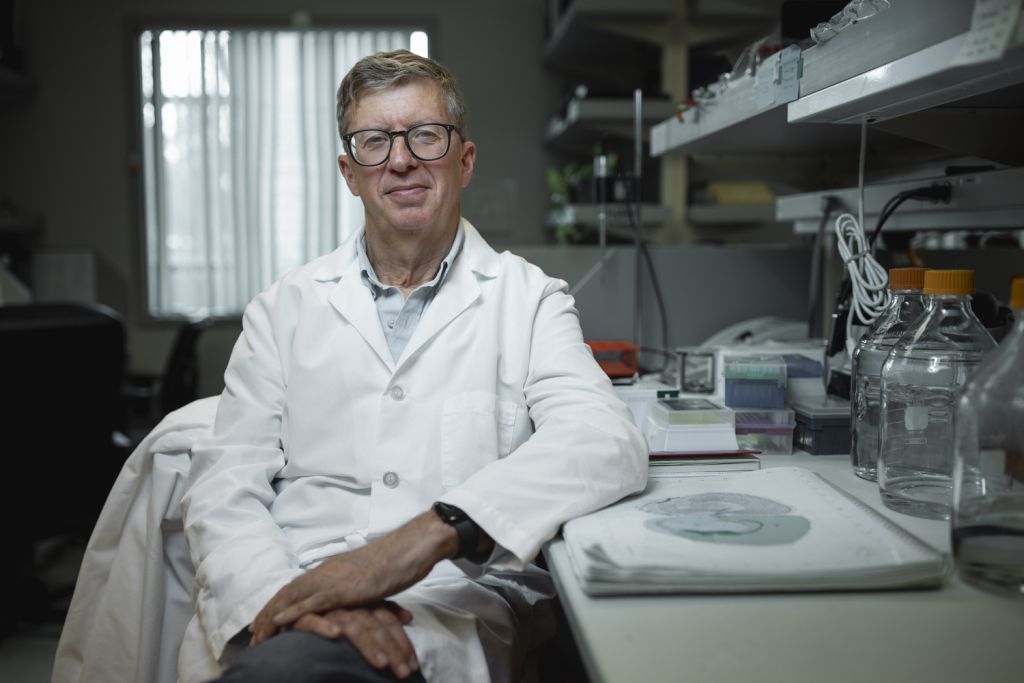
When the institute sent out its call for new Big Ideas in Neuroscience proposals, “Luis and I emailed each other at the exact same time,” said Kaltschmidt.
She and de Lecea recruited Christoph Thaiss, a newly hired assistant professor of pathology at Stanford Medicine and core investigator at the Arc Institute in Palo Alto, who specializes in gut–brain interactions. Together they’ll apply their knowledge of disease, sensory systems, sleep, and the gut’s nervous system to better understand how illness shapes our behavior – including sleep – and lay the groundwork for potential treatments.
“If you understand what the mechanism is – what the molecules are that are involved in sickness and fatigue – maybe you can harness those and find a cure,” Kaltschmidt said.
New horizons
This year’s round of Big Ideas will also back two ambitious efforts to develop cutting-edge tools to expand the frontiers of neuroscience.
In vivo functional genomics and foundational virtual models of brain homeostasis and resilience
One team aims to tackle the mystery of brain cells’ remarkable resilience to stress – and how it begins to fail with age – using cross-species genomics and AI.
Unlike many parts of your body, in which cells die off regularly and are replaced, you are born with all the brain cells you’ll ever need. This means brain cells need to be tough and resilient to all kinds of stressors. Researchers have long puzzled over how the brain accomplishes this at a molecular level and how these mechanisms of resilience may start to fail with age, a key suspect in the rise of neurodegenerative disease and cognitive decline.
Currently, no one has quite the right tools to address this problem, but a Big Ideas team co-sponsored by the Knight Initiative for Brain Resilience comprising neurobiologist Tom Clandinin, developmental biologist Will Allen, and geneticist Xiaojie Qiu, all based at Stanford Medicine, are taking on the challenge.
They’re working to adapt genetic methods typically used in mice into fruit flies, in which genetic screens and other methods can be carried out much more quickly owing to the flies’ short lifespan. Then, they’ll study which genes might affect the fly brains’ stress responses and build artificial intelligence models to translate their results back into mice. Eventually, they hope to translate their results into humans to better understand the brain’s response to stress.
“Stressors are an inevitable part of life,” said Clandinin, the Shooter Family Professor and a professor of neurobiology at Stanford Medicine. “We’d like to understand how they affect the brain” and perhaps even identify genes that might protect the brain against stress and disease.
Genetically encoded, nature-inspired transparency in the mammalian brain
Finally, in perhaps the most “future is now” project of the bunch, scientists are working to make live mouse brains transparent.
To do so, materials scientist Guosong Hong, a Wu Tsai Neuro Faculty Scholar, is teaming up with biologists Xiaoke Chen and Lauren O’Connell of the Stanford School of Humanities and Sciences to develop genetic tools to turn what sounds like science fiction into reality.
“There are lots of applications that use light to study the brain, including calcium and voltage imaging and optogenetics tools,” said Hong, an assistant professor of materials science and engineering at Stanford Engineering, “but light can’t penetrate deeply enough into the tissues.”
As a result, researchers currently rely on invasive methods that cause both acute and long-term tissue damage to animals. “Our long-term goal is to obtain a four-dimensional map of brain activity – with the first three dimensions representing space and the fourth representing time – at optical resolution without the need for invasive approaches,” Hong said.
Doing so will require O’Connell’s knowledge of naturally see-through glass frogs, Chen’s experience building molecular toolkits to genetically engineer the brain, and Hong’s engineering skills and familiarity with turning skin and muscles transparent in live animals.

The sum is greater than the parts
None of those projects would be possible, the researchers said, without the Big Ideas program encouraging researchers to take on ambitious problems and work across schools and departments to solve them.
“None of us could do this alone, but maybe together we can figure something out,” said Svensson, of the neuro-pregnancy project.
Thaiss, part of the sickness and fatigue project, echoed that perspective. “Julia has developed many techniques for studying the gut nervous system, Luis has been studying the brain circuitry of sleep for a long time, and my lab has been developing tools for studying sensory neurons in the gut,” Thaiss said. “Each of those would be interesting standalone projects, but now we’re trying to integrate everything. The advantage is that we can find connections between these different points that would otherwise be hard to find.”
Without Big Ideas, the effort to make transparent brains – and the science that could come out of that – might not have gotten off the ground, said Chen, an associate professor of biology at Stanford Humanities and Sciences. “We were always talking about finding an opportunity to work together, and that’s why this kind of internal funding mechanism is so critical. It gives us a way to pursue some crazy ideas that might have a major impact.”
For more information
This story was originally published by Wu Tsai Neurosciences Institute.
Writer
Nathan Collins