In brief
- Stanford established the Office of Community Engagement in 2020 to strengthen collaboration between Stanford and neighboring communities.
- The office has supported collaborations between researchers and community partners and has worked with local organizations to tackle health, education, and sustainability challenges.
- By the numbers: OCE has helped Stanford invest in 79 scholar-led engagement projects and mapped over 160 campus Community Engagement Hubs working with partners worldwide.
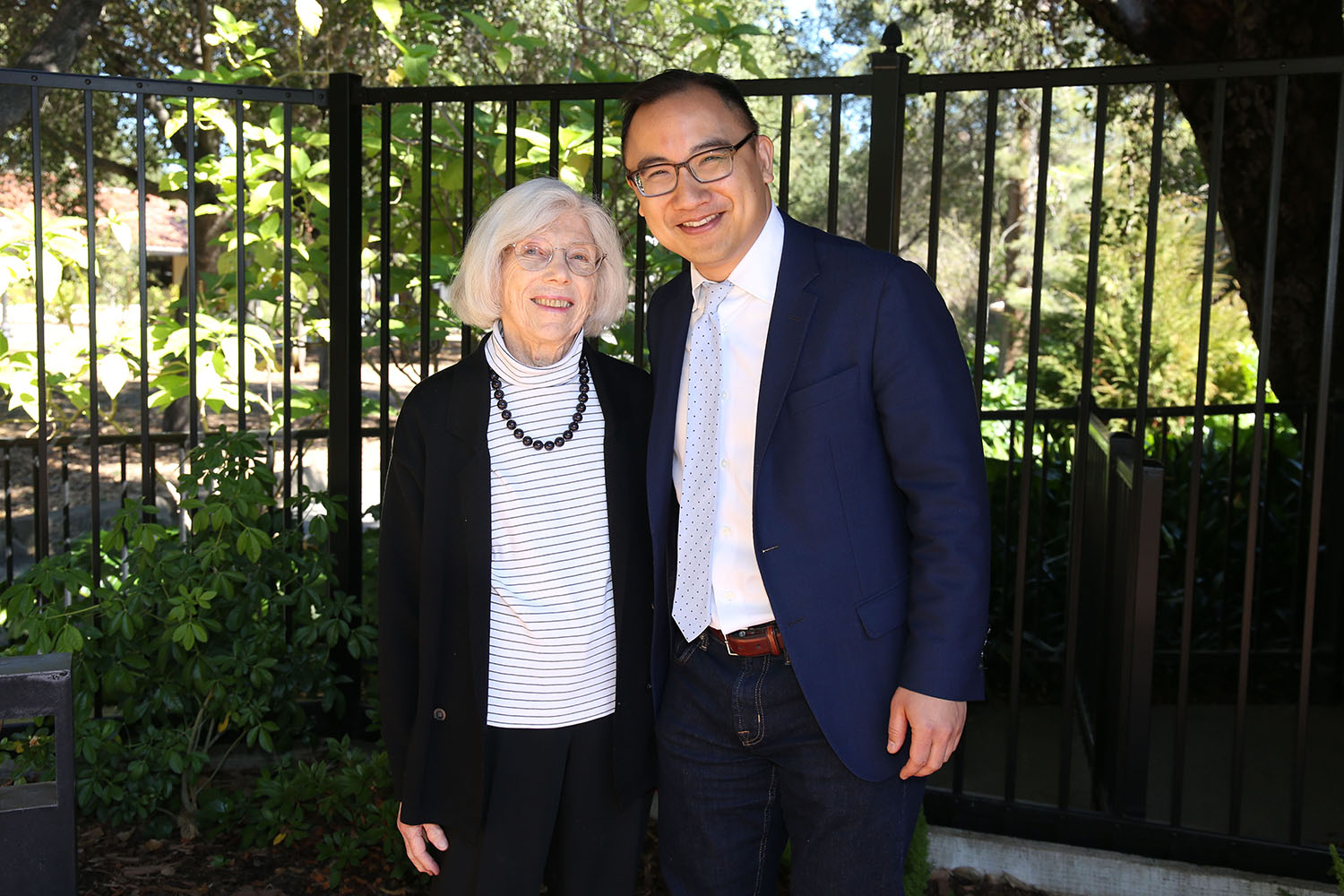
Promoting public welfare and being of service to humanity have been core Stanford values since the university’s founding, and ones carried forward by generations of scholars. Since its launch in 2020, the Office of Community Engagement has worked to extend Stanford’s education and research mission by supporting connections with communities beyond campus.
Martin Shell, Stanford’s vice president and chief external relations officer, oversaw the creation of the office and said its work has strengthened ties that have existed for decades while helping establish transformative new ones.
“The streets that connect Stanford with our neighbors run both ways, and the Office of Community Engagement has been instrumental both in fostering connections beyond campus and creating a warm, welcoming atmosphere for our visitors,” he said. “While Stanford has an array of units and functions across campus, for many of our neighbors, we are simply viewed as ‘Stanford.’ OCE has helped foster connections that build upon the depth, strength, complexity, and mission of the university.”
Community engagement hubs
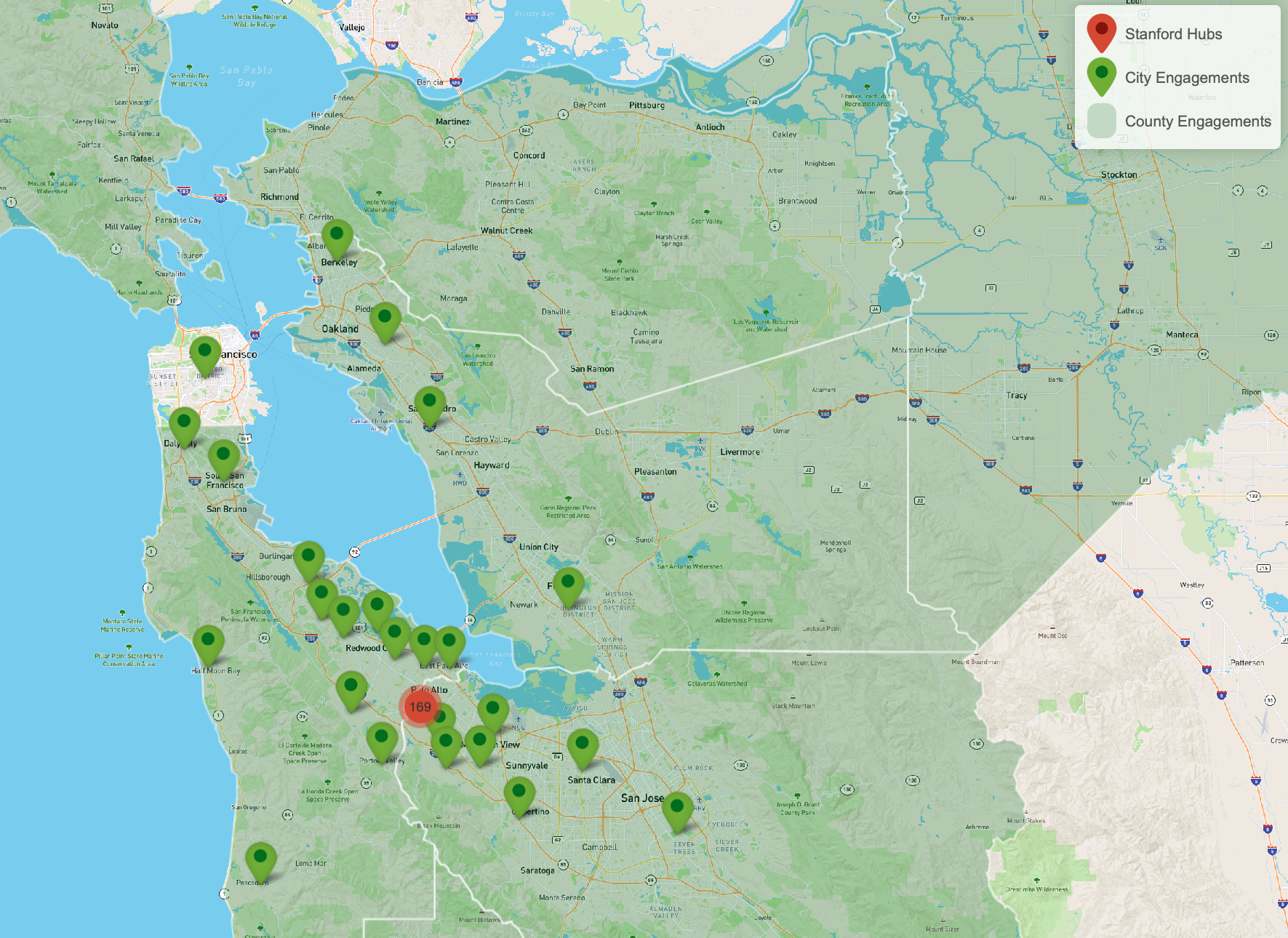
See a map of Stanford’s more than 165 engagement hubs and 300 global collaborations.
In her role as deputy city manager of the City of Palo Alto, Chantal Gaines serves as a community advisor to the office. “OCE has been a bridge for the city,” she said. “We often have interactions with Stanford, but OCE provides the opportunity for us to talk about specific community needs and where to connect people and organizations with resources on campus that advance our collective community goals.“
OCE supports efforts across campus to elevate engagement, including the Cardinal at Work Cares effort to encourage staff service; the annual Veterans Day celebration with the City of Palo Alto; and Stanford's annual Democracy Day, a student-led effort guided by the Democracy Hub and Haas Center for Public Service. The office also functions as a ‘front door to Stanford,’ fielding more than 450 inquiries a year from government delegations, schools, museums, and other public organizations interested in engaging with the university.
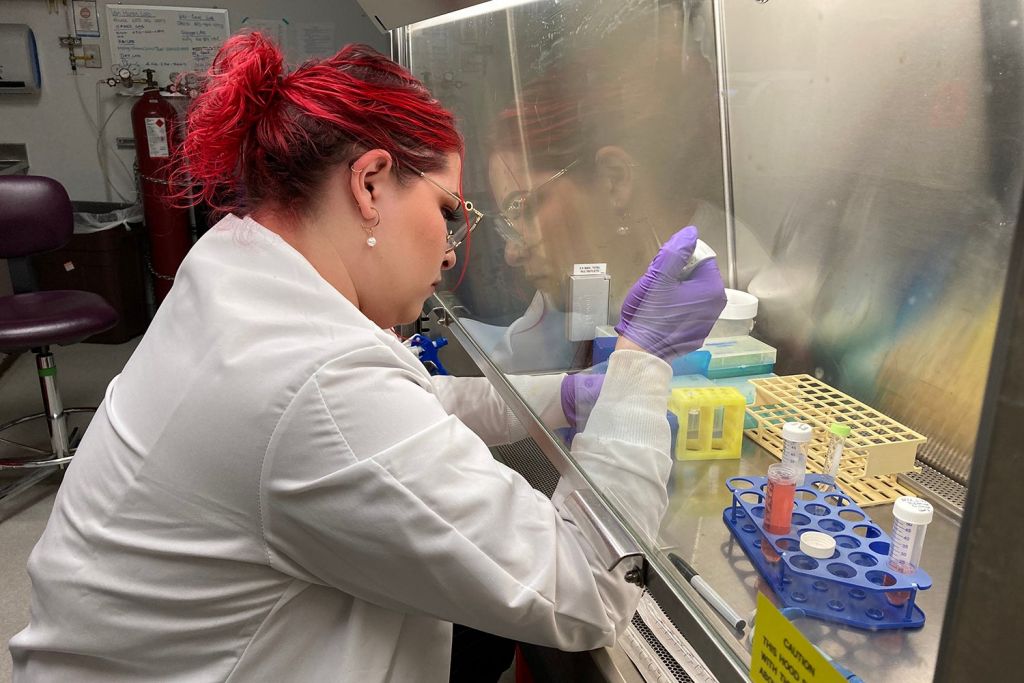
De Anza College student Isabel Caballero Teixeira interned with the Wu Tsai Neurosciences Institute’s Neuroscience Undergraduate Research Opportunity (NeURO), a program supported in part by funding from the Office of Community Engagement. | Lisa Chung
Solving problems together
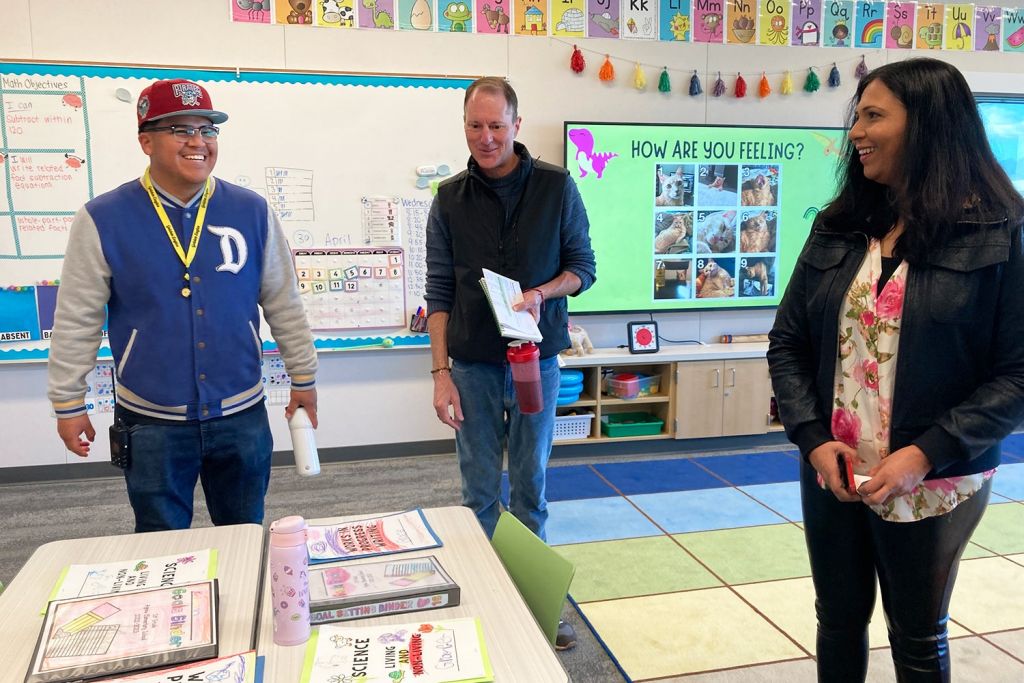
The core of OCE’s work is supporting collaborations between Stanford scholars and local organizations for the purpose of addressing needs in the community. Megan Swezey Fogarty, senior associate vice president for community engagement, has led the office since its inception and spent more than three decades working in civic engagement roles on and off campus. “OCE has a superpower: we're a connector,” she said. “We help Stanford be more than the sum of its parts on and off campus.”
OCE has coordinated Stanford’s investment in 79 Community Engagement Impact Projects focused on health, education, and other challenges, from addressing water affordability for low-income households in Santa Cruz to providing augmented reality workshops designed to interest local youth in careers in health care.
Community Engagement Impact Projects are rooted in collective problem-solving. The office also works with the Thrive nonprofit alliance to link Stanford experts with local nonprofits and organize events like the Climate Summit for San Mateo County at Stanford’s Redwood City campus. As Thrive CEO Georgia Farooq described the relationship, "OCE helps connect Stanford’s departments and practitioners to local community-based organizations across key issue areas, ranging from the environment to youth mental health to nonprofit workforce development."
Members of three community research partnerships describe how enduring relationships built on trust lead to success. | Stanford Community Engagement
Dr. Baldeep Singh, clinical professor of medicine and the medical director of Health Care Services for the San Mateo County nonprofit Samaritan House, one of the largest free clinics in the Bay Area, has seen firsthand the impact of OCE-sponsored projects.
“OCE’s support has helped us provide monitors for our clinic waiting rooms to show educational videos and conduct patient feedback surveys,” Singh said. “The key for me is how OCE builds trust. The goodwill OCE has generated allows for better relationships with the community, better opportunities for students, and better opportunities for faculty and staff.”
Another recipient of scholar engagement funding, education Professor Adam Banks, co-leads a project with Stanford’s Institute for Diversity in the Arts and StreetCode Academy to reduce the digital divide in East Palo Alto and Cleveland, Ohio. Some 200 East Palo Alto students and 70 Cleveland students have taken versions of Stanford courses offered by Banks. Student instructor development, fellowships for East Palo Alto residents, and technology skill-building opportunities were all part of the project.
“Being a good neighbor,” Banks said, “means showing the organizations, artists, leaders, and thinkers in the community that they matter and have something to offer to this collective knowledge-making enterprise trying to have a positive impact in the world."
For more information
Adam Banks is a professor of education in the Graduate School of Education and, by courtesy, of African and African American studies in the School of Humanities and Sciences. He is also the faculty director for the Program in Writing and Rhetoric and the Institute for Diversity in the Arts.
Baldeep Singh is a clinical professor of medicine in primary care and population health.
Megan Swezey Fogarty is the senior associate vice president for community engagement in Stanford's Office of Community Engagement.
Writer
Solveig Knapstad