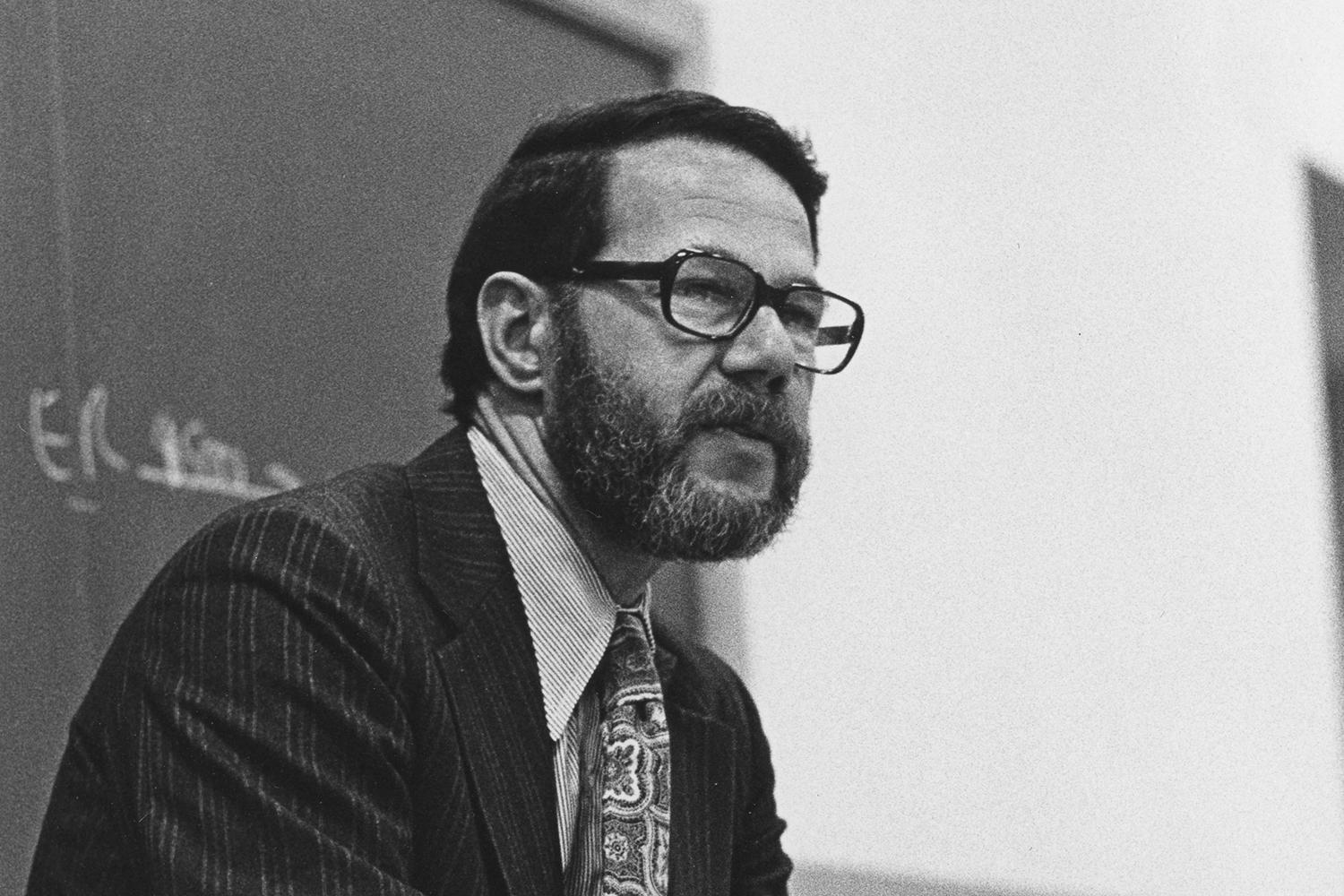
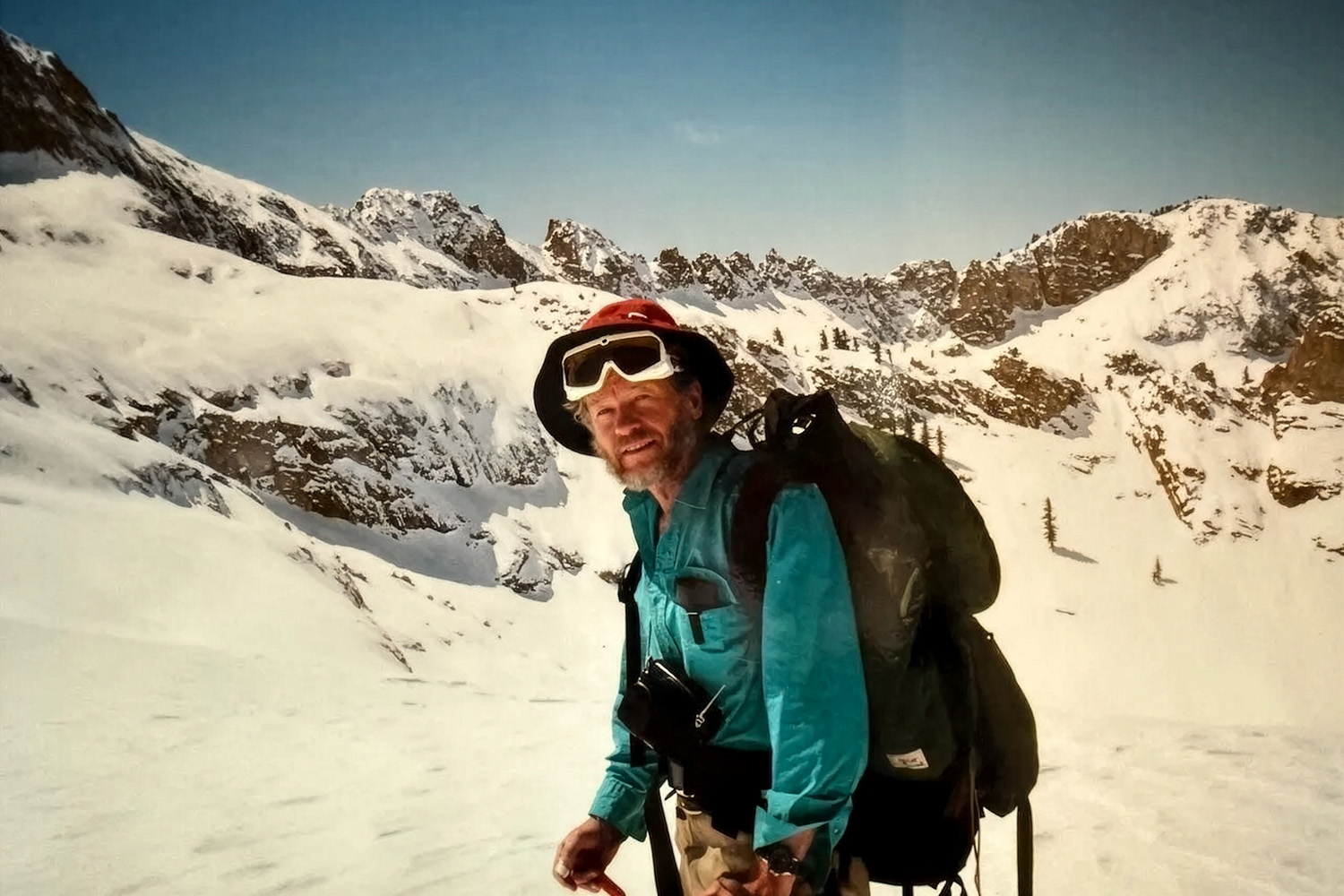
Richard G. Luthy, the Silas H. Palmer Professor of Civil and Environmental Engineering at Stanford University and senior fellow at the Stanford Woods Institute for the Environment, died Monday, Oct. 6, at Stanford Hospital after suffering a cerebral hemorrhage. He was 80 years old.
Luthy was a monumental figure in the field of environmental engineering. His expertise lay in the sustainable management of water resources. His body of research, which includes authorship of over 310 peer-reviewed papers, several book chapters, and at least six patents, focused on water conservation, recycling, and storage, particularly in urban and rural water settings of the water-challenged American West.
“There isn’t a single activity that will solve our water problems,” Luthy once said, “but conservation, recycling, desalination, stormwater capture, recharge, and water banking will go a long way.”
“Dick Luthy was a remarkable engineer and scientist, a gifted leader, and a deeply caring human being,” said former dean of the School of Engineering Jim Plummer. “But he was also a friend, someone who was always available to discuss challenges, opportunities, or just life. He was someone who could always be counted on to do the right thing for his department, the school, and Stanford. He thought creatively but always drove consensus to make real and lasting changes. His untimely passing leaves a huge hole; he had much more to give and all of us had much more to learn from him. “
“It is not an exaggeration to say Dick Luthy became one of the most influential environmental engineers – if not the preeminent one – in the United States,” remembered colleague Jeffrey Koseff, a professor of civil and environmental engineering and co-founder of the Woods Institute for the Environment, who recruited Luthy to Stanford. “Most importantly, he was an incredibly kind and humble man. We are all better people for his presence in our lives.”
From the prairie to Palo Alto
Richard Godfrey Luthy was born on June 11, 1945, in Buffalo, New York. His childhood was spent in Prairie Village, Kansas, and he had a lifelong interest in the sciences. He was influenced by gifts from his father designed to inspire curiosity. To illustrate the origins of his childhood love of science, Luthy recalled a gigantic chemistry set in the family garage. His family relocated to Palo Alto, California, when he was a teen, and he came of age amid the space race, publication of Rachel Carson’s Silent Spring, and a period of growing exploration of the ocean depths led by Jacques Cousteau. He was initially drawn to ocean engineering.
Luthy earned his Bachelor of Science degree in chemical engineering at the University of California, Berkeley, in 1967, a master’s degree in ocean engineering at the University of Hawaii in 1969, and a second master’s degree in environmental engineering at Berkeley in 1974.
Choosing to volunteer for the Navy rather than to be drafted into the Army, he joined the Navy Civil Engineer Corps during the early ’70s Vietnam War era. In the Navy, he became a deep-sea diver leading underwater construction projects and first contemplated using his skills to solve pressing environmental issues. The establishment of the U.S. Environmental Protection Agency and passage of the Clean Water Act in that time steeled his resolve, and Luthy went on to earn his PhD in environmental engineering at Berkeley in 1976.
Luthy took a faculty position at Carnegie Mellon University in Pittsburgh, where he taught from 1975 until 1999. He joined Stanford in 2000, wooed by Perry McCarty, Paul Roberts, and Jeff Koseff, to focus on physicochemical processes of water quality, establishment of sustainable practices, and contaminant remediation in groundwater and sediments.
Beyond his research and projects, Luthy was also revered among his colleagues, mentees, and students at the School of Engineering. “Dick was my first chair when I arrived in 2003, and he was the first to congratulate me on getting tenure,” remembered current department chair Sarah Billington. “Then, when I became chair, he was a huge support. At the end of meetings, he would put a hand on my shoulder and say, ‘Good job.’ If it was a difficult meeting, he’d add, ‘It’s time for a hamburger!’ His calm, wise, and fun-loving presence was a model of collegiality. I miss him terribly.”
“Dick was a father figure known for a measured and steady voice even at fractious faculty meetings, which were calmed by his thoughtful comments,” recalled colleague William Mitch, a fellow professor of civil and environmental engineering.
High-profile results
Luthy was especially known for championing a collaborative, interdisciplinary approach to studying and remediating organic contaminants, which produced significant advancements in environmental quality criteria and cleanup practices. In his decades in engineering, Luthy worked to remediate an alphabet soup of notorious contaminants, from PCBs and DDT to polybrominated diphenyl ethers, phthalates, and common pharmaceuticals, all of which often ended up in river, lake, and ocean sediments.
Ever the practical, cost-conscious engineer, however, Luthy favored treating the sediments in place using inexpensive activated charcoal rather than dredging and hauling them to a new location. To back his remediation strategies, he conducted rigorous research. In one example, he showed how a clam left in a mixture of contaminated sediment and activated carbon absorbed just a tenth the PCBs as a clam in contaminated soil without carbon.
Luthy was an eager and natural communicator who engaged lay audiences in the media in a plainspoken voice full of colorful metaphors rather than scientific language. He once likened activated charcoal to “burnt toast” and compared dredging unfavorably with vacuuming carpet. “[Dredging is] like a shell game; you have to put the contaminated sediment somewhere,” Luthy said. “This technique is radical because we are changing the chemistry of the sediment rather than digging up the mud and hauling it away.”
In 2011, Luthy led the successful and high-profile effort to bring a National Science Foundation Engineering Research Center to Stanford, one of only four such centers in the country. That effort produced the “Re-inventing the Nation’s Urban Water Infrastructure” (ReNUWIt) program, a four-university collaboration to capture and store water in resource-compromised California cities, which Luthy directed from its inception in 2011 until 2022.
Under ReNUWIt, Luthy created projects to gather rainwater and treated wastewater in urban wetland parks that teemed with wildlife, foliage, and human activity. In one ReNUWiT remediation project at Calera Creek in Pacifica, California, Luthy led the transformation of a once-barren quarry into a vibrant ecological space using highly treated wastewater.
“Ecosystems have an equal claim to water as industry and agriculture, and we have to find a way of satisfying these competing claims,” he said.
While Luthy was an optimist about his prospects for success, he was also a pragmatist. Noting that the challenges of water quality were “billion-dollar problems,” he said that financial costs were the biggest hurdle to improving water reuse. He stressed the importance of good business models to complement good engineering models for his innovative projects that always struck a balance between scientific aspirations and financial practicality.
“In the field of water quality and supply, we can either do things differently or just keep muddling along,” Luthy once said.
Recognized figure
His work was acknowledged internationally. In 2015, Luthy received the Gordon Maskew Fair Award from the American Academy of Environmental Engineers & Scientists for “substantial contributions” to environmental engineering. He won the Jack Edward McKee Medal from the Water Environment Federation for innovative research on the treatment of cyanide-contaminated groundwater. In 2000, he and collaborators were recognized with the Cleanup Project of the Year award from the U.S. Department of Defense.
“Dick Luthy often saw problems before they escalated, and he had this unique ability to identify practical, affordable, and effective methods to any problem,” said James Leckie, a colleague and professor emeritus of civil and environmental engineering. “He made a lasting impression on those who worked with him.”
Luthy was invited to give the John Henske Distinguished Lecture at Yale University and was elected Einstein Professor of the Chinese Academy of Sciences. He served as chair of the National Research Council Committee on Beneficial Use of Stormwater and Graywater, as chair of the National Research Council’s Water Science and Technology Board, and as president of the Association of Environmental Engineering and Science Professors. Clarkson University awarded him an honorary doctorate in 2005.
“Dick hired me, and he was my mentor. He believed in me when I barely believed in myself and it meant the world to me,” said colleague Alexandria Boehm, a professor of civil and environmental engineering. “We had offices next to each other and we often brainstormed ways to build the department. I remember the little things we shared: a love of running and of Diet Coke, and our never-ending quest to find free food on campus. I teased him about his lunches of stale bread and peanuts, but he always offered to share.”
“Dick was the professor we all aspire to be, a great researcher, a great teacher, and perhaps most importantly, a hard-working, friendly, and supportive faculty colleague who always was positive and upbeat. We will miss him,” said colleague Stephen Monismith, a professor of civil engineering and former department chair.
Luthy is survived by his wife, Mary Sullivan of Stanford; son, Matthew Luthy of Santa Clara, California; daughters Mara Luthy of Southern California and Olivia Saachi of Stanford; and grandsons Rafe Grossmann of Alaska, Jaiden Luthy of Stanford, and Michael Luthy of Stanford; as well as by many beloved extended family and in-laws. In lieu of flowers, the family suggests a donation in the name of Richard G. Luthy be made to an environmental cause, organization, or charity of your choosing.
For more information
This story was originally published by Stanford School of Engineering.
Writer
Andrew Myers