In brief
- A new book explores "flash teams," a type of work group that AI is making more accessible.
- These distributed teams enable rapid collaboration among global experts to address dynamic project needs.
- The book provides insights to promote healthy, flexible work environments, informed by lessons from the gig economy and remote work.
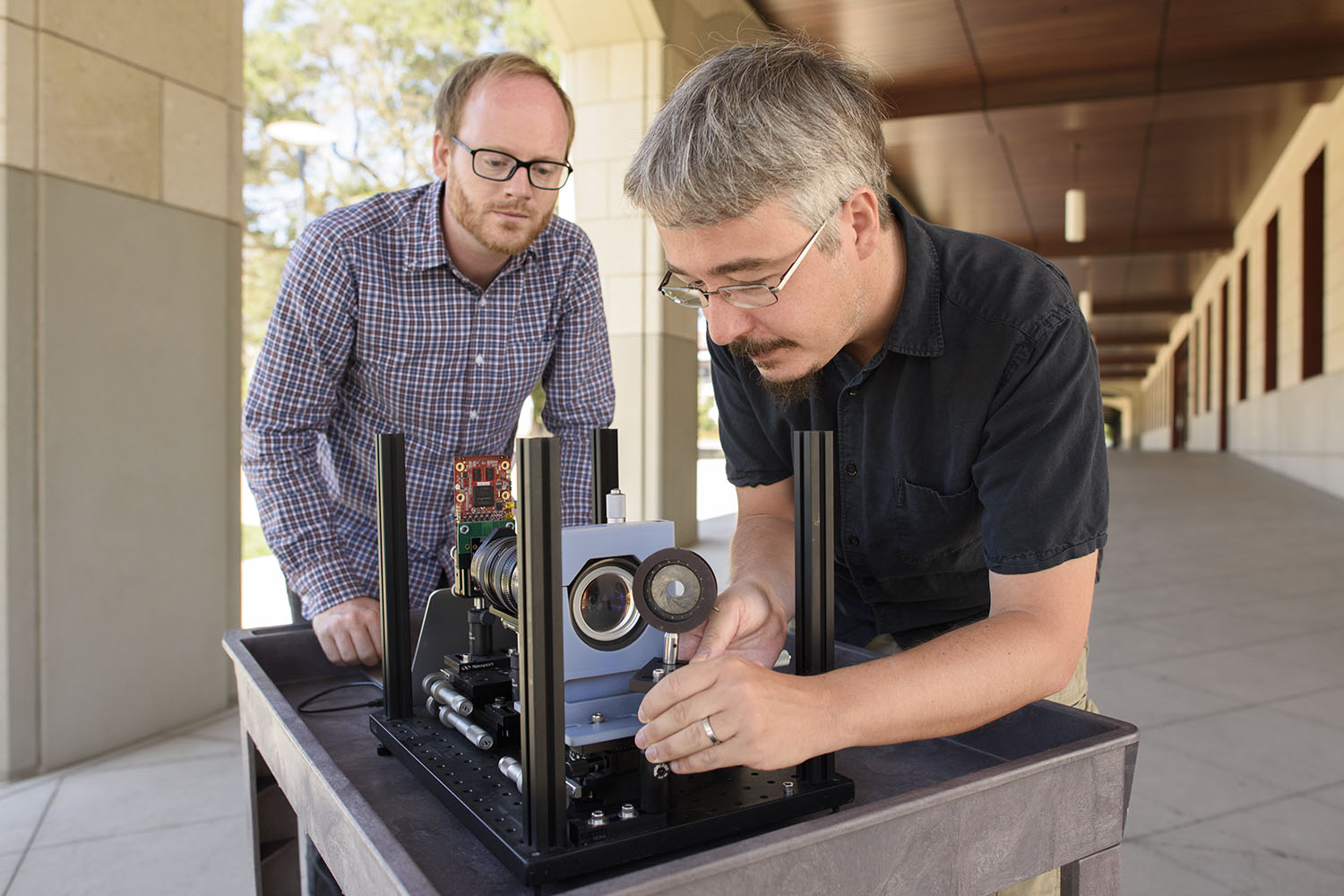
In their new book, Flash Teams: Leading the Future of AI-Enhanced, On-Demand Work (MIT Press, 2025), Stanford professors Melissa Valentine and Michael Bernstein introduce readers to an innovative model for organizing work known as “flash teams.” Flash teams are groups of globally distributed experts who come together quickly – “in a flash” – to tackle a specific project and then dissolve just as quickly when the work is complete. Often, team members have never met but are put together through online platforms based on experience and expertise.
In the book, Valentine, an expert in management science, and Bernstein, a computer scientist, lay out a new vision for the future of teamwork and a practical guide for managers, freelancers, and entrepreneurs seeking agile teams to realize their dreams. The Stanford Institute for Human-Centered Artificial Intelligence (HAI) talked to Valentine and Bernstein about the growing promise of flash teams.
What exactly is a flash team?
Melissa Valentine: A flash team is essentially a group of strangers – even from all over the world – who come together quickly to solve a problem or build something. In the past, you would have had to rely on personal networks, engage a firm or an agency, or hire your own teams – a slow and expensive way to go. Now, with artificial intelligence, the cloud, and the internet, technology can help identify the expertise needed for the job at hand, assemble teams within minutes, and coordinate their work across the project life cycle. Technology tools help track project status, recommend next steps, and enable team members to communicate effectively. The result is that anyone with an idea can pull together as many highly qualified collaborators as needed and move from concept to prototype in weeks rather than months.
Michael Bernstein: Flash teams draw on online marketplaces to bring together exactly the right set of people, at exactly the right time, for whatever your goal is.
How are flash teams put together?
Valentine: The first flash teams we studied were freelancers who came together on the web platform Upwork. They were freelance hourly contractors who could be hired in an instant. But we have since seen the model expand. Companies use flash teams internally. University labs use them for research projects. And consultancies organize their networks to better serve their clients. The larger point is that this sort of ad hoc expertise is more available and more accessible than most people assume. Whether you’re drawing on freelancers, employees inside your own organization, or a professional network, the same principles apply to putting together the right teams and managing them through a project.
Bernstein: Flash teams are a combination of new management strategies and software. Software, because we can tap into a globally distributed online workforce. Whom should we bring together? With what expertise? How do we onboard them? Management strategies, because you have to lead these teams in strikingly new ways to help them coordinate even if they’ve never worked together before.
Why is this concept growing in popularity?
Valentine: We have been working on the idea for years, but generative AI makes it even easier and more accessible, so there is a renewed interest. This set of technologies – internet, remote work technologies, and many AI tools – reduce the difficulties of searching, hiring, contracting, and onboarding people to new jobs and teams. Historically, because those steps were all quite onerous, we got used to models where people joined a company or a team and stayed even as the needs of the job and team changed. But with digital platforms, finding the perfect person or team can take minutes, and payment and contracts can be handled automatically through the platform. Add to it all the rise of remote work during the pandemic and ever-improving AI tools that help find and recommend whom you should hire, and you suddenly have a model of work that is faster, more flexible, and better suited to today’s dynamic problems, particularly for entrepreneurs with nothing more than a good idea and no way to know whom to hire or how to hire them, much less how to manage them.
Bernstein: It’s also a continuation of the incomplete revolution of remote work. If many more people are working remotely, then it becomes natural to ask: What would teams and organizations look like if they tapped into that remote workforce?
What are the risks or downsides of flash teams?
Valentine: Like any management system, flash teams can be used in ways that are exploitative or coercive or not good for workers. We talk in the book about lessons learned from the gig economy about what has not been good for workers in that system and what people are looking for when they choose more flexible work arrangements. We also talk about what good leadership and a healthy ecosystem for work look like. Our vision is that people use these new technologies and approaches for solving more problems together with great teams, not as a race to the bottom of really invasive or exploitative algorithmic management.
Bernstein: Bad managers are bad managers, no matter whether the team is traditional or a flash team. If you aren’t making the effort to understand and support the workers who are on your flash team, you’re going to be harming them. As Professor Valentine mentions, we spend substantial time in the book talking about what good (and bad) management looks like for flash teams and laying out the steps it takes to create conditions where workers prefer flash teams to their traditional work.

How does one build a flash team?
Valentine: Often people start by hiring a single key person, like a technical lead who can help scope the project and identify the next roles to fill. Platforms like Upwork, Catalant, or Gigster make it easy to search for talent, while project management tools like Asana and Slack help keep everyone aligned and on target. Increasingly, AI systems can even suggest the sequence of hires based on what similar projects have required. And for managers inside existing companies, the same approach applies– look beyond your immediate team and think expansively about expertise. Google uses flash teams internally to advance projects.
I’m a freelancer or subject-matter expert. How can I join a flash team?
Valentine: There are specialized companies that organize flash teams in different industries. For example, Catalant connects business consultants, Gigster organizes software engineers, and Chief Outsiders does the same for marketing and brand design. Joining those networks is one way to get on this type of team. More generally, it helps to be open to dynamic teaming, jumping into projects where your expertise is needed for a sprint. In that sense, being part of a flash team is about seeing yourself in a global pool of talent that can assemble and reassemble around specific opportunities.
How do flash teams build trust among team members who have never met?
Valentine: Familiarity definitely matters. Teams that know each other often perform better. But one of the exciting frontiers is balancing speed with trust. Some platforms now factor in whether people have worked together before. At the same time, data from past projects can help estimate costs and scope more accurately, which allows clients to make better-informed choices. As with hiring a general contractor to build a house, you need to rely on the experience and leadership of a project manager to build and organize the team you bring on, while also benefiting from the transparency that platforms and software provide.
Bernstein: It also turns out that flash team members may have worked together before. In one of the projects that we describe in the book, the recruitment algorithm explicitly prioritizes people who have worked together well in the past. So it might be that your flash teams are always a combination of new and familiar faces.
Are flash teams meant only for quick, short-term projects?
Valentine: Not at all. We’ve seen flash teams engaged for projects that last weeks, months, or even years. The point of a flash team isn’t that the project itself is done in a flash, but that you can assemble the right people quickly and adapt the team as needs change. Sometimes, it’s a six-week sprint to design a brand identity or an ad campaign. Other times, it’s an ongoing engineering project to build a prototype. Flash teams give managers and entrepreneurs flexibility to decide how big, long, or familiar they want the team to be.
Bernstein: One interesting thing we saw was that, even though the roles in the flash teams would turn over quickly, the people in those roles would often stay stable. Suddenly, we have a very dynamic and adaptive org chart, but the members of the team are jumping between roles as that org chart evolves. So, even in cases where a project is short-lived, it turns out that the team itself can become an always-adapting, persistent group.
Authors Melissa Valentine and Michael Bernstein share more about flash teams at an upcoming HAI seminar and book signing on Oct. 8. RSVP for your spot now.
For more information
This story was originally published by the Stanford Institute for Human-Centered Artificial Intelligence.
Writer
Andrew Myers