In brief
- Reduced access to affordable electricity puts people’s health at risk, especially during extreme heat when cooling can be essential for survival.
- California utilities spent about $9 billion in 2025 on safety measures and infrastructure upgrades to avoid starting wildfires. Stanford researchers propose a framework to have ratepayers absorb less of the cost.
- A California program designed to help people afford electricity and gas could keep more households powered if it redirected polluter-funded credits toward lower-income customers.
Like many Americans, Stanford’s Michael Wara and Michael Mastrandrea have seen their energy bills climb in recent years. “Electricity rates and, more importantly, bills have gotten really high in California and are now increasing elsewhere around the country, too,” said Wara, a lawyer and scholar in the Stanford Doerr School of Sustainability who focuses on energy, climate, and wildfire policy.
Rising electricity costs for consumers across the United States are forcing a reckoning with aging energy infrastructure and its capacity to withstand extreme weather and climate change, increased demand from data centers, and shifts toward electrification.
Reduced access to affordable electricity to power climate control and other essential home appliances puts people’s health at risk, especially during extreme heat waves. “Electricity is an essential service, not just because we need our Wi-Fi, but because it keeps people alive,” said Wara. “As climate change impacts worsen, that’s going to become even more true.”
Nationally, electricity rates have increased 10% on average since last year, and about one in six households are now behind on utility bills. But the factors behind electricity costs vary across states and regions. In Hawaii, reliance on oil amid supply disruptions in the Strait of Hormuz is a factor. In southeastern states, repairs to storm-damaged infrastructure have played a larger role. In California, grid repairs and upgrades to deal with wildfires are a driving force.
Wara and Mastrandrea, co-directors of Stanford’s Climate and Energy Policy Program, are working to understand how wildfires contribute to electricity costs in California and across the U.S. West. Their research includes analyzing how policies can be designed to address wildfire risks while making energy more affordable.
Here are four essential facts based on Wara’s and Mastrandrea’s research and field of work.
Parts of the system for distributing electricity in the U.S. are reaching the end of their useful life.
Utilities finished building out much of the country’s roughly 7 million miles of local electricity distribution wires and long-distance transmission lines decades ago. Increasingly, utilities are spending money on repairs and upgrades after years of deferred maintenance.
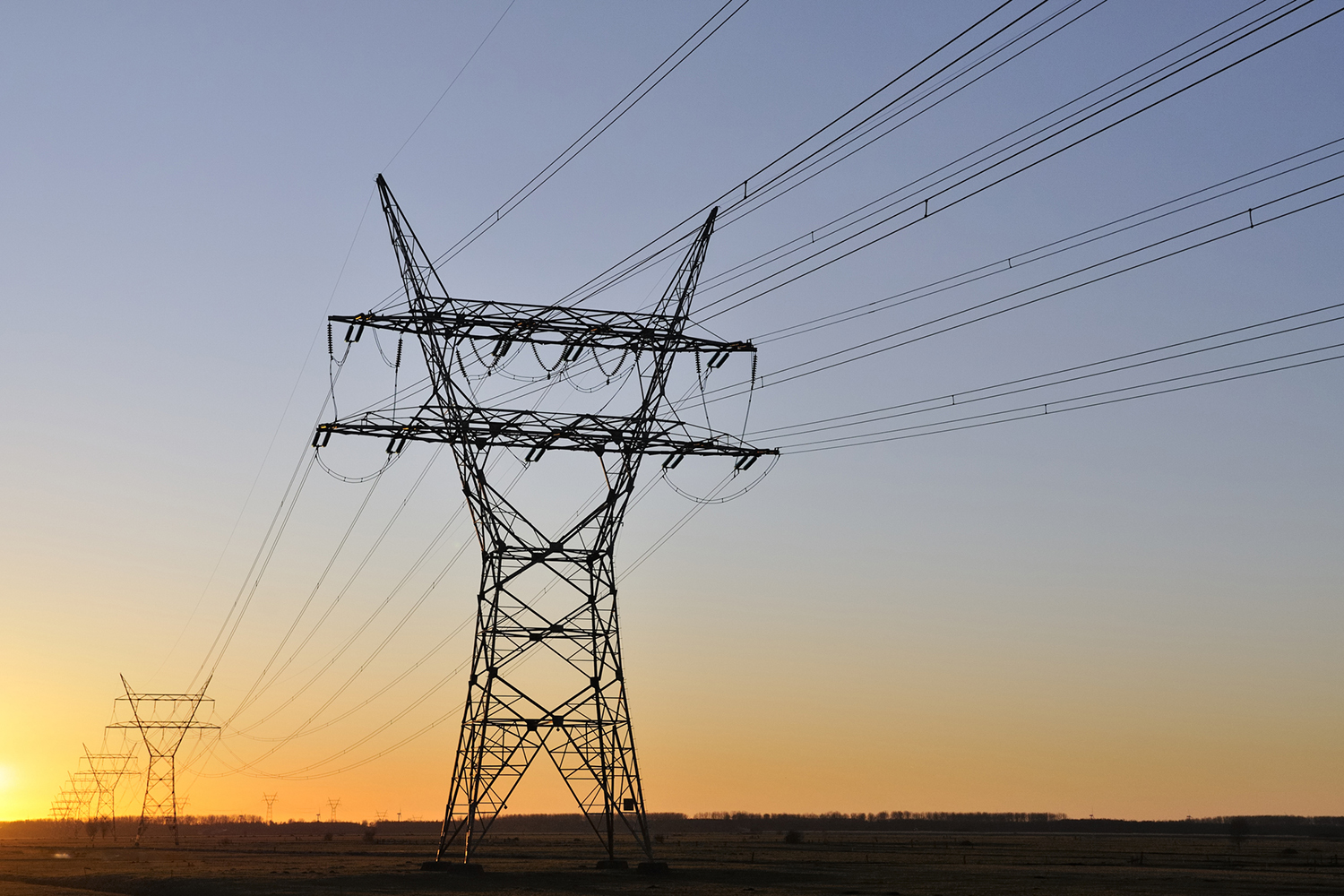
“The thing that is driving up costs nationally is investment in poles and wires, especially that last mile” reaching homes and businesses, said Wara. He compared the grid to a house with a paid-off mortgage that now needs a new roof, plumbing, and floors.
About one in six households are now behind on utility bills.
Compounding the cost of repairs is an influx of new sources connecting to the old grid. Solar and wind farms are often built far from population centers and old coal or gas plants headed for retirement. As a result, utilities need to build new transmission lines to deliver the electricity they generate to where it’s needed. “You’ve got to build a different architecture to support the grid we need for the future,” said Mastrandrea.
Utility-ignited wildfires are driving up electricity costs in western U.S. states.
Aging grid infrastructure is increasingly implicated in devastating wildfires across the western United States. Recent examples include the 2018 Camp Fire in Northern California, which ignited after a failed hook let a live line fall from a transmission tower; the 2023 Lahaina Fire in Hawaii, caused by a broken utility pole; and the 2025 Eaton Fire in Southern California, which preliminary evidence suggests may have ignited after a power surge caused arcing in an idled transmission line. Because they occurred under extremely dangerous fire weather conditions, these fires led to fatalities, destroyed homes, and billions in damages.
Regulators often allow utilities to raise customers’ rates to recover costs related to wildfire mitigation and claims paid to people and businesses when courts hold utilities responsible for fire damages.
In an effort to avoid future disasters on these scales, utilities in California and elsewhere are adopting new grid operations strategies, such as turning off the power during dangerous conditions, that enhance safety but can compromise reliability.
Some utilities are also shifting toward preventive maintenance and “hardening” of existing infrastructure. This approach includes burying power lines underground and replacing unprotected wires with insulated lines that are less likely to cause sparks. Wara said California utilities collectively spent about $9 billion last year on these and other safety measures – a little over twice the 2025 budget of the California Department of Forestry and Fire Protection, known as CalFire.
The Stanford researchers are exploring ways to minimize risk and damage from future wildfires and ultimately reduce electricity rates. One proposal in a 2024 Brookings Institution report they wrote envisions expanding a wildfire mitigation framework developed in California to high-risk areas in other states. This would include creating a voluntary program for utilities, states, and a hypothetical new federal regulatory entity to share the costs of future fires for utilities that follow recommended practices to identify vulnerable infrastructure, coordinate power shutoffs during high-risk weather events, and implement other proven tactics.
High electricity prices can hurt public health.
In some high-profile instances in western states, utility cutoffs due to unpaid electrical bills have caused heat-related deaths, leading the California legislature and an Arizona regulatory body to enact emergency rules curtailing power shutoffs and improving notifications.
Seeking to help reduce the public health threat from utility cutoffs, Mastrandrea and Wara authored a white paper in 2025 on improving electricity affordability through the California Climate Credit program. Funded by large polluters required to buy allowances for their carbon emissions in the state, the program gives a small refund to households and small businesses once or twice a year on gas and electricity bills.
Each utility awards credits equally among its customers. But the analysis, co-authored with Stanford postdoctoral scholar Lane D. Smith and wildfire legal fellow Eric Macomber, showed concentrating the credits toward lower-income customers could make a bigger difference in keeping climate control powered for more people. The concept initially made its way into a governor’s executive order in 2024, then legislation a year later. The California Public Utilities Commission is now working to implement formal regulation.
“Seeing this struggle with affordability, our focus is to impact policy conversations and bring new ideas for consideration by those in government,” said Mastrandrea. “The climate credit work shows how this approach can be successful.”
Growing demand for electricity opens a possible new source of funding for grid upgrades.
For the first time in nearly two decades, electricity demand is rising sharply across much of the United States. Energy efficiency standards, advances in LED lighting, and de-industrialization of the American economy kept U.S. electricity demand nearly flat between the mid-2000s and early 2020s despite economic and population growth. Now that’s changing, partly due to wider electric vehicle adoption and increased demand from manufacturing facilities, and more recently because of skyrocketing energy consumption by data centers for artificial intelligence.
If demand for energy to power data centers increases as projected by industry, Wara and Mastrandrea said it could present an opportunity for utilities to modernize grid infrastructure and add generating capacity with financial support from the private sector.
“This could take costs off of the plates of residential customers, but realizing this potential benefit of surging electricity demand for AI will depend on how utilities, regulators, and lawmakers manage the boom, and how smart utilities and their customers can be about optimizing the use of the grid,” Mastrandrea said.
Featured experts
Michael Wara
Senior Director for Policy at the Stanford Sustainability Accelerator, which is based at the Stanford Doerr School of Sustainability
Director of the Climate and Energy Policy Program
Senior Research Scholar at the Stanford Woods Institute for the Environment
Current research: Legal and policy scholarship focused on wildfire, climate policy, electricity regulation, and insurance
Michael Mastrandrea
Director of Policy at the Stanford Sustainability Accelerator
Research Director of the Climate and Energy Policy Program
Senior Research Scholar at the Stanford Woods Institute for the Environment
Chief Advisor for Energy and Climate Research at the California Energy Commission
Current research: Management of climate risks and the design and implementation of energy and climate policy in California and beyond
For more information
The Climate and Energy Policy Program (CEPP) is a program of the Stanford Woods Institute for the Environment at the Doerr School of Sustainability, in partnership with the Environmental Law and Natural Resources Program at Stanford Law School.
This story was originally published by Stanford Doerr School of Sustainability.
Media contacts
Michael Wara, Stanford Woods Institute for the Environment: michael.wara@stanford.edu
Michael Mastrandrea, Stanford Woods Institute for the Environment: mikemas@stanford.edu
Josie Garthwaite, Stanford Doerr School of Sustainability: (650) 497-0947, josieg@stanford.edu
Writer
Adam Hadhazy